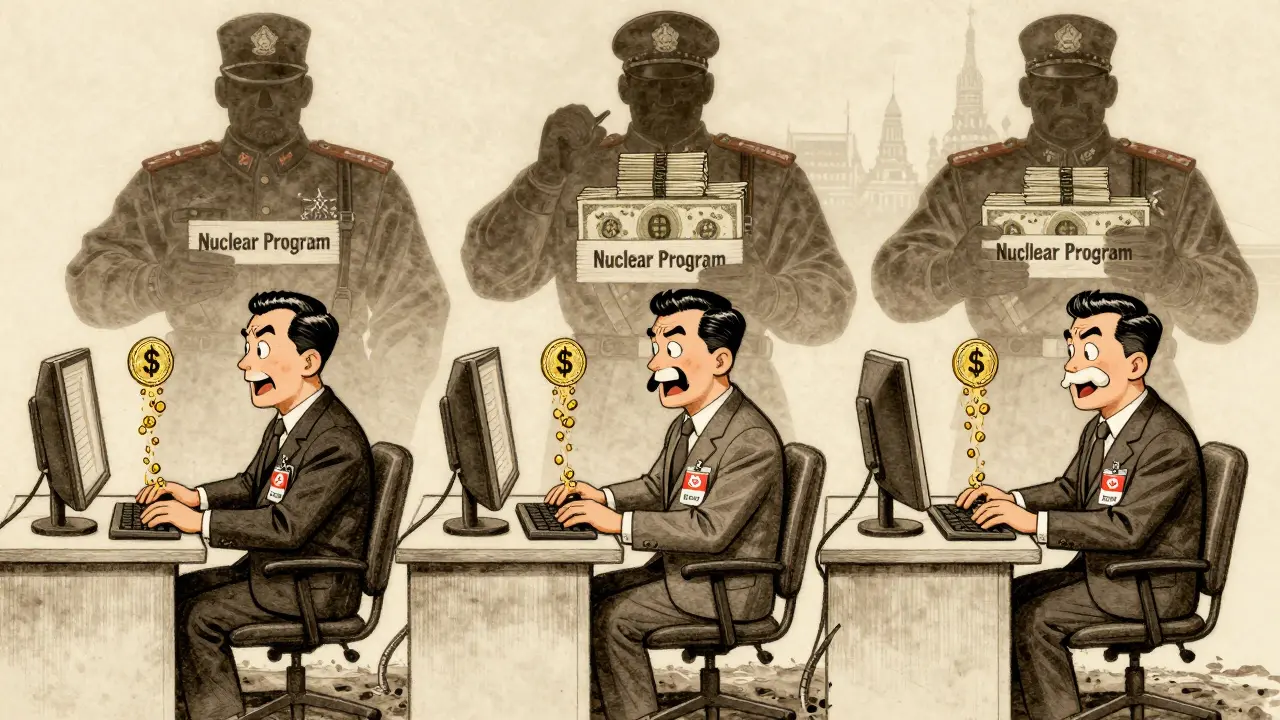
On February 12, 2025, crypto exchange Bybit lost $1.4 billion in a single heist. But this wasn’t a hack by a shadowy group of anonymous coders. It was the work of people sitting at desks in Beijing, Moscow, and Dubai - people who claimed to be software engineers from Poland, Brazil, and Canada. They weren’t criminals in the traditional sense. They were North Korean IT workers, paid in cryptocurrency to work remote jobs for companies that never knew their true identity.
This isn’t science fiction. It’s the reality of how the North Korean regime is bypassing international sanctions. With nuclear weapons and missile programs to fund, and no access to global banking, Pyongyang turned to something it excels at: cyber operations. But instead of just stealing crypto outright, they built a quiet, steady machine - one that pays regular salaries, uses fake identities, and hides in plain sight.
The Real Business of North Korean Cybercrime
Most people think of North Korean hackers as the Lazarus Group - the ones who broke into exchanges, stole millions, and vanished. But since 2017, the regime has shifted tactics. The Multilateral Sanctions Monitoring Team (MSMT) found that in 2024 alone, North Korea made $1.2 billion from crypto. And by September 2025, that number had jumped to $1.65 billion. The biggest source? Not exchange heists. Not ransomware. It’s remote IT workers.
These aren’t freelance gig workers. They’re state-sponsored operatives. Recruited by agencies like Chinyong Information Technology Cooperation Company - sanctioned by the U.S. Treasury in July 2025 - they’re sent overseas under false passports and fake resumes. Their job? Apply for software development, QA testing, or data analysis roles with companies in the U.S., Europe, and Southeast Asia. They interview via Zoom, pass background checks with forged diplomas, and start working.
And here’s the twist: they ask to be paid in USDC or USDT. Not Bitcoin. Not Ethereum. Stablecoins. Why? Because they’re pegged to the dollar. Easy to move. Easy to convert. And easy to hide.
How the Laundering Works
Once the salary hits their wallet - usually around $5,000 a month - the laundering begins. The money doesn’t go straight to Pyongyang. It gets split across dozens, sometimes hundreds, of crypto addresses. Each one holds a small amount. Then, through a series of mixers, bridges, and peer-to-peer trades, it’s funneled into wallets controlled by sanctioned individuals like Kim Sang Man and Sim Hyon Sop.
The final step? Conversion to cash. This happens through over-the-counter (OTC) traders in Russia, the UAE, and China. One such trader, known only as ‘Lu’, was sanctioned by OFAC in December 2024 for moving $2.1 million in crypto tied to North Korea. These traders don’t ask questions. They just exchange crypto for cash, often through shell companies or fake import/export businesses.
Chainalysis tracked one network that used 1,200 unique wallet addresses over 18 months. None of them were directly linked to North Korea. But when analysts looked at transaction patterns - timing, amounts, and wallet clustering - the fingerprints were unmistakable.
The Red Flags No One Noticed
Companies hiring remote workers had every chance to spot the fraud. But they didn’t. Here’s why:
- They’re cheaper. North Korean workers offer services at 20-30% below market rates. For startups trying to cut costs, that’s tempting.
- No contract needed. They’ll start working before signing anything. They want to get paid fast.
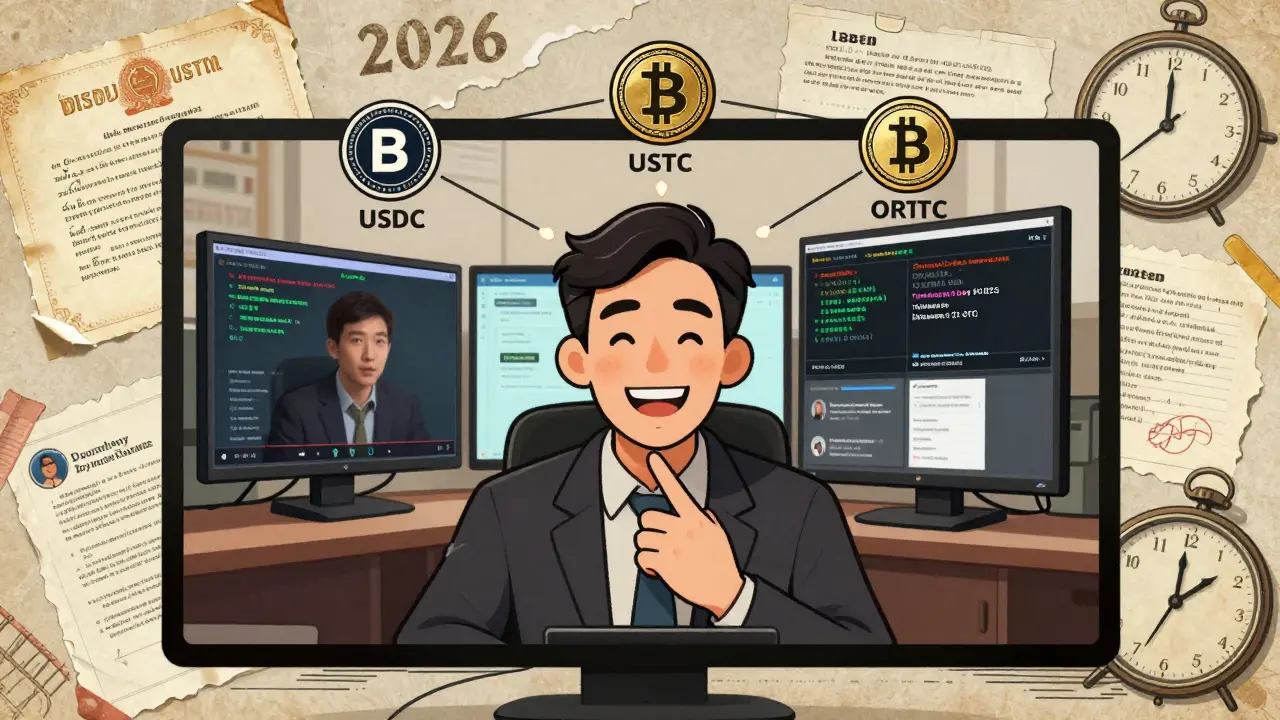
- They use deepfakes. AI-generated voices and faces make video interviews look real. One Canadian tech firm lost $280,000 after a worker used AI to mimic a Polish engineer during 12 video calls.
- Multiple logins from different countries. One worker logged in from Ukraine, then Nigeria, then Indonesia - all in the same week. Companies assumed they were traveling.
- Forged credentials. The RCMP found that 92% of verified DPRK applications had fake university degrees or employment history.
And when the money’s gone? The worker disappears. No trace. No recourse. Crypto transactions are irreversible. And most companies don’t track blockchain activity.
Who’s Being Targeted?
It’s not just startups. Big companies are getting hit too. A U.S.-based cybersecurity firm reported that a North Korean operative accessed their internal code repository for six months before stealing $900,000 in crypto. The U.S. Department of Justice indicted four North Koreans in July 2025 for this exact scheme. The indictment listed the stolen assets: USDC, ETH, and even NFTs.
But the real danger isn’t just the money lost. It’s the data. These workers often get access to proprietary software, customer databases, and internal networks. Once they’ve collected what they need, they vanish - leaving behind backdoors, malware, or compromised systems.
According to the Canadian Anti-Fraud Centre, the average business loss per incident is $47,000. And 78% of cases involved crypto payments. The scale is growing. The global remote work market hit $427 billion in 2025. That’s a massive blind spot.
How to Protect Your Business
It’s not impossible to stop this. Companies that took action saw results.
- Never pay in crypto. This is the single most effective step. If you’re paying a remote worker in USDC or USDT, you’re helping fund a nuclear program. Switch to bank transfers or PayPal. If they refuse, walk away.
- Verify identity with multiple tools. Use live video calls on two different platforms at once - Zoom and Teams, for example. AI deepfakes can’t maintain perfect sync across both. Look for lip movements that don’t match audio, unnatural blinking, or frozen expressions.
- Check education and work history directly. Don’t trust LinkedIn. Call the university. Ask for transcripts. Contact past employers. North Korean operatives often list universities that don’t exist or have no record of the person.
- Use blockchain monitoring tools. Platforms like Chainalysis and Elliptic can flag wallet addresses linked to known DPRK laundering networks. Integrate them into your payment verification process.
- Require signed contracts before work begins. If someone won’t sign a contract, they’re hiding something.
Companies that followed these steps reduced successful infiltration by 63%, according to a Treasury Department analysis in August 2025. It’s not about being paranoid. It’s about being smart.
The Bigger Picture: Sanctions and the Future
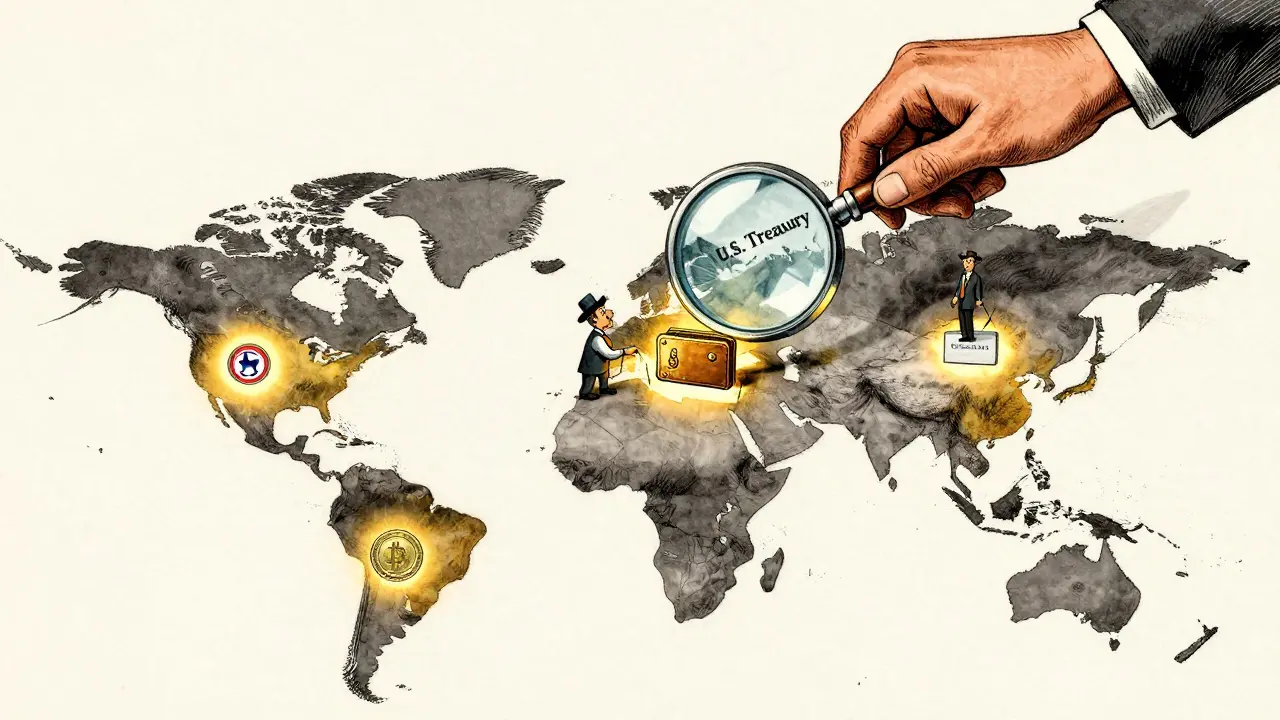
The U.S., Japan, and South Korea issued a joint warning in July 2025. The State Department is offering up to $15 million for tips that lead to arrests. FinCEN is building a new AI system set to launch in early 2026 that can detect DPRK-linked wallets with 89% accuracy.
But here’s the hard truth: as long as crypto remains anonymous across borders, this will continue. North Korea has adapted before. When sanctions hit their shipping routes, they turned to cybercrime. When exchanges tightened security, they shifted to remote workers. They’ll adapt again.
What’s different now is the scale. This isn’t a few rogue hackers. It’s a state-run payroll system. The money funds copper imports for munitions. It buys missiles. It keeps the regime alive.
Every time a company pays a remote worker in USDT without verifying their identity, they’re indirectly helping North Korea build weapons. That’s not a side effect. It’s the point.
What’s Next?
By Q4 2026, experts predict a 25-30% drop in successful infiltrations due to better verification and global coordination. But the threat won’t disappear. It’ll evolve. Maybe next, they’ll use AI to generate fake video resumes. Or bribe local bank employees in the UAE to move funds faster.
The only real defense is awareness. If you hire remote workers - especially from high-risk regions - you’re not just hiring talent. You’re becoming part of a global financial network that supports a regime under international sanctions.
Ask yourself: Is saving $1,000 a month worth funding a nuclear arsenal?
Are North Korean IT workers legal to hire?
No. Hiring North Korean IT workers, even unknowingly, violates U.S., EU, and UN sanctions. The U.S. Treasury has sanctioned multiple agencies and individuals involved in recruiting these workers. If you pay them in crypto, you’re potentially aiding a regime that uses the funds for weapons development. You can be held legally responsible, even if you didn’t know their true identity.
Can I trust a remote worker who wants to be paid in USDT or USDC?
Be extremely cautious. While some legitimate workers prefer stablecoins for lower fees and faster settlements, North Korean operatives specifically request them because they’re easier to launder. If a worker insists on crypto and refuses bank transfers, it’s a major red flag. Always verify their identity through multiple channels before agreeing to any payment method.
How do I check if a remote worker is from North Korea?
You can’t always tell by name or location. North Korean operatives use fake identities from other countries. The best way is to look for patterns: inconsistent work history, forged diplomas, requests for crypto payments, and use of AI deepfakes during video calls. Use blockchain analytics tools to trace payment addresses. If the wallet has ever interacted with known DPRK-linked addresses, walk away.
Has anyone been arrested for running these schemes?
Yes. In July 2025, the U.S. Department of Justice unsealed an indictment against four North Korean nationals for stealing $900,000 in crypto through remote IT jobs. The U.S. Treasury has also sanctioned multiple individuals and companies, including Chinyong Information Technology Cooperation Company and OTC trader ‘Lu’. Arrests are rare because operatives are based overseas, but asset seizures are increasing - including over $7.7 million in crypto and NFTs seized by the FBI in mid-2025.
What should I do if I suspect I’ve hired a North Korean IT worker?
Stop all payments immediately. Do not confront the worker - they may destroy evidence. Report the case to your country’s financial crimes unit (like FinCEN in the U.S. or the RCMP in Canada). Provide transaction IDs, IP logs, and video recordings. Contact a blockchain forensic firm to trace the crypto flow. You may also be eligible for a reward under U.S. State Department programs if your information leads to a successful prosecution.




Comments (25)
Vernon Hughes
This is terrifying but not surprising. The regime has been adapting for decades. What’s new is how professionalized it’s become. They’re not just hackers anymore-they’re HR departments with fake diplomas and Zoom scripts.
Alison Hall
Companies need to stop paying in crypto. Period. It’s not worth the risk. Even if you think you’re being smart, you’re just enabling a nuclear program.
Rajappa Manohar
so many compnies just hire for cheap and dont care about who they are... this is why its happening
surendra meena
THIS IS A WAR. NOT A HACK. NOT A SCAM. A FULL-ON STATE-SANCTIONED INVASION OF THE GLOBAL WORKFORCE. AND NO ONE’S DOING ANYTHING?!?!?!?!
Kevin Gilchrist
They’re not just stealing money-they’re stealing our future. Every USDT payment is a bullet in a missile. And we’re sitting here debating remote work policies like it’s a LinkedIn post. 🤡
Khaitlynn Ashworth
Oh wow, so if I pay someone in crypto I’m basically funding Kim Jong-un’s next missile test? And I thought my startup’s budget cuts were bad. Thanks for the guilt trip, article. 🙃
NIKHIL CHHOKAR
It’s not about being paranoid-it’s about being responsible. The fact that people still think ‘they’re just a remote worker’ shows how detached we’ve become from the consequences of our choices.
Mike Pontillo
So let me get this straight. You’re telling me I can’t hire someone from India because they’re too cheap and use USDT? What’s next? No more freelancers? No more remote work? We’re turning into a surveillance state.
Joydeep Malati Das
The systemic nature of this operation is alarming. It reflects not only the ingenuity of the regime but also the profound lack of due diligence across the global remote work ecosystem. A sobering reflection on modern labor practices.
rachael deal
Thank you for laying this out so clearly. I’m sharing this with my entire team. We’re switching to PayPal tomorrow. No exceptions. This isn’t about trust-it’s about survival.
Elisabeth Rigo Andrews
Blockchain analytics are not optional anymore. If you’re not integrating Elliptic or Chainalysis into your payroll pipeline, you’re not just negligent-you’re complicit. The regulatory exposure is astronomical.
Steve Williams
This is a global challenge requiring international cooperation. The anonymity of cryptocurrency must be addressed at the protocol level. National regulations alone will not suffice.
nayan keshari
Wait, so the real problem is not North Korea-it’s that we’re too lazy to do background checks? Let’s blame the victims. Classic.
Jack and Christine Smith
my husband and i just hired a dev from 'poland' who asked for usdt... we're canceling now. this article scared us. thanks for the wake up call.
Jackson Storm
Did you know 92% of DPRK fake resumes use the same 3 universities? I found a list of them last week. If you're hiring remotely, just ask for the student ID number from their 'school'-most will panic.
Raja Oleholeh
India is not North Korea. Don’t generalize. We have real talent here. Stop making us look bad. 🇮🇳
Brandon Woodard
It’s ironic. We built this entire remote work economy on trust. And now, the most dangerous actors in the world have exploited that trust with surgical precision. We didn’t just fail to secure systems-we failed to secure our ethics.
Jacky Baltes
If we treat every remote worker as a potential threat, we lose the human element of collaboration. But if we ignore the threat, we lose our sovereignty. Where’s the middle ground?
Willis Shane
Sanctions are toothless when the global economy operates in the shadows. The real failure is not in the hackers-it’s in the systems that allow this to persist without accountability.
Emily L
my boss just said ‘it’s just crypto, who cares?’ and i want to quit. this is literally funding nukes and no one gets it
Gavin Hill
It’s not about fear. It’s about awareness. We’re not just hiring workers-we’re participating in a global financial network we don’t understand. And that’s dangerous
SUMIT RAI
lol why are we so scared of North Korea? they’re just trying to survive. we bombed them for 3 years. now they use crypto? chill.
😎Adam Hull
The real tragedy isn’t the $1.65 billion stolen-it’s that we’ve normalized this. We’ve turned state-sponsored cybercrime into a remote job listing. We’ve become the enablers of our own moral decay.
Andrew Prince
Let’s be honest: the entire remote work model is fundamentally broken. It relies on trust, verification, and identity-all of which are illusions in a decentralized, borderless economy. This isn’t a North Korean problem. It’s a civilization problem.
Johnny Delirious
As a CEO of a tech firm, I can confirm: we’ve implemented all 5 steps listed. We’ve cut our risk by 70%. This isn’t fear-mongering-it’s due diligence. And it’s the bare minimum.