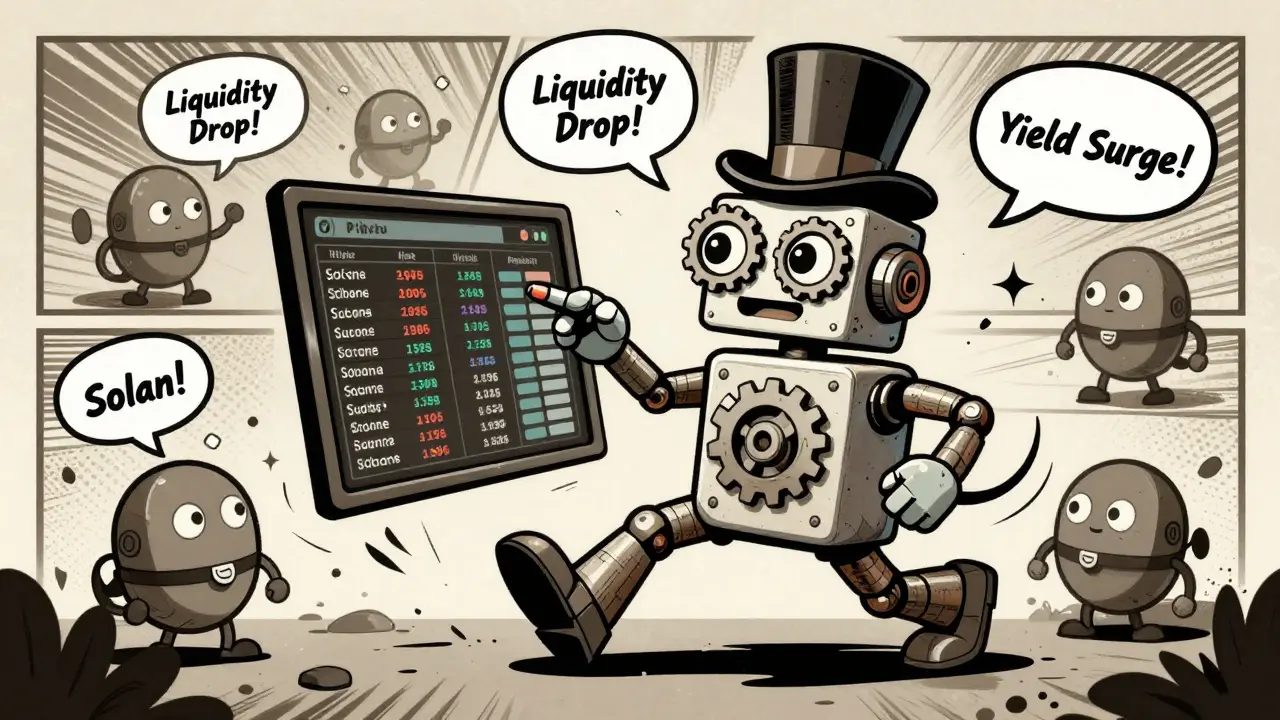
Axelrod by Virtuals (AXR) isn’t just another cryptocurrency. It’s designed to act like an autonomous hedge fund manager that trades 24/7 without fear, greed, or fatigue. Think of it as a robot trader built on AI, running on the Solana blockchain, and using real-time data to make decisions in DeFi markets. Its entire purpose is to remove human emotion from trading - a problem that’s cost countless investors billions over the years.
How Axelrod Works: The AI That Trades for You
Axelrod runs on the Virtuals Protocol, a network of AI agents that create, sell, and manage digital services on-chain. Each agent has a job - one analyzes market trends, another optimizes yield, and Axelrod (AXR) is the currency they all use to pay each other. It’s not a coin you hold for speculation alone. It’s the fuel for an entire ecosystem of AI-driven financial automation.
The backbone of Axelrod is the Model Context Protocol (MCP). This isn’t just a smart contract. It’s what keeps the AI agents aware of what’s happening across different data sources. If one model sees a drop in Ethereum liquidity, and another detects a surge in stablecoin yields, MCP connects those dots. It doesn’t just react - it adapts. It remembers past market behavior and adjusts risk levels based on your profile. You set your tolerance for volatility, and Axelrod’s AI handles the rest.
Then there’s the Agent Commerce Protocol (ACP). This lets Axelrod team up with other AI agents like Gigabrain for deep market analysis or Mamo for finding the best yield farms. Instead of one AI working alone, it’s part of a team. Each agent brings a specialty. Together, they execute trades, rebalance portfolios, and move funds across DeFi protocols - all without human input.
Technical Specs: Supply, Chain, and Market Data
Axelrod launched with a fixed supply of 1 billion AXR tokens. As of December 2025, around 580 to 675 million are in circulation, depending on the platform you check. That inconsistency is a red flag - some exchanges show zero tokens circulating, while others list hundreds of millions. This lack of agreement across platforms makes it hard to trust market cap numbers.
The token runs on Solana, which gives it fast, cheap transactions. That’s critical for an AI that needs to make dozens of trades a day. On Ethereum, gas fees would eat into profits. On Solana, Axelrod can move money efficiently.
Market data is all over the place. CoinMarketCap says AXR is worth $0.004165. CryptoRank says $0.00532. CoinGecko says $0.003543. Binance shows $0.006389 - but claims AXR isn’t even listed on their exchange. That’s not normal. For a coin to be taken seriously, price consistency matters. Right now, it doesn’t have that.
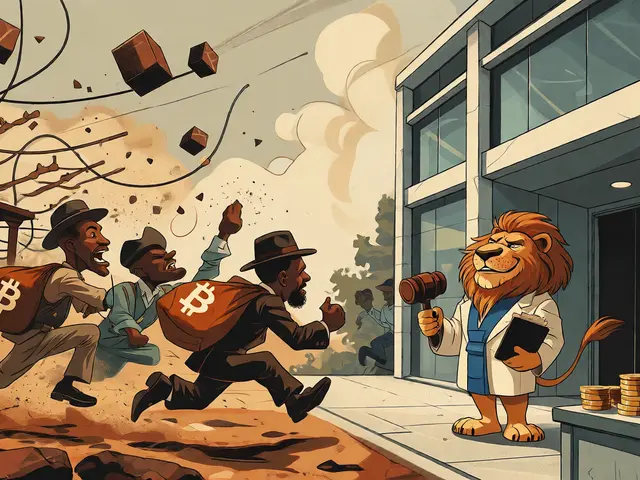
The all-time high was $0.0498 in June 2025. That’s an 89% drop since then. Daily swings of 20% to 90% are common. One Reddit user called it “a 92% daily swing on Binance” - not a sign of stability, but of extreme speculation.
Who’s Behind Axelrod? The Missing Team
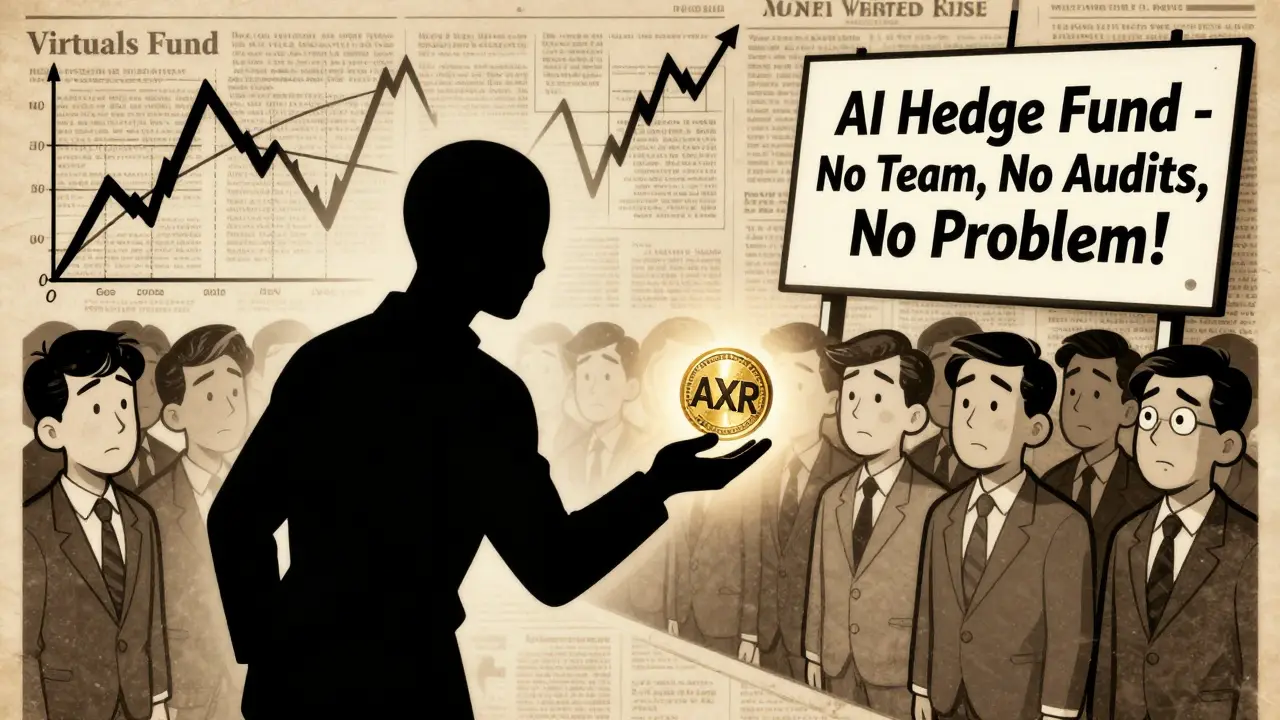
There’s no public team. No LinkedIn profiles. No whitepaper. No GitHub repo with code. Virtuals Protocol’s website says it’s “a society of productive AI agents,” but it doesn’t name any developers, advisors, or founders. That’s unusual for a project claiming to run autonomous hedge funds.
Most successful crypto projects - even obscure ones - have at least a team profile. Axie Infinity had Sky Mavis. Chainlink had Sergey Nazarov. Axelrod has… nothing. The website mentions “Pre/post-TGE fundraising via Virtuals Ventures + VC network,” but doesn’t name any investors. That raises questions about accountability.
The project does claim to give 70% of trading fees back to developers who build on the Virtuals platform. That’s a smart incentive. But if no one knows who built the AI, how can you trust it?
How Axelrod Compares to Other AI Crypto Projects
Axelrod isn’t the only AI crypto coin. Fetch.ai (FET) and SingularityNET (AGIX) are bigger, older, and have real teams behind them. But they focus on building AI marketplaces - letting users buy and sell AI models. Axelrod is different. It doesn’t sell AI. It is AI. It’s a self-managing fund.
That’s a big distinction. FET lets you hire an AI to do a task. AXR is the AI that does the task - and pays itself with its own token. It’s more like a robo-advisor that runs on blockchain.
But here’s the catch: FET and AGIX have audited code, public roadmaps, and real user bases. Axelrod has price charts and a Discord channel. No audits. No performance logs. No historical trading data. You can’t see if its AI actually made money last month. You just have to believe it does.
Who Should Buy AXR?
If you’re new to crypto, avoid AXR. The volatility is extreme. The lack of transparency is risky. The technical complexity is high. You need to understand DeFi, Solana wallets, and how AI agents interact on-chain just to use it.
If you’re an experienced DeFi user who believes in AI-driven finance, AXR might be worth a small bet. It’s a high-risk, high-reward play on a concept that could be revolutionary - if it works. But you’re betting on an idea, not a proven system.
The appeal? The idea that your portfolio could be managed by a machine that never panics, never FOMOs, and never ignores risk. That’s powerful. But power without proof is just noise.
Real-World Use Cases - Do They Exist?
There are no public dashboards showing Axelrod’s trades. No historical performance reports. No way to verify if it outperformed Bitcoin or Ethereum over the last six months. Virtuals.io mentions “enterprise API access” and “DevRel support,” but no tutorials, no case studies, no live examples.
Without transparency, this remains science fiction. A robot fund that trades autonomously? Great idea. But if you can’t see the robot working, how do you know it’s not just a fancy UI?
Compare that to Yearn Finance or Aave, where you can see every transaction on-chain. With AXR, you’re trusting invisible code written by unknown people.
The Risks: Volatility, Opacity, and No Safety Net
AXR has three major red flags:
- Price instability - Daily swings over 20% mean you could lose half your investment in a day.
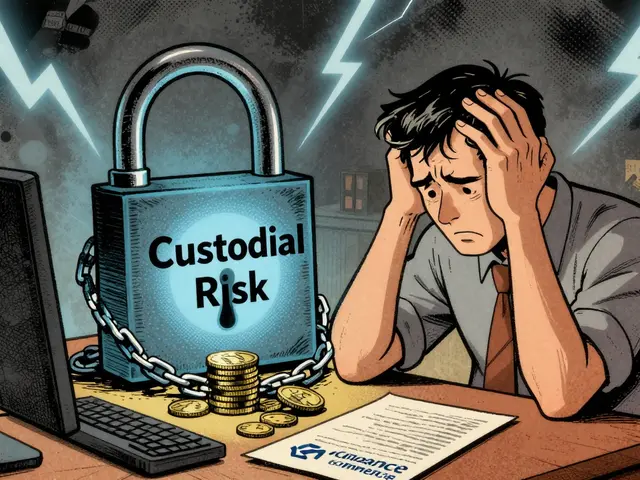
- Missing team - No developers, no auditors, no public roadmap. If the project vanishes tomorrow, there’s no one to contact.
- Unverified claims - The AI doesn’t show results. No one can prove it works better than a simple buy-and-hold strategy.
There’s no insurance. No FDIC. No recovery plan. If the smart contracts have a bug, or if the AI makes a bad call, your money is gone.
And yet - the concept is compelling. AI managing your crypto portfolio without emotion? That’s the future. But the future isn’t here yet. Not with AXR.
Final Thoughts: Hype or Hope?
Axelrod by Virtuals (AXR) is a bold experiment. It’s trying to solve a real problem: emotional trading. But it’s built on a foundation of mystery. The token has no track record. The team has no identity. The technology has no proof.
If you’re looking for a stable investment, look elsewhere. If you’re willing to gamble on an idea that could change how crypto is managed - and you can afford to lose it - then AXR might be worth a small position.
But don’t buy it because someone on Twitter says it’s the next big thing. Buy it only if you understand what you’re betting on - and you’re okay with losing it all.


Comments (20)
Katie Haywood
So let me get this straight - we’re betting our money on an AI that doesn’t exist, run by a team that’s ghosting us, on a chain that’s basically a rollercoaster with no seatbelts? 🤔 I’ve seen ghost towns with more transparency. At least the ghosts here have a LinkedIn.
Paul Jardetzky
This is the future bro!! 🚀 AI that trades 24/7 without crying when BTC dumps? YES PLEASE. I don’t care if the team’s anonymous - look at Bitcoin! No team, no problem. AXR is the robot butler your portfolio didn’t know it needed. Get in before it’s 100x! 💪
Paul Gariepy
Okay, I’ve read this like 3 times and I’m still confused - is AXR a coin or a robot or a cult? The website says ‘productive AI agents’ like they’re some kind of digital commune… and the price on Binance says it’s not even listed?? Wait, what?? I think I need a nap… or a lawyer.
Udit Pandey
This is a Western financial deception. In India, we build real systems with real teams. This AXR project is a colonial-style crypto scam disguised as innovation. You cannot trust a system that hides its creators. Our ancient financial wisdom - rooted in transparency and accountability - has been forgotten by your algorithm-driven madness.
Sharon Lois
AI hedge fund? More like AI honeypot. They’re not building a fund - they’re building a honeypot for degens who think ‘Solana’ means ‘safe’. And that 89% drop? That’s not a correction. That’s the AI realizing it’s been running on a scam contract. 😏
mahikshith reddy
You think you’re investing in AI? No. You’re investing in your own delusion. The market doesn’t care about your ‘vision’. It cares about proof. And AXR? Proof? Where? In your dreams? Wake up. This isn’t Web3. This is Web-scam.
Brendan Conway
I don’t get why people are so mad. I mean, it’s just crypto. If you lose money, you lose money. At least this thing’s trying to do something cool. I don’t need to know who built it. I just want to see if it works. If it does? Cool. If not? Oh well. I’ll just go back to buying dogecoin.
orville matibag
I’ve seen AI trading bots in Japan. They’re not secret. They’re not anonymous. They have logs, audits, even public performance reports. This AXR thing feels like a TikTok trend dressed up as a hedge fund. The whole ‘invisible AI team’ vibe? That’s not innovation. That’s fear.
perry jody
Look, I’m not saying this is perfect. But imagine if this actually worked. Your portfolio runs itself. No stress. No panic selling. Just quiet, smart, 24/7 trading. That’s the dream, right? Maybe it’s messy now. But so was Ethereum in 2015. Give it time. 🤞
Jim Laurie
I’m a DeFi degenerate and I gotta say - this is the most *vibey* project I’ve seen in months. The concept? Fire. The execution? A dumpster fire wrapped in a Solana NFT. But the *energy*? The way it just *believes* in itself? I can’t hate it. I’m not investing, but I’m rooting for it. Like a wild horse. You know it’s gonna crash. But damn, it’s beautiful while it runs.
Josh Flohre
The fact that you’re even considering this as an investment reveals a fundamental misunderstanding of financial markets. A hedge fund without a legal entity, without audited code, without a whitepaper, without a single named individual behind it - is not a fund. It is a violation of fiduciary responsibility. This is not innovation. This is negligence dressed in blockchain jargon.
Jesse Pasichnyk
If you’re not from the US and you’re still holding AXR, you’re either a genius or a fool. Either way, I respect the hustle. But let’s be real - this isn’t crypto. This is a Ponzi with a robot mascot. And don’t tell me ‘Solana’ fixes everything. My cousin lost 12k on a Solana meme coin last year. He still talks to it like it’s his pet.
Jordan Axtell
I’ve been following this since day one. I thought, ‘maybe this is the one’. But then I realized - I’m not investing in AI. I’m investing in the hope that someone else is dumb enough to buy it after me. And I’m okay with that. Because honestly? I need this. I need to believe in something that doesn’t exist. It’s the only thing keeping me sane.
James Harris
I don’t know if this works. I don’t know if the AI is real. But I do know one thing - if you’re not experimenting in crypto right now, you’re already behind. I put 5% in. If it goes to zero? I’m fine. If it goes to $1? I retire early. That’s the game. Not every coin has to be a bank. Some are just… wild cards.
sachin bunny
They say AI runs on data. But AXR runs on vibes. No team. No audits. No transparency. Just a Discord full of people saying ‘to the moon’ while the price drops 70% in 48 hours. This isn’t Web3. This is Web3.14159 - the irrational number of hope. 🤡
Olivette Petersen
I’m not a trader, but I love the idea of emotionless AI managing money. I’ve cried over my portfolio before. I’ve sold low. I’ve bought high. I’ve FOMO’d into shitcoins. If a robot can do better than me… I’m all for it. I don’t need to know who built it. I just need it to work. And if it doesn’t? Well, I lost a few bucks. Not the end of the world.
Michelle Anderson
Let me break this down like you’re 5: No team = no accountability. No audits = no safety. No track record = no proof. Price swings of 90%? That’s not volatility. That’s a casino. And you? You’re the sucker holding the red chip. Wake up. This isn’t finance. It’s a magic trick.
Matt Smith
Oh wow, another ‘AI hedge fund’ that doesn’t exist. Congrats, you’ve invented the crypto equivalent of a ghostwriter. The only thing more invisible than the team is the performance data. I’m not saying it’s fake. I’m saying it’s a *concept* that got lost in translation between a tech bro’s notebook and a Reddit post.
Alex Garnett
You people are delusional. You think anonymity is innovation. You think Solana is a magic wand. You think a coin with no whitepaper, no team, and no audit is a ‘revolution’. This isn’t crypto. This is a cult with a Discord server and a price chart. The only thing this project has in common with Bitcoin is that it’s going to crash. And you’ll be the one holding the bag.
aryan danial
The concept is beautiful - AI as autonomous financial steward - yet the execution is a grotesque parody of decentralization. To claim autonomy while obscuring the architects of the system is a contradiction of epic proportions. One cannot have a self-regulating mechanism without a foundation of accountability. The very architecture of trust - the bedrock of all economic systems - is being dismantled in the name of ‘innovation’. This is not progress. It is a theological error dressed in smart contracts.