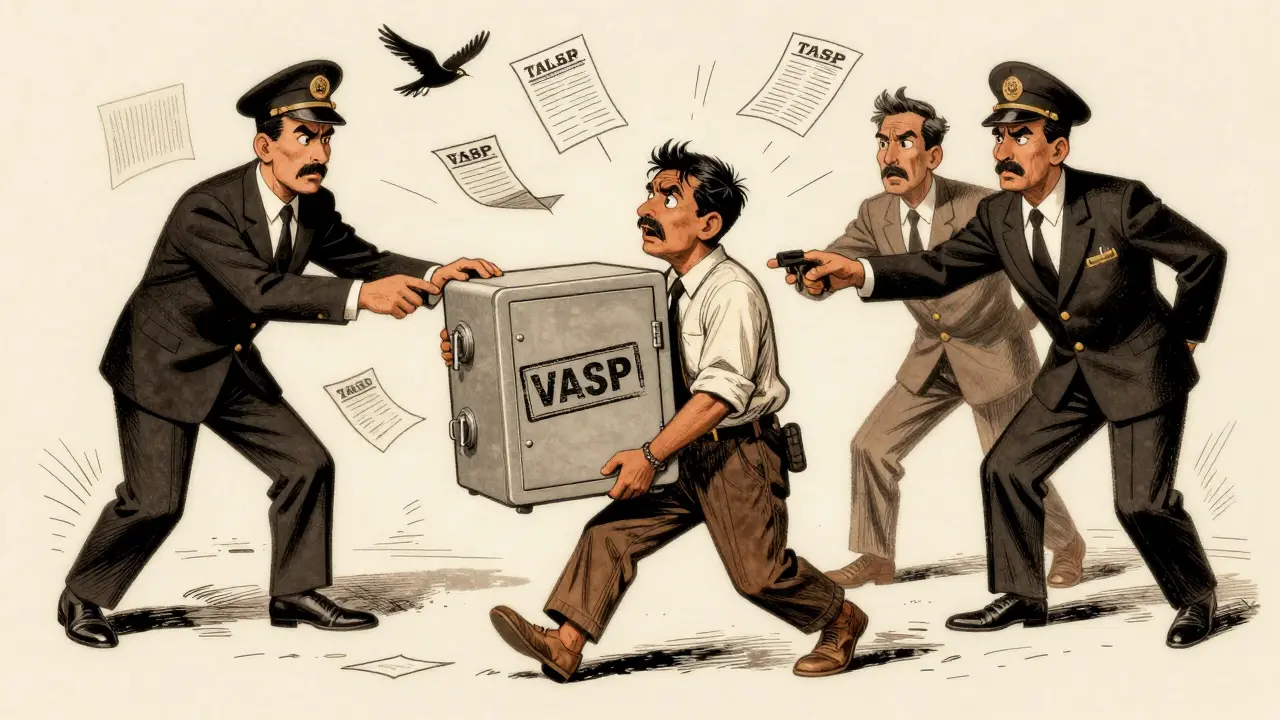
There’s a lot of noise online about India banning non-custodial crypto wallets. You’ve probably seen headlines screaming "India to Ban Self-Custody Wallets!" or "Your Ledger Is Doomed." But here’s the truth: India has never proposed banning non-custodial wallets. Not once. Not in any official document. Not in any parliamentary debate. What’s really going on is something far more confusing - and far more dangerous for users.
What Even Is a Non-Custodial Wallet?
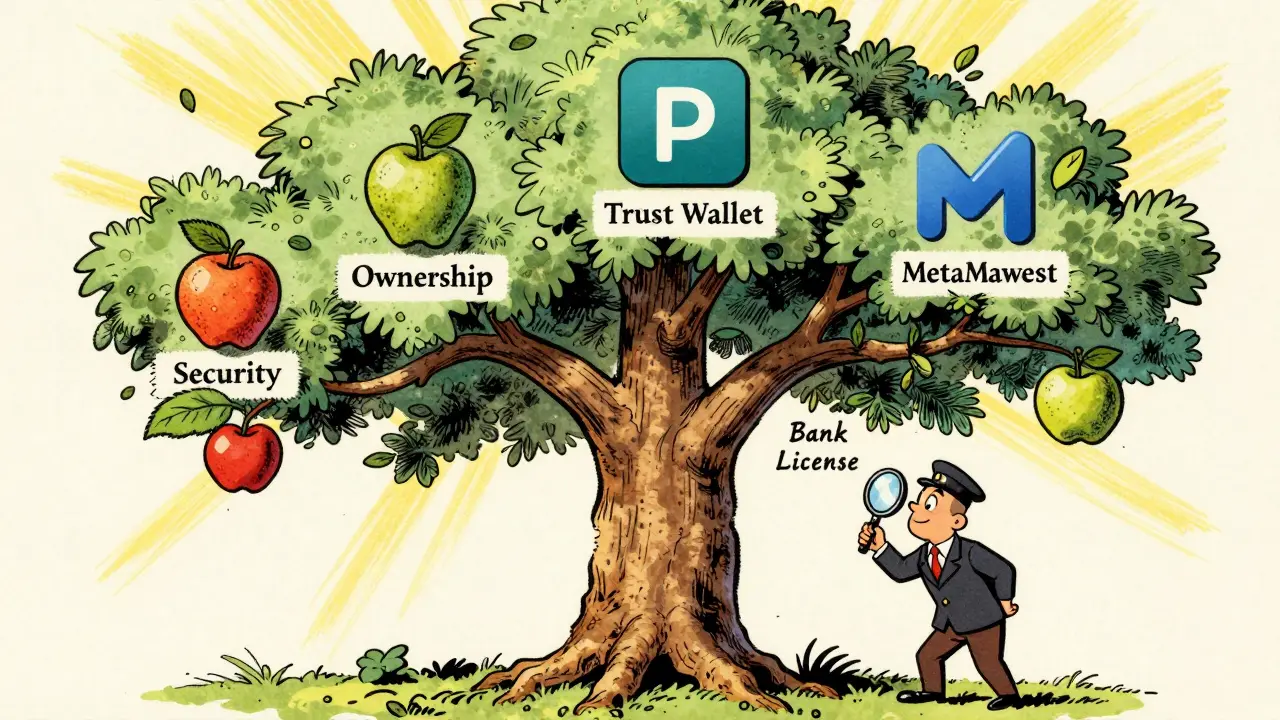
A non-custodial wallet is your own private key, your own control. Think of it like a physical safe you keep under your mattress. No bank, no exchange, no app holds your money. You’re the only one with the key. Popular examples include Ledger Nano S Plus, a hardware wallet that stores Bitcoin and Ethereum offline, Trust Wallet, a mobile app that lets you manage crypto without handing keys to anyone, and MetaMask, a browser extension used by millions to interact with DeFi apps. These aren’t just tools - they’re the backbone of decentralization.
In India, over 18.7 million people use non-custodial wallets, according to Statista’s October 2025 report. That’s 23% of all Indian crypto users. Why? Because after the WazirX hack in July 2024 wiped out $230 million, people stopped trusting exchanges. They moved their coins out. They wanted real ownership. And now, they’re being punished for it - not by a ban, but by a broken system.
The Real Problem: India Treats Every Wallet Like a Bank
Here’s where things get messy. In 2023, India’s Financial Intelligence Unit (FIU) issued rules saying every "Virtual Asset Service Provider" (VASP) must register. That sounds fine - until you realize they didn’t define what a VASP is. And they didn’t make a single distinction between custodial and non-custodial wallets.
That’s a huge deal. In the EU, under MiCA rules, non-custodial wallets are explicitly exempt from registration. Same in the U.S., Japan, and Singapore. But in India? If you use MetaMask to send ETH, you’re treated like a bank. If you use Ledger to hold Bitcoin, you’re treated like Coinbase. That’s not just wrong - it’s technically impossible.
Non-custodial wallets don’t have access to your keys. They can’t freeze your funds. They can’t track your transactions. So how can they comply with AML rules? They can’t. And yet, the FIU is demanding they do. Trust Wallet, Exodus, and others have been forced to add Indian-specific KYC flows - even though they don’t hold your money. It’s like forcing a postal service to verify what’s inside every letter, even though they don’t open them.
Taxation Over Control: The 30% Tax and 1% TDS Nightmare
India’s crypto tax regime is brutal. A flat 30% tax on all gains - no deductions, no losses offset. Plus, 1% TDS (Tax Deducted at Source) on every crypto transaction. That means if you send $100 to a friend, $1 gets taken before you even hit send.
Here’s the kicker: TDS is enforced at the exchange level. But what if you’re using a non-custodial wallet? Who collects it? No one. So the government started targeting wallet providers. In October 2025, the FIU issued show-cause notices to 25 offshore platforms - including non-custodial ones - demanding they implement TDS collection. But how? They don’t control the transactions. They can’t. This isn’t enforcement. It’s coercion.
Real users are paying the price. Reddit user "CryptoSaverIN" posted in October 2025: "After paying ₹28,000 in TDS on a ₹25,000 loss on CoinSwitch, I transferred everything to Ledger - no more surprise tax deductions." That’s the irony. The very people trying to avoid exchange risks are now caught in a tax trap they can’t control.
Why Your Wallet Still Works - For Now
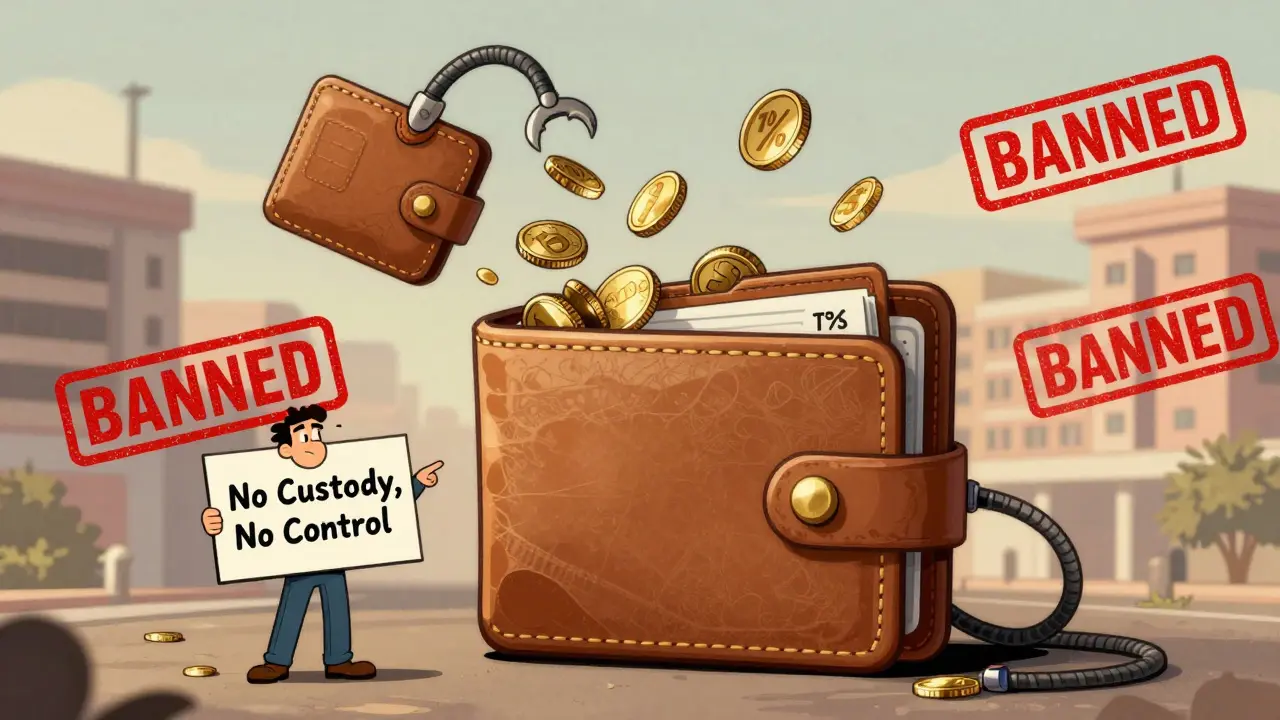
Despite all this, your Ledger, MetaMask, and Trust Wallet still work in India. Why? Because the government can’t shut them down. They’re decentralized. They’re open-source. They run on global servers. You can download them from their websites. You can install them from APK files. Google Play banned custodial apps in October 2025 for lacking licenses - but exempted non-custodial ones. That’s a clear signal: India knows it can’t ban them.
Hardware wallets like Ledger Nano Stax (priced at ₹13,999 as of September 2025) are still selling. Software wallets still function. But the friction is growing. Only 3 out of 10 major non-custodial wallets support UPI. Most require P2P trades to convert INR to crypto. That’s risky. That’s slow. That’s expensive. And it’s all because regulators refuse to accept the difference between holding and controlling.
What’s Changing in 2026?
There’s hope. On October 7, 2025, the Ministry of Finance released a draft amendment to the VDA rules: "Non-custodial wallet providers not facilitating fiat conversion shall not be classified as VASPs." That’s the first time any Indian authority has acknowledged the difference. Industry analysts at BCG predict 68.3% of Indian non-custodial providers will comply with this new framework by Q1 2026.
Dr. Rajesh Saraf, former SEBI technical advisor, wrote in his October 3, 2025 NITI Aayog paper: "India will formally recognize non-custodial wallets as user-controlled tools rather than VASPs by mid-2026." That’s not a prediction. It’s a promise. But it’s still just a draft. No law passed. No enforcement mechanism in place.
Meanwhile, the risks remain. EY’s October 2025 report warns that 32.7% of current non-custodial users could face retroactive tax claims if the government decides to interpret past transactions as taxable events under new rules. And with only 1,247 full Bitcoin nodes in India - versus 14,852 in Germany - transaction delays are still 27% longer than global averages.
What Should You Do Right Now?
If you’re using a non-custodial wallet in India:
- Keep your seed phrase offline. 76.2% of support tickets from Ledger’s India team are about lost phrases. Don’t be one of them.
- Use BitcoinTaxes.in, a tool used by 28.7% of Indian self-custody users to track TDS and capital gains to stay compliant.
- Avoid sending crypto directly to Indian exchanges. Use P2P platforms like LocalBitcoins or CoinSwitch Kuber for INR on-ramps.
- Don’t panic. No ban is coming. But the rules are still being written. Stay informed.
The real threat isn’t a ban. It’s confusion. It’s being treated like a financial institution when you’re just trying to hold your own money. India’s approach isn’t about control - it’s about ignorance. And that’s more dangerous than any law.
How India Compares to the Rest of the World
Let’s put this in perspective. Here’s how India stacks up against global standards:
| Region | Treats Non-Custodial Wallets as VASPs? | TDS on Crypto Transactions? | Regulatory Clarity Score (1-10) |
|---|---|---|---|
| India | Yes (in practice) | 1% (unenforceable) | 3.1 |
| European Union (MiCA) | No | None | 8.9 |
| United States | No | No federal TDS | 7.2 |
| Singapore | No | No | 8.5 |
| Japan | No | Capital gains tax only | 7.8 |
India ranks 45th in global regulatory clarity for DeFi, according to Cambridge’s 2025 index. That’s worse than Nigeria and Vietnam. Meanwhile, countries like Switzerland and Estonia have built entire economies around self-custody. India is stuck in a loop - trying to regulate something it doesn’t understand.
What’s Next?
The next 12 months will decide the fate of non-custodial wallets in India. Will the government finally recognize the difference between holding and controlling? Or will it double down on impossible enforcement?
One thing’s clear: if you’re using a non-custodial wallet, you’re not breaking any law. You’re just trying to own your money. And in a country where banks freeze accounts, exchanges get hacked, and tax rules change overnight - that’s not rebellion. It’s common sense.
Is there an actual ban on non-custodial wallets in India?
No. There is no ban on non-custodial wallets in India. The government has never proposed one. What exists is regulatory confusion - where wallet providers are forced to comply with rules designed for banks, even though they don’t control user funds. This creates friction, not prohibition.
Can I still use Ledger, MetaMask, or Trust Wallet in India?
Yes. You can download and use all major non-custodial wallets in India. Google Play removed custodial apps in October 2025 but explicitly allowed non-custodial ones. Hardware wallets like Ledger Nano Stax are still sold in India. The issue isn’t access - it’s usability. UPI integration is limited, and tax compliance is messy.
Why am I being taxed even though I use a non-custodial wallet?
India taxes crypto transactions regardless of where they happen. The 30% capital gains tax and 1% TDS apply to every sale, trade, or transfer - even if you’re moving coins between your own wallets. The government assumes you’re using exchanges to convert crypto to INR, but if you’re using P2P or non-custodial tools, you still owe taxes. Tools like BitcoinTaxes.in help track this.
What happens if I don’t report my crypto transactions?
The FIU is tracking all VDA transactions through registered exchanges and payment gateways. If you move large amounts (over ₹50,000) and don’t report, you risk being flagged for tax evasion. While enforcement against self-custody users is rare, the risk grows as the government pushes wallet providers to report transaction data.
Will India ban non-custodial wallets in 2026?
Highly unlikely. The draft amendment from October 2025 explicitly excludes non-custodial wallets from VASP classification. Industry experts predict formal recognition by mid-2026. Banning them would be technically impossible and politically damaging. The real goal is to make them compliant - not illegal.
Final Thought
India’s crypto policy isn’t about stopping people. It’s about controlling the flow of money. But non-custodial wallets don’t flow - they sit. They’re not pipelines. They’re vaults. You can’t regulate a vault unless you own the key. And that’s why this battle isn’t about bans. It’s about whether India wants to be a country that respects ownership - or one that demands control over everything.




Comments (14)
Ann Liu
Let’s be crystal clear: India’s regulatory approach to non-custodial wallets isn’t just flawed-it’s logically incoherent. You can’t demand AML compliance from a system that doesn’t have access to the keys, the transaction metadata, or the user identity. It’s like requiring a postal worker to verify the contents of every sealed envelope they deliver. The FIU’s stance reveals a fundamental misunderstanding of blockchain architecture. Non-custodial wallets aren’t service providers; they’re infrastructure. And infrastructure shouldn’t be regulated like a bank.
Meanwhile, the 1% TDS on every transfer is a nightmare for ordinary users. It doesn’t deter illicit activity-it just punishes people trying to avoid centralized exchanges after WazirX. The real solution? Define VASPs properly, exempt non-custodial tools, and focus enforcement on actual intermediaries. Otherwise, you’re just creating friction for law-abiding citizens while letting bad actors slip through the cracks.
And yes, Ledger, MetaMask, and Trust Wallet still work. But they’re being strangled by bureaucracy, not banned. That’s the real tragedy.
Dionne van Diepenbeek
This whole thing is a mess and nobody in power gets it
Graham Smith
The regulatory arbitrage here is breathtaking. India is attempting to impose a centralized, fiat-denominated tax regime on a decentralized, peer-to-peer protocol. This is a classic case of institutional myopia-regulators clinging to legacy financial paradigms while ignoring the ontological shift brought about by cryptographic sovereignty.
Non-custodial wallets aren’t merely ‘tools’-they are sovereign digital identity vectors. By conflating them with VASPs, the FIU is effectively criminalizing self-sovereignty. The 30% capital gains tax + 1% TDS regime isn’t revenue generation-it’s a covert attempt at financial surveillance under the guise of taxation. And let’s not forget: TDS is unenforceable on off-chain transfers. This isn’t policy. It’s performative governance.
Meanwhile, countries like Singapore and Switzerland are actively courting DeFi innovation. India? They’re trying to regulate entropy.
Jerry Panson
Thank you for this meticulously researched and clearly articulated exposition. The regulatory confusion surrounding non-custodial wallets in India is not merely an administrative oversight-it is a systemic failure of policy design. The conflation of custody with control is a fundamental error that undermines both financial innovation and individual liberty.
It is deeply concerning that regulatory bodies continue to apply frameworks designed for centralized institutions to decentralized architectures. The technical impossibility of enforcing AML/KYC obligations on non-custodial wallet providers has been well-documented by international standards bodies. Yet, India persists in this path, likely due to institutional inertia and a lack of technical literacy among policymakers.
One must hope that the October 2025 draft amendment, which explicitly excludes non-custodial providers from VASP classification, will be enacted without delay. Until then, users are caught in a regulatory gray zone-legally compliant but practically burdened.
Katrina Smith
so like... india is trying to tax a safe you keep under your bed?? 😂
Anastasia Danavath
lmao the 1% tds on every transfer?? 🤡 why not just add a 5% tax on breathing while you're at it?? 🤦♀️
Angelica Stovall
They’re not banning wallets. They’re banning freedom. This isn’t about taxes. This is about control. They know they can’t shut down Ledger or MetaMask. So they’re making it so painful to use that people give up.
And don’t get me started on the 30% tax. You lose money? Still pay 30%. You send crypto to your mom? Pay 1%. You move coins between wallets? Pay again. This isn’t finance. This is extortion dressed up as policy.
And who’s behind this? Big banks. Big exchanges. The same ones who got hacked and lost $230 million. Now they’re lobbying to crush the competition-people who actually own their own money.
Trust me. This is bigger than crypto. This is about who controls your future.
Bryan Roth
I’ve been following this for months, and honestly? This post nails it. The real story isn’t a ban-it’s a slow-motion collision between outdated regulation and revolutionary technology.
What’s amazing is how Indian users are adapting. They’re using P2P, learning to track taxes manually, downloading APKs, and still holding their keys. That’s resilience. That’s innovation born from necessity.
And the fact that Google Play allowed non-custodial apps while banning custodial ones? That’s the government accidentally telling the truth: they know these wallets are essential. They just don’t know how to handle them.
Let’s not panic. Let’s educate. Let’s push for clear rules. And let’s support each other-because the people building this future aren’t criminals. They’re just trying to own their money.
sai nikhil
As an Indian crypto user, I want to say thank you for writing this. The confusion is real. I’ve been using Ledger since 2024 after WazirX. I pay my taxes, track everything with BitcoinTaxes.in, and still use P2P because I don’t trust exchanges anymore.
But the emotional toll? Heavy. Every time I send ETH, I worry about TDS. Every time I update my wallet, I fear it’ll get blocked. I’ve seen friends quit because it’s too complicated.
Yes, there’s no ban. But the friction is a silent ban. We need clarity-not more rules. We need recognition-not more bureaucracy.
I hope the 2026 amendment passes. Not because I’m pro-crypto. Because I’m pro-ownership.
Kira Dreamland
I’ve been using MetaMask since 2023 and never had an issue. The tax thing is annoying but doable. Just use BitcoinTaxes.in like the post says. Honestly? India’s just late to the game. Give it a year and they’ll get it right.
Shreya Baid
Regulatory ambiguity is the true enemy here. While the draft amendment of October 2025 is a step forward, its lack of enforceable mechanisms renders it symbolic rather than substantive. The FIU’s continued issuance of show-cause notices to non-custodial providers demonstrates institutional resistance to paradigmatic change.
Furthermore, the disparity in transaction processing times-27% longer than global averages-directly impacts liquidity and user experience. With only 1,247 Bitcoin nodes in India, the network’s resilience is compromised. This is not merely a policy issue; it is a technological infrastructure deficit.
Therefore, the path forward must be dual: legal clarity for non-custodial entities, and strategic investment in decentralized node infrastructure. Without both, India risks becoming a digital financial backwater.
Christopher Hoar
bro why tf is india taxing ur own wallet like its a bank?? lmao
Robert Kunze
i just moved all my btc to ledger after that wazirx hack and now im getting tds notices?? this is insane. how do you even collect tds from a wallet you dont control? the fiu is outta their mind
Sarah Zakareckis
Let me say this plainly: India’s crypto policy is a textbook case of regulatory capture. The FIU is being pressured by centralized exchanges who lost billions during WazirX. Their solution? Make life hell for self-custody users so people go back to the exchanges that failed them.
The 1% TDS? It’s not about revenue-it’s about visibility. They want to track every movement. But non-custodial wallets don’t give them that. So they’re forcing wallet providers to become spies.
Meanwhile, the real winners? Hardware wallet manufacturers. Ledger Nano Stax sales are up 400% in India since October 2025. People aren’t giving up-they’re upgrading.
Keep holding. Keep learning. And keep using BitcoinTaxes.in. This isn’t over. But we’re winning.