
Imagine owning a piece of a skyscraper in New York, a luxury hotel in Bali, or a warehouse in Berlin - not as a shareholder in a fund, but as a direct, digital owner of a fraction of the actual asset. That’s not science fiction. It’s happening right now, and property tokenization is the engine behind it.
Property tokenization turns physical real estate into digital tokens on a blockchain. Each token represents ownership, income rights, or voting power tied to a real building or land. Instead of buying an entire house or office block, you can buy 0.1% of it - for as little as $500. This isn’t just about making real estate cheaper. It’s about making it faster, more transparent, and open to people who were never allowed in before.
How Property Tokenization Actually Works
It starts with a property. A commercial building, a mixed-use development, even a single-family home - anything with clear title and income potential can be tokenized. First, an independent appraiser values the asset. Then, lawyers set up a legal structure that says: these tokens = real ownership under local law. This step is critical. Without it, you’re just holding a digital receipt.
Next, smart contracts are coded. These aren’t just computer programs - they’re self-executing rules written in code. If the building earns $100,000 in rent this month, the contract automatically divides it among token holders based on how many tokens they own. No property manager needs to write checks. No bank wires. No delays. The money goes straight to wallets.
Finally, the tokens are issued. They can be fungible (like shares - all identical) or non-fungible (NFTs - unique to one property). Most real estate uses fungible tokens. For example, a 10-story office building might be split into 10,000 tokens. Each token equals 0.01% ownership. You can buy one. You can buy 500. You can sell them later, anytime, on a decentralized exchange.
Why This Beats Traditional Real Estate
Traditional real estate investment is slow. You find a property. You get a mortgage. You wait 45 days for closing. You pay $10,000+ in fees. Then you hope the tenant pays on time. And if you want to sell? You list it. Wait months. Negotiate. Pay 6% commission. It’s a relic.
Tokenization cuts that down. Settlements take minutes, not weeks. Fees drop by 70% or more. You don’t need a broker. You don’t need a lawyer to handle the paperwork - the smart contract does it. And because tokens are tradable on blockchain networks, you can sell your share at 3 a.m. on a Saturday. No one’s closed. No one’s asleep.
Compare this to REITs. When you buy a REIT, you own a slice of a fund. You don’t know which buildings are in it. You can’t pick. You can’t track performance per asset. With tokenized real estate, you know exactly which property you own. You see the rent rolls. You see the maintenance logs. You vote on renovations. It’s direct ownership - not indirect exposure.
Who’s Doing It Right Now?
It’s not startups. It’s not hobbyists. It’s institutions.
Kin Capital is launching a $100 million real estate debt fund on the Chintai blockchain in 2025. Only qualified investors can join, with a $50,000 minimum. That’s not for retail. That’s for pension funds, hedge funds, family offices. They’re using blockchain not to experiment - but to scale.
Deloitte’s 2024 report shows that institutional investors are no longer asking if tokenization works. They’re asking how fast they can deploy it. The reason? Custom portfolios. Want exposure to logistics centers in Poland and student housing in Spain? Buy tokens. No need to juggle 12 separate legal entities. One wallet. One transaction.
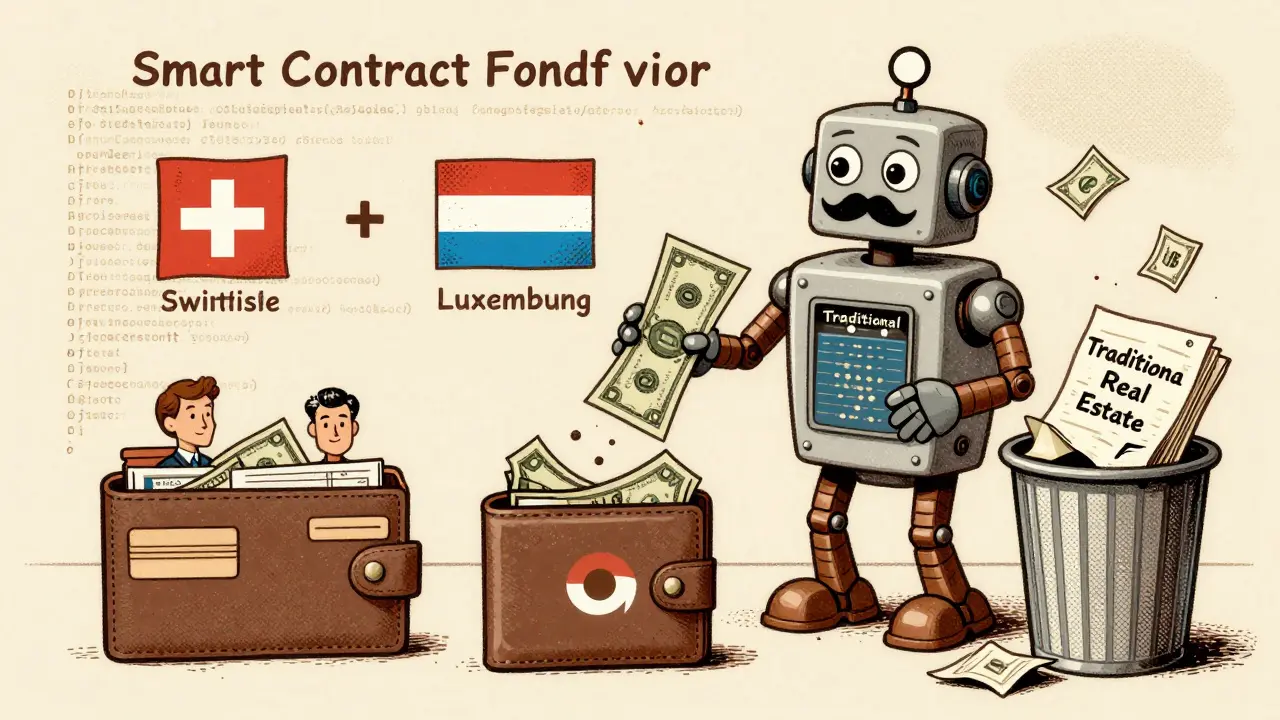
Europe is leading. Luxembourg has clear rules. Switzerland treats tokens like securities - but with digital clarity. EY calls Luxembourg a strategic hub because its legal system recognizes blockchain records as valid for asset transfers.
In the U.S., it’s messier. The SEC uses the Howey Test to decide if a token is a security. If it is, you need registration, disclosures, audits - the same as stocks. Some platforms comply. Others don’t. That’s why most U.S. tokenized real estate is limited to accredited investors.
The Tech Behind It
Not all blockchains are built the same. Ethereum was the first to support tokenization. But its high fees and slow speed make it expensive for daily trading. That’s why newer chains are taking over.
Hedera Hashgraph handles 10,000 transactions per second with fees under a penny. It’s used by hotels and commercial developers who need fast, cheap transfers. Chintai, built for real estate, integrates directly with legal frameworks in Europe. AWS and Microsoft are helping build the backend - not the blockchain itself, but the tools that connect blockchain records to property databases.
Smart contracts are the real innovation. They don’t just pay rent. They can lock a property from being sold until a loan is paid. They can trigger repairs when maintenance costs exceed a threshold. They can even auto-insure the asset using decentralized insurance protocols.
And yes - it’s secure. Ownership is proven by digital signatures using private keys. No one can fake it. No one can alter the record. The blockchain doesn’t forget.
The Big Hurdles
It’s not all smooth sailing.
First, land registries. In most countries, property titles are still stored in paper archives or outdated digital systems. Only 17% of tokenized real estate projects have fully integrated with government registries, according to MIT’s 2023 research. That means you might own a token - but the government doesn’t recognize it. That’s risky.
Second, regulation. The U.S., EU, and Asia have wildly different rules. A token that’s legal in Luxembourg might be illegal in California. Investors can’t afford to get this wrong.
Third, liquidity. Most tokenized properties still have no secondary market. Who’s buying? Right now, it’s mostly other institutions. Retail investors are still waiting. Without buyers, tokens sit idle. That kills the point of liquidity.
Fourth, cost. Setting up a tokenized property isn’t cheap. Legal fees, smart contract audits, compliance, integration - it costs between $150,000 and $500,000. That’s fine for a $50 million hotel. Not for a $300,000 apartment.
What’s Next? The Road Ahead
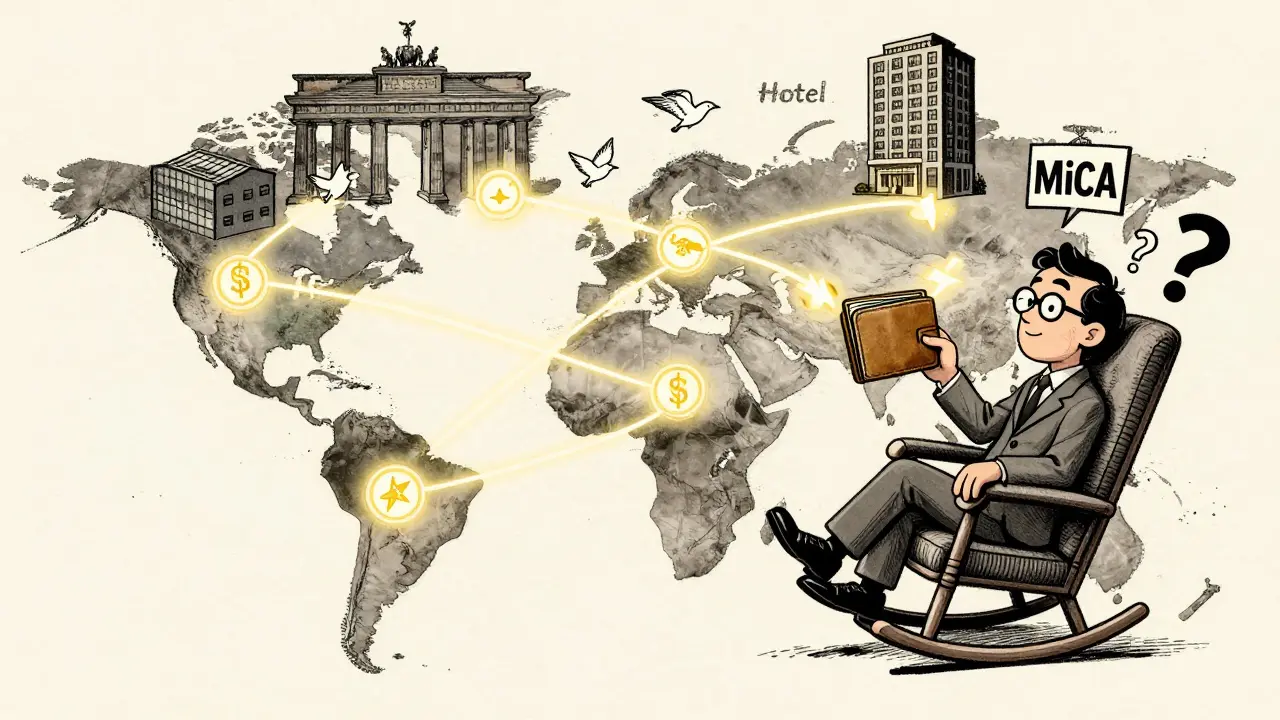
By 2030, experts predict tokenized real estate could be worth $1 trillion to $10 trillion. That’s a huge range - and it depends on one thing: regulation.
If governments create clear rules - like the EU’s MiCA framework for crypto assets - adoption will explode. If they don’t, it’ll stay a niche for the wealthy and well-connected.
Commercial properties will lead. Offices, warehouses, hotels - they have clear cash flow. Residential? Slower. A single-family home is harder to divide. But high-end condos in London, Dubai, or Singapore? Already being tokenized.
The next big step? Interoperability. The InterWork Alliance - with IBM, SAP, and Microsoft - is building universal standards. That means a token issued on Hedera could be traded on a platform using Ethereum. No more silos.
And eventually? Retail investors will get in. Not because it’s trendy. But because it’s better. Cheaper. Faster. Transparent. Real.
Is This for You?
If you’re an individual investor with $5,000 to $50,000, you can already participate - but carefully. Look for platforms that:
- Are regulated (Switzerland, Luxembourg, or compliant U.S. platforms)
- Use legal wrappers (like SPVs or trusts) to link tokens to real ownership
- Have real property audits and rent data available
- Offer secondary market trading (not just holding)
If you’re a property owner with one or two assets? Tokenization could be your best exit strategy. Sell 30% of your building now. Keep 70%. Use the cash to buy more. Repeat. No banks. No brokers. Just code.
But don’t jump in because it’s hype. This isn’t crypto gambling. It’s real estate - with better tech. Treat it like real estate. Do your homework. Know the asset. Know the jurisdiction. Know the risks.
Can I really own a fraction of a building with tokenization?
Yes. Tokenization divides ownership into digital units - like shares - but tied directly to a physical property. You don’t own a share of a fund. You own a percentage of the actual building. If the building earns rent, you get your share. If it sells, you get your cut. The blockchain records your ownership permanently.
Is property tokenization legal?
It depends on where you are. In Switzerland and Luxembourg, it’s fully legal and regulated. In the U.S., the SEC treats most property tokens as securities, meaning they must comply with federal rules. In many countries, the law hasn’t caught up. Always check local regulations before investing.
What’s the difference between tokenized real estate and REITs?
REITs let you buy shares in a company that owns many properties. You don’t know which ones. Tokenized real estate lets you buy direct ownership in a specific building. You can see its location, rent history, and condition. You vote on decisions. You get income from that one asset - not a portfolio.
Can I sell my tokenized property anytime?
Theoretically, yes - if there’s a market. Most platforms now offer secondary trading on decentralized exchanges. But liquidity varies. A tokenized luxury hotel in Miami might have buyers. A tokenized warehouse in rural Ohio might not. Always check trading volume before buying.
How much does it cost to tokenize a property?
For a commercial property, expect $150,000 to $500,000. Costs include legal setup, smart contract development, audits, compliance, and integration with existing systems. It’s expensive - but often cheaper than traditional sales, especially for high-value assets.
Will tokenization replace traditional real estate?
No - but it will change it. Traditional buying and selling won’t disappear. But more investors will use tokens for liquidity, fractional ownership, and automated income. Think of it as a new layer on top of real estate - not a replacement.
Are tokenized properties safe from hacking?
The blockchain itself is extremely secure - it’s nearly impossible to alter ownership records. But your private key is your responsibility. If you lose it, you lose access. If someone steals it, they own your property. Use hardware wallets and multi-sig setups. Treat it like digital gold.
Property tokenization isn’t about replacing the old system. It’s about giving people new tools to interact with one of the world’s largest asset classes. The future isn’t just digital. It’s divisible. It’s transparent. And it’s already here.

Comments (16)
John Fuller
This is just crypto with a fancy name. Real estate is about location, tenants, and maintenance. Not code.
Fiona Monroe
The legal structure underpinning tokenized real estate remains the most critical component. Without binding, jurisdictionally recognized ownership rights, these tokens are merely speculative digital receipts. The integration of blockchain with national land registries is not optional-it is foundational. Until then, this remains a high-risk experiment.
Lucy Simmonds
Wait wait wait... so you're telling me that some rich guys are putting buildings on the blockchain so THEY can control everything? And now we're supposed to trust computers? What's next? AI judges deciding who gets evicted? I've seen this movie. It ends with everyone homeless and the billionaires in space.
Maggie House
I'm so excited about this!! I just bought my first token on a tiny warehouse in Ohio-$500!! I feel like a real investor now 😊 I hope I get rent soon!!
Dana Sikand
I’ve been watching this space for years and honestly? This is the first time I feel like real change is happening. No more waiting six months to close. No more brokers taking 6%. Just direct ownership. If you’re an individual with $5k, this is your shot. Don’t get caught up in the hype-but don’t sleep on it either. The future isn’t coming. It’s already here.
Cameron Pearce Macfarlane
Liquidity is a myth. No one’s buying these tokens. It’s all vaporware.
Elizabeth Smith
You people think technology solves everything. But property is about human connection. Community. Roots. You can't tokenize that. You're just turning homes into crypto gambling chips.
Jeff French
The real innovation isn't the tokenization-it's the automation of cash flow via smart contracts. That’s the game-changer. Rent collection, distribution, even maintenance triggers-all programmable. The blockchain is just the ledger. The real value is in the execution layer.
Danny Kim
So you're telling me I can own 0.1% of a hotel in Bali... but I can't even get my money out if I want to? Sounds like a pyramid scheme with better marketing.
Cathy Sunshine
I mean, if you're going to tokenize real estate, why not just tokenize the concept of ownership itself? Why stop at buildings? Why not tokenize air? Or sunlight? Or the feeling of nostalgia? This is just capitalism with a blockchain tattoo.
Shannon Black
The regulatory divergence between jurisdictions remains a significant barrier. While the EU has moved toward harmonization under MiCA, the U.S. continues to operate under a fragmented, enforcement-driven framework. This creates legal uncertainty for cross-border investors and undermines the scalability of the model.
Richard Cooper
Tokenization is the future. I saw it in a dream. I was floating above a building made of code. The rent paid itself. I cried.
Dee Resin
Oh wow so now we’re going to let rich people own buildings through a phone app? And the poor? They’ll just be stuck paying rent to a smart contract. How poetic.
Tanvi Atal
This is why developing countries stay poor. You make fancy tech for rich people. No one in India can afford $500 to buy 0.01% of a building. Meanwhile, landlords still use paper receipts.
Sony Sebastian
The real issue isn't regulation-it's the underlying asset valuation. Most tokenized properties are overvalued by 30-50% based on speculative projections. Without independent, real-time appraisal feeds tied to transaction volume, this is just a liquidity bubble dressed up as innovation.
Brian Lemke
This isn’t just about ownership-it’s about liberation. For the first time, someone in a small town in Kansas can have a stake in a luxury hotel in Lisbon. No gatekeepers. No minimums. No middlemen. It’s not magic. It’s math. And math doesn’t care who you are. It just works. And that? That’s beautiful.