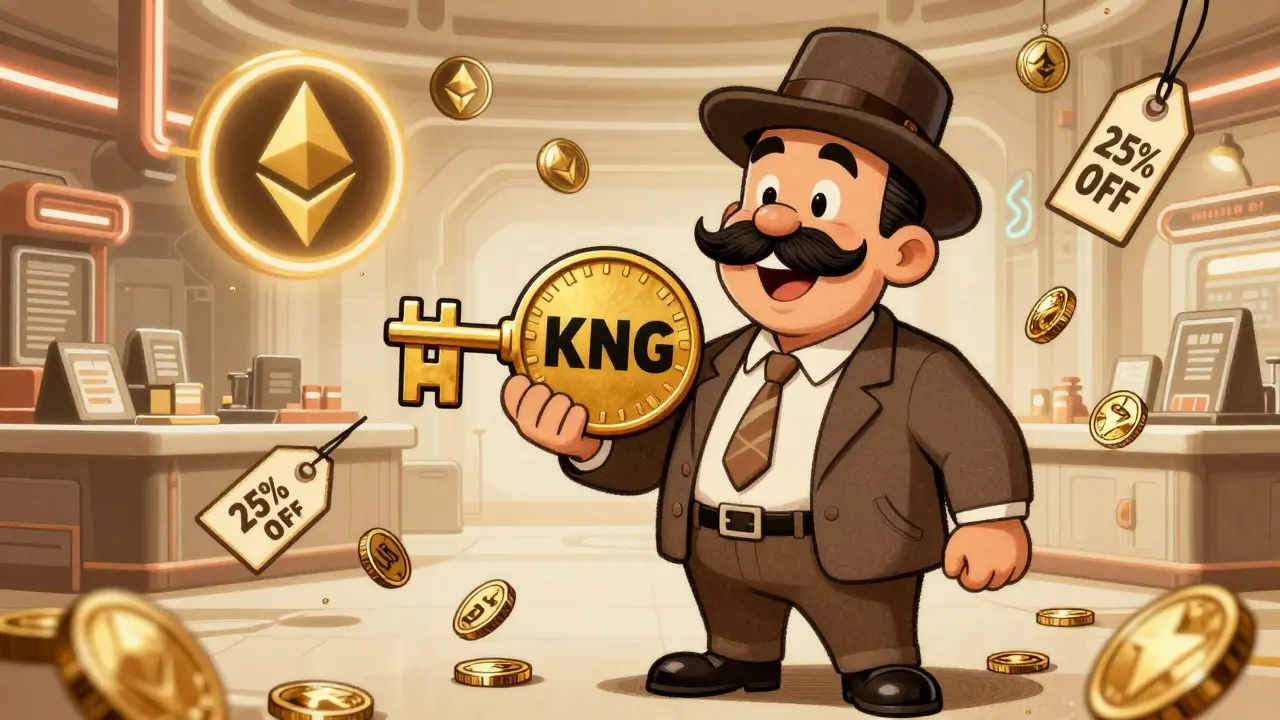
Kanga Exchange Fee Savings Calculator
Calculate Your Savings
Kanga Exchange users save 25% on trading fees when paying with KNG token. See how much you could save!
Your Savings
Based on standard 0.2% trading fee and 25% discount for KNG users
Kanga Exchange Token (KNG) isn't just another crypto coin. It’s the engine that powers the Kanga Exchange platform - a centralized crypto exchange built to make trading, staking, and paying fees easier for its users. Unlike Bitcoin or Ethereum, KNG doesn’t exist to be a store of value or a decentralized network. It’s a utility token, designed to be used inside one specific ecosystem. If you’re trading on Kanga Exchange, holding KNG isn’t optional - it’s how you save money, earn rewards, and get access to better features.
What Exactly Is KNG?
KNG is an ERC-20 token built on both the Ethereum and Polygon blockchains. That means it works on two different networks at once. Ethereum is secure but expensive. Polygon is faster and cheaper. KNG lets you pick which one you want to use when sending or receiving tokens. This dual-chain setup is rare among exchange tokens and gives users flexibility without needing to switch platforms. The total supply of KNG is fixed at 21 million tokens. No more will ever be created. That’s a key difference from tokens like BNB, which have inflationary models where new tokens are minted regularly. KNG’s supply is capped, and it’s actually shrinking over time. Since its launch on November 10, 2019, KNG has gone through several upgrades. The biggest one, called KNG 2.0, rolled out in early 2024 and changed how the token works. It introduced daily fee rebates, staking tiers, and even let users use KNG as collateral for loans - something most exchange tokens don’t offer yet.How Does KNG Work Inside Kanga Exchange?
If you’re using Kanga Exchange, KNG is your key to unlocking savings and perks. Here’s how:- Pay fees in KNG and get 25% off - Every time you trade, withdraw, or deposit, you pay a fee. If you pay that fee in KNG, you automatically get a 25% discount. That’s not a one-time promo - it’s built into the system.
- Stake KNG to earn daily rewards - You can lock up your KNG in the platform’s staking pool. In return, you get a steady stream of new KNG tokens every day. The longer you stake, the higher your reward rate. Holding 5,000 KNG or more unlocks the VIP program, which gives you even better rates and priority support.
- Use KNG as loan collateral - Kanga’s loan service lets you borrow other cryptocurrencies by putting up KNG as security. This is unusual. Most exchanges only accept BTC or ETH as collateral. KNG being accepted shows how deeply integrated it is into the platform’s infrastructure.
- Access governance (limited) - While Kanga Exchange is centralized, KNG holders do get early access to new features and can vote on some platform updates. It’s not full DAO-style democracy, but it’s more than you get with most exchange tokens.
Token Burns and Deflationary Design
One of KNG’s standout features is its deflationary model. The team regularly burns tokens - permanently removing them from circulation. Between 2022 and 2023, over 178,000 KNG were burned. Then, in 2024, they announced a plan to burn another 1 million tokens by the end of the year. Why does this matter? Fewer tokens in circulation means each remaining token could become more valuable - if demand stays the same or grows. It’s a simple economic trick, but it works. Compare that to BNB, which burns tokens quarterly but still increases supply overall. KNG’s supply is going down, not up.Current Price and Market Data (as of December 2025)
As of now, KNG trades between $1.52 and $1.77, depending on the exchange. CoinMarketCap lists it at $1.52, while Crypto.com shows $1.77. That’s a 16% spread - a sign of low liquidity. The 24-hour trading volume hovers around $50,000 to $250,000. That’s tiny compared to BNB, which trades over $1 billion daily. KNG’s market cap is under $10 million. That puts it at #4530 on CoinMarketCap and #6660 on CoinPaprika. It’s not a top-tier crypto. It’s not even in the top 1,000. But that’s not the point. KNG isn’t meant to compete with Bitcoin or Ethereum. It’s meant to serve Kanga Exchange users.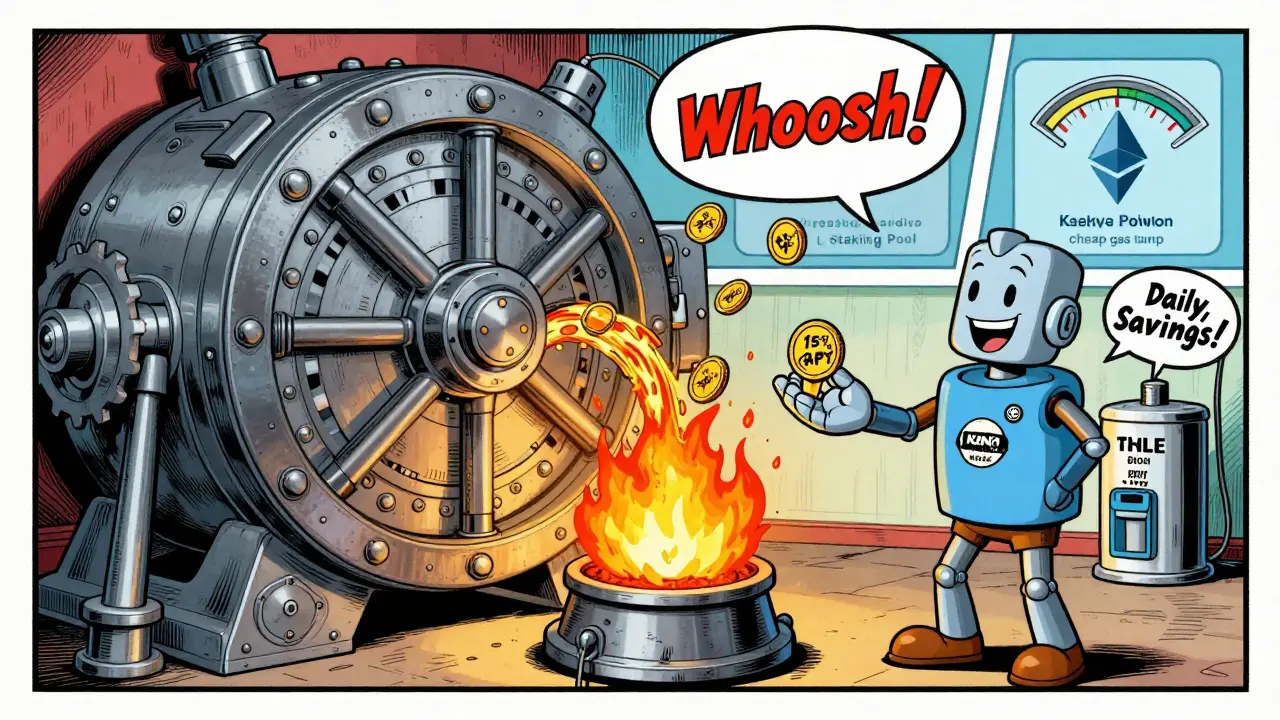
Where Can You Buy KNG?
You can’t buy KNG on Coinbase, Binance, or Kraken. It’s only listed on five exchanges total, with Kanga Exchange being the main one. Other places include BitMart, DigiFinex, and MEXC. That’s a big problem. If you want to buy KNG, you have to go through Kanga’s platform. If you want to move it elsewhere, you’re stuck with fewer options and higher slippage. This dependency is a double-edged sword. On one hand, it keeps the token’s value tied to the platform’s success. On the other, if Kanga Exchange loses users, KNG’s price will crash. There’s no safety net.Staking KNG: Real Returns and Risks
Staking KNG is where most users get their value. The platform claims a 15% annual percentage yield (APY) for basic staking. That’s solid - better than most bank savings accounts. But here’s the catch: the reward is paid in KNG. If KNG’s price drops 20%, your 15% APY turns into a net loss. Users report that staking rewards are consistent - you get them every day, no delays. But withdrawing them to other wallets can be tricky. Some users have had issues with network selection, sending KNG on Ethereum when they should’ve used Polygon. Kanga’s support data shows 22% of all KNG-related tickets are about wrong network transfers. If you’re serious about staking, you need to know which network you’re on. Always double-check the deposit address. Kanga gives you separate addresses for Ethereum and Polygon. Use the right one.Who Is KNG For?
KNG isn’t for casual investors. It’s not for traders looking to flip coins for quick profits. It’s for people who:- Trade regularly on Kanga Exchange
- Want to reduce their trading fees
- Are comfortable holding a token tied to one platform
- Understand that liquidity is low and price swings are normal
- Plan to use KNG for staking or loans
Biggest Risks
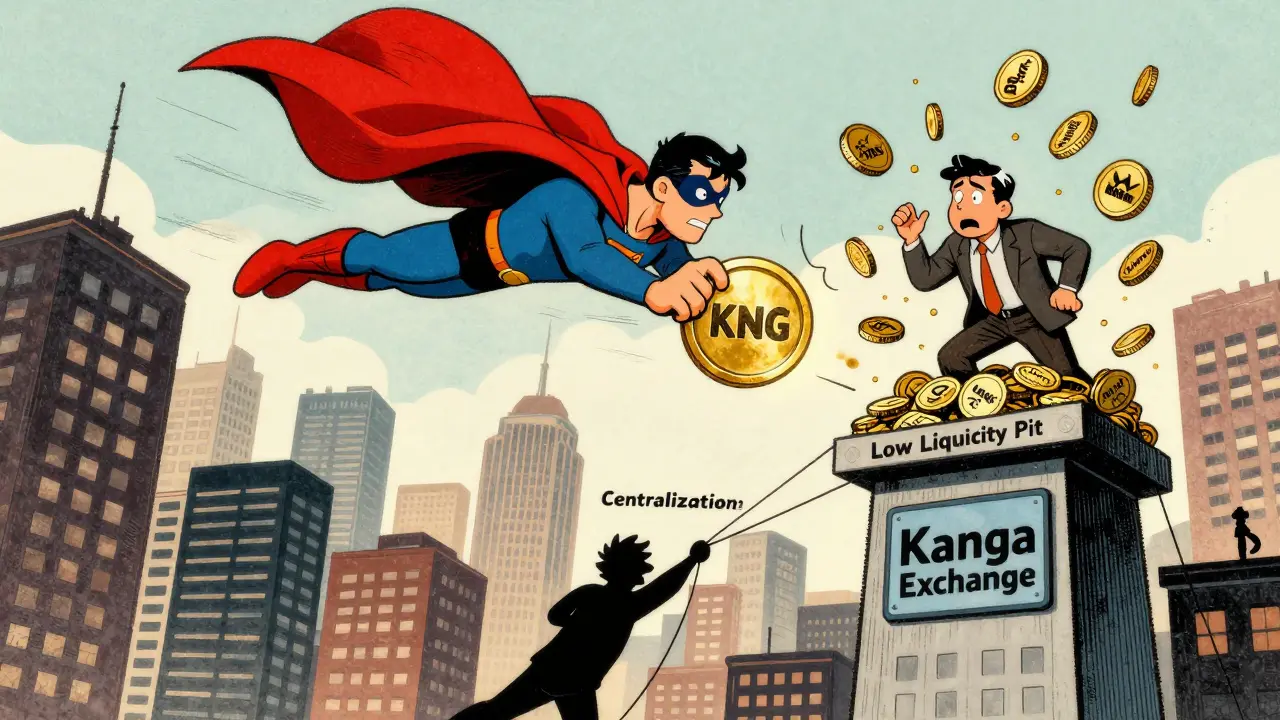
KNG has three major risks:- Centralization - Kanga Exchange controls everything: the token, the burns, the staking rules. There’s no community governance. If the team decides to change the rules, you can’t stop them.
- Liquidity - With only five exchanges listing KNG, you can’t easily sell large amounts without moving the price. Selling 10,000 KNG could drop the price by 10% or more.
- Ecosystem dependency - KNG’s value is 100% tied to Kanga Exchange’s success. If the platform gets hacked, loses users, or gets shut down by regulators, KNG becomes nearly worthless.
Future Plans: What’s Next for KNG?
Kanga Exchange has big plans for 2025. They’re working on their own blockchain - called the Kanga Blockchain - which could eventually replace Ethereum and Polygon as the base for KNG. If that works, KNG could become the native currency of an entire new network. They’re also expanding into Vietnam, Indonesia, Turkey, and the Philippines, with plans to open 2,000 OTC trading points and 1,000 Kanga Pay locations. If they pull this off, KNG’s user base could grow fast. Bitget predicts KNG will reach $1.60 by the end of 2025. That’s not a huge jump - just a 5% increase from current levels. It’s not a moonshot. But it’s realistic - if Kanga keeps growing.Final Thoughts
KNG isn’t a cryptocurrency you buy because you think it’s going to hit $100. It’s a tool. Think of it like a loyalty card for Kanga Exchange. If you use the platform often, KNG saves you money and gives you perks. If you don’t, it’s just another token sitting in your wallet, collecting dust. Its strengths? Deflationary burns, multi-chain support, and real utility inside its ecosystem. Its weaknesses? Low liquidity, centralization, and no outside demand. If you’re already trading on Kanga Exchange, get some KNG. Pay your fees with it. Stake it. Use it for loans. That’s where the value is. If you’re not using Kanga? Skip it. There are better tokens out there for speculation or long-term holding. KNG doesn’t need to be the next Bitcoin. It just needs to keep serving its users well. So far, it’s doing that.Is KNG a good investment?
KNG isn’t a traditional investment. It’s a utility token. If you trade on Kanga Exchange, holding KNG saves you money and earns you rewards. But if you’re not using the platform, there’s little reason to hold it. Its low liquidity and centralized structure make it risky for pure speculation. Only buy KNG if you plan to use it.
Can I stake KNG on other platforms?
No. KNG staking is only available on Kanga Exchange. The token’s staking rewards, VIP tiers, and fee discounts are all locked inside the platform. You can’t stake KNG on Binance, Coinbase, or any other exchange. If you want rewards, you must use Kanga’s system.
Why does KNG work on both Ethereum and Polygon?
Ethereum is secure but expensive for small transactions. Polygon is fast and cheap. KNG being available on both lets users choose based on cost and speed. Sending KNG on Polygon costs pennies. Sending it on Ethereum might cost a few dollars. This flexibility is rare and useful, especially for frequent traders.
How do I buy KNG?
You can only buy KNG on five exchanges: Kanga Exchange (main), BitMart, DigiFinex, MEXC, and Gate.io. First, create an account on Kanga Exchange, complete KYC, then buy KNG directly with fiat or crypto. You can’t buy it on Coinbase, Binance, or Kraken.
Is KNG safe to hold?
KNG is as safe as Kanga Exchange is. The token itself is built on secure blockchains (ERC-20), and the contract has been audited. But since Kanga is centralized, your funds are subject to their policies, security, and decisions. If the exchange gets hacked or shuts down, KNG could lose value fast. Only hold what you’re comfortable losing.
What happens if Kanga Exchange shuts down?
If Kanga Exchange shuts down, KNG loses almost all its utility. No staking, no fee discounts, no loans. The token would still exist on the blockchain, but without the platform that gives it value, it would likely become nearly worthless. That’s the biggest risk with any exchange token.
Does KNG have a future beyond Kanga Exchange?
Possibly. Kanga is developing its own blockchain - the Kanga Blockchain - which could make KNG its native currency. If that launches successfully, KNG could become more than just an exchange token. But until then, its future is entirely tied to Kanga Exchange’s growth and stability.



Comments (13)
Shane Budge
KNG is just a loyalty card with blockchain hype. If you trade on Kanga, it makes sense. If not, it's a dusty token.
Adam Bosworth
lol this whole thing is a scam. 21 mil supply? yeah right. the devs are prob just minting more in the backdoor. and 15% apy? sure jan. i got my kng and now its worth half what i paid. classic rug pull vibes.
Renelle Wilson
While the utility of KNG within the Kanga ecosystem is clearly articulated, it is imperative to recognize the structural vulnerabilities inherent in centralized token models. The deflationary mechanics are intellectually elegant, yet the total dependency on a single exchange introduces systemic risk that may not be adequately mitigated by technical features such as dual-chain support. One must weigh the convenience of fee discounts against the potential for regulatory or operational failure.
Elizabeth Miranda
Honestly, I love how KNG uses both Ethereum and Polygon. I switch between them depending on gas prices. Polygon is a lifesaver for small trades. Just make sure you copy the right address - I lost a tiny amount once because I used the wrong network. 🤦♀️
Chloe Hayslett
USA is the only country that lets this garbage pass as finance. In Europe we'd have regulators shut this down by now. 5 exchanges? $10M cap? this isn't crypto, it's a side hustle for a startup that can't get funding.
Thomas Downey
The notion that this token constitutes a viable investment vehicle is fundamentally flawed. One does not invest in a proprietary utility token tied to a centralized entity. One participates in a closed-loop loyalty program masquerading as blockchain innovation. The absence of true decentralization renders the entire construct philosophically bankrupt.
Annette LeRoux
I'm just here for the staking rewards 😌✨ and honestly? It's been chill. Daily KNG drops feel like a little gift. I don't care if it's not BTC - it pays my gas fees and I'm not complaining. If Kanga goes down, I'll cry... but for now, it's working. 🤷♀️
Jerry Perisho
KNG works if you trade on Kanga. Pay fees in it get 25% off. Stake it get daily rewards. Use it for loans. That's it. No need to overthink it. Just don't buy it hoping to get rich.
Manish Yadav
This is not real crypto. Real crypto is Bitcoin. KNG is just a trick to make people pay more fees. I saw this in India too. They call it crypto but it is just a pyramid.
Krista Hewes
i staked 10k kng and got my daily rewards for like 3 months then one day the app just stopped showing them. i messaged support and they said 'check your network' but i was on polygon... i think they just forgot to pay me? idk anymore. i'm still holding tho 🤷♀️
Madison Agado
There's a quiet irony here. We're told this token is deflationary, yet its value is entirely dependent on human behavior - trust, usage, loyalty. The burn mechanism is elegant, but it's just math without meaning if the ecosystem collapses. KNG isn't money. It's a promise. And promises are only as good as the people keeping them.
Scott Sơn
KNG is the crypto equivalent of a loyalty punch card that somehow got a blockchain tattoo and a LinkedIn profile. It's not sexy, it's not revolutionary, but if you're already on Kanga? It's the only smart move. Don't overthink it. Just stake it, use it, and don't look back.
miriam gionfriddo
so i bought kng at 1.80 and now its at 1.52... and the 'daily rewards' are just more kng that's also dropping in value??? this is like getting paid in devaluing coupons. i feel so used. why did i trust this? why did i listen? i'm so mad. 💔