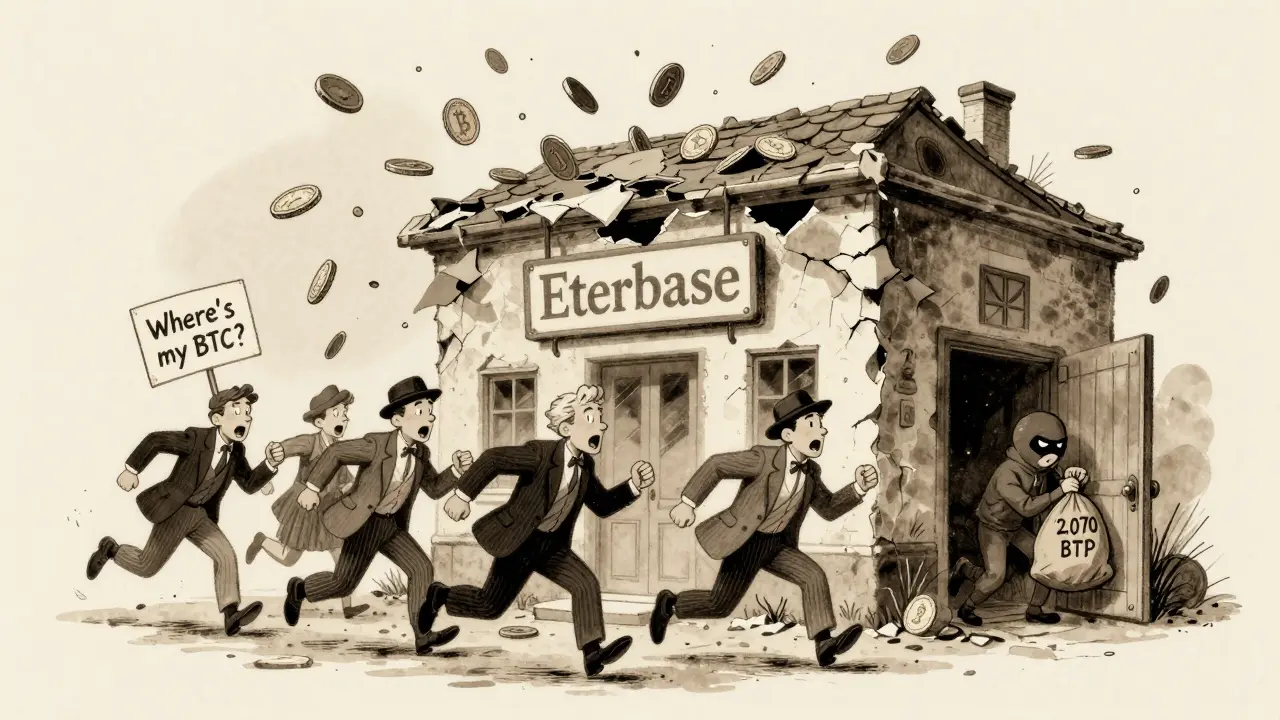
Eterbase was once a quiet contender in Europe’s crypto scene - now it’s a warning sign.
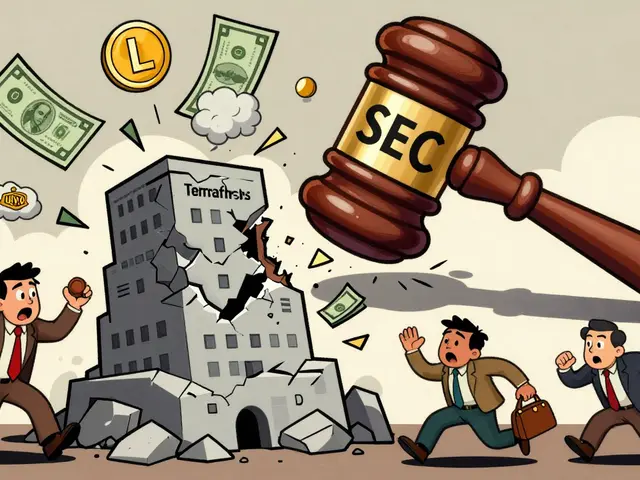
If you’re looking for a crypto exchange to use today, Eterbase isn’t an option. It shut down in April 2021, and it didn’t fade away quietly. It collapsed after losing over €5.5 million in a single hack, leaving thousands of users with no way to recover their funds. This isn’t just a story about a failed business. It’s a lesson in how quickly trust can vanish when security is treated like an afterthought.
Eterbase launched in 2015 out of Slovenia, targeting European traders who wanted a simple, local platform. It supported eight European languages, accepted EUR and USD deposits, and charged low fees - 0.15% for makers and 0.25% for takers. That was about 40% cheaper than Bitstamp at the time. For beginners, it looked appealing. Clean interface. Fast EUR deposits. No confusing menus. It even had mobile apps rated 4.1 and 4.3 on Android and iOS. By early 2020, it was handling $85 million in daily volume, ranking #27 globally on CoinMarketCap. It wasn’t Binance. But it had a real user base - 85,000 active monthly users in August 2020.
Behind the scenes, things were crumbling.
The security flaws that no one noticed until it was too late
Eterbase claimed to store 95% of assets in cold storage. That sounds solid - until you dig into what actually happened. According to CipherTrace’s post-hack analysis in December 2020, their hot wallet system was a mess. Signing keys for crypto withdrawals were stored on internet-connected servers. No multi-signature protection. No proper access controls. This wasn’t a sophisticated attack. It was a basic exploit that any professional exchange would have fixed years earlier.
The hack happened in October 2020. Thieves stole 2,070 BTC, 14,500 ETH, and 1.3 million XRP. That’s not a typo. Those numbers add up to €5.5 million at the time. The exchange didn’t disclose the breach for weeks. When they finally did, users were left in the dark. No updates. No transparency. No emergency response plan.
Compare that to Kraken, which had used multi-signature wallets since 2013. Or Coinbase, which had insurance and layered security since its founding. Eterbase didn’t have those safeguards. And when the breach hit, their entire model fell apart.
What users lost - and how the company responded
On Reddit’s r/CryptoCurrency, threads exploded after the hack. One user, u/EterbaseVictim1, posted: “Lost 3.2 BTC (€112,000). No communication from support for 17 days.” That wasn’t rare. Trustpilot reviews dropped from 4.1 stars to 1.3 within months. Of the 87 reviews posted after the hack, 92% called customer service “unresponsive” or “nonexistent.”
The official forum, once buzzing with 4,328 active users in Q3 2020, shrank to just 127 by Q1 2021. People weren’t just angry - they were scared. And they had every right to be.
The Slovenian authorities took over the liquidation process. By March 2022, they announced users would get back only 18.3% of their lost funds. That’s not a refund. That’s a partial recovery after years of silence. For many, it meant walking away with less than a fifth of what they’d deposited.
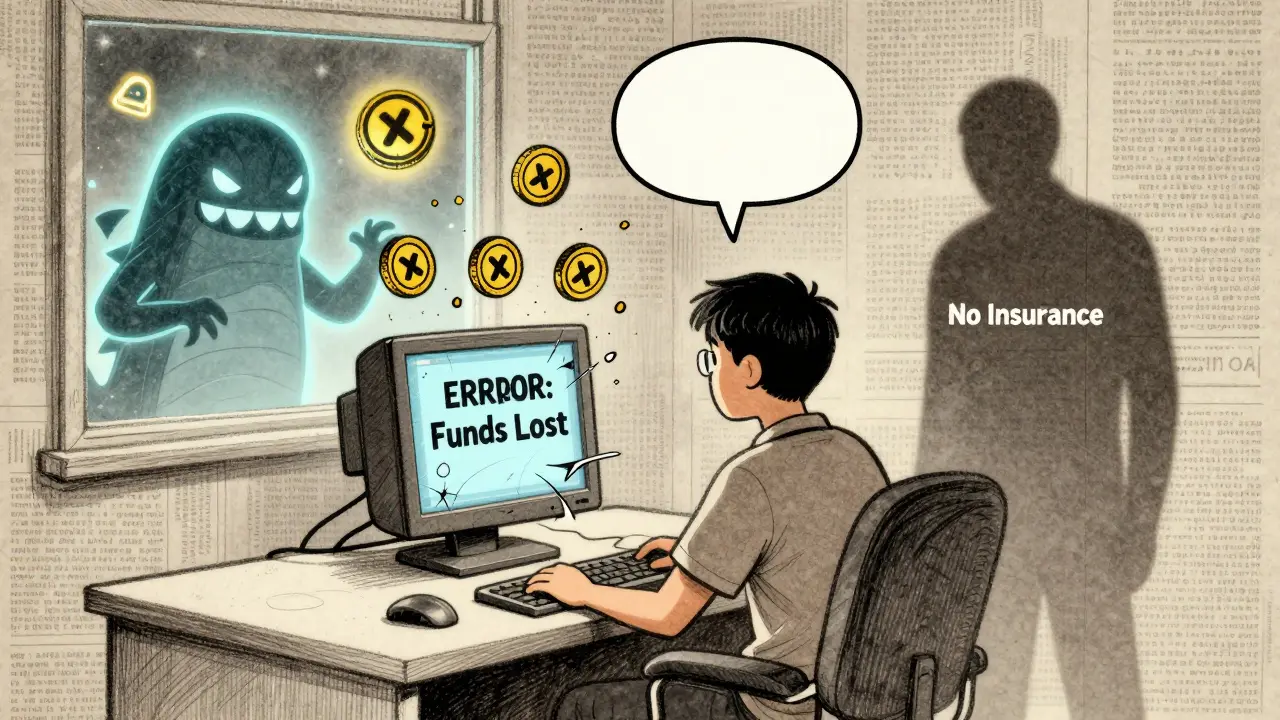
The XBASE token: a ghost of what it once was
Eterbase had its own token: XBASE. Launched in mid-2019, it gave users up to 50% fee discounts if they held over 50,000 tokens. It was a smart idea - and it worked. At its peak in January 2020, XBASE hit a $138 million market cap. Today, it’s worth $1.8 million. That’s a 98.7% drop. Daily trading volume? Around $3,200. No one’s using it for fees anymore. No one’s even trading it seriously. It’s a relic. A digital tombstone.
It still trades on decentralized exchanges, but only because some collectors or speculators hold on to it. There’s no team, no roadmap, no future. Just a token floating in the void, a reminder of what happens when a platform’s value is built on hype, not substance.
Why Eterbase looked good - until it didn’t
Before the hack, Eterbase had real strengths. It was easy to use. It supported EUR deposits without crazy fees. It had decent liquidity for major coins. It was one of the few exchanges that offered clear support in languages like Polish, Dutch, and Portuguese. For someone in Berlin or Barcelona who didn’t want to deal with English-only interfaces, it was a breath of fresh air.
But those strengths were surface-level. The real foundation - security, compliance, risk management - was rotten. Deloitte’s 2021 audit found Eterbase failed to meet basic EU AMLD5 requirements. Their transaction monitoring tools were weak. Their KYC process, while technically compliant, took days to complete and didn’t catch suspicious activity.
They were growing fast - too fast. User numbers jumped from 30,000 to 85,000 in just six months. But their security team didn’t scale. Their infrastructure didn’t adapt. They were a small shop pretending to be a real exchange. And the market punished them for it.
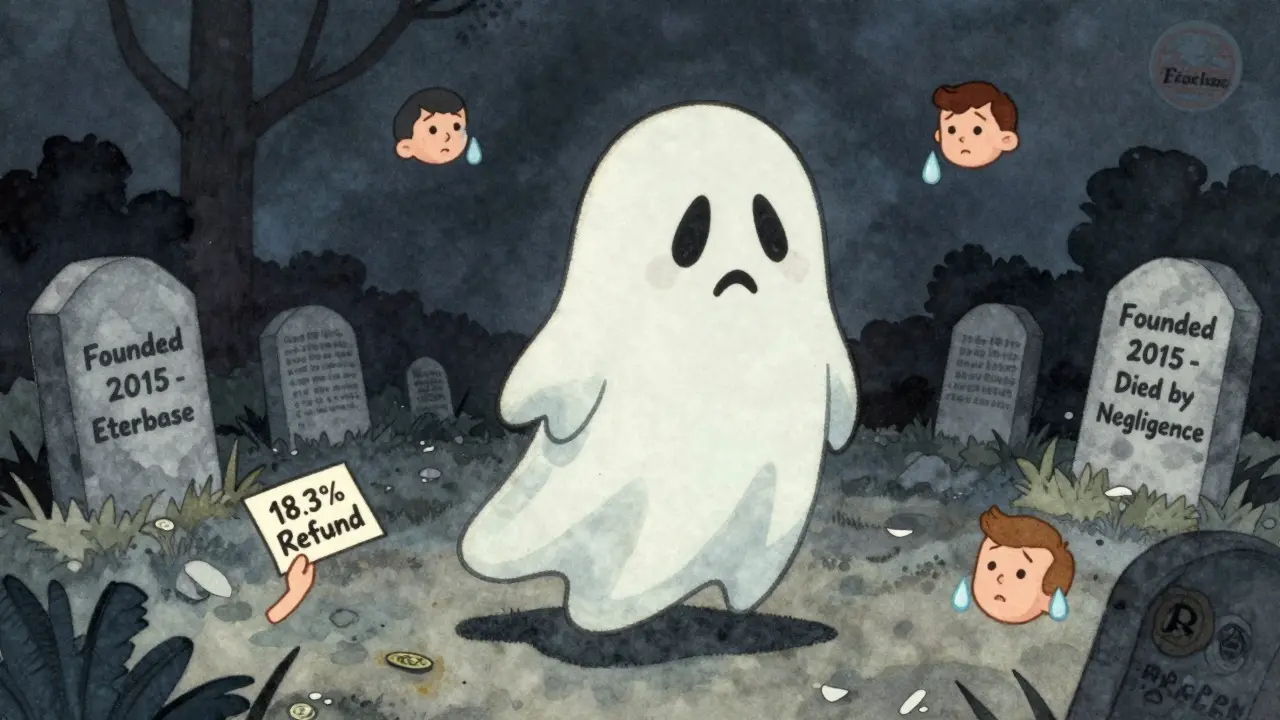
What you can learn from Eterbase’s failure
This isn’t just history. It’s a checklist for anyone choosing a crypto exchange today.
- Check if the exchange is regulated - not just “based in Europe,” but actually licensed by a financial authority. Eterbase had a Slovenian registration, but it wasn’t enough.
- Look for multi-signature wallets - if they don’t mention it, assume they don’t use it. Kraken, Coinbase, and Bitstamp all use multi-sig. Eterbase didn’t.
- Read the fine print on insurance - did they ever say they insured customer funds? Eterbase didn’t. That’s a red flag.
- Watch how they handle crises - when things go wrong, do they communicate clearly? Or vanish? Eterbase went silent for weeks. That’s not customer service. That’s abandonment.
- Don’t be fooled by low fees - cheap trading means nothing if you can’t get your money back.
Eterbase’s downfall wasn’t caused by a single mistake. It was caused by a pattern: ignoring security to save money, scaling too fast, hiding behind a clean UI, and assuming users wouldn’t notice the cracks. They thought they could outgrow their weaknesses. They were wrong.
Where Eterbase stands today
The website is gone. The apps are offline. The license was revoked by Slovenian regulators in September 2021. Gartner listed Eterbase in their 2023 report as one of the top 10 crypto exchange failures. The Cambridge Centre for Alternative Finance classifies it as “non-operational” with no chance of return.
There’s no revival plan. No new team. No investor stepping in. The community is dead. The token is a ghost. The only thing left is the lesson.
If you’re choosing a crypto exchange today, ask yourself: Would I trust this company with my life savings? Would they tell me the truth if something went wrong? Eterbase said yes - until it didn’t. And now, it’s just another cautionary tale in crypto’s long history of broken promises.

Comments (22)
Richard Kemp
man i remember when eterbase was just some little exchange i used to trade on... no one talked about it but it just worked. then one day poof. all gone. guess i should've looked deeper than the ui.
Jerry Ogah
This is why I don't trust any exchange that doesn't scream "multi-sig" from the homepage. Eterbase was a pretty website with a rotten core. People got fooled by clean design and low fees. Wake up, folks. If it doesn't have insurance and multi-sig, it's not safe. Period.
Christopher Michael
Let’s be clear: Eterbase didn’t fail because of a hack-it failed because it was never built to survive one. Cold storage claims? Empty marketing fluff. No multi-sig? Basic negligence. No insurance? Criminal carelessness. They were a boutique shop masquerading as a financial institution. And the users paid the price. This isn’t crypto’s fault-it’s human greed and incompetence.
Elle M
Wow. So europeans are just now learning that "low fees" don't mean "safe"? I mean, i'm shocked. Absolutely shocked. Maybe next time don't trust some slovenian startup with your life savings? 🤡
Rico Romano
The real tragedy here isn't the hack-it's that people still don't understand that crypto exchanges aren't banks. They're tech startups with crypto keys. Eterbase didn't fail because they were bad-it failed because they were amateurs playing in a professional arena. The fact that anyone thought 0.15% fees meant legitimacy is laughable.
Crystal Underwood
Y’all still falling for this "easy UI = safe" nonsense? Eterbase was a glitter-covered dumpster fire. 85k users? Congrats, you all just funded a Ponzi with a trading interface. And now you’re all mad because you got played? Newsflash: if your exchange doesn’t have a public audit and multi-sig, you’re not a customer-you’re a sucker.
Raymond Pute
I mean, objectively speaking, the entire narrative around Eterbase is a bit reductive-yes, the hack was catastrophic, but the deeper issue is the systemic failure of regulatory oversight in the EU’s fragmented crypto landscape. Slovenia’s financial authority was underfunded, undertrained, and utterly unprepared for the scale of decentralized finance. Eterbase wasn’t an outlier-it was the inevitable product of a regulatory vacuum. We’re still trying to fit blockchain into 20th-century financial frameworks. That’s the real tragedy.
Freddy Wiryadi
i still have a few xbase tokens in my wallet lol. like a dusty trophy from a dead game. sometimes i open it and just stare. reminds me to check the security stuff before i deposit anything. 🤦♂️
Calvin Tucker
The collapse of Eterbase is a metaphysical allegory for the illusion of trust in digital systems. The UI was a facade, the fees a seduction, the cold storage a myth. The only truth was the vulnerability of human belief in institutional authority. When the keys were stolen, so too was the illusion of safety.
Gustavo Gonzalez
Let me break this down for the slow ones: Eterbase didn’t just have bad security-they had zero governance. No CISO? No incident response team? No legal counsel? They were a garage project with a domain name and a dream. And now you’re all acting like this is a crypto problem? No. It’s a YOU problem. You didn’t do your homework. You got lazy. And now you’re crying about it. Grow up.
Brandon Vaidyanathan
I feel so bad for the people who lost everything. I know what it’s like to put your savings into something you believe in… and then watch it vanish. But here’s the thing-this isn’t just about Eterbase. It’s about all of us. We need to stop treating crypto like a casino and start treating it like a bank. If you don’t ask for multi-sig, insurance, and audits-you’re not investing. You’re gambling.
Dahlia Nurcahya
I know this is harsh, but please, if you're new to crypto-take a breath. Don’t pick an exchange because it looks nice or has low fees. Look at the security page. Look for multi-sig. Look for insurance. Look for a real team with LinkedIn profiles. Eterbase had none of that. And now you know why. Don’t make the same mistake.
Jeremy Dayde
i just think about how many people trusted this thing with their money and then got ghosted for weeks. no emails no updates nothing. just silence. it’s not just about the money. it’s about how they treated people like numbers. and now they’re just gone. it’s sad. really sad.
Steven Dilla
I lost 5 BTC on this. 5. FIVE. And all I got was a 18% payout after two years of silence. I don’t care about the lesson. I care about justice. And there’s none. 🤬
josh gander
look, i get it. you want low fees. you want easy deposits. you want a clean app. but if your exchange doesn’t have a public security audit, a multi-sig setup, and insurance? you’re not trading. you’re donating. and honestly? you deserve what you got. learn. grow. don’t make the same mistake again.
Akhil Mathew
This is why I always check if an exchange is registered with a real financial authority-not just "based in Europe." Eterbase had a registration, but no real oversight. That’s the trap. Always dig deeper. The UI doesn’t care if you’re broke.
Tom Sheppard
bro i used eterbase back in 2019 and thought it was cool til it vanished. now i only use coinbase or kraken. they might charge more but at least i know if something goes wrong, they’ll actually talk to me. peace 🙏
Aaron Poole
One thing people miss: Eterbase actually did a lot right for European users. Local languages? EUR deposits? Low fees? Those weren’t gimmicks-they were real needs. The problem wasn’t their vision. It was their execution. They grew too fast without scaling security. That’s not evil. It’s stupid. And it’s fixable-if you’re willing to invest.
Ramona Langthaler
so like... 18% back? thats like getting your lunch money back after someone stole your entire wallet. congrats you got a coupon for your own ruin
Sunil Srivastva
Honestly, I think the biggest lesson is this: Never trust an exchange that doesn’t publish its wallet addresses on-chain. If they won’t show you where the money is, they don’t want you to know. Eterbase? Silent. Scary.
Devyn Ranere-Carleton
wait so xbase is still trading? i thought it was dead? like is anyone even buying it? or is it just bots?
Kevin Thomas
If you’re using an exchange that doesn’t have multi-sig, insurance, and a public security team? You’re not a trader. You’re a target. Eterbase didn’t get hacked. They were picked clean. And the worst part? They made it easy. Don’t be next.