You clicked on FibSWAP expecting a new DeFi revolution. You might have seen it listed on a minor exchange or stumbled upon its website claiming to be the "first ever" cross-chain swap solution. But here is the cold hard truth: as of late 2025, FibSWAP DEx is a decentralized exchange token with near-zero trading volume and minimal market presence. If you are looking for the next Uniswap, this isn't it. This article breaks down exactly what FibSWAP claims to be, where it stands in the current crypto landscape, and why most experienced traders ignore it.
The Core Concept: What FibSWAP Claims to Do
FibSWAP positions itself as a decentralized exchange built on the BNB Smart Chain. The project launched in 2021 with a bold promise: to solve the fragmentation problem in DeFi. Most exchanges like Uniswap work only on one chain (Ethereum), while PancakeSwap lives on Binance Smart Chain. To move assets between them, users typically need complex bridges.
FibSWAP claims to fix this with its proprietary Interoperable Multichain Bridge System (IMBS). They say their FibSwapSmart algorithm allows seamless swapping of tokens across different blockchains without leaving the platform. It sounds great on paper. In practice, however, the technology remains largely unverified by independent auditors. There are no major security reports from firms like CertiK or OpenZeppelin confirming that their smart contracts are safe or that the bridge actually works as advertised.
Tokenomics: A Supply Puzzle
If you look at data aggregators, you will find conflicting numbers. This is often a red flag for low-cap projects. According to Coinbase, the circulating supply of FIBO is over 9 billion tokens. Yet, CoinMarketCap reports a total supply of just 90 million. How do you get two numbers so far apart? Usually, it means the team controls a massive portion of the supply, or the data feeds are broken.
On-chain analysis suggests extreme concentration. Data from November 2025 indicates that 87.3% of the circulating FIBO supply sits in just ten wallets. For the average investor, this is dangerous. If those ten holders decide to sell, the price crashes instantly. There is no broad community holding the bag; it is mostly insiders or bots. With a market cap hovering around $18,000, FIBO is effectively invisible in the broader crypto economy.
| Metric | FibSWAP (FIBO) | Uniswap (UNI) | PancakeSwap (CAKE) |
|---|---|---|---|
| Blockchain | BNB Smart Chain | Ethereum/Multi | BNB Smart Chain/Ethereum |
| 24h Trading Volume | $0 | $1.5 Billion+ | $1.2 Billion+ |
| Market Cap Rank | > #5,000 | #32 | #287 |
| Audits | Unverified | Multiple | Multiple |
Why Is the Trading Volume Zero?
Let’s address the elephant in the room. Across major platforms like Coinbase, CoinMarketCap, and Symlix, the 24-hour trading volume for FIBO is reported as $0. This doesn’t mean no transactions ever happen. It means they are so rare and small that they don’t register meaningfully. On P2P marketplaces, you might see offers for $2 to $132 worth of tokens. That is not an active market; that is a ghost town.
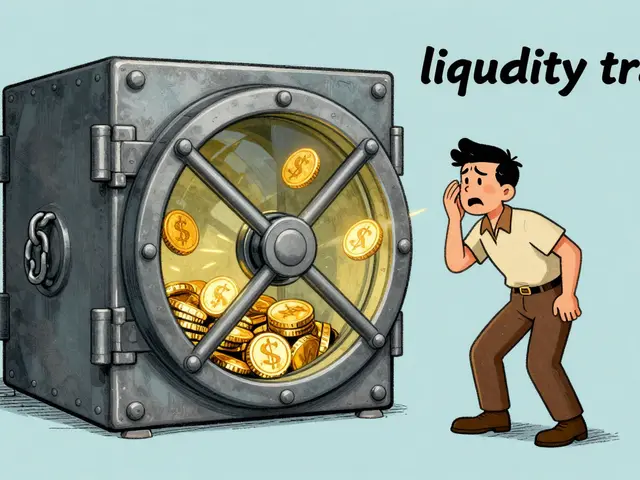
Why would anyone trade a token with zero liquidity? Liquidity providers earn fees from trades. If there are no trades, there are no fees. Without fees, there is no incentive to provide liquidity. Without liquidity, large trades slip the price massively. It is a death spiral. Established competitors like THORSwap offer similar cross-chain features but have hundreds of millions in market cap because people actually use them. FibSWAP has failed to capture any significant user base since its launch.

Technical Barriers and User Experience
Trying to buy FIBO is harder than it should be. You cannot simply buy it on Binance or Coinbase directly. It is not listed on major centralized exchanges. Instead, you must use a Web3 wallet like MetaMask or Binance Web3 Wallet. You then have to manually add the contract address and swap via a decentralized interface.
Most documentation is outdated. The official website hasn’t been updated since March 2022. There are no recent code commits on GitHub. When a project stops updating its code and docs, development has likely halted. Users report confusion when trying to configure RPC endpoints, leading to failed transactions. Compare this to PancakeSwap, where you connect your wallet and swap in two clicks. The friction required to interact with FibSWAP outweighs any theoretical benefit of its cross-chain tech.
Community and Expert Sentiment
Social proof is missing. The official Twitter account has fewer than 100 followers. There is no dedicated subreddit with active discussions. When you search for reviews, you find almost nothing. No major crypto news outlet like CoinDesk or Cointelegraph has covered FibSWAP recently. Why? Because journalists cover things that matter to readers. A token with $18k market cap and zero volume does not move markets.
Experts are skeptical. Hasu, a well-known DeFi researcher, noted that projects claiming revolutionary tech without published audits often fall into the "vaporware" category. Vaporware means software that is announced but never fully delivered or functional. Chris Burniske of Placeholder Ventures emphasizes that real cross-chain solutions require transparent cryptographic research. FibSWAP offers marketing claims, not peer-reviewed science.

Is It a Scam or Just Abandoned?
It is difficult to label every inactive project a scam. Some teams run out of money. Others lose interest. However, certain signs point toward high risk. The lack of transparency regarding who runs the project is concerning. The audit claims mentioned in FAQs are vague-no specific firm is named, and no public link to the report exists. TokenSniffer gives it a high-risk score due to these opacity issues.
If you hold FIBO, you are essentially betting on a resurrection. Given that the last meaningful development activity was years ago, the probability of a comeback is low. The broader DeFi market processed $1.27 trillion in Q3 2025. FibSWAP captured roughly 0% of that flow. It is not competing; it is surviving on inertia.
Practical Advice for Investors
Should you buy FIBO? Probably not, unless you enjoy collecting obscure digital artifacts. If you want exposure to cross-chain swaps, look at established players like THORChain or LayerZero protocols. These have verifiable TVL (Total Value Locked) and active developer communities.
If you already hold FIBO, consider the opportunity cost. Your capital is locked in an asset with no exit liquidity. Selling a significant amount could crash the price further due to the thin order books. Always check the latest on-chain data before making decisions, as small-cap tokens can fluctuate wildly based on single whale movements.
Is FibSWAP a legitimate project?
FibSWAP is a registered token on the BNB Smart Chain, but it lacks the hallmarks of a thriving legitimate project. It has no verified audits, negligible trading volume, and stagnant development since 2022. While not necessarily a "scam" in the legal sense, it functions more like an abandoned venture than an active DeFi protocol.
Can I buy FIBO on Binance?
No, FIBO is not listed on the main Binance Centralized Exchange (CEX). You must use the Binance Web3 Wallet or other decentralized exchanges (DEXs) on the BNB Smart Chain to purchase it. This requires manual setup of token contracts and gas fees in BNB.
What is the total supply of FIBO?
There is a discrepancy in reported data. CoinMarketCap lists a total supply of 90 million FIBO, while other sources suggest a much higher circulating supply figure. On-chain data indicates extreme concentration, with over 87% of tokens held by just ten wallets.
Does FibSWAP support cross-chain swaps?
The project claims to support cross-chain swaps via its IMBS system. However, there is little independent verification or user evidence that this feature is widely used or fully functional compared to competitors like THORSwap or Synapse Protocol.
Why is FIBO trading volume zero?
Trading volume is zero because there is virtually no market activity. Few users trade the token, and liquidity pools are empty or negligible. This creates a cycle where lack of liquidity discourages new buyers, keeping volume at rock bottom.