
Every time a photographer uploads a photo, a musician releases a track, or a designer posts a logo online, they’re risking theft. Without clear, tamper-proof proof of ownership, their work can be copied, sold, or reused without permission - and chasing down infringers across borders is nearly impossible. Traditional copyright systems are slow, expensive, and fragmented. But there’s a better way: blockchain for IP protection.
Why Traditional IP Systems Fail Creators
Patent offices and copyright registries take months, sometimes years, to process applications. By the time you get official recognition, your work may have already been copied thousands of times online. Even if you win a lawsuit, collecting damages is a nightmare if the infringer is in another country. Licensing? That’s a maze of lawyers, contracts, and delays. Royalties? Often lost in paperwork or never paid at all. The system was built for a pre-digital world. Today, creative content moves instantly across borders. Counterfeit luxury goods, stolen music files, pirated software - all of it adds up to over $500 billion in global losses each year, according to the OECD. Creators need a system that’s fast, global, and automatic. That’s where blockchain comes in.How Blockchain Proves You Created Something First
Blockchain isn’t just for Bitcoin. At its core, it’s a digital ledger that records transactions in a way that’s permanent, public, and impossible to alter. When you register your artwork, song, or invention on a blockchain, you’re not just filing a form - you’re creating a cryptographic timestamp that proves you owned it at a specific moment in time. Here’s how it works: You upload your file (a JPEG, MP3, or PDF) to a blockchain-based platform. The system generates a unique digital fingerprint - a hash - and stores it on the blockchain along with your public wallet address. This hash is tied to your identity, but your personal info stays private. The record is immutable. No one can delete it. No one can change it. And because the blockchain is global, anyone can verify it, anywhere. This isn’t theory. Platforms like Ascribe and Verisart have been doing this for artists since 2015. A painter in Berlin, a photographer in Nairobi, a coder in Tokyo - all can prove ownership with a single transaction. No government form. No waiting. Just proof.Smart Contracts: Automating Royalties and Licensing
Owning your IP is one thing. Getting paid when someone uses it? That’s the real challenge. Traditional licensing means sending invoices, negotiating terms, and waiting for checks. Smart contracts change all that. A smart contract is code that runs automatically when conditions are met. You can program it to pay you 10% every time your song is streamed, or to grant a license only if payment is received. No middlemen. No delays. No disputes over whether a payment was made. Mycelia, founded by musician Imogen Heap, uses smart contracts to track music usage across streaming platforms. When a track plays, the contract checks if the user has a valid license. If yes, royalties are instantly split among composers, producers, and performers - all in real time. No more hidden royalty statements. No more “we didn’t know you were owed money.” This isn’t just for music. Software developers can license code snippets. Designers can sell templates. Writers can grant usage rights to blogs. Every use is tracked. Every payment is automatic.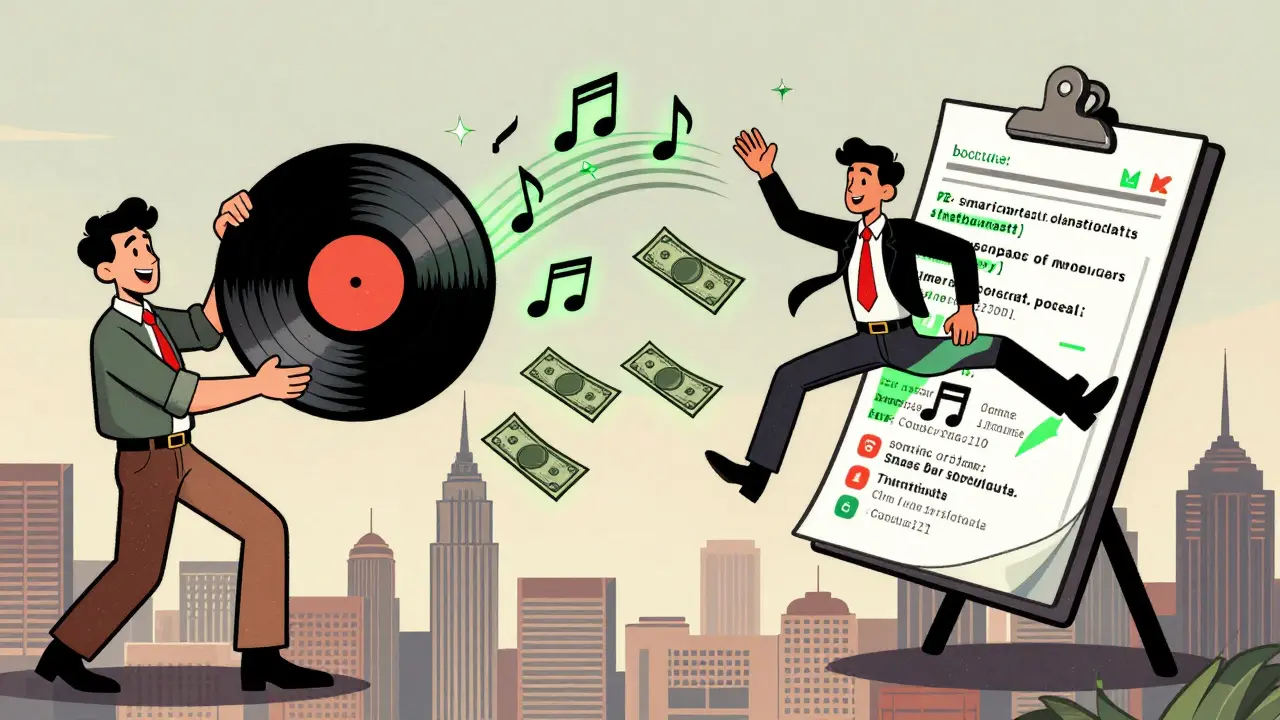
Stopping Counterfeits with Digital Twins
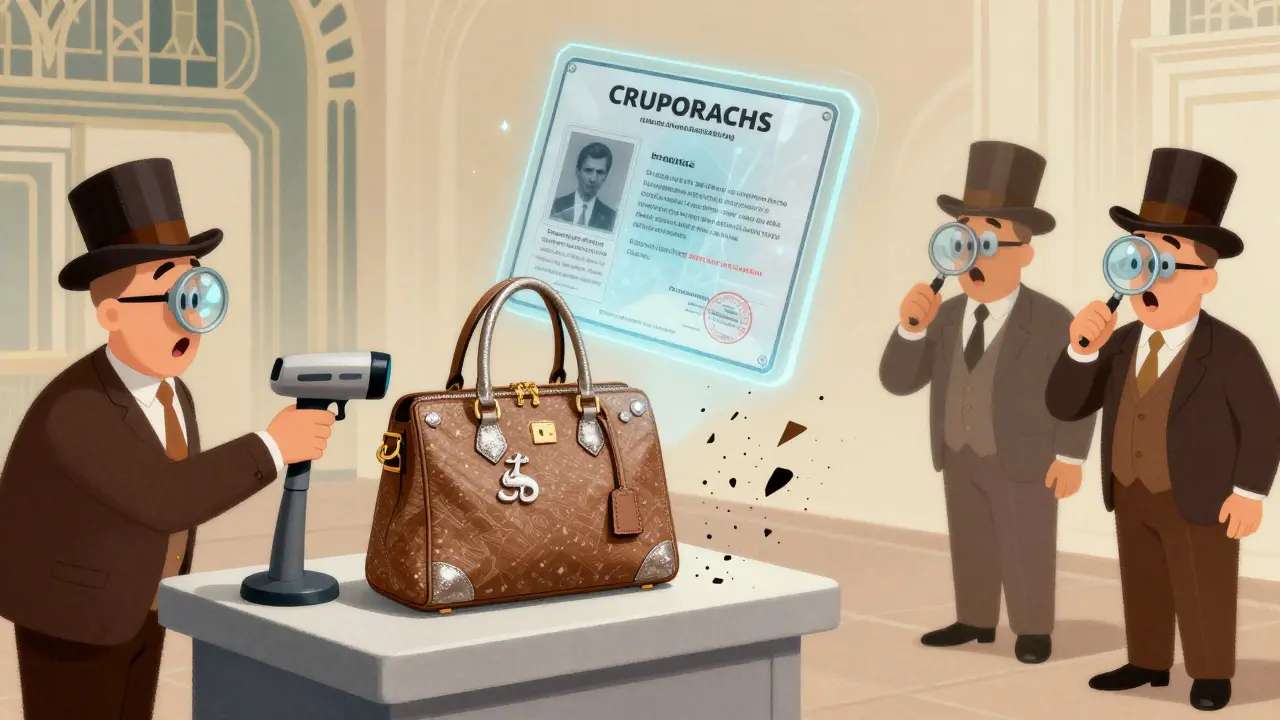
Counterfeiting isn’t just a problem for luxury brands - it’s a crisis for everything from pharmaceuticals to electronics. Fake medicines kill. Fake parts fail. Blockchain helps by creating digital twins of physical goods. Everledger, for example, tracks diamonds from mine to market. Each stone gets a unique digital ID on the blockchain, linked to its origin, cut, and certification. When a jeweler sells it, the buyer can scan a QR code and see the full history - no fakes, no fraud. The same applies to sneakers, handbags, or even medical devices. A blockchain-based certificate of authenticity can’t be forged. It can’t be duplicated. And it can’t be erased. This isn’t just about brand trust - it’s about safety.What Blockchain Doesn’t Do (And What It Can’t Replace)
Let’s be clear: blockchain doesn’t replace copyright law. It doesn’t give you legal rights you didn’t already have. It doesn’t automatically sue infringers. What it does is give you irrefutable evidence - the kind courts are starting to accept. In 2023, a U.S. court accepted a blockchain timestamp as proof of authorship in a copyright case. In the EU, the European Patent Office now allows blockchain records as supporting evidence. But acceptance varies. In some countries, you still need a formal registration. Blockchain doesn’t fix that - but it makes your case stronger. It also doesn’t solve piracy by itself. If someone downloads your song and shares it on a dark web forum, the blockchain won’t stop it. But it will let you prove who created it - and who owns the rights to pursue them.Real Platforms You Can Use Today
You don’t need to be a tech expert to use blockchain for IP. Here are three working platforms:- Ascribe: Lets artists upload digital art and claim copyright with a single click. Ownership is recorded on Ethereum.
- KodakOne: Built for photographers. It scans the web for your images and alerts you if they’re used without permission. You can license them directly through the platform.
- Verisart: Used by galleries and auction houses to authenticate art and collectibles. Each item gets a blockchain certificate that buyers can verify.
Challenges and Limitations
Blockchain isn’t magic. There are real hurdles:- Scalability: Some blockchains get slow and expensive during high traffic. Newer chains like Polygon and Solana are faster and cheaper.
- Regulation: No global standard exists yet. The World Intellectual Property Organization (WIPO) is working on one, but until then, rules vary by country.
- Energy use: Older blockchains like Bitcoin use a lot of power. Most modern IP platforms use energy-efficient networks like Ethereum 2.0 or Algorand.
- Adoption: If no one checks the blockchain record, it’s useless. Legal systems, platforms, and users need to start trusting it.
Where This Is Headed
In five years, blockchain won’t be optional for creators - it’ll be standard. Imagine this:- Your AI-generated design is automatically registered on a blockchain the moment you save it.
- Every time a brand uses your logo in an ad, your smart contract triggers a payment.
- A counterfeit product is scanned at customs - the blockchain flags it as fake before it even enters the country.
Getting Started: What You Need to Do Now
If you’re a creator, here’s how to begin:- Choose a platform: Start with KodakOne (for photos), Ascribe (for art), or Verisart (for physical goods).
- Upload your work: Most platforms let you drag and drop files. They’ll generate a hash and record it on-chain.
- Link your wallet: Use MetaMask or another wallet to sign the record. This proves it’s you.
- Set up licensing: If you want to sell usage rights, enable smart contracts for royalties.
- Share your proof: Add a blockchain verification badge to your website or portfolio.
Can blockchain replace traditional copyright registration?
No. Blockchain doesn’t replace legal copyright registration - but it gives you immediate, tamper-proof proof of creation. In many countries, you still need to file with a government office to enforce rights in court. But with a blockchain timestamp, your case is much stronger. Think of it as digital evidence that supports your legal claim.
Are NFTs the same as blockchain IP protection?
NFTs are one way to use blockchain for IP, but not the only way. An NFT is a token that represents ownership of a digital item. Some platforms use NFTs to sell licenses or prove authorship. But you can register IP on a blockchain without creating an NFT - for example, by storing just a hash and timestamp. NFTs are useful for trading, but not required for protection.
How much does it cost to protect IP on blockchain?
Costs vary. Some platforms charge a small fee - often under $5 - to register a file. Others offer free basic registration with paid upgrades for licensing or monitoring. Gas fees on Ethereum can be higher, but platforms like KodakOne and Ascribe use cheaper networks. Compared to legal fees for patent filing (which can cost $10,000+), blockchain registration is extremely affordable.
Can I protect ideas or concepts on blockchain?
No. Blockchain protects the expression of an idea - like a song, image, or code - not the idea itself. You can’t register “a new type of app” on a blockchain. But you can register the actual code, design files, or prototype that implements it. IP law only protects tangible expressions, not abstract concepts.
What happens if I lose my private key?
If you lose your wallet’s private key, you lose access to your blockchain record. The record still exists on the chain, but you can’t prove you’re the owner without the key. That’s why backing up your key - using a hardware wallet or secure seed phrase - is critical. Some platforms offer recovery options, but most don’t. Treat your key like a password to your identity.
Is blockchain IP protection legal everywhere?
There’s no global law yet, but blockchain records are increasingly accepted as evidence. Courts in the U.S., EU, Japan, and Singapore have started recognizing them. The World Intellectual Property Organization is pushing for international standards. Until then, treat blockchain as strong supporting evidence - not a standalone legal right. Always combine it with local registration where required.
Comments (18)
Bianca Martins
Finally someone gets it. I’ve been using KodakOne for my photos since last year and it’s been a game changer. No more begging people to credit me or chasing down stolen images. The platform even found a big brand using one of my shots in an ad without asking. Got paid. Easy. 🙌
alvin mislang
Oh great, another tech bro pushing blockchain like it’s the holy grail. You think putting a hash on a ledger makes you a creator? Nah. You still need to sue people. And guess what? Most creators can’t afford lawyers. This is just fancy digital vanity.
Monty Burn
What is ownership anyway if not a story we tell ourselves? The blockchain doesn’t own your art it just remembers when you said it was yours. But who decides what counts as yours? The state? The algorithm? The crowd? The truth is we’re all just borrowing time and space to make things that outlast us. The ledger is just a tombstone with better encryption
Alexandra Wright
Oh honey let me guess you think blockchain is gonna fix capitalism? Cute. Smart contracts don’t pay you if the buyer’s a shell company in the Caymans. And no, your ‘tamper-proof’ hash won’t stop a corporation from just saying ‘we didn’t know’ - because they never do. You’re not protecting creators. You’re just giving them a new subscription fee.
Jack and Christine Smith
im not techy at all but i tried verisart for my handmade jewelry pics and it was so easy like drag and drop and boom done. my aunt in germany saw the badge and asked if it was legit and i was like yessssss she bought two pieces 😭 thank you for making this feel possible
Jackson Storm
Hey just curious - if I upload a sketch I made on my phone, does the hash include the metadata like time and location? Or is it just the file? Asking because I’ve got some concept art from a trip to Iceland and I wanna make sure the context is preserved too. Thanks for the guide btw
Raja Oleholeh
India already has copyright law. Why waste money on blockchain? This is Western tech imperialism. 🇮🇳
Prateek Chitransh
Interesting how you say blockchain doesn’t replace copyright… but then you list courts accepting it as evidence. So it’s not replacement, it’s upgrade? Or just a very expensive workaround for broken systems? Either way, it’s better than nothing. Still waiting for the day a judge says ‘this blockchain record is sufficient’ and we don’t need paper anymore.
Amy Garrett
YESSSS I just registered my whole portfolio today!! I’m crying happy tears 😭✨ You guys are changing the game. If you’re a creator reading this - DO IT. It takes 5 minutes. Your future self will thank you.
Antonio Snoddy
Think about it - the blockchain is just a mirror reflecting our collective anxiety about being erased. We don’t trust institutions anymore, so we build digital altars to our own egos. We scream into the void and call it ‘proof.’ But the void doesn’t care. The void doesn’t pay royalties. The void doesn’t love your art. You still have to fight. You still have to beg. You still have to be seen. The ledger doesn’t heal you. It just logs the wound.
Rajappa Manohar
lost my key once. panic mode. thought i lost everything. turned out the platform had a backup link. saved me. always backup your seed phrase. seriously.
prashant choudhari
Blockchain for IP is not a solution. It is a tool. Like a hammer. Use it right. Use it wrong. Either way the nail doesn't care. But if you don't have a hammer you're stuck with your fingers.
Willis Shane
While I appreciate the technical innovation presented herein, I must emphasize that the legal framework governing intellectual property remains codified in statutory law, not cryptographic consensus. The blockchain serves as an evidentiary supplement, not a jurisdictional override. One must still comply with the Berne Convention, WIPO treaties, and domestic registration statutes to secure enforceable rights.
Jake West
Wow. Another ‘blockchain will save creativity’ post. Meanwhile, my cousin’s band got sued by a label for using a sample they bought on BeatStars. Blockchain doesn’t fix dumb people. Or greedy corporations. Or the fact that most creators just want to eat and not be lawyers.
Shawn Roberts
YOU CAN DO THIS. Seriously. I was scared too. I thought I needed to be a coder. Nope. Drag. Drop. Sign. Done. Now I sleep better. My art is mine. No one can take it. Not really. 💪🔥
Abhisekh Chakraborty
blockchain? sounds like another scam. why not just use watermark? everyone knows that. this is just crypto bros trying to sell you something you dont need. why waste your money?
dina amanda
They’re using blockchain to track your art so they can sell your data to the government. Next thing you know they’ll know what you draw and lock you up for ‘unauthorized creativity’. I’ve seen the videos. They’re already tagging people. Don’t sign up. Don’t trust them.
Emily L
Why are you all so excited? It’s just a hash. It doesn’t stop anyone from stealing. It just means you can say ‘I had it first’ after they already made millions off it. That’s not protection. That’s a postcard after the house burned down.