
Finding a free token distribution is always exciting, but the WagyuSwap airdrop requires a bit of digging to understand how it actually fits into the bigger picture. If you've seen mentions of a "WAGYUSWAP IDO LAUNCH AIRDROP," you're likely looking for a way to get free WAG tokens or wondering if this project is still a viable play in 2026. While airdrops are great for bootstrapping a community, they are only as valuable as the ecosystem supporting them.
What Exactly is WagyuSwap?
To understand the airdrop, we first need to look at the platform. WagyuSwap is a decentralized exchange (DEX) that operates as an automated market maker (AMM) on the Velas Network. Launched in September 2021, it aims to be the fastest DEX by leveraging the codebase of Solana, while remaining compatible with the Ethereum Virtual Machine (EVM). This means it tries to combine the raw speed of Solana with the flexibility of Ethereum's smart contract environment.
Essentially, it allows users to swap VEP20 tokens -the token standard for the Velas chain-without needing to go through a central authority or provide KYC (Know Your Customer) documentation. This keeps your transactions private and fast.
Breaking Down the IDO Launch Airdrop
The IDO (Initial DEX Offering) launch airdrop was designed as a growth lever. In the world of DeFi, projects often distribute tokens to early adopters to create a base of holders and incentivize people to provide liquidity. By giving away WAG tokens, WagyuSwap hoped to attract users who would then lock their assets into liquidity pools.
If you are looking to participate or claim tokens, here is the reality of how these mechanics usually work on the platform:
- Eligibility: Most IDO airdrops target users who held specific tokens on the Velas network or participated in early community milestones.
- The Hook: The airdrop isn't just about free money; it's an invitation to use the AMM for swapping and yield farming.
- Claiming Process: Users typically connect a compatible wallet (like MetaMask configured for Velas) to the WagyuSwap dashboard to claim their allocation.

WAG Tokenomics and Market Reality
Before you get too excited about a few free tokens, let's look at the numbers. The WAG token has a hard cap of 500 million tokens, which prevents infinite inflation. However, the market performance has been a bumpy ride. As of late 2025 and moving into 2026, the token has seen a massive drop from its all-time high of $0.00435, currently hovering around the $0.00015 mark.
| Attribute | Value |
|---|---|
| Max Supply | 500 Million WAG |
| Circulating Supply | ~54.16 Million WAG |
| All-Time High | $0.00435 |
| Recent Price Range | $0.000151 - $0.0001525 |
| Total Value Locked (TVL) | ~$182,150 |
How to Actually Use WagyuSwap
If you've claimed your airdrop or bought WAG, the real value comes from using the platform's features. It's not just a place to hold a token; it's a functional tool for the Velas Network ecosystem.
- Token Swapping: You can exchange one VEP20 token for another instantly via the AMM.
- Liquidity Provision: You can add a pair of tokens (e.g., WAG and VEL) to a pool. In return, you earn a share of the trading fees.
- Staking and Yield Farming: To fight "impermanent loss" (where the price of your deposited tokens changes significantly), WagyuSwap lets you stake your LP tokens. This earns you additional WAG rewards, essentially paying you to keep your liquidity in the system.
The Risks: What You Need to Watch Out For
No investment is without danger, and small-cap DEXs are particularly volatile. The most immediate concern is the lack of trading volume. When 24-hour volumes hit zero or stay very low, it means there aren't enough buyers and sellers. This makes it hard to sell a large amount of tokens without crashing the price further.
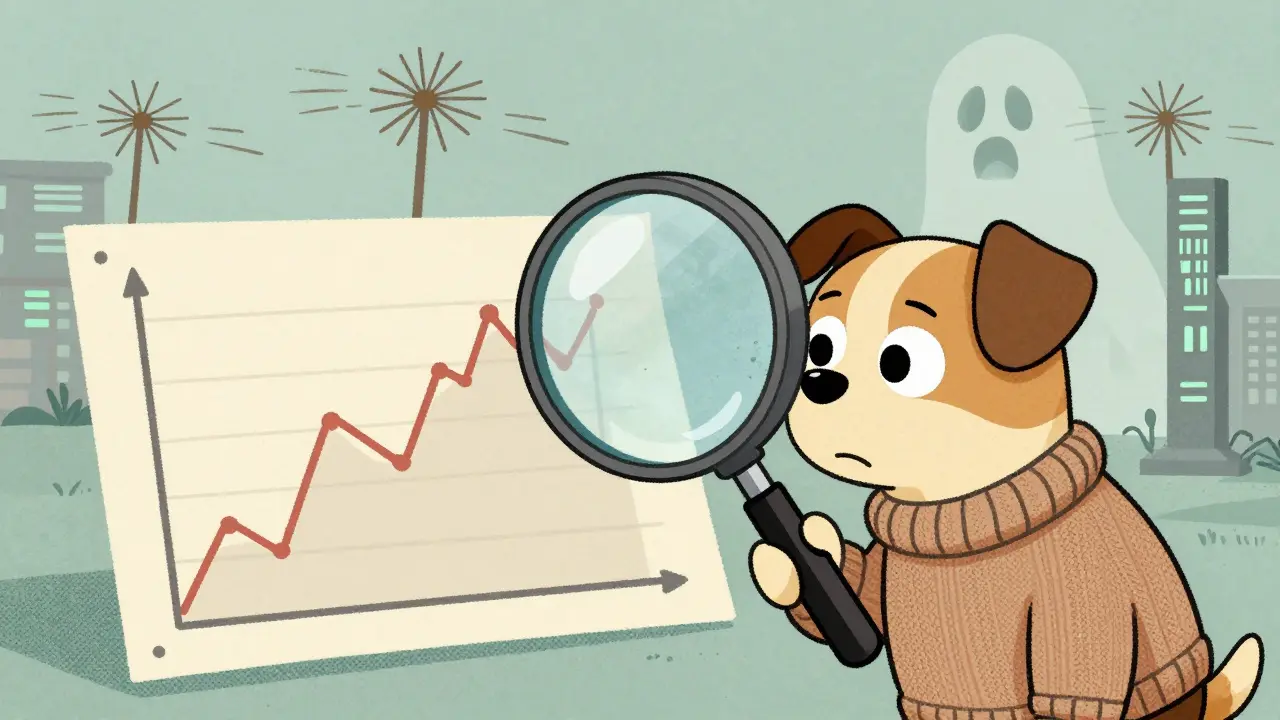
Additionally, the project's reliance on the Velas Network means its success is tied to that blockchain's adoption. If Velas doesn't grow, WagyuSwap remains a ghost town regardless of how fast its codebase is. You should also be wary of any "airdrop" links that ask for your seed phrase-real airdrops only require you to connect your wallet to a verified smart contract.
Comparison: WagyuSwap vs. The Giants
It's easy to compare WagyuSwap to Uniswap or PancakeSwap, but they operate in different leagues. While the giants have billions in TVL, WagyuSwap is a niche player focusing on a specific high-speed chain. The advantage here is lower fees and faster transaction times compared to the congested Ethereum mainnet, but the trade-off is significantly lower liquidity.
Is the WagyuSwap airdrop still active?
Most IDO launch airdrops are time-limited events that happen at the start of a project. While some tokens may still be claimable for eligible wallets, you should check the official WagyuSwap dashboard. Be extremely careful of third-party sites claiming to distribute "new" airdrops, as these are often phishing scams.
What is the Velas Network?
Velas is a blockchain designed for speed and scalability, using a codebase similar to Solana but adding EVM compatibility. This allows developers to port Ethereum-based apps over to a faster network.
How do I earn more WAG tokens?
Beyond airdrops, the primary way to earn WAG is through liquidity mining. By providing liquidity to pools on the DEX and staking your LP tokens, you earn WAG as a reward for supporting the platform's stability.
What is impermanent loss in WagyuSwap?
Impermanent loss happens when the price of tokens you've deposited into a liquidity pool changes compared to when you deposited them. If you withdraw during a price swing, you might have less value than if you had just held the tokens in your wallet. WagyuSwap mitigates this by giving you WAG rewards for staking.
Does WagyuSwap require KYC?
No, as a decentralized exchange, WagyuSwap does not require any identity verification. You only need a compatible crypto wallet to interact with the smart contracts.

Comments (14)
Greg Reynolds
The claim that combining Solana's speed with EVM compatibility is a primary advantage is a bit reductive. Most people ignore the fact that liquidity is the only metric that actually matters for a DEX, and with a TVL that low, the 'speed' is essentially irrelevant since there's nothing to swap.
Benjamin Forg
funny how they push this velas network as some revolution when it is probably just another way for the elites to track every single transaction on a shadow ledger no one talks about the real controllers behind the amm codebase just follow the money and see where it leads to the central banks
Sara Ellis
money is just an idea anyway
Yvette P
Oh, absolutely, because nothing says "financial revolution" like a project with a TVL that wouldn't even cover a decent dinner in Manhattan. I'm sure the slippage on these trades is just delightful for anyone attempting to move more than ten dollars. It's truly a masterclass in inefficiency masquerading as a high-speed ecosystem, and we're all just waiting for the inevitable rug-pull or the slow decay into a ghost chain. Truly revolutionary stuff here, folks, just keep staking your precious liquidity into a void where the only thing growing is the developers' egos while the token price does a perfect impression of a lead balloon.
Jason M
Wait, everyone! We have to remember that for someone just starting their DeFi journey, these smaller ecosystems can be a fantastic playground to learn how AMMs actually work without risking their life savings! It is a breathtaking opportunity to witness the raw mechanics of liquidity pools in real-time!
Paige Raulerson
I can't believe people are actually debating this. It's clearly a low-tier project. Why bother with such a basic analysis?
Gloris Young
Stay safe everyone. Just be careful with those links!
Kyle Bush
USA 🇺🇸 SHOULD BE LEADING THE BLOCKCHAIN REVOLUTION NOT SOME RANDOM NETWORK! GET SOME REAL VOLUME IN HERE! 🚀🚀🚀
Liz Ariza
Giving liquidity to a small pool is like planting a tiny seed in a wild garden 🌸✨. It's all about the patience and the vibe of the community!
Jennifer L
I feel so much empathy for those who invested at the peak. It is truly heartbreking to see such a drop in value. I hope everyone finds a way to recover their losses in a peacefull manner. Please be gentel with each other in the comments while we navigate these launguage barriers and market crashes.
Tara Aman
I'm totally down to help anyone who needs a hand setting up their wallet for this!
Mary Tawfall
It's always good to look at the fundamentals before jumping in. Even with a price drop, there's always a chance for a recovery if the utility is there.
Candace Sherrard
The nature of these niche DEXs is that they exist in a state of perpetual tension between the desire for speed and the necessity of liquidity, which leads one to wonder if the very architecture of the Velas network is an attempt to solve a problem that is more social than technical. When we strip away the jargon of VEP20 and AMMs, we are essentially looking at a digital village that is waiting for inhabitants to arrive, and whether that arrival ever happens depends entirely on the collective belief in a decentralized future that isn't dominated by the giants.
Ellie Drews
Just a reminder to everyone to double-check the official dashboard link before connecting your wallets! Keep it safe!