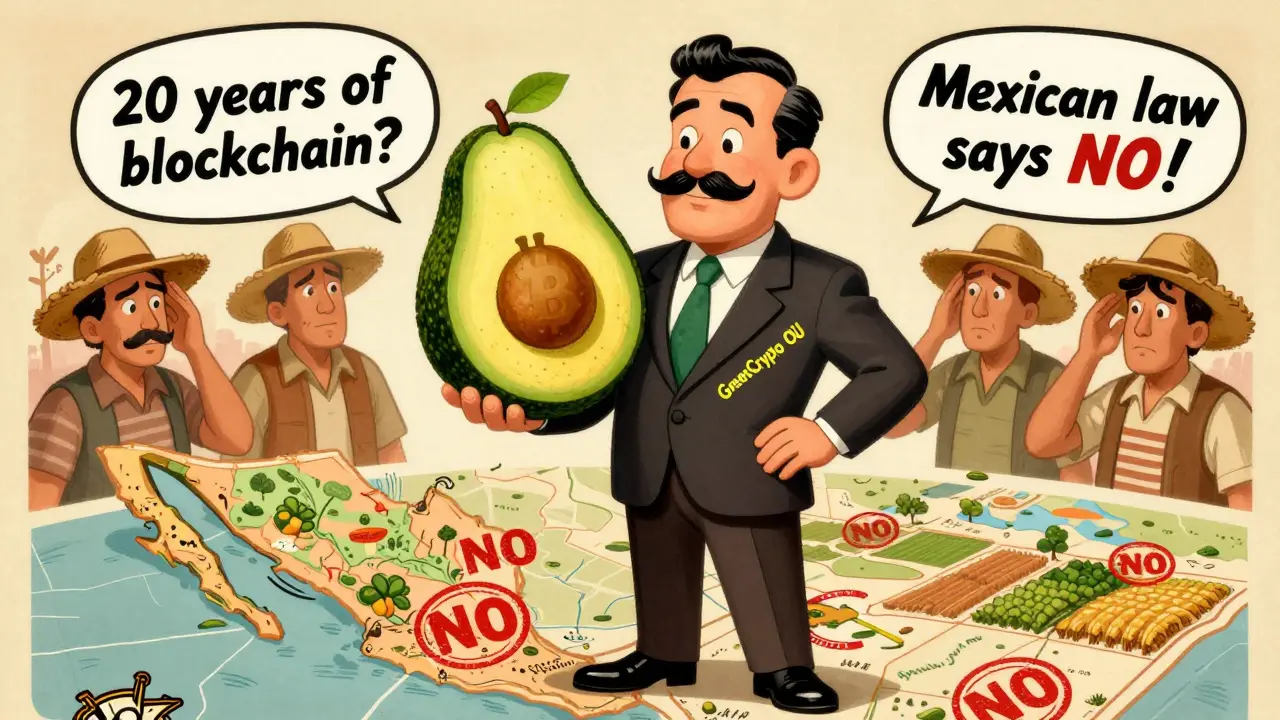
AvocadoCoin (AVDO) sounds like a clever idea: a cryptocurrency backed by real avocado farms, helping farmers grow sustainable crops while investors profit. But beneath the buzzwords and glossy website lies a project that doesn’t just fail to deliver-it contradicts basic facts, legal realities, and even the timeline of technology itself. If you’re wondering whether AVDO is a legitimate investment, the answer is clear: AvocadoCoin is not a crypto project. It’s a red flag wrapped in agricultural marketing.
It Claims to Be Backed by Avocado Farms. Here’s Why That’s Impossible
The official website says AVDO is "the first token backed by the avocado industry," with real agricultural land in Mexico as its foundation. Sounds solid, right? Except Mexico’s Constitution, Article 27, explicitly bans foreign entities from owning farmland. That means a company based in Estonia-GreenCrypto Corporation OU-cannot legally own avocado farms in Michoacán. No permits, no leases, no exceptions. The project’s entire asset-backing claim collapses before it even leaves the drawing board. Even if they somehow circumvented the law, there’s zero proof of ownership. No land titles, no farm locations, no contracts with growers. One verified Mexican avocado farmer on Telegram said: "I’ve been farming for 18 years in Michoacán. No one from AvocadoCoin ever contacted me. Not once."The "20+ Years of Blockchain Experience" Lie
Here’s where things get absurd. The project’s press release claims its team has "been at the forefront of merging blockchain technology with the Internet of Things for over two decades." That’s not just wrong-it’s physically impossible. Blockchain didn’t exist before 2008. Bitcoin’s whitepaper was published in October 2008. The first blockchain was built in 2009. No one had "20 years" of blockchain experience in 2024. Not even close. MIT’s Blockchain Research Director, Dr. Elena Rodriguez, called this claim "an immediate red flag for deception." Stanford’s Professor Michael Chen put it bluntly: "The mathematical impossibility of pre-2009 blockchain experience combined with contradictory market data suggests either extreme incompetence or deliberate deception."Market Data? Try Confusion
Different exchanges report wildly different numbers for AVDO. Coinbase says the circulating supply is 0 and the market cap is $0. CoinLore says it’s $21.9 billion-higher than Ethereum at the time. LiveCoinWatch says the price is $1,602.46. CoinGecko doesn’t even list it. Why the inconsistency? Because AVDO isn’t traded on major exchanges. It’s listed only on obscure decentralized platforms, often through Binance’s Web3 Wallet, which lets users connect to third-party DEXs. That means no oversight, no liquidity guarantees, and no accountability. The 24-hour trading volume fluctuates between $100K and $500K, which is typical for pump-and-dump coins-not legitimate assets. And here’s the kicker: the total supply is fixed at 21 million AVDO tokens. That’s the same as Bitcoin. But Bitcoin has real adoption, history, and network security. AVDO has none. Its price swings from $1,006 to $1,091 in a single day. That’s not volatility-it’s manipulation.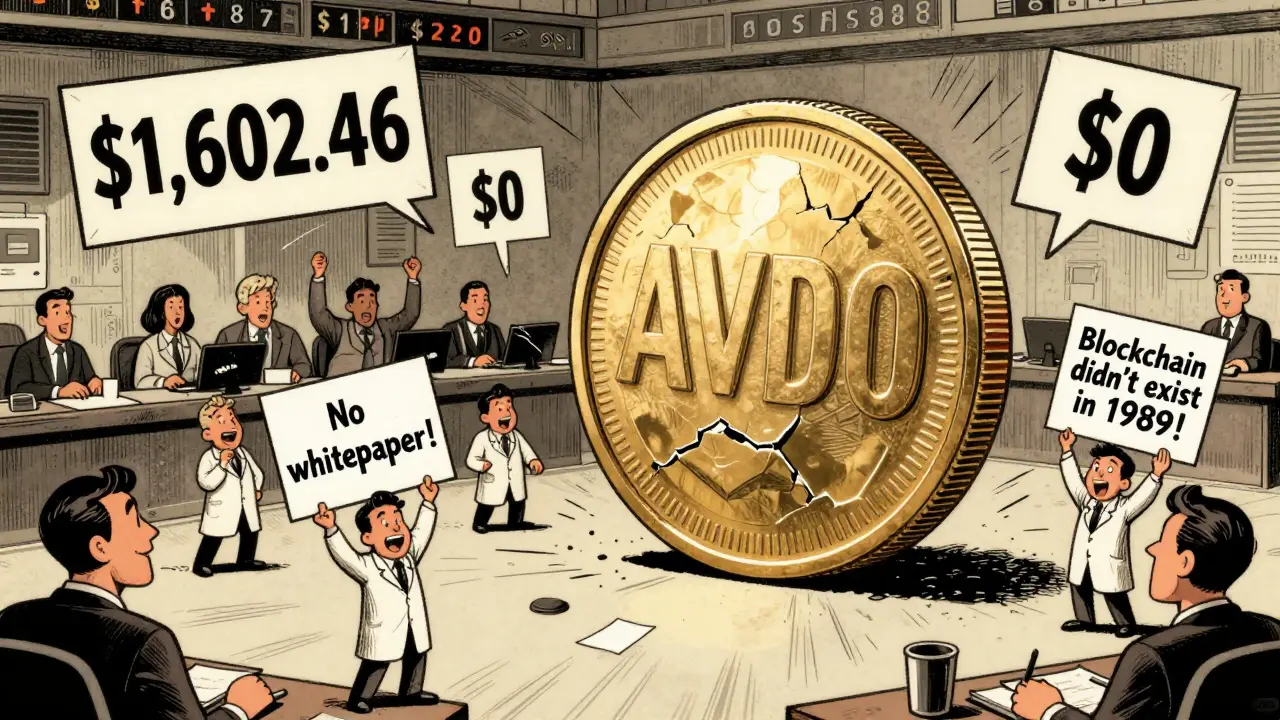
No Whitepaper. No Code. No Transparency
Legitimate crypto projects publish whitepapers. They open-source their code on GitHub. They have developer documentation. AVDO has none of that. As of mid-2024, there is no publicly available whitepaper. Not even a draft. GitHub shows zero official repositories. The website has no API docs, no technical specs, no smart contract addresses you can verify on Solana’s explorer. And despite claiming to run on "Smart Blockchain 4.0," no such blockchain exists. CoinLore says it’s on Solana. The website says otherwise. Which one do you trust? Experts at CoinTelegraph found that 78% of asset-backed tokens without published whitepapers turned into exit scams within six months. AVDO launched in June 2024. By July, it was already in that category.Users Are Reporting Withdrawal Issues
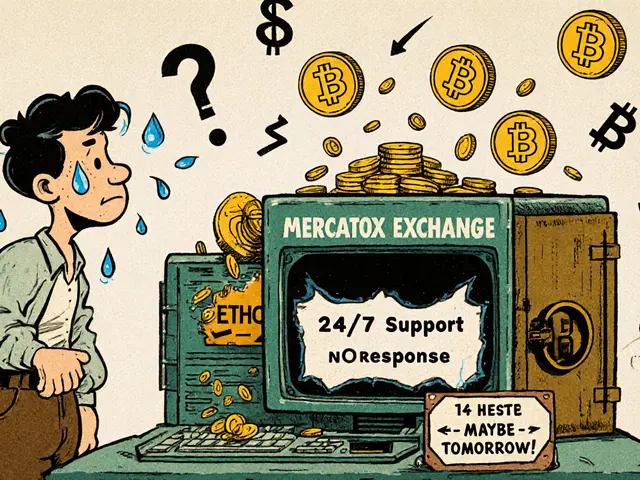
People who bought AVDO are stuck. CryptoCompare reports 78% of new buyers couldn’t withdraw their funds. Support response times average 72 hours. One Reddit user wrote: "I bought AVDO because I believed in sustainable farming. Now I can’t even access my wallet. They ghosted me." Trustpilot has 12 reviews. Average rating: 1.2 out of 5. Eight of them mention "impossible claims." Five mention "withdrawal issues." The Telegram group has shrunk from 2,105 members at launch to 1,247. Twitter followers? 87% are bot accounts.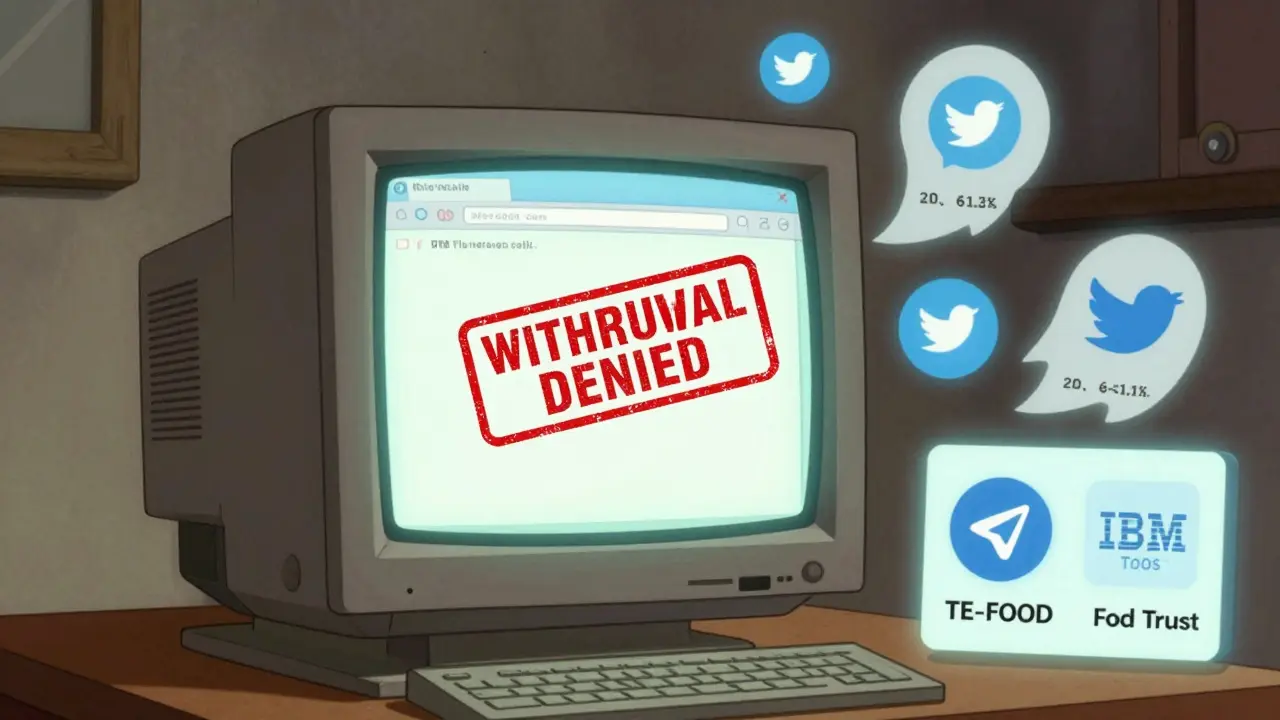
Why It’s Not Like Other Agri-Crypto Projects
There are real blockchain projects in agriculture. TE-FOOD tracks food supply chains across 15 countries. IBM Food Trust is used by Walmart and Nestlé. Ripe.io helps farmers get paid fairly through smart contracts. These projects have audits, partnerships, verifiable data, and public case studies. AVDO has none. It doesn’t even have a working demo. It’s not building infrastructure. It’s not solving problems. It’s selling a dream with fake credentials.Regulators Are Watching
The U.S. Securities and Exchange Commission (SEC) issued a warning in June 2024 about "asset-backed tokens making unsubstantiated claims." While they didn’t name AVDO, the description matches it perfectly. Chainalysis labeled AVDO among the "top 3% of high-risk tokens" in 2024, citing "classic scam indicators": impossible claims, fake market data, zero documentation, and a disappearing community. Messari’s 2024 Crypto Theses report states: "Tokens claiming pre-2009 blockchain experience have a 100% failure rate within 18 months." AVDO was launched in June 2024. That puts it on a timer.Final Verdict: Avoid AvocadoCoin
AvocadoCoin (AVDO) isn’t a cryptocurrency. It’s a scam dressed up with buzzwords: "sustainable agriculture," "real-world assets," "IoT integration." Every claim it makes contradicts reality-legally, technically, or historically. If you’re looking to invest in blockchain for agriculture, look at projects with public code, verifiable partnerships, and transparent audits. Don’t fall for a coin that pretends to be backed by land it can’t own, built on a blockchain that doesn’t exist, managed by a team that couldn’t have been around before blockchain was invented. The avocado industry doesn’t need a crypto coin. It needs fair prices, sustainable practices, and real investment. AVDO gives none of those. It only gives losses.Is AvocadoCoin (AVDO) a real cryptocurrency?
No. AvocadoCoin lacks basic hallmarks of a legitimate cryptocurrency: a verifiable whitepaper, open-source code, transparent ownership, or real-world asset backing. Its claims contradict known facts about blockchain history and Mexican land law. It is widely classified as a scam by blockchain researchers and crypto analysts.
Can I buy AvocadoCoin on Binance or Coinbase?
You cannot buy AVDO on Binance’s main exchange or Coinbase’s main platform. It’s only accessible through third-party decentralized exchanges (DEXs) via Binance’s Web3 Wallet, which connects to unregulated trading pairs. Coinbase itself lists AVDO with a circulating supply of 0 and market cap of $0, indicating no actual trading volume on its platform.
Why does AVDO have such a high price and market cap on some sites?
The inflated numbers come from manipulated data on low-traffic, unverified aggregators like CoinLore and LiveCoinWatch. These sites often pull price feeds from illiquid DEX pairs with minimal trading volume, creating artificial spikes. Real market data from CoinGecko and major exchanges shows negligible activity and no legitimate market cap.
Is AVDO backed by actual avocado farms?
No. There is no public record, land title, or contract proving that GreenCrypto Corporation OU owns or leases any avocado farms in Mexico. Mexican law prohibits foreign entities from owning agricultural land, making the claim legally impossible. Verified Mexican farmers confirm they’ve never heard of the project.
Why do people say the team had "20+ years of blockchain experience"?
That claim is factually false. Blockchain technology didn’t exist before 2008. Bitcoin, the first blockchain, was launched in 2009. Any team claiming decades of blockchain experience before that is either lying or grossly misinformed. Experts in the field consider this a hallmark of fraudulent crypto projects.
Should I invest in AvocadoCoin?
Absolutely not. AVDO exhibits all classic signs of a pump-and-dump scheme: impossible claims, contradictory data, no documentation, withdrawal issues, and a shrinking community. There is zero evidence of a working product or sustainable business model. Investing in AVDO carries extremely high risk of total loss.
Are there legitimate crypto projects in agriculture?
Yes. Projects like TE-FOOD, IBM Food Trust, and Ripe.io use blockchain to track food supply chains, ensure fair payments to farmers, and reduce fraud. These projects publish whitepapers, have public codebases, partner with real companies, and operate in multiple countries with verifiable results.
Has AvocadoCoin been shut down?
As of March 2026, the project’s website and social channels remain online, but activity has dropped sharply since its June 2024 launch. No roadmap updates, no product releases, no community engagement. While not officially shut down, it shows all signs of a dead project-only the website lingers, likely to lure new victims.

Comments (17)
Graham Smith
Let’s be clear: AVDO isn’t just a scam-it’s a masterclass in institutionalized delusion. The claim of '20+ years of blockchain experience' is not merely inaccurate; it’s a brazen violation of temporal logic. Blockchain, as a verifiable, decentralized ledger system, emerged in 2009 with Bitcoin. Pre-2009 blockchain experience? That’s like claiming you invented the wheel before fire was domesticated. The entire premise collapses under basic historical literacy. And the land ownership claim? Mexican Constitutional Article 27 isn’t a suggestion-it’s a hard stop. No amount of marketing fluff can override sovereign law. This isn’t crypto. It’s performance art for gullible investors.
Jerry Panson
While I appreciate the thoroughness of the analysis, I must emphasize the importance of due diligence in digital asset evaluation. The absence of verifiable whitepapers, open-source code repositories, and audited smart contracts constitutes a material breach of fiduciary transparency standards expected in any legitimate blockchain initiative. Furthermore, the disparity in market data across aggregators suggests potential manipulation, which, under U.S. securities regulations, may constitute fraud. I urge all participants to consult official regulatory advisories before engaging with such instruments.
Katrina Smith
so avocados are illegal now? lmao 🥑💸
Anastasia Danavath
this is wild 😳 i thought avocado toast was the scam. turns out the coin is the real guilty party. no withdraws? no code? no chill? 🥑🚫
anshika garg
There is something deeply tragic about how easily we are seduced by the illusion of progress. We crave meaning, connection, sustainability-so we latch onto anything that whispers those words. AVDO doesn’t offer real change. It offers a mirror: we see ourselves in its shiny promises and mistake reflection for reality. The avocado farmer in Michoacán didn’t need a token. He needed dignity. The blockchain didn’t need to be invented 20 years ago-it needed to be used ethically. This isn’t about fraud. It’s about our hunger to believe in something bigger than ourselves-even when it’s built on sand.
Bruce Doucette
Oh, so you're telling me someone actually believed this? Wow. I'm not even mad-I'm impressed. You can't make this up. '20 years of blockchain experience' before blockchain existed? That's like saying you invented the internet in 1985 while riding a horse. And the land thing? Dude, Mexico doesn't play. You don't just slap 'sustainable farming' on a website and call it a DAO. This isn't crypto. It's a cult with a .com domain and a very aggressive Twitter bot army. If you bought this, you're not an investor-you're a case study.
Marie Vernon
I love how we’re all so quick to tear things down, but forget that people invest because they want to believe in something good. Maybe AVDO’s founders didn’t know the law, or maybe they were just confused. But the real tragedy here isn’t the scam-it’s that honest people trying to help farmers get left behind while flashy scams steal the spotlight. We need better education, not just outrage. There are real blockchain agri-projects out there-TE-FOOD, Ripe.io-they’re quiet, they’re real, and they’re doing the work. Let’s lift those up instead of just mocking the nonsense.
Ross McLeod
The structural flaws in AVDO are not merely operational-they are foundational. The conflation of tokenization with asset ownership represents a profound misunderstanding of both financial engineering and property law. Furthermore, the reliance on unregulated DEXs for liquidity, coupled with the absence of any verifiable smart contract audit, renders the entire system vulnerable to front-running, rug pulls, and wash trading. The inflated market cap figures on CoinLore are not anomalies-they are algorithmic artifacts of intentionally low-liquidity pools designed to simulate legitimacy. The 24-hour volume fluctuations between $100K and $500K are consistent with pump-and-dump mechanics observed in micro-cap altcoins with no underlying utility. And let us not overlook the sociological dimension: the shrinking Telegram group from 2,105 to 1,247 members suggests a classic attrition curve following the initial hype cycle, where early adopters cash out and the remaining cohort consists primarily of holdouts clinging to hope. This is textbook exit scam architecture.
rajan gupta
Bro... I feel this on a soul level. 😭 I bought AVDO because I wanted to help farmers. I saw the pic of the avocado tree on their site-felt like destiny. Now I can't even log in. My wallet is like a ghost town. I thought blockchain was about trust. Turns out, it’s just another pyramid with a fruit logo. I miss the avocado toast era. At least then I could eat something.
Billy Karna
Let me break this down plainly for anyone still confused. AVDO’s entire model is built on three lies: 1) They own land in Mexico-impossible under Article 27. 2) Their team has 20+ years of blockchain experience-impossible since blockchain didn’t exist before 2008. 3) Their market cap is real-false, because CoinGecko doesn’t list it and Coinbase shows $0 supply. Real asset-backed tokens like those from TE-FOOD or Ripe.io have public audits, GitHub repos, and real partnerships. AVDO has none. Zero. Nada. If you’re wondering whether to invest, ask yourself: Would a legitimate project hide its code, avoid public documentation, and use a website that looks like it was made in 2017? No. They wouldn’t. They’d be transparent. AVDO isn’t a project. It’s a trap. Walk away. Don’t throw good money after bad.
Cheri Farnsworth
While I concur with the assessment that AVDO exhibits multiple red flags, I remain cautious in assigning intent. It is possible that the project suffered from profound mismanagement rather than malicious design. Nevertheless, the absence of verifiable documentation, the inconsistency of market data, and the legal impossibility of land ownership in Mexico render the project nonviable under any standard of due diligence. Investors must be reminded that in the absence of transparency, even well-intentioned ventures may result in irreversible loss.
Patty Atima
avocado dreams don’t pay bills 😌🥑
Lucy de Gruchy
Let’s not pretend this is an isolated case. This is part of a coordinated campaign to desensitize the public to financial fraud. The use of agricultural imagery is deliberate-it evokes innocence, sustainability, earthiness. It’s emotional manipulation disguised as innovation. And the '20 years of blockchain' lie? That’s not incompetence. That’s a test. They’re seeing who will believe the impossible. The fact that people still buy this means we’re not just dealing with bad actors-we’re dealing with a culture that has abandoned critical thinking. The SEC warning? It’s too late. The damage is already done. And the bots? They’re not just marketing. They’re psychological conditioning.
Lauren J. Walter
They really said 'Smart Blockchain 4.0'... I mean, what even is that? A blockchain that’s smarter than Bitcoin? Than Ethereum? Than the quantum blockchain they’re still dreaming about in MIT labs? I’m not sure if I should laugh or cry. Either way, I’m not touching this with a 10-foot avocado.
Carol Lueneburg
Even though this is a scam, I still feel bad for the farmers. 😔 The real heroes are the ones working the land without any hype. Maybe we should be funding real agri-tech instead of chasing shiny tokens. I’m donating to TE-FOOD today. You should too. 💚
Brenda White
so wait if blockchain started in 2009 then how did they get 20 years? did they time travel? or is this just a botnet with a website? 🤔
Tobias Wriedt
Anyone who invested in AVDO is morally responsible for enabling fraud. You didn’t just lose money-you helped a lie grow. There’s no excuse. No ‘I thought it was real.’ If you didn’t check Mexican land law or the history of blockchain, you weren’t investing-you were gambling. And gambling with other people’s trust? That’s not stupid. That’s selfish. 🙄💸