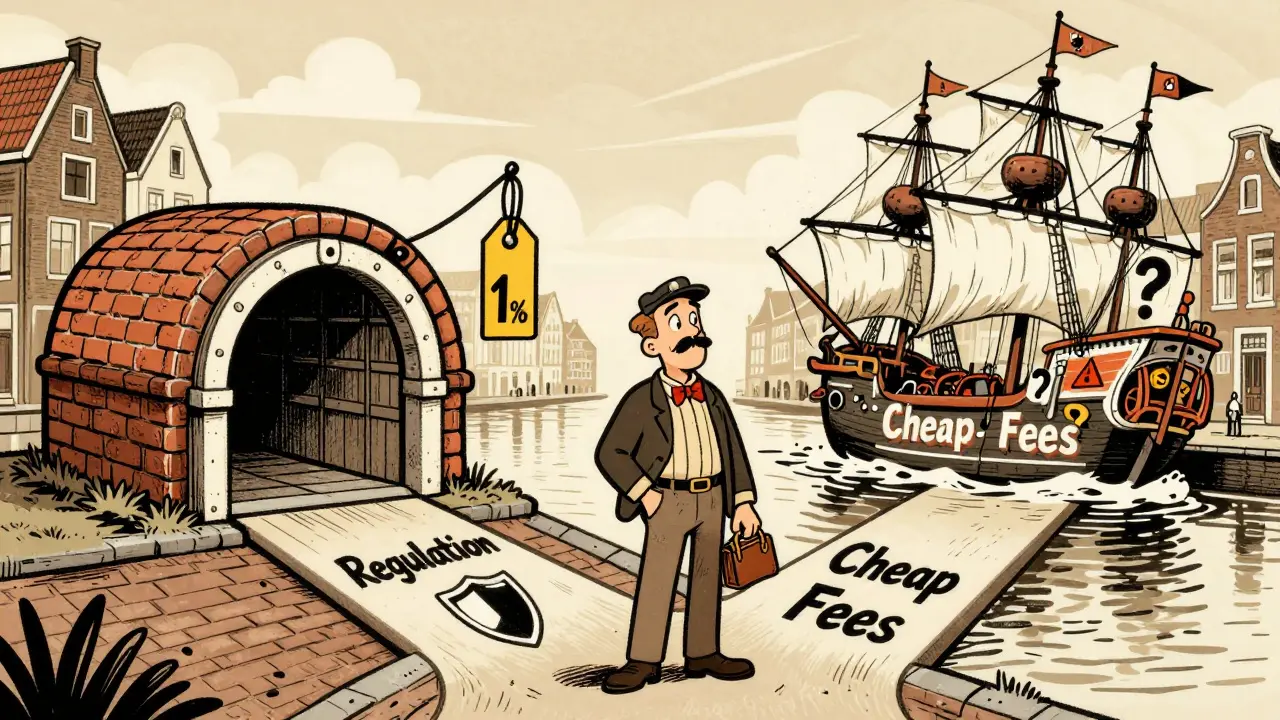
Buying cryptocurrency in the Netherlands used to mean choosing between safety and convenience. You could stick with a heavily regulated platform like SATOS, which is a Dutch-regulated cryptocurrency exchange operating under De Nederlandsche Bank supervision and feel safe but pay high fees. Or you could use an offshore giant for cheap trades and worry about your money’s security. In September 2024, that choice changed. SATOS partnered with Bybit, a global cryptocurrency derivatives exchange known for advanced trading tools. This move gave Dutch users access to over 300 trading pairs while keeping their funds protected by strict local laws. If you live in the Netherlands, this review breaks down whether SATOS is still worth your time.
Why Regulation Matters for Dutch Traders
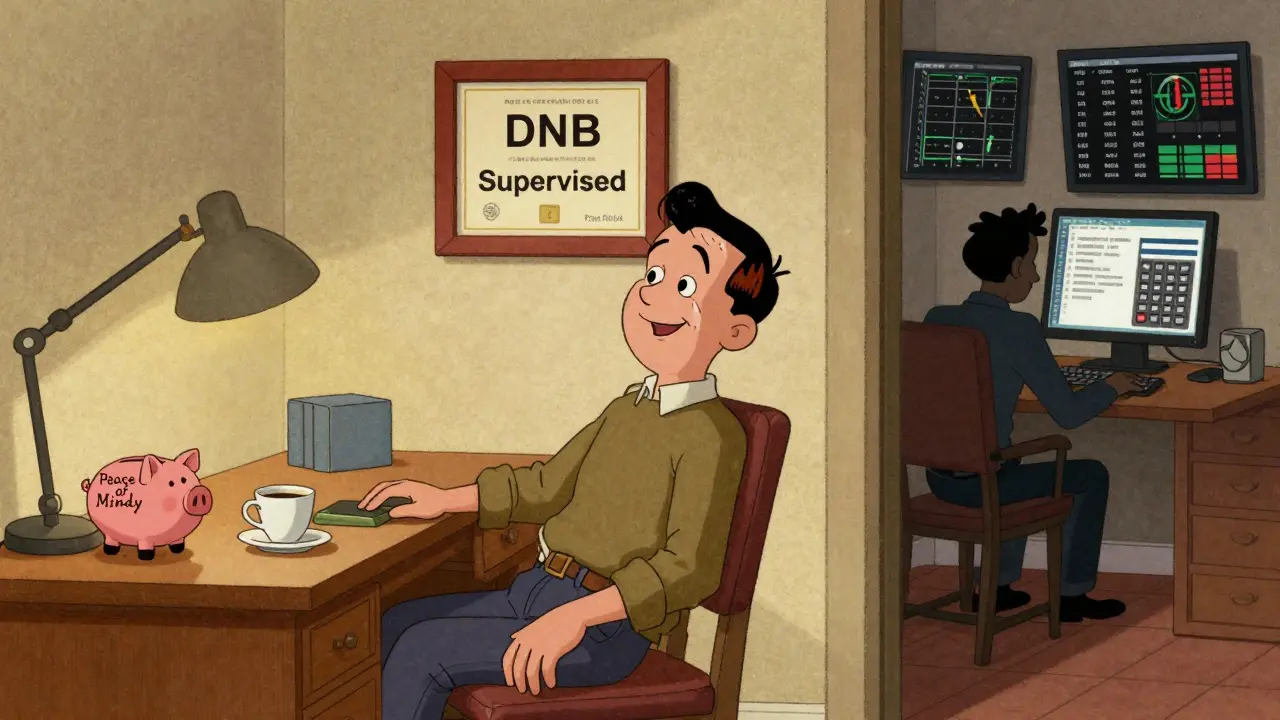
The biggest selling point of SATOS isn’t its interface or its fee structure-it’s who watches it. SATOS operates under the supervision of De Nederlandsche Bank (DNB), the central bank of the Netherlands responsible for financial stability and regulatory oversight. This isn’t just a badge on their website. It means SATOS must follow strict Anti-Money Laundering (AML) and Countering the Financing of Terrorism (CFT) rules. According to Chainalysis’ 2024 compliance guide, exchanges regulated by national banking authorities see 68% fewer security incidents than unregulated platforms.
Dr. Eva Jansen, a cryptocurrency compliance specialist at Amsterdam University, explained in a September 2024 interview with FinTech Weekly that DNB supervision forces exchanges like SATOS to undergo rigorous security testing. This includes penetration testing at least twice a year and continuous transaction monitoring. Most offshore exchanges ignore these standards. For a Dutch resident, this regulatory shield offers peace of mind that simply doesn’t exist on platforms based in jurisdictions with loose oversight.
Fees: The High Cost of Safety
Here is where things get tricky. SATOS charges a flat 1% trading fee for both buying and selling. That number stays the same regardless of how much you trade. Compare that to Bitvavo, a popular Dutch cryptocurrency exchange offering tiered fee structures, which charges between 0.15% and 0.25%. Even Bitonic, another regulated Dutch crypto exchange focusing on Bitcoin and Ethereum, charges just 0.25% per transaction. Mark van der Berg, a crypto security expert, noted in his November 2024 analysis for the Dutch Financial Times that SATOS’s fee is 300% higher than Bitonic’s.
If you are a high-volume trader, that 1% adds up fast. Buying €10,000 worth of Bitcoin costs you €100 in fees alone. On Bitvavo, that same trade would cost around €25. However, if you trade occasionally-say, once a month-the difference might not bother you. You are paying for regulatory compliance and local support, not market-making efficiency. The table below shows how SATOS compares to its main competitors.
| Exchange | Trading Fee | Regulatory Body | Payment Methods | Best For |
|---|---|---|---|---|
| SATOS | 1.0% | DNB | Bank Transfer (SEPA) | Security-focused casual traders |
| Bitvavo | 0.15% - 0.25% | DNB | iDEAL, SEPA, Credit Card | Active traders seeking low fees |
| Bitonic | 0.25% | DNB | iDEAL, SEPA | Bitcoin/Ethereum only investors |
| Kraken | 0.16% - 0.26% | Multiple EU Regulators | SEPA, Wire, Cards | Advanced European traders |

The Bybit Partnership: More Coins, Same Rules
In September 2024, SATOS announced a strategic partnership with Bybit. Before this, SATOS offered only 42 trading pairs. Now, Dutch users can access over 300 cryptocurrencies through the platform. This expansion solves one of SATOS’s biggest weaknesses: limited selection.
How does it work? SATOS handles the regulatory compliance and fiat on-ramps (your Euro deposits). Bybit provides the liquidity and the broader range of tokens. You still go through SATOS’s KYC process, and your funds remain under DNB scrutiny. This hybrid model lets you buy obscure altcoins without leaving the safety of a Dutch-regulated environment. However, keep in mind that while you have more choices, the 1% fee still applies to all these new pairs. There is no discount for trading less popular tokens.
Security and Payment Options
SATOS takes security seriously, as required by law. They store the majority of user funds in offline cold storage wallets. This protects against online hacks, which are the most common threat to centralized exchanges. The platform also requires two-factor authentication (2FA). Crucially, they recommend using an authenticator app rather than SMS. Security.org’s January 2025 guide highlights that SMS-based 2FA is vulnerable to SIM-swapping attacks, making app-based verification the minimum standard for serious protection.
Where SATOS falls short is in payment flexibility. You can deposit and withdraw Euros via SEPA bank transfer. That’s it. No iDEAL, no credit cards, no instant payments. Users on Reddit’s r/netherlands subreddit frequently complain about this. One user, ‘AmsterdamTrader88’, wrote in September 2024: “I wish they added iDEAL payments like Bitonic - bank transfers take too long.” SEPA transfers can take 1-3 business days. If you want to react quickly to market movements, this delay is a major inconvenience.
User Experience and Support
The SATOS interface is straightforward but basic. It is available only in Dutch. If you do not speak Dutch, you will struggle to navigate the platform or understand error messages. Unlike Binance or Kraken, which support 15+ languages, SATOS is built exclusively for the local market.
Customer support is another mixed bag. SATOS offers email and phone support. Their Trustpilot rating sits at 4.1 out of 5 from 142 verified reviews as of November 2025. Users praise the responsive Dutch-language support and the feeling of safety provided by DNB regulation. However, response times average 12-24 hours. Compare that to Coinbase, which offers 24/7 live chat with 5-minute response times. If you have an urgent issue outside of business hours, you might be waiting a while. Dutch financial blogger Pieter de Vries noted in September 2024 that new users typically need 2-3 transactions to feel comfortable with the interface, suggesting a moderate learning curve.
Is SATOS Right for You?
SATOS occupies a specific niche. It is not for day traders who care about every basis point of fee savings. It is not for international users who need multi-language support. It is for Dutch residents who prioritize regulatory safety above all else. With the Bybit partnership, it has become more viable for those who want exposure beyond just Bitcoin and Ethereum.
If you trade small amounts occasionally and value knowing that a Dutch central bank oversees your exchange, SATOS is a solid choice. If you trade frequently, hold large volumes, or need instant payments via iDEAL, look at Bitvavo or Bitonic instead. The 1% fee is hard to justify unless you view it as an insurance premium for total regulatory compliance.
Is SATOS safe to use?
Yes, SATOS is considered very safe because it is regulated by De Nederlandsche Bank (DNB). This requires strict adherence to security protocols, including regular audits, cold storage for most funds, and mandatory anti-money laundering checks. Regulated exchanges like SATOS experience significantly fewer security incidents than unregulated offshore platforms.
What are the trading fees on SATOS?
SATOS charges a flat 1% fee on all buys and sells. This fee does not change based on your trading volume. While this is higher than competitors like Bitvavo (0.15-0.25%) or Bitonic (0.25%), it reflects the cost of maintaining full DNB regulatory compliance.
Can I use iDEAL to deposit money on SATOS?
No, SATOS currently only supports SEPA bank transfers for deposits and withdrawals. This means transfers can take 1-3 business days to complete. Many users find this inconvenient compared to exchanges that offer instant iDEAL payments.
Does SATOS support non-Dutch speakers?
No, the SATOS platform and customer support are available only in Dutch. This makes it difficult for non-Dutch residents or tourists to use the service effectively. It is designed specifically for the domestic Dutch market.
How many cryptocurrencies can I trade on SATOS?
Thanks to a partnership with Bybit launched in September 2024, SATOS now offers over 300 trading pairs. Previously, the selection was limited to around 42 coins. This expansion allows users to access a wider variety of altcoins while staying within the regulated Dutch framework.
Is SATOS better than Bitvavo?
It depends on your priorities. Bitvavo is better for active traders due to lower fees (0.15-0.25%) and faster payment methods like iDEAL. SATOS is better for conservative investors who prioritize maximum regulatory oversight and peace of mind from DNB supervision, even if it costs more in fees.