SSF Staking: What It Is, How It Works, and What You Need to Know
When you hear SSF staking, a process where users lock upSSF tokens to support a blockchain network and earn rewards in return. It’s not magic—it’s math and incentives. Think of it like putting money in a savings account, but instead of a bank, you’re helping keep a decentralized network running. Also known as token locking, this method is central to how many DeFi projects reward participation without needing a central authority. But here’s the catch: not every project calling itself "SSF staking" is real. Some are just dressed-up scams. Others vanish after the first reward cycle. You need to know what’s behind the numbers.
Staking crypto, the broader practice of locking digital assets to secure a blockchain and earn yield. It’s the backbone of proof-of-stake networks like Ethereum 2.0, Cardano, and Solana. But when you see "SSF staking" on a random website, you’re not just signing up for yield—you’re trusting code, team credibility, and token supply mechanics. That’s why DeFi staking, staking done through decentralized protocols without intermediaries can be risky if you don’t check the contract, the team, or the liquidity. Many "SSF" projects have no public code, no audits, and zero trading volume. They look like staking. They sound like staking. But they’re just waiting for you to deposit before pulling the plug.
And then there’s the tokenomics, the economic design behind a crypto token, including supply, distribution, and reward structures. A good staking model keeps rewards sustainable. A bad one dumps new tokens faster than users can claim them, crashing the price. Look at past cases like OpenDAO’s SOS or Spintop’s SPIN—both started with big airdrops and promises of staking rewards. Within a year, the tokens were worth pennies. Why? Because the tokenomics didn’t match real demand. If you’re considering SSF staking, ask: Who controls the treasury? Is the reward rate sustainable? Is there a vesting schedule for team tokens? If the answers are vague, walk away.
You’ll find plenty of posts below that dig into real staking setups, fake ones, and the crypto projects that pretended to offer rewards but left users with nothing. Some are about exchanges that vanished. Others are about tokens that had no utility from day one. None of them are about "easy money." They’re about recognizing patterns—how scams mimic legitimacy, how rewards collapse when supply outpaces demand, and how the smartest move isn’t chasing the highest APY, but understanding the system behind it. This isn’t a list of get-rich-quick schemes. It’s a collection of real-world lessons from people who learned the hard way.
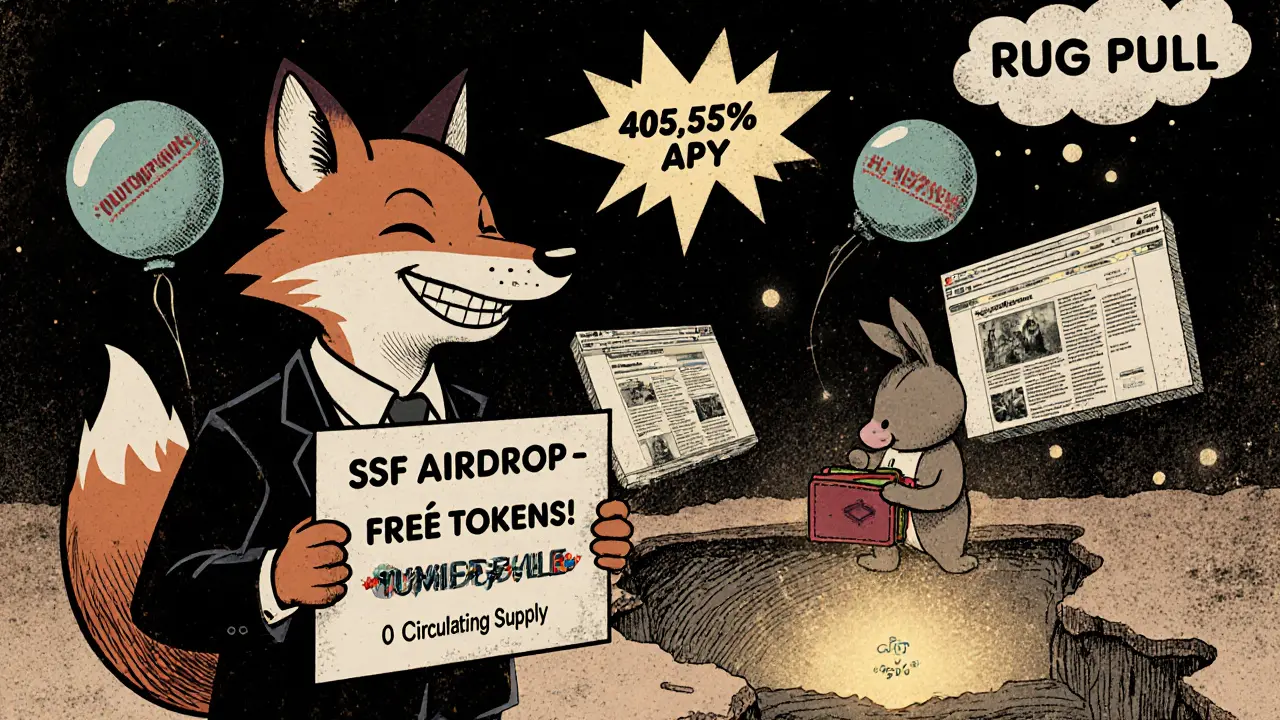
SecretSky.finance claims to offer an SSF token airdrop, but there's no official campaign, no trading volume, and no working app. Learn why this is a scam and how to avoid losing your crypto to fake airdrops.
Continue reading