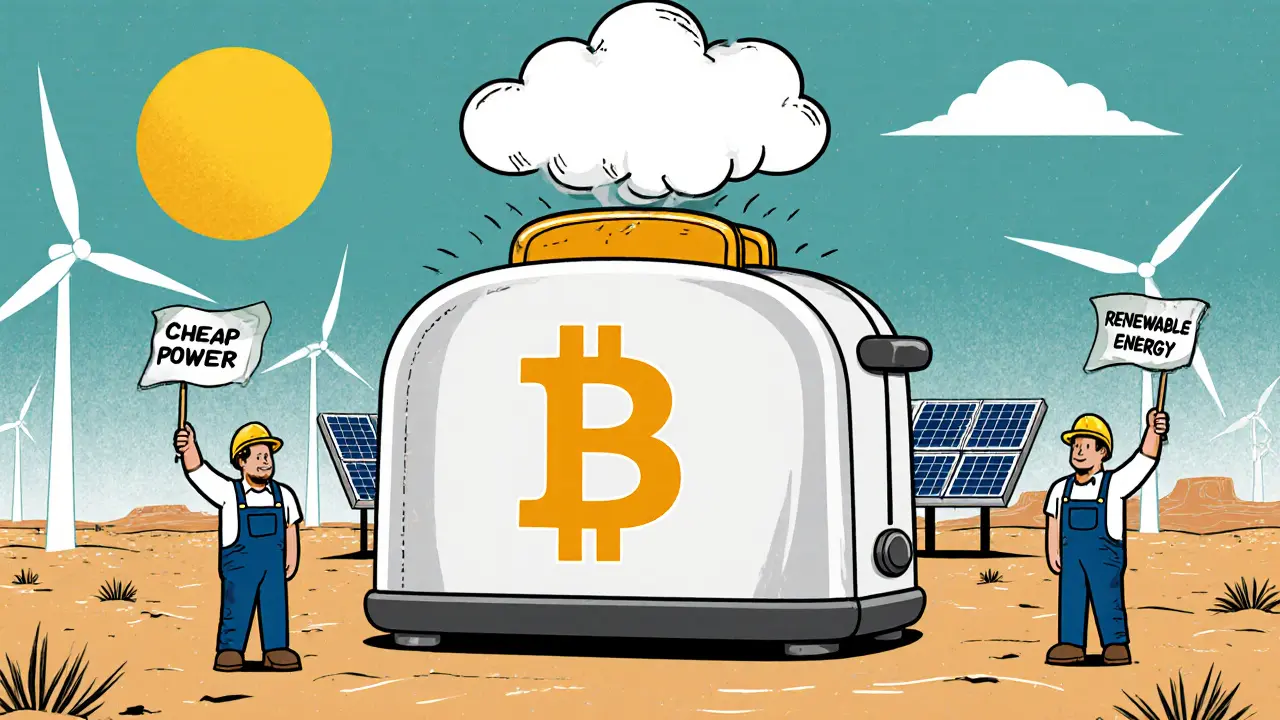
Hash Rate Geography: Where Crypto Mining Is Really Happening
When you hear about hash rate geography, the geographic distribution of cryptocurrency mining power across the globe. It’s not just about where the machines are — it’s about who controls the power, the policy, and the profit. Bitcoin’s network security depends on miners spread across the planet, but in reality, most of the hash rate is concentrated in just a few places. This isn’t random. It’s physics, politics, and electricity bills deciding where mining survives — and where it dies.
Crypto mining locations, the physical regions where mining operations are active. Also known as mining hubs, these spots aren’t chosen for cool weather or scenic views. They’re picked because of cheap power, stable grids, and governments that don’t shut them down. Places like Texas, Kazakhstan, and parts of Canada used to dominate. Now, after policy shifts and energy caps, the map is changing fast. Iceland, once a mining paradise thanks to geothermal energy, froze new projects. China’s ban in 2021 didn’t kill mining — it just moved it. Today, the biggest clusters are where energy is abundant and regulation is quiet. The Bitcoin mining power, the total computational force dedicated to securing the Bitcoin network. Also known as network hash rate, it’s not a number you can ignore. When a country like the U.S. adds gigawatts of new mining capacity, the whole network gets more secure. When a region like Kazakhstan faces power outages, the hash rate dips — and miners start moving again. This isn’t just technical. It’s economic survival.
Mining hardware distribution, where the physical ASIC machines are physically located and operated. These aren’t sitting in garages anymore. They’re in warehouses, repurposed factories, and even shipping containers near power plants. The machines themselves are made in China, but they’re running in places where electricity costs less than a cup of coffee. And that’s the real story: hash rate geography is really about cost per watt. The best miner isn’t the one with the newest chip — it’s the one sitting next to a dam, a wind farm, or a natural gas flare. You can’t mine Bitcoin profitably if you’re paying $0.15 per kWh. But if you’re paying $0.03? You’re in the game. That’s why some of the most advanced mining setups are in places most people have never heard of — places where excess energy goes unused until a mining rig shows up.
And then there’s the energy for crypto mining, the electricity sources powering mining operations worldwide. Also known as mining energy mix, it’s not just about cheap power — it’s about clean, stranded, or wasted power. Some miners now use flared gas from oil fields. Others run on hydro during rainy season. A few even use nuclear waste heat. This isn’t greenwashing — it’s pragmatism. The most successful miners aren’t the loudest. They’re the ones who turn waste into profit.
What you’ll find in the posts below aren’t just stories about mining rigs or electricity bills. They’re real-world snapshots of how policy, geography, and energy shape the crypto world. From Iceland’s frozen expansion to Venezuela’s crypto-powered survival, these posts show you where mining is alive, where it’s dying, and why location still beats technology every time.
As of 2025, the U.S. leads global Bitcoin mining with 44% of the hash rate, followed by Kazakhstan, Russia, and Canada. Learn where mining power is concentrated, why geography matters for security, and how renewable energy is reshaping the industry.
Continue reading