Crypto Derivatives Trading: What It Is, How It Works, and Where to Stay Safe
When you engage in crypto derivatives trading, a financial activity where you speculate on the price of cryptocurrencies without owning them. Also known as leveraged crypto trading, it lets you control larger positions with less capital—but it also multiplies your risk. This isn’t buying Bitcoin. It’s betting on whether Bitcoin will go up or down, using tools like futures, options, and margin contracts.
Margin trading, a common form of crypto derivatives trading where you borrow funds to increase your position size. Also known as leverage trading, it’s what makes some traders rich overnight—and wipes others out just as fast. If you trade with 10x leverage and the market moves 10% against you, you lose everything. That’s not theory. It’s what happened to thousands on platforms like Mercatox and M2, where withdrawal delays and poor risk controls turn high rewards into total losses. The same leverage that can turn $1,000 into $10,000 can also turn it into $0 in minutes.
Crypto leverage, the multiplier used in derivatives trading to amplify exposure. Also known as trading on margin, it’s offered by exchanges from UAE-based M2 to older platforms like BitUBU—but not all are built the same. Some let you trade 100x. Others cap it at 5x. The higher the leverage, the more likely you’ll get liquidated. Real users on Mercatox report getting wiped out by tiny price swings because their stop-losses didn’t trigger in time. And on exchanges without clear rules, there’s no one to blame but yourself.
Most people think crypto derivatives are for pros. They’re not. They’re for people who don’t understand risk. The posts below show real cases: traders who chased high APY on M2, got caught in fake airdrops pretending to be derivatives rewards, or lost everything on unstable platforms like LeetSwap. You’ll find guides on how leverage actually works, why most traders fail, and how to spot exchanges hiding dangerous terms in fine print. You’ll also see how some users turned small wins into steady gains—not by gambling, but by sticking to low leverage, avoiding scams, and knowing when to walk away.
There’s no magic system. No secret indicator. Just discipline, clear rules, and knowing that if a trade sounds too easy, it’s probably a trap. The next few posts don’t promise riches. They show what actually happens when people trade crypto derivatives—and how to avoid becoming a statistic.
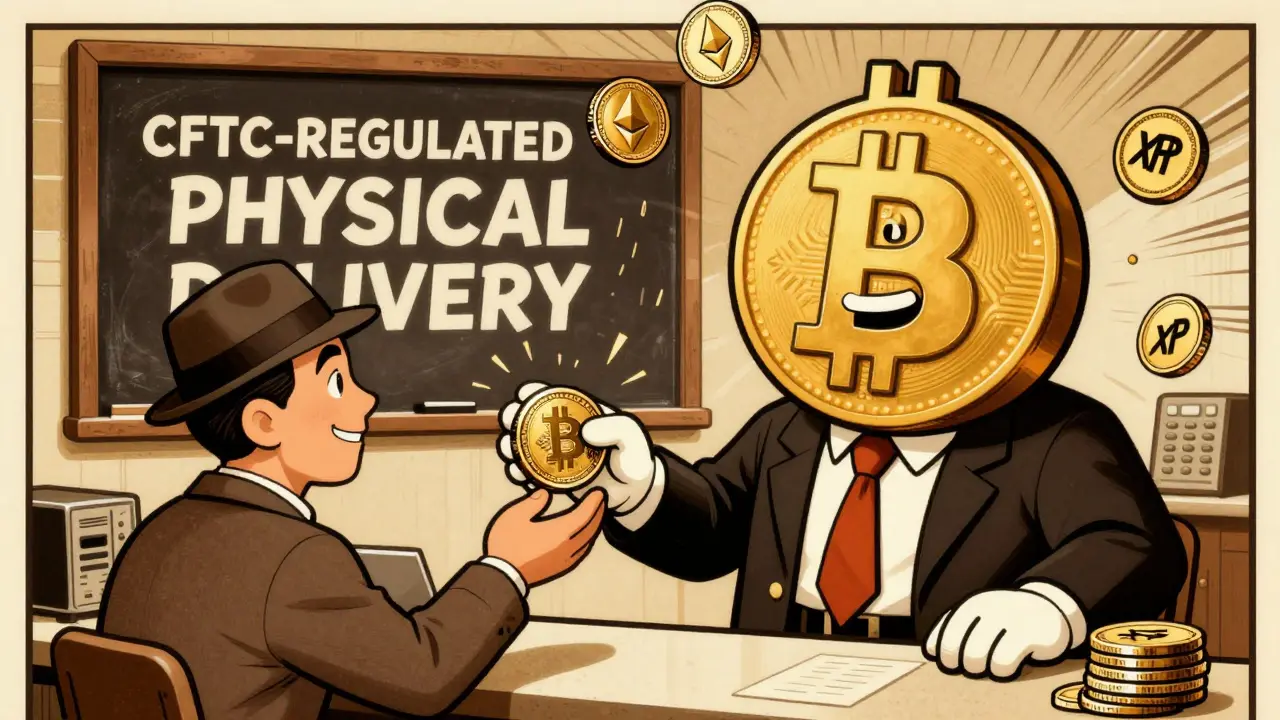
Bitnomial is the only U.S.-regulated crypto exchange offering physically delivered futures on Bitcoin, Ethereum, Solana, XRP, and USDC. With CFTC approval and crypto-as-margin, it’s built for serious traders.
Continue reading