Physical Delivery Cost Calculator
Compare margin requirements and settlement costs between physical delivery and cash settlement for crypto futures
Estimated Savings
0.00%Physical delivery eliminates conversion costs and counterparty risk
Most crypto exchanges let you buy and sell Bitcoin like stocks. But if you're serious about trading derivatives in the U.S., you need something else entirely. Bitnomial isn’t just another exchange. It’s the only U.S.-regulated platform offering physically delivered crypto futures, options, and perpetual contracts - and it’s been building this system since 2014.
What Makes Bitnomial Different?
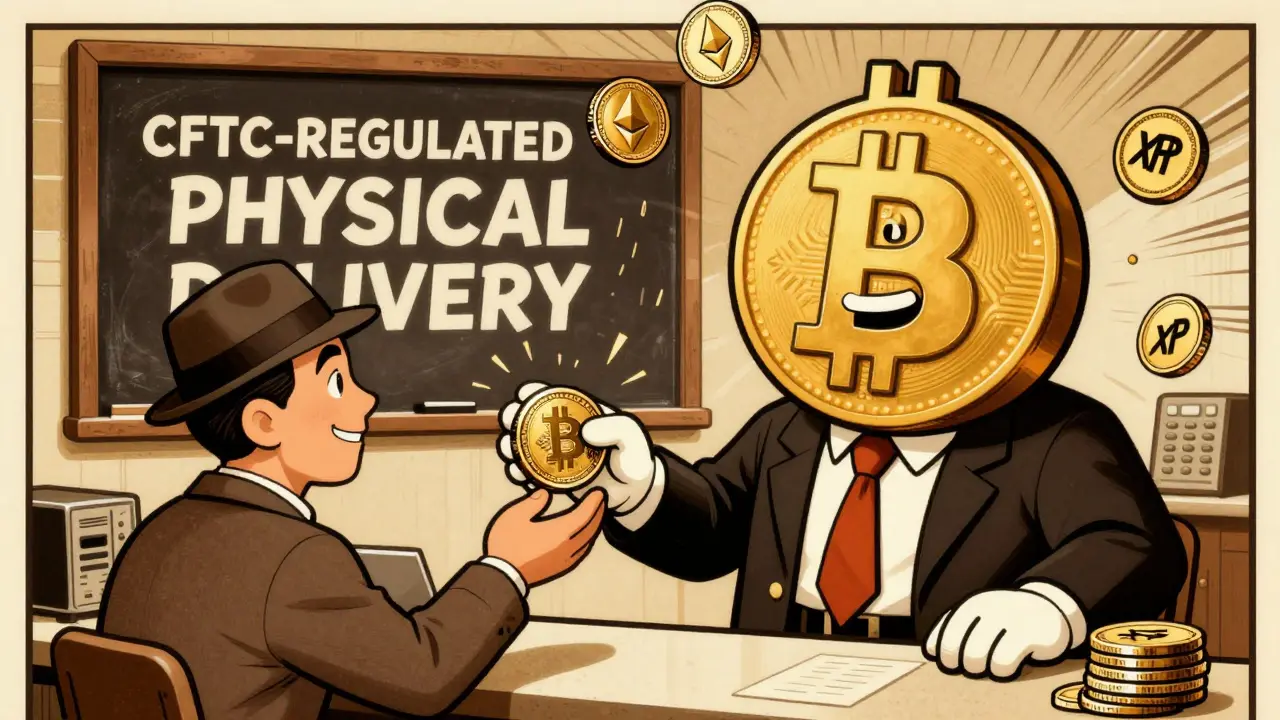
You’ve probably heard of Binance, Coinbase, or Kraken. They’re big. They’re popular. But they don’t offer what Bitnomial does: physical delivery. Most exchanges settle futures in cash. That means you never actually get the Bitcoin or Ethereum - you just get the dollar value. Bitnomial delivers the real asset. If you hold a Bitcoin futures contract to expiration, you get actual Bitcoin in your wallet. Same with Ethereum, Solana, Cardano, and even XRP. This isn’t just a technical detail. It matters for institutions, treasuries, and serious traders. Physical delivery means you’re not exposed to counterparty risk or synthetic price manipulation. You own the asset. And because Bitnomial is regulated by the CFTC, you’re trading on a platform that follows federal commodity rules - not offshore loopholes.The Regulatory Edge: A First in the U.S.
Bitnomial didn’t just apply for a license. It built the full stack. In 2020, it became a Designated Contract Market (DCM) - the first crypto-native exchange to get this from the CFTC. That meant it could legally run a futures exchange. In 2022, it became a Futures Commission Merchant (FCM), so it could handle client funds. Then in 2023, its clearinghouse became a Derivatives Clearing Organization (DCO), making it the first crypto company to hold all three licenses. What does that mean for you? Everything from order matching to margin calls to settlement happens under one regulated roof. No third-party clearing firms. No offshore intermediaries. No gray areas. The whole chain - from trade to delivery - is supervised by the CFTC. That’s unheard of in crypto.Product Offerings: Beyond Bitcoin
Bitnomial doesn’t just trade Bitcoin. It’s the only U.S. exchange with:- Physically delivered XRP futures (launched in 2024)
- Physically delivered Cardano (ADA) futures (first in the world)
- Physically delivered Solana (SOL) futures (first globally)
- Physically delivered USDC futures (world’s first stablecoin futures with physical delivery)
Perpetual Futures: Built for Real Markets
Most perpetual contracts on offshore exchanges use 8-hour funding rates. Bitnomial does too - but with a twist. Its perpetuals use a 25-year contract term. That means no rolling over positions every month. No slippage. No hidden costs from frequent expiration cycles. The funding rate adjusts based on real-time spot prices and interest rates, keeping the perpetual price tightly aligned with the actual market. This design reduces spreads and increases liquidity. Traders don’t need to constantly close and reopen positions. It’s closer to how traditional commodities like oil or wheat trade - continuous, stable, and efficient.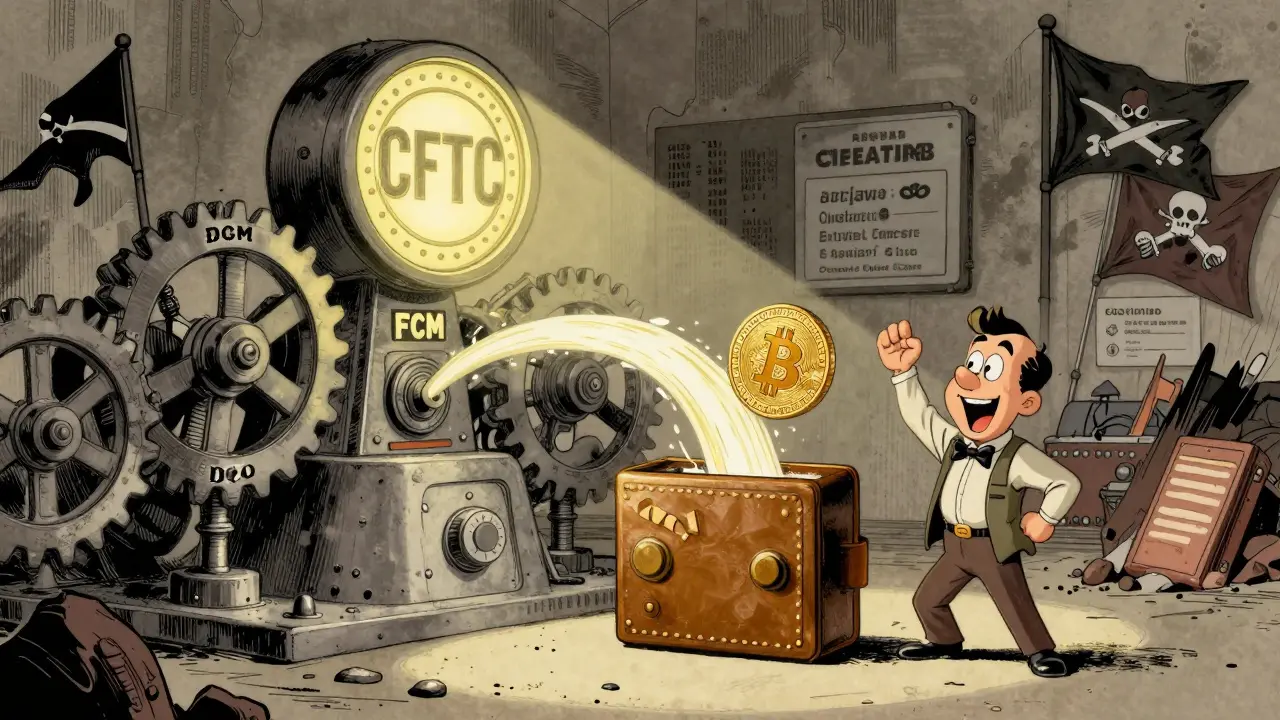
Digital Assets as Margin: A Game Changer
On September 25, 2025, Bitnomial made history again: it became the first CFTC-regulated exchange to accept Bitcoin and Ethereum as margin collateral. Before this, you had to convert your crypto to dollars or Treasury bonds to trade futures. Now, if you hold BTC or ETH, you can use it directly to open positions. This isn’t just convenient. It’s capital-efficient. You don’t have to sell your crypto to pay for margin. You don’t get taxed on the sale. You don’t miss out on price moves while waiting for funds to settle. Bitnomial applies standard haircuts (like 20-30% for BTC) to protect against volatility - just like gold or treasuries in traditional markets. Institutional clients report 30-50% better capital utilization since switching to Bitnomial. For hedge funds and crypto-native firms, this is a massive upgrade.Botanical: The Retail Play
While Bitnomial’s main platform targets institutions, it launched Botanical in October 2024 - a new trading interface designed for retail traders. Botanical offers the same regulated perpetual futures, but with a cleaner UI, lower minimums, and simpler order types. It’s not a DEX. It’s not a VPN workaround. It’s a U.S.-regulated alternative to Binance or Bybit. Ripple led a $25 million funding round for Botanical, and Brad Garlinghouse joined Bitnomial’s board. This signals strong backing for regulated crypto trading in the U.S., especially around XRP-related products.Who Is This For?
Bitnomial isn’t for people who just want to buy $100 of Dogecoin. It’s for:- Crypto funds that need regulated exposure to altcoins
- Corporate treasuries managing USDC reserves
- Traders tired of offshore platforms with no legal recourse
- Institutions that want to use crypto as margin, not cash

The SEC Fight: Why It Matters
Bitnomial’s XRP futures triggered a legal battle. The SEC claimed XRP futures were “security futures” - meaning only the SEC, not the CFTC, could regulate them. Bitnomial sued the SEC in October 2024, calling it regulatory overreach. The case is ongoing. Why should you care? Because if Bitnomial wins, it sets a precedent: crypto derivatives are commodities, not securities. That opens the door for more regulated exchanges to list altcoins without fear of SEC raids. If they lose, the entire U.S. derivatives market could shrink.Bottom Line: Is Bitnomial Worth It?
If you’re in the U.S. and want to trade crypto derivatives with real asset delivery, legal oversight, and capital efficiency - Bitnomial is the only choice. No other exchange offers all three: CFTC regulation, physical delivery, and crypto-as-margin. It’s not the easiest platform for beginners. There’s no one-click buy button. But if you’re serious about trading, not just speculating, it’s the most robust, compliant, and innovative platform available today.Future Outlook
Bitnomial is planning more stablecoin futures beyond USDC. It’s expanding its clearing infrastructure. And with Botanical growing, it’s moving toward becoming the go-to U.S. platform for both institutions and retail traders who want to avoid offshore risks. The crypto derivatives market is shifting. Regulated players are winning. Bitnomial isn’t just keeping up - it’s setting the standard.Is Bitnomial a legitimate crypto exchange?
Yes. Bitnomial is fully regulated by the U.S. Commodity Futures Trading Commission (CFTC). It holds three key licenses: Designated Contract Market (DCM), Futures Commission Merchant (FCM), and Derivatives Clearing Organization (DCO). This makes it the first and only crypto-native exchange in the U.S. with full vertical regulatory integration.
Can I trade Bitcoin futures with physical delivery on Bitnomial?
Yes. Bitnomial offers physically delivered Bitcoin futures. When your contract expires, you receive actual Bitcoin in your wallet - not cash. This is different from exchanges like CME, which settle in dollars. Physical delivery gives you direct ownership and avoids counterparty risk.
Does Bitnomial accept crypto as margin?
Yes. Since September 2025, Bitnomial allows Bitcoin and Ethereum to be used as margin collateral. You don’t need to sell your crypto to fund trades. The platform applies standard haircuts (e.g., 20-30%) to account for volatility, similar to how gold or treasuries are treated in traditional markets.
What’s the difference between Bitnomial and Binance or Coinbase?
Bitnomial is U.S.-regulated and offers physically delivered derivatives. Binance and Coinbase operate offshore or offer cash-settled products. Bitnomial’s contracts result in actual asset delivery, use regulated clearing, and allow crypto-as-margin - features none of those platforms offer under U.S. law. It’s designed for compliance, not just volume.
Can retail traders use Bitnomial?
Yes, through Botanical - Bitnomial’s retail-facing platform launched in late 2024. Botanical offers the same regulated perpetual futures as the main exchange but with a simplified interface, lower minimums, and easier navigation. It’s built for traders who want U.S. compliance without offshore workarounds.
Why does physical delivery matter in crypto futures?
Physical delivery means you actually receive the underlying asset when your contract expires. This prevents price manipulation, reduces counterparty risk, and gives you direct ownership. Cash-settled contracts only pay out the price difference - you never own the crypto. For institutions and long-term holders, physical delivery is the only way to get true exposure.
What is the Stablecoin Complex™ on Bitnomial?
The Stablecoin Complex™ is Bitnomial’s suite of regulated stablecoin futures, starting with USDC. It allows institutions to hedge their USDC holdings without moving funds off-chain. You can lock in prices, manage liquidity risk, and settle directly into your USDC wallet - all under CFTC oversight. It’s the first of its kind in the U.S.




Comments (25)
Marsha Enright
This is actually the first crypto platform I've seen that doesn't feel like a gamble. Physical delivery? CFTC oversight? Using BTC as margin? I'm sold.
Finally, someone built this right.
Murray Dejarnette
Y'all are acting like this is some miracle. Binance does everything better, faster, cheaper. This is just a regulated sandbox for rich folks who don't know how to use a VPN.
Sarah Locke
I've been watching Bitnomial since 2020 and I swear this is the most underrated story in crypto. Three licenses? Physical delivery? USDC futures? This isn't just innovation - it's institutional-grade infrastructure.
Most exchanges are glorified betting shops. This? This is a futures exchange. Period.
Mani Kumar
Regulation is the death of innovation. Why would anyone use this when Binance offers 1000+ pairs, zero KYC, and 100x leverage? This is crypto for accountants.
Philip Mirchin
I'm a former Wall Street guy who moved into crypto in 2021. I used to trade on CME. Then I jumped to Binance. Then I tried Kraken.
Bitnomial is the first one that made me feel like I was trading something real - not a derivative of a derivative. The physical delivery thing? That’s the key. You’re not betting on price. You’re owning the asset. That’s the whole point.
Britney Power
Let’s be brutally honest: this is a regulatory play designed to attract institutional capital while pretending to be ‘crypto-native.’ The fact that they’re suing the SEC over XRP is a red flag - it means they’re gambling on legal ambiguity, not building a product.
And don’t get me started on ‘Stablecoin Complex™’ - that’s just marketing jargon for a cash-settled contract with a fancy name. They’re not delivering USDC, they’re settling in USDC. Big difference.
Maggie Harrison
This is the future 🚀
Imagine being able to hedge your ETH holdings without selling. No taxes. No slippage. Just pure exposure. This isn't just better - it's how it should've always been.
Lawal Ayomide
US regulation is a trap. You think this is safe? They can freeze your account tomorrow. Crypto is about freedom. Not compliance.
Darlene Johnson
CFTC? Please. They’re just a front for the Fed. This is how they’re slowly bringing crypto under the banking system. They’ll tax your holdings, force KYC on every wallet, and then shut down the ‘unregulated’ players. This isn’t progress - it’s capture.
Ivanna Faith
Botanical looks like a gimmick why would anyone use this over binance the interface is ugly and the fees are higher and they still have to deal with the same regulators
Akash Kumar Yadav
India has better crypto infrastructure than this. We have regulated futures on NSE with 500+ coins. You think US is leading? Wake up. This is just bureaucratic theater.
Jay Weldy
I get why people hate regulation. But if you’re serious about building long-term value in crypto, you need legal clarity. Bitnomial isn’t perfect, but it’s the only one trying to do it right.
Let’s not throw the baby out with the bathwater.
Melinda Kiss
I’ve used Bitnomial for six months now. As a small fund manager, the ability to use ETH as margin changed everything. We’ve reduced our cash drag by 40%. The order book depth on SOL futures is insane. And yes - we’ve received actual Bitcoin after contract expiry. No delays. No disputes. Just clean settlement.
This isn’t hype. It’s operational reality.
Nancy Sunshine
The 25-year perpetual contract model is genius. Most platforms force you to roll every month, creating artificial volatility and hidden costs. Bitnomial’s approach mirrors how oil or wheat futures work - continuous, stable, and anchored to real market fundamentals.
This isn’t just a technical upgrade. It’s a philosophical shift: crypto as a commodity, not a casino token.
Alan Brandon Rivera León
I live in a country where crypto is banned. I’ve been watching Bitnomial from afar. The fact that they’re accepting crypto as margin? That’s huge. It means you’re not forced to liquidate your position just to trade.
That’s the kind of innovation that actually helps people hold through volatility. Not just speculate.
Ann Ellsworth
The Stablecoin Complex™ is a regulatory arbitrage play disguised as innovation. USDC is not a commodity - it’s a liability-backed IOU. The CFTC has no jurisdiction over fiat-collateralized tokens. This is a legal fiction. And the fact that they’re calling it ‘physical delivery’ when the underlying is a centralized stablecoin? That’s Orwellian.
Ziv Kruger
Physical delivery means nothing if the exchange can still freeze withdrawals.
Regulation doesn’t equal security. It equals paperwork.
Heather Hartman
I used to think crypto was just for anarchists. Then I started using Botanical.
It’s clean. It’s safe. I’m not hiding behind a VPN. I’m not worried about my account vanishing. I can trade XRP futures without feeling like I’m breaking the law.
Thank you for existing.
Catherine Williams
I work with hedge funds. We tested Bitnomial against CME and Binance. The difference? On CME, we had to wait 3 days for settlement. On Binance, we got hacked last year. On Bitnomial? We got our BTC in 2 hours. Clean. Direct. Regulated.
This isn’t a startup. It’s the future of institutional crypto.
Paul McNair
I’m Nigerian. I’ve traded on Binance for years. But when my account got frozen last year because of AML flags, I lost 3 months of income.
Bitnomial’s CFTC regulation means they can’t just shut you down. You have legal recourse. That’s worth more than low fees.
Mohamed Haybe
US regulators are scared of crypto. So they made a fake version. Bitnomial is their puppet. The ‘physical delivery’ is just a trick. The real asset is still locked in their cold wallet. You don’t own it until they say so.
Andrew Brady
CFTC? That’s the same agency that let Enron trade energy futures. This is a slow-motion takeover. They want crypto to be as boring as the stock market. And they’re using ‘regulation’ as the weapon.
Sharmishtha Sohoni
XRP futures? Interesting. But why only XRP? What about DOT or ALGO? Why not build for the whole ecosystem?
Durgesh Mehta
I tried Botanical last week. Simple UI. No confusion. I bought 0.1 SOL future. Got the actual SOL when it expired. No drama.
Best crypto experience I’ve had in 5 years.
Christy Whitaker
You all sound like you’ve been brainwashed by the Bitnomial PR team. Physical delivery? Please. They still control the keys. You think you own Bitcoin? You don’t. You own a promise. And promises can be revoked.