Blockchain Gaming Airdrop: How to Find Real Rewards and Avoid Scams
When you hear blockchain gaming airdrop, a free distribution of tokens to players in blockchain-based games. Also known as GameFi airdrop, it’s meant to grow user bases by rewarding early players or testers. Sounds simple, right? But most of what you see online is fake. Real blockchain gaming airdrops come from projects with working games, active communities, and transparent tokenomics—not just a website with a claim button and a Discord link full of bots.
These airdrops are tied to gaming tokens, cryptocurrencies built for in-game economies, like buying skins, upgrading characters, or earning rewards. Think of them like loyalty points—but tradable, ownable, and sometimes even profitable. Projects like Spintop’s SPIN token or Sake Finance’s SAKE token gave out tokens to traders and players who did real actions: trading, staking, or playing. But many others? They vanish after the airdrop. Gunstar Metaverse (GSTS) and SecretSky.finance (SSF) are examples of projects that promised rewards but had no game, no users, and no future. The same goes for BSC AMP (BAMP) and xSuter—no airdrop, no product, just hype.
That’s why you need to check three things before claiming anything: Does the game actually work? Is there real trading volume on exchanges? And is the team public and responsive? If the answer to any of those is no, walk away. Scammers know people want free crypto. They copy real project names, fake social media, and even steal logos. A real airdrop doesn’t ask for your seed phrase. It doesn’t ask you to send crypto first. And it doesn’t promise instant riches.
Real blockchain gaming airdrops are rare, but they exist. They’re tied to projects building something people actually use—not just marketing slides. The ones that last have gameplay, not just tokenomics. They reward participation, not just clicks. And they don’t disappear after the first month. If you’ve ever wondered why some airdrops fade while others stick, it’s because one side is building a game, and the other is building a scam.
Below, you’ll find real reviews, broken-down case studies, and scam warnings from projects that tried to trick users—and the ones that actually delivered. No fluff. No fake promises. Just what you need to know before you claim your next token.
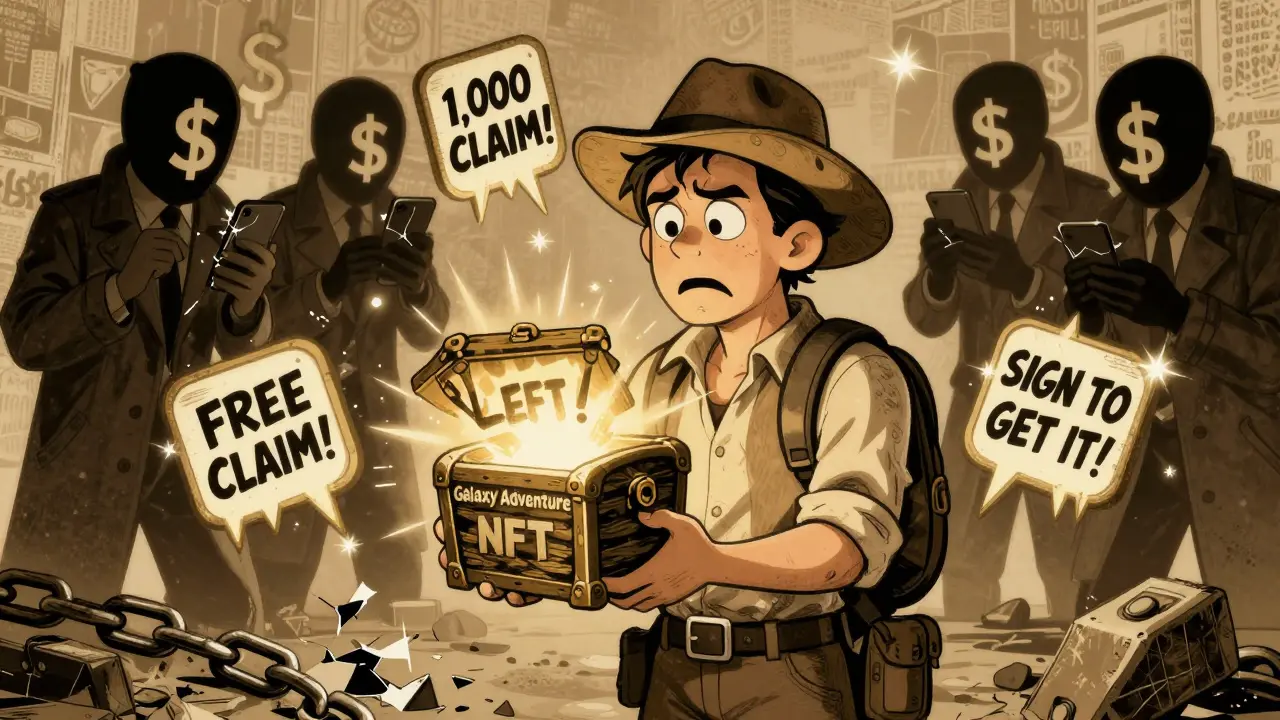
No Galaxy Adventure Chest NFT airdrop exists in 2025. This article exposes the scam behind fake NFT claims, shows how real airdrops work, and gives you steps to protect your wallet from crypto thieves.
Continue reading