
Tokenomics Sustainability Score Calculator
Evaluate Your Tokenomics Model
Assess your token design against the four key principles for sustainable tokenomics in 2025.
Does your token provide daily utility (e.g., reduced fees, passive income, access) beyond price speculation?
Does your token adjust supply dynamically based on demand (e.g., burning when low, minting only with value addition)?
Is governance balanced between decentralization and efficiency (not too slow, not too centralized)?
Do you have strong risk controls (distribution limits, audits, insurance, emergency stops)?
Tokenomics Sustainability Assessment
Key Findings:
Tokenomics used to be simple: mint a token, set a supply cap, throw in a burn mechanism, and hope people buy in. That was 2018. Today, in 2025, tokenomics is the core economic engine behind every serious blockchain project - and it’s no longer optional. It’s the difference between a token that dies in six months and one that powers a multi-billion-dollar ecosystem.
From Speculation to Substance
Early crypto tokens were often just digital lottery tickets. People bought them because someone else would buy them later. No utility. No clear purpose. Just hype. That model collapsed under its own weight. Regulators cracked down. Investors got burned. And the survivors? They redesigned their tokenomics from the ground up. Now, successful tokenomics starts with one question: What real value does this token create? It’s not about how fast the price goes up. It’s about how often it’s used. Is it paying for gas on the network? Is it granting voting rights in a DAO? Is it unlocking access to a service only token holders can use? If the answer isn’t clear, the token won’t last. Take Chainlink’s LINK token. It doesn’t just sit in wallets. It pays node operators for real-world data feeds. That’s utility. That’s demand. And that’s what keeps the token valuable long after the hype fades.Real-World Assets Are the New Frontier
The biggest shift in 2025? Tokens aren’t just representing digital assets anymore. They’re representing physical ones. Real-world asset (RWA) tokenization is now a $1.2 trillion market - and growing fast. Think real estate in Dubai, farmland in Iowa, or even wind turbines in Ireland. These assets are being split into digital shares, locked into smart contracts, and traded on blockchain platforms. A single apartment building can now have 10,000 token holders, each owning a tiny fraction. Why does this matter for tokenomics? Because it adds layers of complexity - and opportunity. The token isn’t just a governance tool anymore. It’s a legal claim. It’s tied to cash flows, rent payments, and regulatory compliance. Projects now need legal teams, auditors, and compliance protocols baked into their token design from day one. The European Union’s MiCA regulation isn’t a threat - it’s a blueprint. Projects that built compliance into their tokenomics from the start are now thriving. Those that ignored it? They’re gone.DAOs and DeFi Are Merging
Decentralized Autonomous Organizations (DAOs) used to be slow, messy, and full of arguments. Governance votes took weeks. Proposals got stuck. Participation was low. Not anymore. Today’s DAOs are tightly integrated with DeFi protocols. A DAO token isn’t just for voting - it’s for earning. You can stake your DAO tokens in a lending pool and earn interest. You can lock them in a liquidity pool and get trading fees. You can even use them as collateral for loans. This creates a feedback loop: the more you use the token, the more valuable it becomes. And the more valuable it becomes, the more people want to hold it. That’s not speculation. That’s economics. Projects like Aave and Uniswap have shown how this works. Their tokens aren’t just governance tools - they’re financial instruments. And that’s the future: tokens that serve multiple roles at once.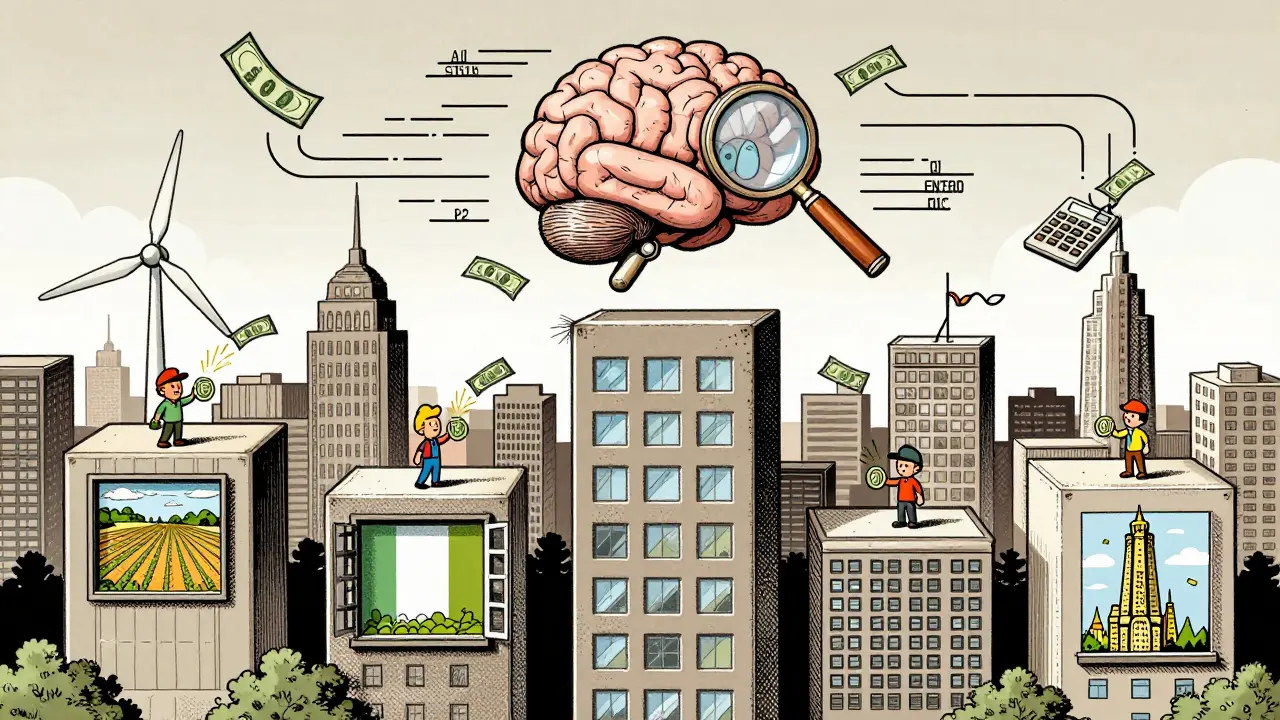
Liquid Restaking Tokens Are Changing Everything
One of the most underrated breakthroughs in 2025 is Liquid Restaking Tokens (LRTs). Here’s how they work: you stake your ETH to help secure the Ethereum network. Normally, your ETH is locked up. But with LRTs, you get a token that represents your staked ETH - and you can trade it, lend it, or use it in DeFi while your ETH keeps earning staking rewards. This isn’t just convenience. It’s capital efficiency. Your money isn’t sitting idle. It’s working in multiple places at once. And the ecosystem is growing fast. LRTs now secure over $40 billion across Ethereum and its Layer-2 chains. What does this mean for tokenomics? It shows that the future isn’t about creating new tokens - it’s about making existing ones more flexible. Tokens that can move, earn, and secure networks simultaneously are the ones that will dominate.Four Rules for Sustainable Tokenomics
After studying hundreds of projects in 2024 and 2025, a clear pattern emerged. The ones that lasted followed four rules:- Continuous value generation - Tokens must create value for users every single day. Whether it’s lower fees, better access, or passive income, there has to be a reason to hold it.
- Smart supply control - Fixed supplies don’t work anymore. The best designs adjust supply dynamically - burning tokens when demand is low, minting new ones only when new value is added.
- Decentralized but efficient governance - Too much decentralization slows things down. Too little kills trust. The winners strike a balance: core decisions are community-voted, but day-to-day operations run smoothly.
- Strong risk controls - Token ownership can’t be concentrated in five wallets. Smart contracts must be audited by multiple firms. Liquidity pools need insurance. And there must be emergency stopgaps built in.
AI Is Making Tokenomics Smarter
You can’t talk about 2025 tokenomics without mentioning AI. In 2024, AI-driven trading of crypto tokens jumped over 500%. Algorithms now analyze token supply schedules, governance vote patterns, and liquidity flows to predict price movements with startling accuracy. But AI isn’t just a trading tool - it’s a design tool. Teams are using AI to simulate thousands of tokenomics models before launch. What happens if 30% of holders sell after six months? What if a governance proposal passes by a slim margin? AI runs these scenarios in minutes. This means future tokenomics won’t be designed by guesswork. It’ll be designed by data. And that’s a good thing. It reduces the risk of catastrophic failures.What’s Next? The Integrated Economy
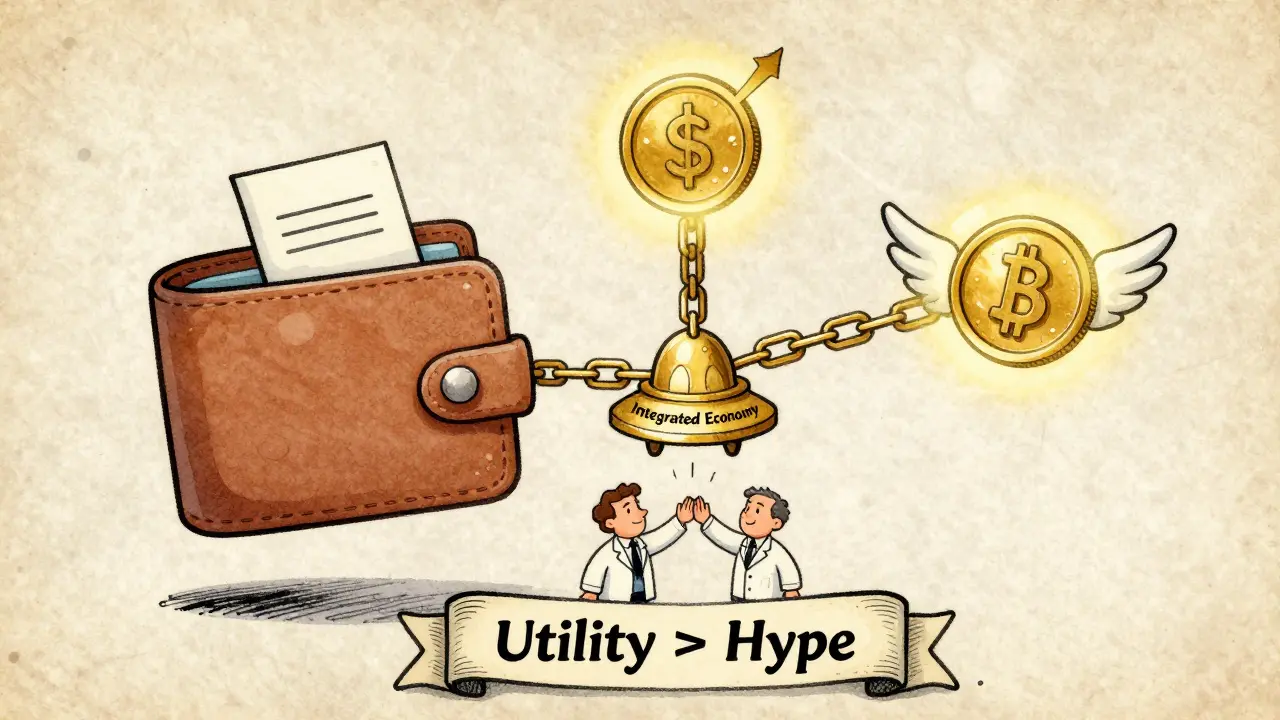
The future of tokenomics isn’t about bigger tokens or faster blockchains. It’s about integration. We’re moving toward a world where your wallet holds:- A token that gives you voting rights in a housing DAO
- Another that earns you rent from a tokenized apartment building
- And a third that pays you interest for lending it to a DeFi protocol
What is tokenomics and why does it matter?
Tokenomics is the economic design behind a cryptocurrency or blockchain token. It includes how tokens are created, distributed, used, and controlled. It matters because it determines whether a token has real, lasting value - or just temporary hype. A well-designed tokenomics model creates incentives for users to participate, hold, and contribute to the network, ensuring long-term sustainability.
How do real-world assets affect tokenomics?
Real-world asset (RWA) tokenization turns physical assets - like property, commodities, or infrastructure - into digital tokens on a blockchain. This changes tokenomics by tying token value directly to cash flows, legal rights, and regulatory compliance. Tokens aren’t just speculative anymore; they represent ownership or income rights in tangible assets. This makes them more stable, more regulated, and more attractive to institutional investors.
Can tokenomics be too complex?
Yes. Overly complex tokenomics - like multiple token types, nested incentives, or hidden supply rules - confuse users and increase risk. Simplicity wins. The best models are easy to understand: one primary token, clear use cases, and transparent rules. Complexity should only be added if it solves a real problem, not just to sound impressive.
Why are DAOs merging with DeFi?
DAOs and DeFi are merging because they need each other. DAOs need liquidity and revenue streams to survive. DeFi needs governance and community trust to scale. By combining them, DAO tokens become financial assets - you can stake them, lend them, or earn fees from them. This creates stronger incentives for participation and makes governance more active and valuable.
What role does regulation play in tokenomics today?
Regulation isn’t a barrier anymore - it’s a requirement. Frameworks like MiCA in Europe and SEC guidelines in the U.S. demand transparency, fair distribution, and clear utility. Projects that bake compliance into their token design gain investor trust and legal protection. Those that ignore it risk shutdowns, fines, or being delisted from exchanges. Regulation is now part of the economic model, not an afterthought.
How do I know if a token’s tokenomics is sustainable?
Look for three things: 1) Does the token have clear, daily utility? 2) Is the supply controlled by demand, not just a fixed cap? 3) Is governance open, transparent, and not dominated by a few wallets? If the token’s value relies only on price speculation or hype, it won’t last. Sustainable tokenomics is built on real usage, not promises.



Comments (24)
Sue Gallaher
This is why the US needs to lead crypto regulation. Other countries are playing catch-up while we build the future. MiCA? That's Europe trying to copy us. We don't need their rules. We make them.
Rakesh Bhamu
Really appreciate this breakdown. In India, we're seeing small farmers tokenize land rights through local cooperatives. It's not flashy, but it's changing lives. Tokenomics isn't just for Wall Street anymore.
Nicholas Ethan
Tokenomics is not a buzzword. It is the structural foundation upon which blockchain sustainability is built. Failure to internalize this principle results in economic entropy.
Kathy Wood
This is why we're all doomed. AI-designed tokens? RWA? You think this is innovation? It's just Wall Street with blockchain tattoos. They're laundering greed with code. We're being played.
Steven Ellis
The shift from speculation to utility is the most beautiful thing to watch unfold. I remember watching early DeFi tokens die because they had no purpose. Now? Seeing LINK, Aave, Uniswap tokens actually fuel real systems - it's like watching a seed become an oak.
Claire Zapanta
MiCA? HA. The EU is just trying to control what they can't understand. Behind the scenes, the Fed is quietly backing LRTs through shadow banks. You think this is decentralized? Wake up. It's all centralized with a blockchain mask.
Ian Norton
You say 'continuous value generation' like it's a virtue. Most of these tokens are just disguised equity. The real winners are the VCs who dumped their bags before the 'utility' narrative took off. Don't romanticize the smoke.
Hari Sarasan
The convergence of DAO governance with DeFi yield mechanics represents a paradigmatic rupture in economic orthodoxy. The token is no longer a unit of account - it is a dynamic, multi-dimensional instrument of capital allocation, liquidity provision, and collective sovereignty. This is the post-neoliberal economy in real-time.
Albert Chau
Most people don't even know what a burn mechanism is. They just see a chart going up. That's why 95% of these projects fail. You don't need AI to predict that. You need common sense.
Madison Surface
I love how you mention the integrated economy. My niece uses a token to vote on her school's lunch menu and earns crypto for recycling. It's not about big money - it's about embedding value into daily life. That’s the real win.
Tiffany M
RWA tokenization is the future!! But we gotta stop letting billionaires own everything!! 🚨 Why should one person own 10% of a wind farm? Tokenomics should be democratic, not a rich kid's toy!! 💸🌍
Eunice Chook
Utility is a myth. If the token doesn't pump, no one cares about 'governance' or 'rent flows'. Humans are emotional creatures. Algorithms can't fix that.
Heath OBrien
LRTs are just rehypothecation with a blockchain sticker. They're not innovation - they're leverage in a tuxedo. The system's still rigged. We're just making the casino prettier.
Taylor Farano
So you're telling me the answer to crypto's problems is... more complexity? Brilliant. Let's add AI, legal teams, and 7 token types. Next you'll say we need a PhD to hold ETH. Congrats, you turned finance into a sorcery exam.
Kathryn Flanagan
I just want to say - I’m so proud of how far we’ve come. When I first heard about crypto, I thought it was all scams. Now? I see people in my neighborhood using tokens to pay for solar panels, vote on community projects, even get loans without banks. It’s not perfect, but it’s real. And it’s growing. I just wanted to say thank you for helping people see that.
amar zeid
In India, tokenomics is being adapted for micro-lending circles. Farmers pool assets, tokenize shares, and use DAO voting to decide who gets loans. No banks. No paperwork. Just code and trust. This isn't the future - it's happening now.
Alex Warren
The four rules are correct. But rule #3 needs refinement. Decentralized governance must be efficient, not merely functional. Efficiency without accountability is authoritarianism in disguise.
Lloyd Cooke
The notion that tokens can be 'sustainable' presupposes a linear, anthropocentric model of value. But in a decentralized, non-anthropocentric economy, value emerges from relational dynamics - not design. The token is not an instrument. It is a mirror.
Kurt Chambers
MiCA? Pfft. They’re scared of what they can’t control. Meanwhile, China’s rolling out CBDCs with blockchain backends. The real game is state-backed tokens. This whole 'decentralized' thing is just a distraction for the masses.
Kelly Burn
LRTs are 🔥🔥🔥 I just staked my ETH and got LRT tokens to use in Aave - now I’m earning staking rewards AND lending fees. It’s like my money has a side hustle 💸✨ #DeFiLife
John Sebastian
This is all just a distraction from the fact that most blockchain projects are useless. Tokenomics won’t fix a bad product.
Jessica Eacker
You’re not alone if you feel overwhelmed. Tokenomics can seem like a maze. But start small - ask: 'Does this token solve a real problem for someone?' If yes, you’re already ahead of 90% of projects.
Andy Walton
AI designing tokenomics? Bro… what if the AI just learns to pump and dump? We’re not building a future - we’re training bots to make us richer for 5 minutes then vanish. This isn’t progress. It’s digital gambling with a fancy name.
Jeremy Eugene
The integration of legal compliance into token design is not a constraint - it is an evolutionary necessity. Without it, the entire edifice collapses under regulatory pressure. The most innovative projects are those that embed governance, auditability, and jurisdictional awareness into their foundational architecture.