BAMP Token Distribution: How It Worked and Who Got It
When you hear BAMP token distribution, the process by which BAMP tokens were handed out to users, often through airdrops, staking, or platform participation. Also known as BAMP token allocation, it was meant to bootstrap a community around a new DeFi or gaming project—but like many tokens in 2021–2023, the hype didn’t last. The BAMP token wasn’t listed on major exchanges. It didn’t have a clear roadmap. And most people who got it never knew what to do with it after claiming.
Token distribution like BAMP’s usually follows one of three paths: crypto airdrop, free tokens given to users who met simple criteria like holding a certain NFT or using a specific app. Also known as free token distribution, it’s a common way to grow early adoption, tokenomics, the economic design behind how tokens are created, distributed, and used. Also known as token supply model, it determines if a token has long-term value or becomes a ghost asset, or direct sales to early backers. BAMP leaned hard on the airdrop model. You didn’t need to buy anything—just sign up, connect a wallet, maybe complete a Twitter follow. Thousands did. But without utility, liquidity, or team updates, the tokens sat idle. Some wallets still hold them. Most are worth less than a dollar. A few users cashed out early when a small DEX listed it. Others forgot about it entirely.
What you’ll find in the posts below aren’t just random stories. They’re real cases of tokens that looked promising but vanished—like SOS, SPIN, GEO, and xSuter. Each one had a distribution plan. Each one had users who believed in it. And each one ended up as a lesson. The BAMP token distribution wasn’t a scam—it was just poorly designed. No team, no product, no follow-through. That’s the pattern. And if you’re holding any token that came from a one-time airdrop with no updates since 2022, you’re probably holding the same kind of ghost asset. The posts here show you exactly how these things play out—not with theory, but with real wallets, real dates, and real prices. You won’t find fluff. Just what happened, who got left behind, and how to spot the next one before it fades.
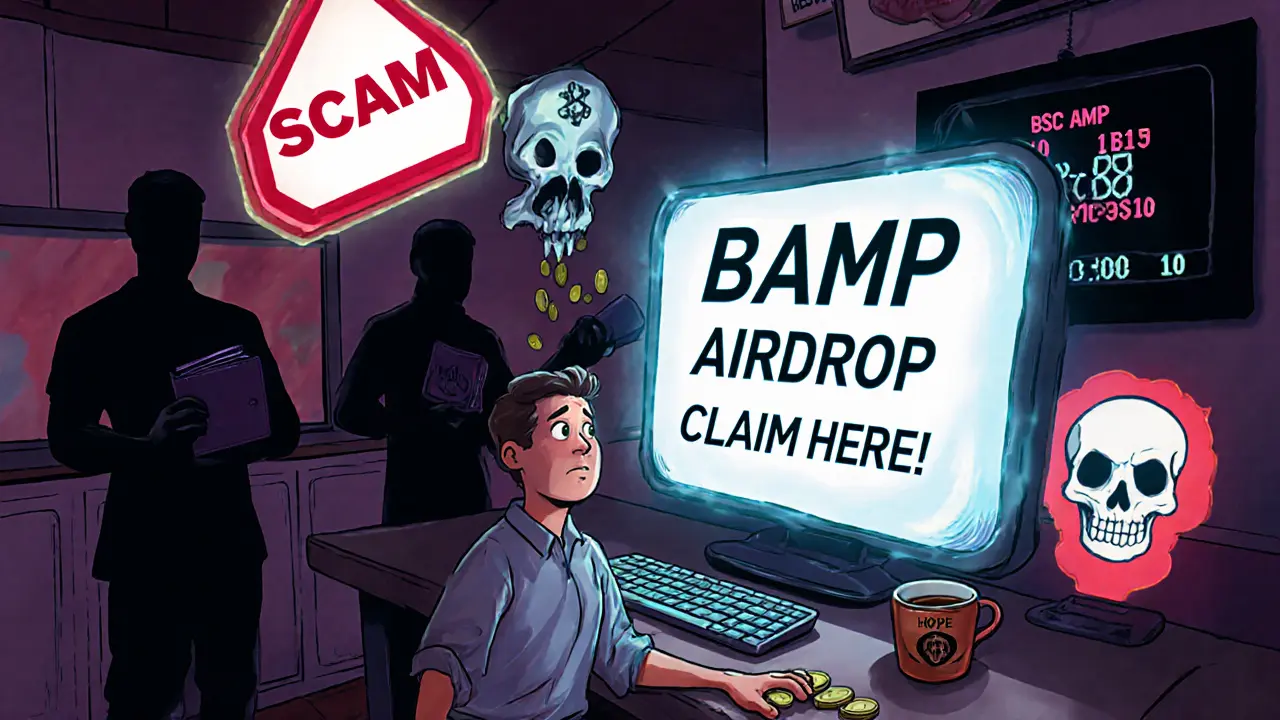
BSC AMP (BAMP) has no confirmed airdrop as of 2025. With zero trading volume and 99.6% of tokens still locked, rumors are dangerous. Learn what’s real, what’s fake, and how to avoid scams.
Continue reading