When you hear about blockchain security, you might think of Bitcoin’s unbreakable ledger or a bank’s hidden internal system. But here’s the truth: public and private blockchains aren’t just different in who can join-they’re built on opposite security philosophies. One trusts the crowd. The other trusts the boss. And that changes everything.
How Public Blockchains Stay Secure: Trust No One
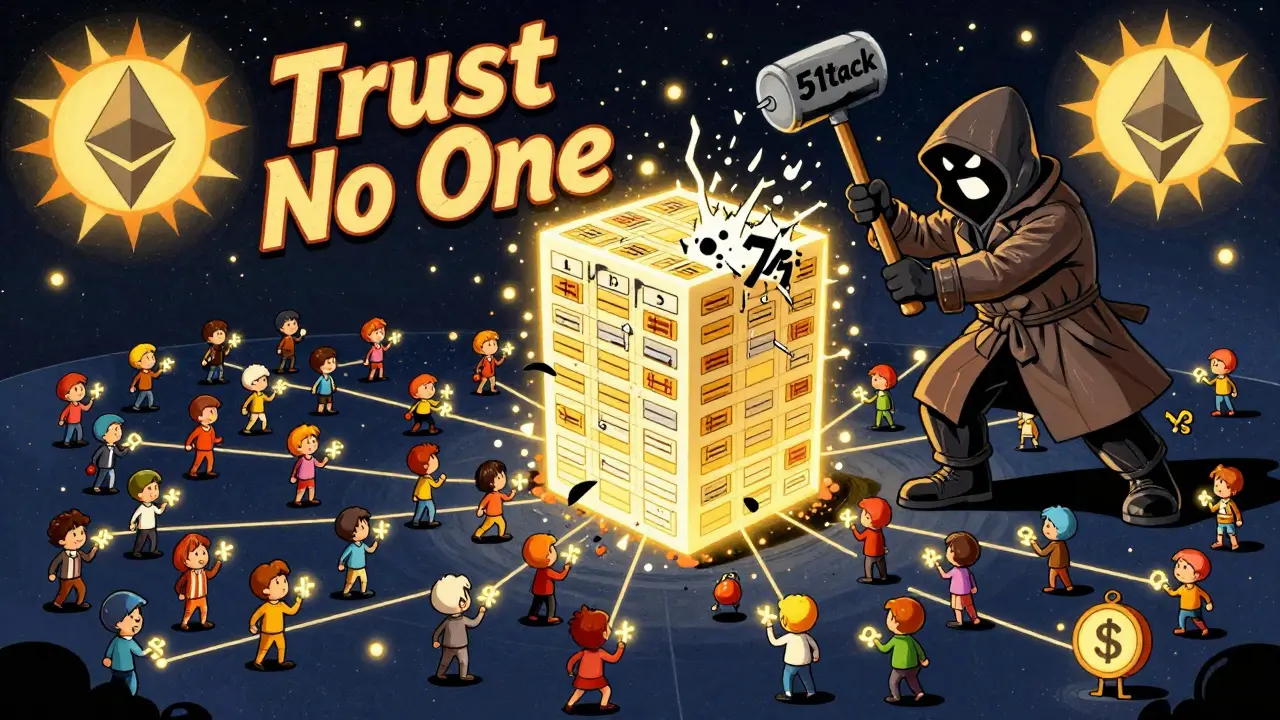
Public blockchains like Bitcoin and Ethereum don’t ask for permission. Anyone can download the software, send a transaction, or even become a validator. That openness sounds risky, but it’s their greatest strength. Security here doesn’t come from passwords or firewalls. It comes from scale and math.Bitcoin’s network has over 480 exahashes per second of computing power. That’s more than the entire top 500 supercomputers in the world combined. To hack it, you’d need to control more than half that power-a 51% attack. Experts estimate that would cost over $13 million per hour. It’s not impossible, but it’s so expensive and obvious that no one has ever pulled it off successfully.
Proof of Work (PoW) and Proof of Stake (PoS) are the engines behind this. Bitcoin still uses PoW, where miners compete to solve puzzles. Ethereum switched to PoS in 2022, locking up $190 billion in ETH as collateral. If a validator tries to cheat, they lose their stake. That economic penalty keeps the network honest.
Public chains also run nonstop. Bitcoin has been up since January 2009. Ethereum’s uptime is 99.98%. There’s no single company running it. No IT team to call. No server room to break into. The network is made of tens of thousands of computers around the world. Take one down, another picks up the slack.
But there’s a catch. Transparency means no privacy. Every transaction is public. That’s why Zcash and Monero use advanced cryptography like zk-SNARKs to hide sender, receiver, and amount. Without those tools, your financial history is visible to anyone with an internet connection.
How Private Blockchains Stay Secure: Trust Fewer People
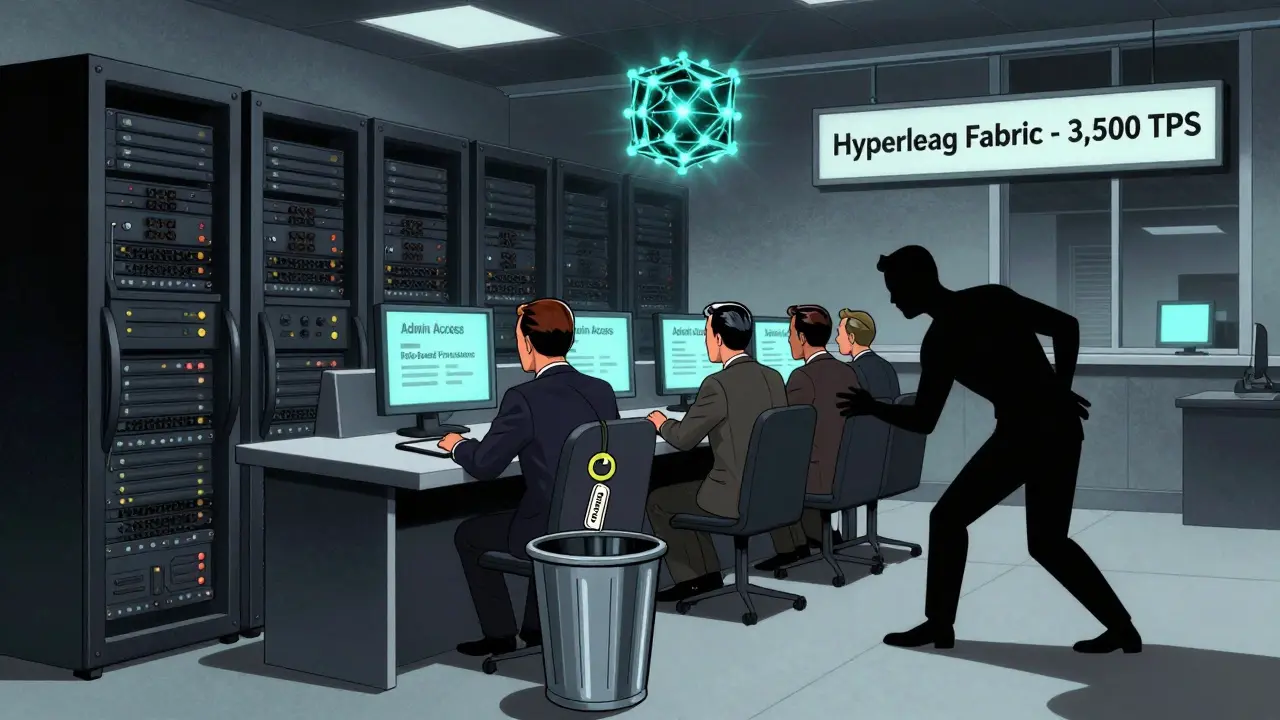
Private blockchains, like Hyperledger Fabric or R3 Corda, are like corporate networks with locked doors. Only approved companies or employees can join. You need an invitation. A digital ID. Approval from a central authority.This setup makes them fast. Hyperledger Fabric can process 3,500 transactions per second with finality in under two seconds. Compare that to Bitcoin’s 7 tps. That speed matters for supply chains, banking settlements, or healthcare records.
Security here is about control. Access is role-based. One person can view data. Another can approve a transaction. A third can audit everything. That’s useful for compliance. A bank can prove it followed KYC rules. A hospital can meet HIPAA requirements.
But here’s the flaw: if the central authority gets hacked, the whole chain is at risk. In 2022, a European bank lost control of its private blockchain when an admin account was compromised. The attacker didn’t crack the blockchain code-they stole a password. That’s not a blockchain failure. That’s an IT failure. And it’s common. According to Reddit’s top blockchain security expert, 63% of breaches in private chains come from weak internal controls, not the network itself.
Private blockchains also use weaker consensus methods like Practical Byzantine Fault Tolerance (PBFT). It’s fast, but it needs fewer nodes-sometimes just a dozen. That means fewer eyes watching. Fewer people to catch a lie. In public chains, a bad actor can’t hide. In private chains, they might never be found.
Security Trade-Offs: Speed vs. Resilience
You can’t have both. That’s the core trade-off.Public blockchains are slow but resilient. They’re designed to survive even if half the network goes offline. They don’t need to trust anyone. That’s why they’re used for digital cash, NFTs, and decentralized apps where censorship resistance matters.
Private blockchains are fast but fragile. They rely on a small group of trusted nodes. If one of them is compromised-or worse, colludes with another-the ledger can be altered. That’s why companies like Maersk and IBM’s Food Trust layer on extra security: encrypted logs, multi-signature approvals, and internal audits. They treat their private blockchain like a vault, not a public bulletin board.
And then there’s the human factor. In public chains, 95% of security incidents come from users losing their private keys. If you forget your password, your Bitcoin is gone forever. No help desk. No recovery. In private chains, the problem is the opposite: too many people have access. Poor key management, shared logins, outdated software-those are the real killers.
Real-World Examples: What Works and What Fails
In 2021, Poly Network was hacked for $600 million. That was a public blockchain. But here’s the twist: the hacker returned the money after the community negotiated with them. Why? Because every move was public. The world was watching. The hacker knew they’d be traced. That’s the power of transparency.On the private side, IBM’s Food Trust has run since 2018 with zero security breaches. How? They vet every participant. Only trusted food suppliers and retailers can join. Every node is monitored. Access is tightly controlled. It’s not perfect, but for tracking lettuce from farm to store, it works.
But not all private chains succeed. A major pharmaceutical company in Germany tried to use a private blockchain to track drug shipments. Within a year, two employees shared login credentials. An outsider got in, altered shipment records, and rerouted $2 million in medicine. The blockchain wasn’t broken. The people were.
Regulation and Compliance: Different Rules, Different Risks
Regulators treat these two types very differently.Public blockchains struggle with GDPR. Once data is on-chain, it can’t be erased. That’s a problem if someone requests their info be deleted. The European Data Protection Board says public chains are “technically incompatible” with right-to-be-forgotten rules.
Private blockchains don’t have that issue. They’re designed for compliance. They can delete data, restrict access, and log every action. That’s why 78% of Fortune 500 companies use private or permissioned blockchains-for finance, healthcare, and legal records.
But regulators are watching. The Financial Action Task Force now requires private blockchain operators to verify every participant’s identity. Public chains? They just need transaction monitoring. So if you’re running a private chain, you’re not just securing code-you’re managing legal liability.
What’s Next? Hybrid Models Are Coming
The future isn’t public vs. private. It’s hybrid.Projects like Ethereum’s Dencun upgrade (early 2024) are making public chains faster and cheaper without giving up security. Meanwhile, private platforms like R3 Corda are adding “notary clusters” to remove single points of failure. It’s like giving private chains a taste of decentralization.
Security tools are catching up too. Chainalysis and CertiK now monitor both public and private chains. They can track suspicious activity whether it’s on Bitcoin or a bank’s internal ledger.
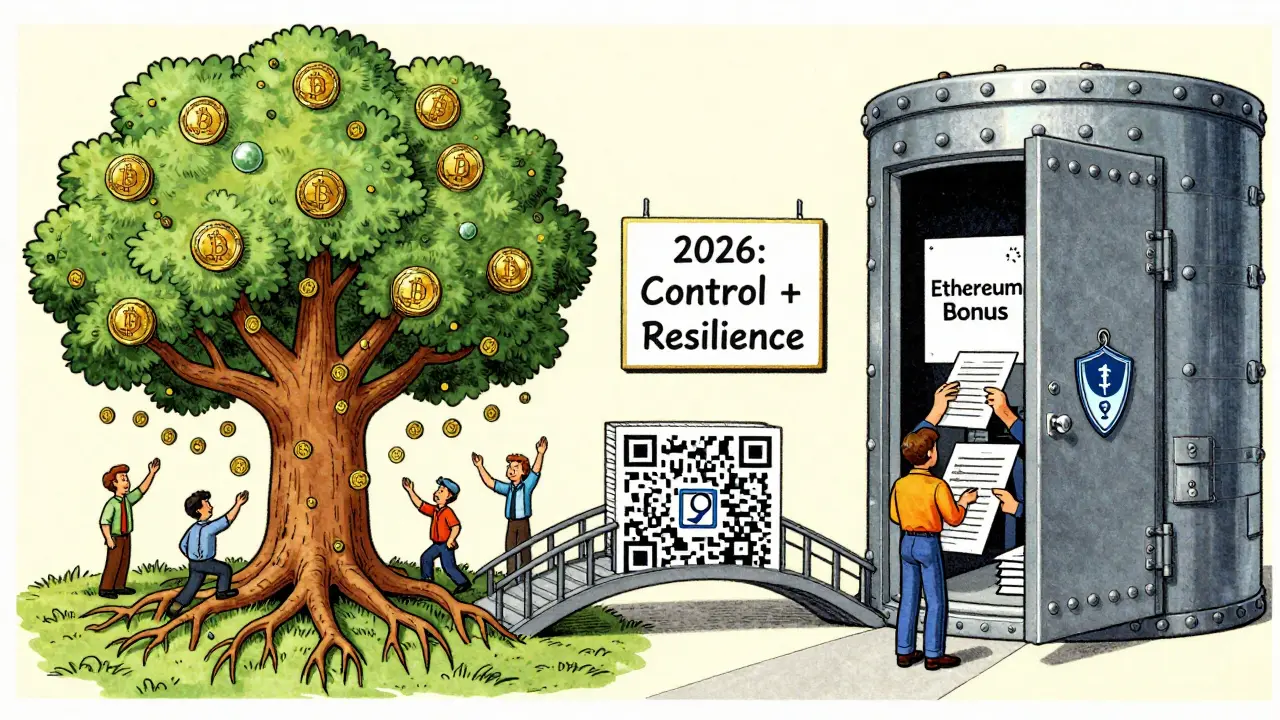
By 2026, most enterprises will use hybrid models: private chains for internal data, public chains for value exchange. Think of it like this: your company’s payroll might run on a private chain. But employee bonuses paid in crypto? That’s on Ethereum.
The lesson? Don’t pick a blockchain because it’s trendy. Pick it because it matches your security needs. Need maximum resistance to tampering? Go public. Need control, speed, and compliance? Go private. But never assume one is inherently safer. The weakest link is always the human.
Are public blockchains more secure than private ones?
Yes, in terms of resistance to censorship, manipulation, and single-point failures. Public blockchains use thousands of independent nodes and cryptographic consensus to ensure no single entity can control the ledger. Private blockchains are more vulnerable because they rely on a small group of trusted participants. If those participants are compromised or collude, the entire system can be altered. However, public blockchains aren’t immune to attacks-user error, like losing private keys, causes most losses.
Can private blockchains be hacked?
Yes, and they’re often easier to hack than public ones-not because the code is weak, but because they’re centralized. Most breaches happen through stolen admin credentials, poor key management, or insider collusion. For example, a 2022 incident at a European bank occurred when an administrator’s account was compromised. The blockchain protocol itself wasn’t broken. The human access controls were.
Why do enterprises prefer private blockchains?
Enterprises choose private blockchains for control, speed, and compliance. They need to meet regulations like GDPR, HIPAA, or AML rules. Private chains let them restrict who sees data, delete records when needed, and audit every action. Public blockchains are too transparent and immutable for most corporate use cases. Even though they’re less secure by design, private chains offer the governance structure businesses require.
What’s the biggest security risk in public blockchains?
The biggest risk isn’t the blockchain-it’s the user. According to Ledger’s 2023 report, 95% of security losses on public chains come from lost or stolen private keys. If you don’t back up your wallet correctly, no amount of cryptographic security can help you. Smart contract bugs are another issue, with 78% of audited contracts having critical flaws in 2023. The network is secure, but the people using it aren’t always careful.
Do public blockchains use the same security as private ones?
No. Public blockchains rely on decentralized consensus (like Proof of Work or Proof of Stake) and open participation to secure transactions. Private blockchains use permissioned access, role-based controls, and centralized validation. Public chains trust math and scale. Private chains trust identity and control. They’re built for different goals, so their security tools are fundamentally different.
Is one type better for long-term security?
For long-term resilience, public blockchains have the edge. Bitcoin has operated without downtime since 2009. Ethereum has survived upgrades, attacks, and market crashes because no single entity controls it. Private blockchains depend on the stability of the organization running them. If the company goes bankrupt, merges, or loses leadership, the chain can be abandoned or altered. Public chains outlive institutions.



Comments (24)
Charlotte Parker
So let me get this straight - we're treating blockchain like it's some kind of moral compass instead of a tool? Public chains are secure because they're slow and chaotic. Private chains are fragile because they're efficient. That's not security - that's just preference dressed up as philosophy. The real question is: why are we still pretending this is about tech and not power?
Calen Adams
Bro this is the exact reason why enterprises are moving to hybrid models. PoS + PBFT + zero-knowledge proofs = the future. You can't have decentralization without scalability, and you can't have compliance without control. We're not choosing between public and private - we're stitching them together. Chainalysis is already doing this for KYC on-chain. It's not a debate anymore - it's architecture.
Meenakshi Singh
LMAO public chains are secure?? 🤡 95% of losses are from users losing keys. That’s like saying a vault is secure because the door is steel - but everyone gives out the combo to their coworkers. Private chains have better access controls. Stop romanticizing chaos.
Kelley Ramsey
I just love how this post breaks it down so clearly! It’s like… public blockchains are the open-source community - wild, messy, beautiful - and private ones are the corporate office - clean, controlled, but kinda soulless? Both have their place!! 😊
Michael Richardson
America built Bitcoin. Europe built private chains. Guess which one’s actually secure?
Sabbra Ziro
I think we’re all missing the point. It’s not about public vs private - it’s about who gets to decide what ‘secure’ means. Is it the coder? The regulator? The user? The hacker? Maybe the real security is in asking that question more often.
Krista Hoefle
public chains r sooo secure lol. also who still uses bitcoin in 2026? everyone’s on solana or base now. also why is this article 5000 words? i’m bored
Jessie X
The human factor is always the vulnerability. Not the code. Not the consensus. The person who writes the password on a sticky note. That’s the real blockchain flaw.
Kip Metcalf
Honestly? I don’t care if it’s public or private. I just want my transactions to go through without a 10-minute wait and a $50 fee. If private chains do that better, then they’re winning. Simple.
Natalie Kershaw
You’re all overthinking this. Think of it like this: public chains = open mic night. Private chains = boardroom meeting. One’s loud, chaotic, unpredictable. The other’s quiet, structured, efficient. Neither is better - they serve different crowds. Just pick the right stage for your message.
Mujibur Rahman
In India we use private chains for UPI-like settlement systems. Speed matters. Compliance matters. Public chains are great for speculation but terrible for real-world utility. The myth of decentralization as security is a Western fantasy. We need results, not ideology.
Mollie Williams
I keep thinking about the phrase 'trust no one' - and wondering if that’s really a strength or just a coping mechanism. What if we built systems that trusted *enough*? Not blindly. Not perfectly. But enough to be human? Maybe the future isn’t more decentralization - it’s more wisdom.
Tre Smith
You mention 63% of breaches come from internal controls. That’s not a blockchain failure. That’s a management failure. Stop blaming the tech. Fix the people. Fix the training. Fix the culture. The ledger doesn’t care if your admin password is 'Password123'.
Jordan Leon
The most secure system is the one that doesn’t exist. But since we’re stuck with technology, the next best thing is the one that makes the human error as hard as possible. Public chains do that by removing intermediaries. Private chains do it by removing temptation. Both have merit.
Brittany Slick
I used to think public chains were the future. Now I see they’re the wild west - beautiful, dangerous, and full of people who just want to get rich quick. Private chains? They’re the quiet librarian who remembers your name and checks your ID before letting you in. I’ll take the librarian.
greg greg
I’ve been working on a private blockchain for logistics since 2021 and I can tell you this - the biggest issue isn’t the tech. It’s the vendors. They don’t update their software. They reuse passwords. They don’t train their staff. One guy used his personal Gmail to log into the admin portal. We had to lock him out. The blockchain was fine. The people? Not so much. So yeah - it’s always the humans. Always. And we keep pretending the code is the problem.
LeeAnn Herker
Did you know the US government secretly runs a private blockchain to track all crypto transactions? And they let the public ones run wild so they can blame hackers when they lose money? That’s why they hate Bitcoin. It can’t be censored. It can’t be tracked. It’s a threat. So they push private chains everywhere - to control you. Wake up.
Staci Armezzani
Hey everyone - if you’re still debating public vs private, you’re missing the bigger picture. The real win is interoperability. Tools like Polygon’s zkEVM and Hyperledger’s connector modules are letting private chains speak to public ones. It’s not either/or anymore. It’s both/and. You don’t have to choose - you can integrate. And that’s where the magic happens.
sathish kumar
In India, private blockchain adoption in banking is growing rapidly due to regulatory clarity and integration with Aadhaar. Public blockchains remain speculative instruments. The distinction is not merely technical but institutional. Security is not an absolute; it is contextual.
jim carry
I remember when I lost my entire ETH stash because I clicked a phishing link. And now I see people acting like private chains are the villains? Honey, I lost $20k to my own stupidity. The blockchain didn’t steal it. My brain did. Stop blaming the system. Fix yourself.
Don Grissett
You guys are so naive. Public chains are just crypto cults with fancy math. Real security is in control. In oversight. In accountability. The fact that you think ‘trust no one’ is a virtue shows how out of touch you are. The world doesn’t run on anarchists. It runs on org charts.
Katrina Recto
The human factor is the only thing that matters. Doesn’t matter if it’s PoW or PBFT. If someone’s using ‘admin123’ as a password, your blockchain is already compromised. The tech is just a mirror - it shows you how careless you are.
kris serafin
Dude I just use a hardware wallet and I’m fine. Public chains are secure if you’re not an idiot. Also here’s a tip: enable 2FA. 💪
Denise Paiva
The notion that public blockchains are inherently more secure is a fallacy rooted in ideological romanticism. The resilience of a network is not measured by the number of nodes but by the fidelity of its governance. A thousand anonymous miners cannot replace the accountability of a single audited entity. The myth of decentralization as an end in itself obscures the fundamental truth: security is not a function of scale but of intention. To equate transparency with safety is to confuse visibility with inviolability. The real vulnerability lies not in the protocol but in the assumption that openness implies immunity. This is not engineering. This is theology dressed in whitepapers.