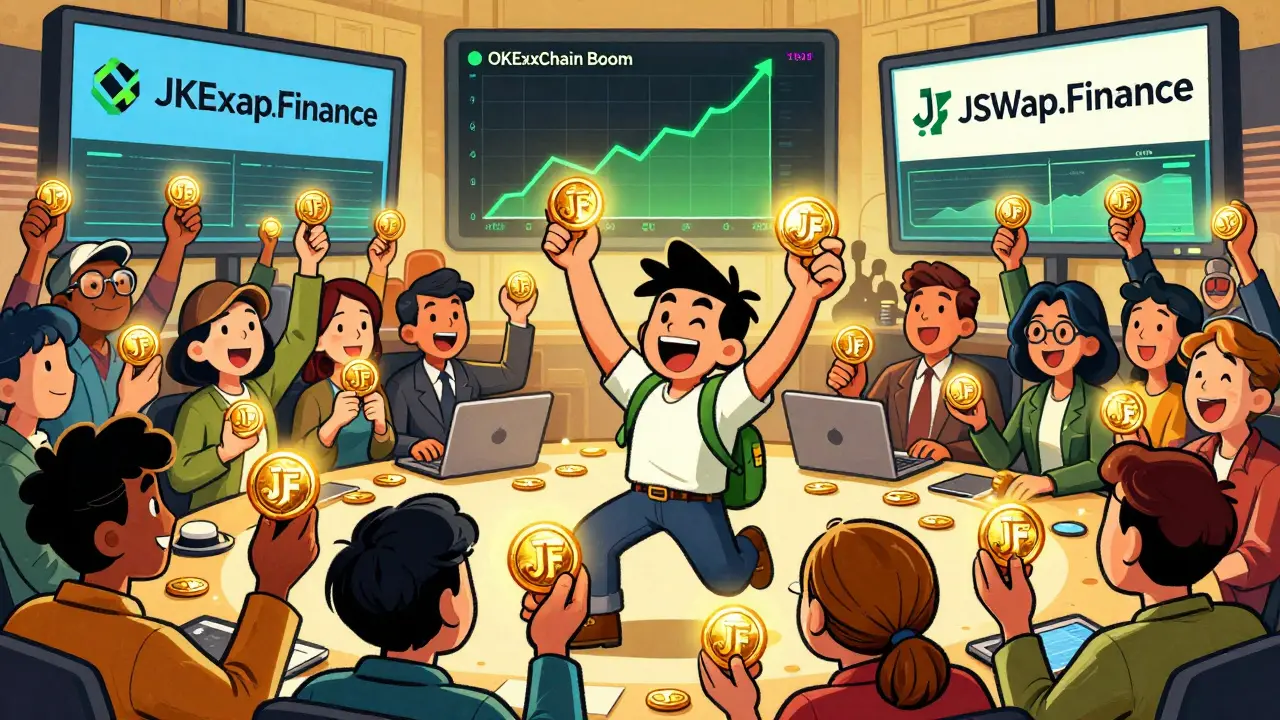
Remember the hype around OKExChain? Back in late 2021, decentralized exchanges were popping up everywhere, promising massive yields and free tokens. One of those projects was JSwap.Finance, a platform that distributed its governance token, JF, through aggressive marketing and exchange partnerships. If you are reading this today in June 2026, you might be wondering if there is still a chance to grab some free JF tokens or if the party has ended. The short answer is complicated. While historical airdrops happened, the current status of the JF token raises serious red flags that every crypto user needs to understand before clicking any links.
This guide cuts through the noise. We will look at how the original JF airdrop worked, specifically the famous MEXC Kickstarter campaign, what the tokenomics looked like on paper, and most importantly, why the current market data suggests extreme caution. You need to know where the money went, who is behind it, and whether "free" tokens are actually worth your time or just a trap for your wallet security.
What Was the JF Token Airdrop?
To understand the current situation, we have to look back at how the JF token distribution program was structured. JSwap.Finance launched as a comprehensive DeFi ecosystem on OKExChain (now known as OKX Chain). Their goal was to offer one-stop services including swap mining, liquidity mining, and DAO dividends. To attract users, they needed liquidity and attention fast. They used the JF token as the incentive.
The total maximum supply of JF tokens was set at 100 million. This is a relatively small cap compared to major cryptocurrencies like Bitcoin or Ethereum, which often implies higher volatility but potentially higher value per token if demand exists. However, supply alone doesn't create value; utility does. The project claimed that all platform profits would go toward repurchasing and burning JF tokens, creating a deflationary model. In theory, this means fewer tokens over time should increase the price of each remaining token. In practice, this only works if the platform generates significant profit from trading fees.
| Attribute | Value / Detail |
|---|---|
| Token Name | JF (Governance Token) |
| Platform | OKExChain (OKX Chain) |
| Total Supply | 100 Million Tokens |
| Primary Use Case | Governance, Staking Rewards, Fee Discounts |
| Historical TVL Peak | ~$60 Million (Late 2021) |
| Current Market Cap | $0 (As of mid-2026 data) |
The MEXC Kickstarter Campaign: The Big Event
If you are looking for the most documented and legitimate way people received JF tokens, it was through the MEXC Exchange Kickstarter program. This wasn't a random "follow us on Twitter" giveaway. It was a structured voting mechanism that took place in November 2021.
Here is how it worked:
- Voting with MX Tokens: Users had to hold MX tokens (MEXC's native token) and lock them into the Kickstarter pool to vote for new listings. By voting for JF, users contributed to the listing fee.
- Massive Participation: The campaign was incredibly popular. Data shows that users contributed a staggering 23,648,779.40 MX tokens to support the JF listing. This demonstrated real interest and capital commitment from the community at the time.
- Reward Distribution: Successful voters received free JF tokens as a reward. The total amount distributed in this specific campaign was approximately 35,200 JF tokens among participants.
This method was transparent because it was tied to an established exchange (MEXC) with clear rules. The catch? MEXC explicitly warned users that projects in their "Innovation Zone" carry high risks and potential price fluctuations. This warning is crucial context that many excited users overlooked in favor of free tokens.
Other Airdrop Mechanisms and Promotions
Beyond the MEXC event, JSwap.Finance attempted to maintain engagement through other channels. Platforms like Bitget mentioned ongoing opportunities where users could receive JSwap airdrops by joining challenges. These typically involved tasks like:
- Joining Telegram groups and Discord servers.
- Retweeting promotional posts.
- Providing initial liquidity to pools.
Bitget also noted that rewards could be converted to JSwap.Finance tokens. However, these smaller campaigns lacked the transparency and scale of the MEXC Kickstarter. Without centralized records, it is difficult to verify exactly how many tokens were distributed or if the promised rewards were ever fully paid out to all participants. In the world of DeFi, "ongoing challenges" often fade away when the marketing budget runs dry.
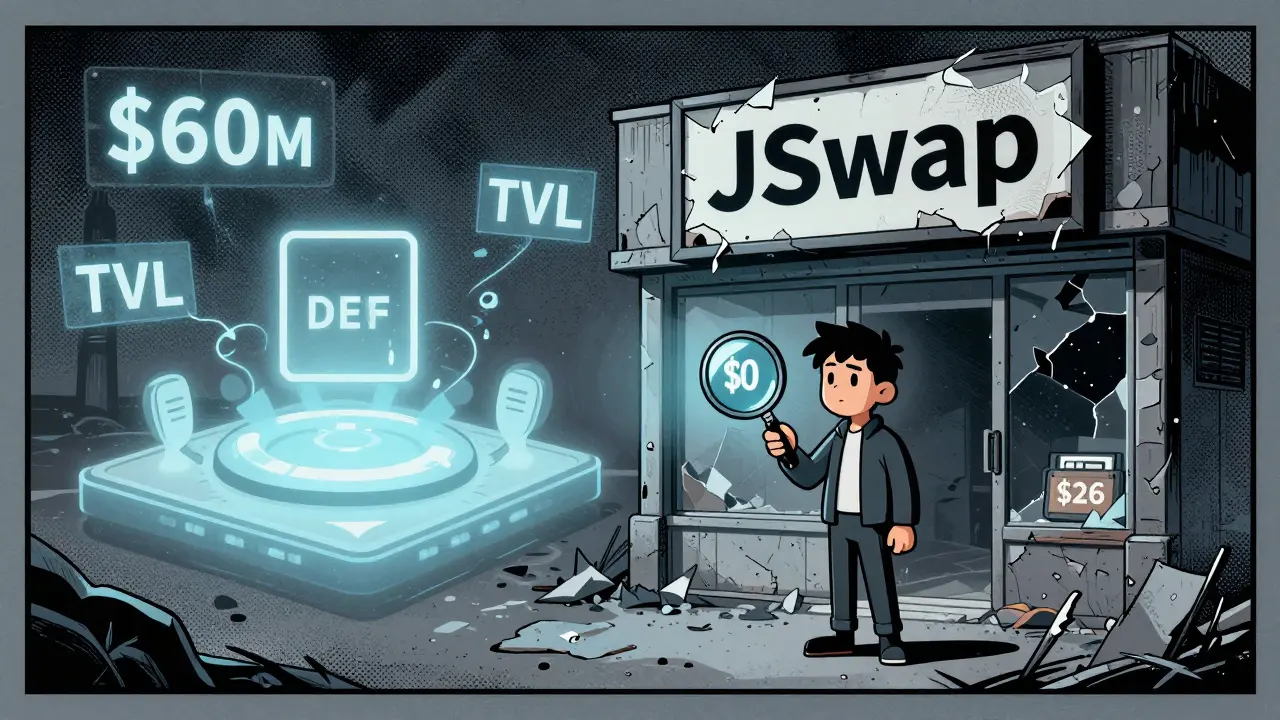
Current Status: Why the Price is Current Status: Why the Price is $0
Now, let’s talk about the elephant in the room. As of June 2026, checking major tracking platforms like Binance and CoinMarketCap reveals alarming data for the JF token. The live price is listed as $0 USD. Trading volume is zero. Circulating supply is reported as zero, despite the max supply being 100 million.
Does this mean the token is worthless? Not necessarily, but it indicates severe liquidity issues. Here is what is likely happening:
1. Delisting from Major Exchanges: When a token drops off centralized exchanges (CEXs), retail investors lose easy access to buy or sell it. If JF was delisted from MEXC or other partners due to low volume or compliance issues, the price discovery mechanism breaks down.
2. Lack of Liquidity Pools: On decentralized exchanges, you need pairs (like JF/USDT) with deep liquidity to trade. If early investors sold their tokens and no new buyers stepped in, the liquidity dried up. The "machine gun pools" and high APYs advertised in 2021 required constant fresh capital to sustain. Without new users earning yield, the system stalled.
3. Data Tracking Errors: Sometimes, $0 prices indicate that the API feed from the blockchain explorer is broken or the contract address is no longer actively monitored by aggregators. However, combined with zero volume, it usually points to a dead or zombie project.
The contrast is stark. At its peak, JSwap boasted nearly 100,000 users and $60 million in Total Value Locked (TVL). Today, the 24-hour DEX volume is reported at a mere $40.24. That is not a typo. Forty dollars. This suggests that while the smart contracts might still exist on the blockchain, the economic activity has effectively ceased.
Red Flags and Risks for New Participants
If you see a website claiming to offer a "new" JF airdrop in 2026, stop. Think. Verify. Here is why you should be extremely cautious:
Honeypot Scams: With the original project seemingly inactive, scammers often create fake websites with similar names (e.g., jswap-airdrop.com) to steal your connection credentials. They ask you to connect your wallet to "claim" tokens, but instead, they drain your existing assets. Never connect your primary wallet to unverified sites.
Phishing Links: Old social media accounts may be hacked or sold. A tweet from @JSwap_Finance (or similar handles) promising a retroactive airdrop could be a phishing link. Always check the official contract address on block explorers like OKX Explorer, not links provided in DMs or comments.
Opportunity Cost: Even if the airdrop is real, what is the value? If the token trades at near-zero with no liquidity, you cannot sell it. Holding worthless tokens provides no benefit and clutters your wallet. Your time is better spent researching active, healthy DeFi protocols with verified audits and consistent volume.
How to Verify Legitimacy Before Engaging
If you are determined to investigate further, follow these steps to protect yourself:
- Check the Contract Address: Find the official JF contract address on a trusted source like CoinGecko or the original MEXC announcement. Compare it to any site asking for interaction. The partial address cited in older reports was
0x5fAc...C85b0A. Ensure the full address matches exactly. - Analyze On-Chain Activity: Use OKX Explorer to look at recent transactions for the JF contract. Are there buys? Sells? Or just dust transactions? If there is no activity in months, the project is dormant.
- Review Social Channels: Check the official Twitter and Telegram. Are they posting regular updates? Is the community engaged? Silence is a loud signal in crypto. Active projects communicate daily.
- Look for Audits: Did JSwap undergo a security audit by firms like CertiK or Hacken? If so, when? An audit from 2021 does not guarantee safety in 2026, especially if the code has been updated or if the team has abandoned the project.
Conclusion: Is It Worth Your Time?
The JF airdrop era peaked in 2021 during the height of the OKExChain boom. The MEXC Kickstarter was a legitimate, large-scale distribution event that rewarded active voters. However, the subsequent years have seen a dramatic decline in activity, liquidity, and market interest.
In 2026, chasing JF tokens offers little to no financial upside and carries significant security risks. The "deflationary" promise of buying back tokens fails when there are no traders generating fees to fund those buybacks. The ecosystem has shrunk from a $60 million TVL powerhouse to a shadow of its former self.
Instead of hunting for ghosts of past airdrops, focus on current opportunities in active DeFi sectors. Look for protocols with transparent teams, consistent revenue, and strong community governance. Free tokens are only valuable if there is a market to buy them. For JF, that market has largely disappeared.
Is the JF airdrop still active in 2026?
No, there is no evidence of an active, legitimate JF airdrop in 2026. The major distribution occurred via the MEXC Kickstarter in November 2021. Any current claims are likely scams or outdated information.
Why is the JF token price showing as $0?
The $0 price indicates a lack of liquidity and trading volume. The token may have been delisted from major exchanges, and there are insufficient buyers in decentralized pools to establish a market price. It essentially means the token is currently illiquid.
Can I still get JF tokens from the MEXC Kickstarter?
No, the MEXC Kickstarter campaign for JF ended in late 2021. Rewards were distributed at that time. You cannot participate in that specific event now.
Is JSwap.Finance a scam?
JSwap.Finance launched as a legitimate DeFi protocol on OKExChain. However, like many projects from that era, it failed to sustain long-term viability. While not necessarily a malicious scam at launch, the lack of current activity and liquidity makes it a high-risk asset today. Be wary of imposter sites using its name.
What happened to the $60 million TVL on JSwap?
The $60 million TVL was achieved during the 2021 bull market. As market conditions changed and interest rates/yields became unsustainable, users withdrew their funds. This is common in DeFi when protocols cannot generate enough organic trading fees to pay high APYs.

Comments (18)
Narendra Kulkarni
hey guys, just wanted to say thanks for the info. i was lookin at this back in 2021 and thought it was legit but now see why its dead. good write up mate.
verna kennedy
You are absolutely foolish if you think there is any value left here. The market has spoken, and JF is garbage. Do not waste your time or mine on these zombie projects. It is a clear sign of poor due diligence by anyone still holding.
Dr Lynea LaVoy
I really appreciate how detailed this guide is because it helps people avoid getting scammed. It is so important to check the contract addresses before connecting wallets. I have seen too many friends lose everything to phishing links that look exactly like the real thing. Please always verify on OKX Explorer directly. Do not trust links in DMs ever. Security should be your number one priority in DeFi. Take care of yourselves out there.
Matthew Malone
Typical crypto scam. These offshore projects always vanish when the money runs out. Americans need to stop falling for these foreign schemes. We should regulate this shit out of existence instead of letting grifters steal from our economy. Pathetic.
aaliyah zahid
Oh wow, talk about a party that ended abruptly. I remember the hype around OKExChain back then. Everyone was talking about yields. Now it's just silence. Sad but true. We should probably move on to better things rather than dwelling on dead coins. Let's focus on what works today.
Meg Gran
the whole concept of deflationary tokens is a lie anyway. they just burn their own way into oblivion. nobody buys them so the price goes to zero. its basic economics. why do ppl keep falling for this? its stupid. really stupid.
Alexander DeVries
LISTEN UP! You need to cut your losses immediately! This token is dead weight dragging down your portfolio! Sell whatever dust you have left and put that energy into active protocols! Do not be a victim of nostalgia! Wake up and smell the coffee! Action is required now!
Mark Corpuz
The data presented here is quite accurate regarding the liquidity crisis. When trading volume drops to forty dollars, the asset effectively ceases to function as currency. It becomes a digital collectible with no utility. Investors should recognize this distinction clearly.
Steven Jacobowitz
i mean the tokenomics were cool on paper right? supply cap of 100m is small. but yeah without buyers its useless. jargon alert: lack of market depth kills the peg. simple as that. dont overthink it.
Yogendra Dwivedi
This is a very informative post. It helps to understand the history of JSwap. I learned something new about the MEXC Kickstarter. Thank you for sharing this knowledge with us all.
Sylvia Mossman
You guys are missing the point entirely. The project isn't dead, it's just waiting for the next bull run. Smart money is accumulating while retail panics. Don't believe the fear-mongering. I'm holding my bags tight. See you at the top.
Alexis Abster
It breaks my heart to see these communities fade away. There was so much hope and excitement in 2021. People worked hard to build these ecosystems. It is tragic that they could not sustain themselves. We must learn from these failures to build stronger projects in the future. Keep the dream alive!
Brad Ranks
Wow. Just wow. $40 volume. That is hilarious. I can buy lunch for more than that. The entire ecosystem collapsed faster than a house of cards in a hurricane. What a disaster. Truly spectacular failure.
Lee Paige
They delisted it because the SEC was watching. Of course they did. The deep state doesn't want you to have financial freedom through decentralized exchanges. They want you dependent on their banks. JF was too successful and threatened the narrative. Stay woke.
Caitlin Donahue
thx for the heads up. i almost clicked a link yesterday thinking it was real. glad i read this first. stay safe everyone. dont trust strangers online lol.
Karthikeyan S
look at you all crying over a dead coin. pathetic. 🤡 you should have sold at the top. now you are stuck with nothing. take the L and cry about it later. 💀
Dinesh Pattigilli
only idiots held this bag. the smart money exited long ago. you are the exit liquidity for everyone else. typical retail behavior. uneducated masses buying the dip on garbage. shamefull.
Dr Lynea LaVoy
@2551 please be kind to others. We are all learning here. There is no need to insult people who made mistakes. Let's support each other instead of tearing each other down. Kindness matters.