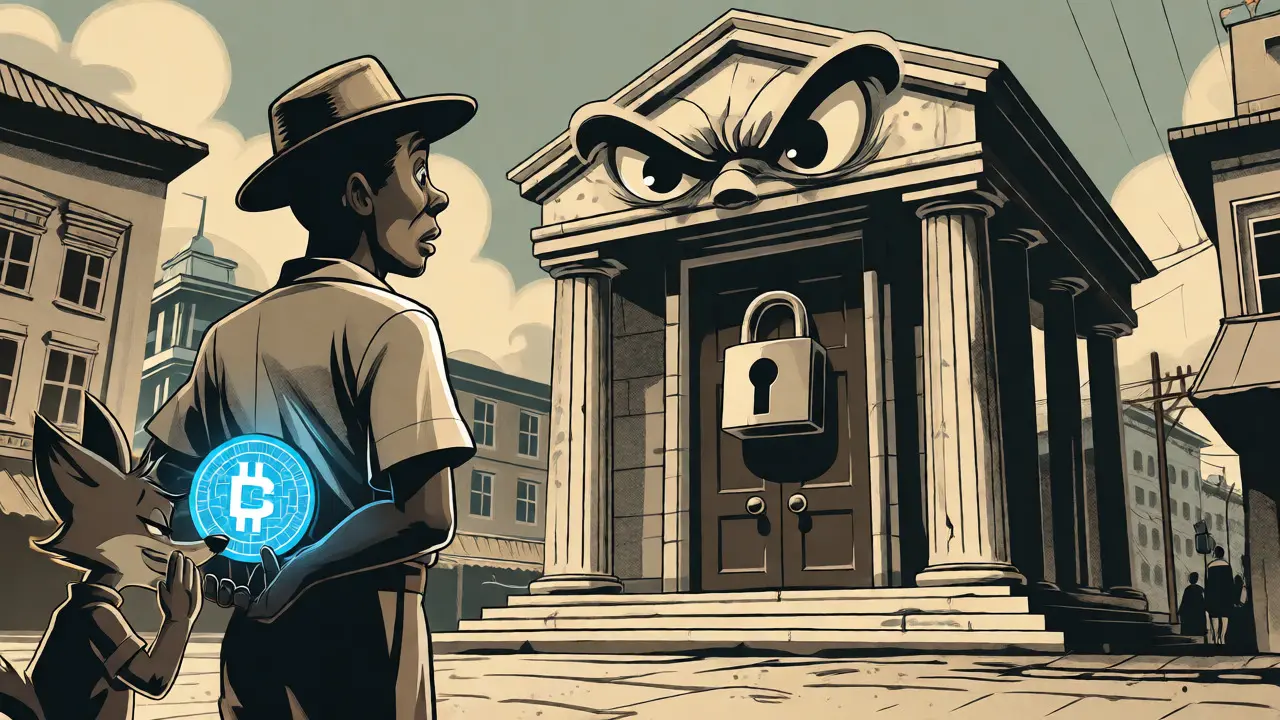
Imagine trying to buy a coffee with money that doesn't officially exist, while your bank threatens to close your account if you even whisper the word "Bitcoin." This isn't a dystopian novel; it's the daily reality for millions of people in countries where cryptocurrency is banned or heavily restricted. From Nigeria to Vietnam, citizens are finding creative ways to bypass strict financial walls. But how exactly do they pull this off without getting their funds frozen or themselves arrested? The answer lies in a mix of technical savvy, informal networks, and a whole lot of patience.
The Reality of Banking Restrictions
Before diving into the solutions, it helps to understand the problem. As of 2025, several nations have implemented strict bans on cryptocurrency usage. China, for instance, has enforced a comprehensive ban since 2019, prohibiting financial institutions from handling digital assets entirely. Similarly, Nigeria maintains a banking ban on crypto transactions, reinforcing penalties for banks that facilitate these payments. These aren't just suggestions; violating them can lead to hefty fines or even prison sentences in places like Algeria and Bangladesh.
Why do governments do this? Often, it's about control. They want to manage capital outflows, protect local currencies, or curb money laundering. For the average citizen, however, this creates a paradox: they might want to hold Bitcoin as an inflation hedge or send remittances cheaper than Western Union allows, but their traditional banking channels are effectively closed. So, they look for backdoors.
Peer-to-Peer (P2P) Trading Platforms
If there’s one method that dominates the landscape in restricted regions, it’s peer-to-peer trading. Unlike centralized exchanges that require you to link a bank account directly, P2P platforms connect buyers and sellers directly. You find someone willing to sell you Bitcoin for your local currency via a bank transfer, mobile money, or cash deposit. The platform acts as an escrow service, holding the crypto until the payment is confirmed.
Binance P2P and Paxful are two giants here. In Nigeria, despite the Central Bank’s stance, Binance P2P processed billions in volume recently because users can trade using local bank transfers without explicitly mentioning "crypto" in the transaction notes. A user in Lagos might pay a seller via a standard bank transfer labeled "service fee," and the seller releases the BTC. It’s a dance of semantics.
However, this method isn't foolproof. You’re dealing with humans, which means scams happen. Always check the trader’s rating and history. Also, be aware that some banks flag frequent transfers to the same individual as suspicious. Diversifying your counterparties helps keep your profile low-key.
Decentralized Exchanges (DEXs)
For those who distrust intermediaries, decentralized exchanges offer a lifeline. A Decentralized Exchange (DEX) is a type of cryptocurrency exchange that operates without a central authority, allowing users to trade directly from their wallets. Examples include Uniswap and PancakeSwap.
The beauty of DEXs is privacy. Since you don’t need to upload your passport or undergo Know Your Customer (KYC) checks, you can remain anonymous. But there’s a catch: you need crypto to buy crypto. You can’t easily convert fiat currency (like Naira or Lira) into ETH on Uniswap directly. Usually, you first acquire stablecoins (like USDT) through a P2P route or a gift card method, then swap them for other assets on the DEX. This adds a layer of complexity but significantly boosts privacy.
| Method | Privacy Level | Speed | Risk Factor |
|---|---|---|---|
| P2P Platforms | Medium | Fast | Scams, Bank Flags |
| DEXs | High | Instant | Smart Contract Bugs |
| No-KYC CEXs | Medium-High | Fast | Regulatory Shutdowns |
| Hawala Networks | High | Variable | Lack of Recourse |

The Role of Virtual Private Networks (VPNs)
You can’t access most global exchanges if your IP address screams "I live in a banned country." That’s why VPNs are essential tools. Services like NordVPN report massive surges in usage from countries like China and Nigeria. By masking your location, you appear to be browsing from a permitted jurisdiction, such as Germany or Singapore.
But don’t just pick any free VPN. Poor quality ones leak data or get blocked quickly. Paid, reputable providers are worth the monthly fee. Also, remember that using a VPN doesn’t hide your activity from your internet service provider (ISP), only from the websites you visit. If the government monitors ISP traffic, they might still see you connecting to known crypto server IPs, though not necessarily what you’re doing.
Creative Workarounds: Gift Cards and Hawala
When direct bank transfers are too risky or impossible, people get inventive. One popular method is gift card arbitrage. You buy Steam, iTunes, or Amazon gift cards with local cash or bank transfers. Then, you sell these gift cards on platforms like Paxful for cryptocurrency. It’s inefficient-you lose value in the spread-but it breaks the direct link between your bank account and crypto purchases.
Another ancient-yet-modern solution is the Hawala system. This is an informal value transfer network common in the Middle East and South Asia. Traditionally used for remittances, Hawala brokers now often accept fiat deposits and release equivalent crypto to your wallet. Because Hawala relies on trust and community reputation rather than formal contracts, it leaves little paper trail. However, you must trust your broker implicitly, as there’s no legal recourse if things go wrong.

Technical Hurdles and Best Practices
Accessing crypto in restrictive environments isn’t just about finding a platform; it’s about managing risk. Here are some practical tips based on real-world experiences:
- Use Non-Custodial Wallets: Keep your private keys. Apps like Trust Wallet or MetaMask give you full control. If an exchange freezes your account, your coins are safe elsewhere.
- Separate Accounts: Don’t use your primary salary account for crypto trades. Open a secondary bank account specifically for these transactions to isolate potential issues.
- Be Careful with Transaction Notes: Never write "Bitcoin" or "Crypto" in bank transfer memos. Use generic terms like "invoice" or "payment."
- Start Small: Test new platforms with small amounts before committing significant capital.
Many users report spending weeks setting up reliable workflows. It’s not instant gratification. You’ll likely face failed transactions, delayed responses, and confusing interfaces. Patience is your best asset.
The Future of Crypto Access
Regulators aren’t standing still. With advancements in blockchain surveillance and stricter KYC rules globally, the cat-and-mouse game continues. New technologies like zero-knowledge proofs promise better privacy, potentially making it easier to prove compliance without revealing identity. Until then, citizens in banking-restricted countries will continue to innovate, proving that where there’s demand, there’s always a way.
Is it illegal to own crypto in restricted countries?
It depends on the specific laws of each country. In some places, like India, owning crypto is legal but taxed heavily. In others, like China, trading is banned, but ownership itself is often a gray area. Always check local regulations regarding possession versus trading.
Can banks detect crypto transactions?
Banks can’t see the blockchain directly, but they monitor patterns. Frequent large transfers to individuals, round numbers, or rapid inflows/outflows can trigger alerts. Using P2P with careful labeling helps mitigate this.
What is the safest way to store crypto in restricted regions?
Hardware wallets (cold storage) are generally considered the safest option because they keep your keys offline. Non-custodial software wallets are also good but require careful management of seed phrases.
Do I need a VPN for every transaction?
Not necessarily. Some P2P apps allow mobile access without a strict geo-block. However, for accessing global websites or ensuring consistent connectivity, a reliable VPN is highly recommended.
Are gift card methods worth the loss in value?
If direct bank transfers are completely blocked or high-risk, yes. The premium paid on gift cards is the cost of privacy and accessibility. For small amounts, it’s manageable; for large sums, look for more efficient routes.