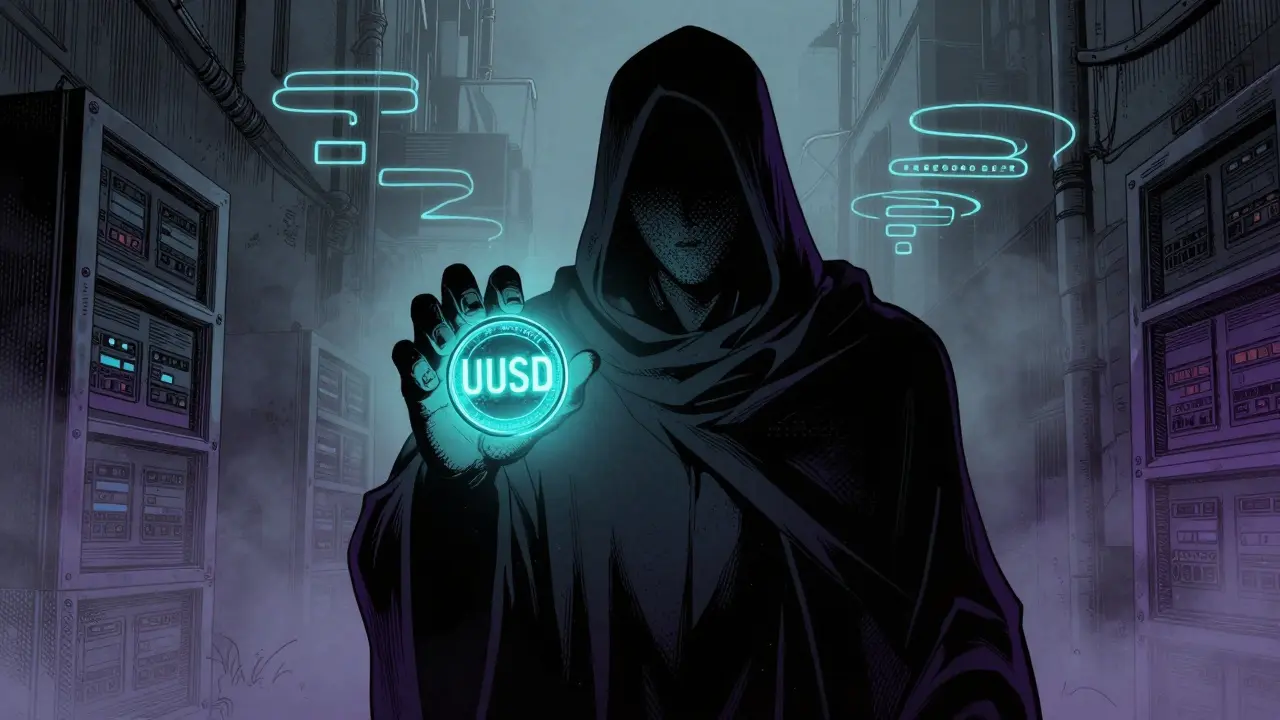
Imagine sending money online where no one can see who you are, where your IP address is hidden, and the value doesn't fluctuate wildly like Bitcoin. That is exactly what Utopia USD (UUSD) aims to provide. It is a digital currency designed for people who want the stability of the U.S. dollar but refuse to give up their anonymity.
If you have been browsing the darker corners of the crypto world or using the Utopia P2P network for private messaging, you might have stumbled upon this token. But before you start buying it, you need to understand how it works, why it exists, and whether it is actually safe to hold. Unlike major stablecoins like USDT or USDC, UUSD operates in a very small, niche ecosystem with unique risks and benefits.
The Core Concept: Stability Meets Anonymity
To understand Utopia USD (a privacy-focused stablecoin on the Utopia blockchain), you first need to look at the ecosystem it lives in. The Utopia network is not just a payment system; it is a serverless, peer-to-peer infrastructure built for anonymous communication. Users here send encrypted emails, browse the web privately, and exchange messages without revealing their physical location or IP address.
Inside this network, there are two main currencies. First, there is Crypton (CRP), which is used for mining rewards and paying for network resources. However, CRP is volatile-its price goes up and down based on market demand. This makes it a poor choice for everyday payments. If you hire someone to do a job within the Utopia network, you don't want to pay them in a currency that might lose 10% of its value by tomorrow.
This is where UUSD steps in. It was launched in November 2022 as a solution to this volatility problem. Its goal is simple: maintain a soft 1:1 peg with the U.S. dollar. When you use UUSD, you get the price stability of fiat money combined with the total anonymity of the Utopia network. Transactions are instant, low-cost, and completely private. There is no central server storing your data, and unlike public blockchains, your transaction history is not visible to the outside world.
How Is UUSD Backed? The DAI Connection
Every stablecoin needs backing to maintain its value. Tether (USDT) claims to be backed by bank reserves and commercial paper. Circle’s USDC is backed by cash and short-term government bonds. Utopia USD takes a different route. It is backed by DAI, a decentralized cryptocurrency stablecoin itself.
According to official documentation, every single UUSD token in circulation is supported by an equivalent amount of DAI held in reserve. This creates a layered structure:
- Layer 1: You hold UUSD inside the Utopia wallet.
- Layer 2: The Utopia system holds DAI as collateral.
- Layer 3: DAI is backed by various crypto assets managed by MakerDAO.
The project claims these DAI reserves are publicly verifiable and equal to the total supply of UUSD. In theory, this offers transparency because DAI operates on public blockchains where anyone can audit the smart contracts. However, there is a catch. While the DAI reserves might be visible on-chain, the specific addresses holding them and the exact mechanism for redeeming UUSD for DAI are not fully detailed in public technical audits. This means users must trust the Utopia team to manage the bridge between their private network and the public Ethereum-based DAI system correctly.
Market Reality: Supply, Price, and Liquidity
Let’s talk numbers, because they tell a stark story about UUSD’s current status. As of early 2025, the total supply of Utopia USD is capped at 1,000,000 tokens. This is tiny compared to giants like USDT, which has hundreds of billions in circulation.
| Metric | Value / Status |
|---|---|
| Total Supply | 1,000,000 UUSD |
| Target Peg | $1.00 USD (Soft Peg) |
| Typical Trading Range | $0.95 - $0.98 |
| Market Cap (Approx.) | $964,000 |
| Daily Volume | $20,000 - $200,000 |
| Blockchain | Proprietary Utopia Chain |
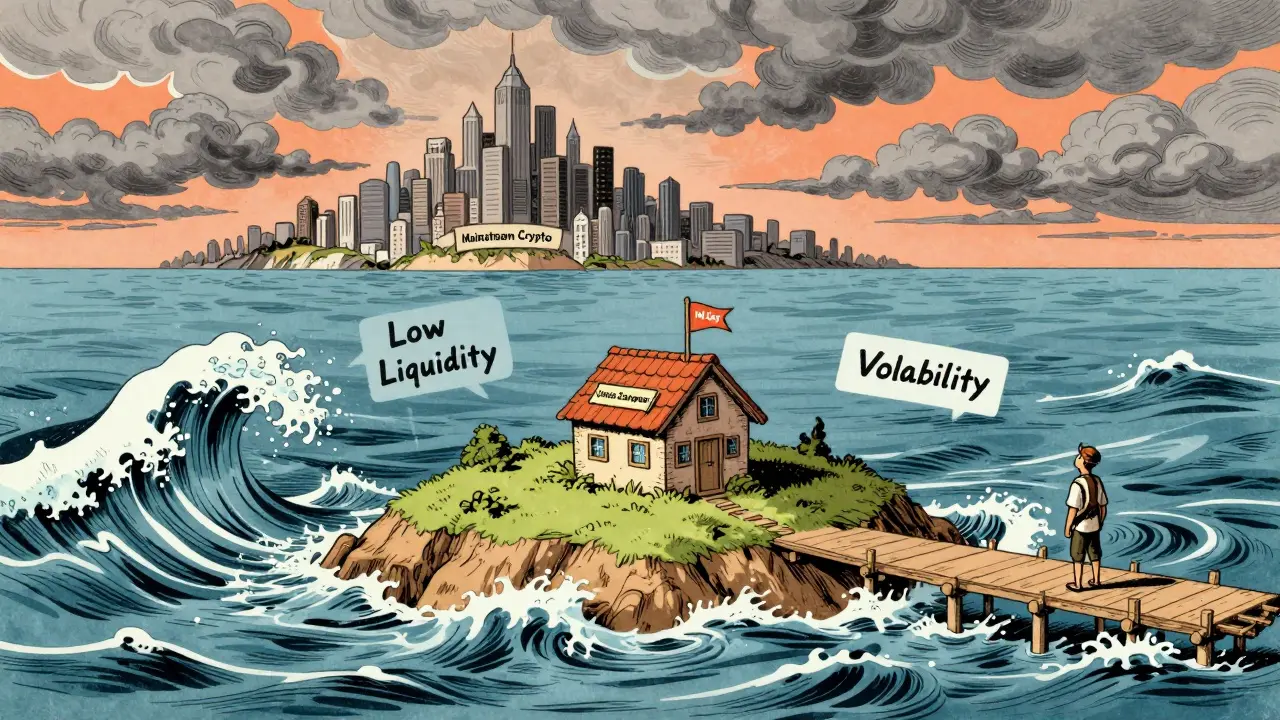
You will notice that UUSD rarely trades at exactly $1.00. Data from trackers like Coinbase and Crypto.com shows it often hovering between $0.95 and $0.98. This deviation happens because liquidity is thin. With only one million tokens in existence, large buy or sell orders can move the price significantly. If you try to sell a large chunk of UUSD, you might face slippage, meaning you get less than the listed price.
Furthermore, data reporting is inconsistent. Some platforms list the circulating supply as zero while showing trading volume, suggesting that much of the activity happens on obscure exchanges or over-the-counter desks rather than mainstream markets. This fragmentation makes it hard to gauge true market health.

Who Should Use Utopia USD?
UUSD is not for everyone. In fact, for most crypto investors, it is likely unsuitable. Here is a breakdown of who fits the profile and who should stay away.
It is for you if:
- You are already an active user of the Utopia P2P network for messaging or browsing.
- You need to make payments within the ecosystem and want to avoid the volatility of Crypton (CRP).
- Anonymity is your top priority, and you are willing to sacrifice ease of use and deep liquidity to protect your identity.
- You understand the risks of proprietary blockchains and are comfortable with non-standard redemption processes.
It is NOT for you if:
- You want to use the stablecoin for DeFi lending, borrowing, or yield farming on major chains like Ethereum or Solana. UUSD does not exist on those networks.
- You need high liquidity to enter and exit positions quickly without affecting the price.
- You require regulatory compliance features, such as KYC (Know Your Customer) verification, for business purposes.
- You expect the peg to be perfectly maintained at $1.00 at all times. The soft peg allows for fluctuations.
Risks and Limitations You Must Know
Before adding UUSD to your portfolio, consider these critical risks. The first is platform risk. Utopia runs on its own proprietary blockchain. It is not open-source in the same way Bitcoin or Ethereum is. There are no widely published security audits from independent firms like CertiK or Trail of Bits. You are trusting the Utopia developers to keep the network secure and the code bug-free.
The second risk is counterparty risk related to the DAI backing. While DAI is generally stable, it is still subject to smart contract risks and governance changes within the MakerDAO protocol. If DAI depegs from the dollar, UUSD could suffer collateral issues. Moreover, since the redemption process for UUSD is internal to the Utopia app, you cannot simply swap it for DAI on a public decentralized exchange like Uniswap.
Third, there is regulatory risk. Governments worldwide are cracking down on privacy coins and anonymous financial tools. Because UUSD explicitly hides IP addresses and transaction metadata, it falls into a category that regulators often view with suspicion. Future laws could restrict access to the Utopia network or make it illegal to use such tools in certain jurisdictions.
How to Buy and Store UUSD
Getting your hands on Utopia USD is more complex than buying Bitcoin on Coinbase. Since it is not widely listed on major centralized exchanges, you have limited options.
- Use the Utopia Wallet: The primary way to interact with UUSD is through the native Utopia wallet. You typically need to acquire Crypton (CRP) first and then swap it for UUSD within the app, or receive UUSD directly from another Utopia user.
- Third-Party Platforms: Some platforms like Atomic Wallet claim to allow purchases of UUSD via credit card, usually with limits ranging from $50 to $20,000 per day. However, fees and spreads can be high due to low liquidity.
- Decentralized Exchanges (DEXs): Occasionally, UUSD may appear on smaller DEXs, but you must ensure you are on the correct network. Remember, UUSD is not an ERC-20 token. Sending it to an Ethereum wallet will result in permanent loss.
Storage is straightforward but restrictive. You must store UUSD in the Utopia wallet. You cannot transfer it to MetaMask, Ledger, or Trezor unless those devices have specific support for the Utopia protocol, which is currently rare. This lack of interoperability locks your funds into the Utopia ecosystem.
Conclusion: A Niche Tool for Specific Needs
Utopia USD fills a very specific gap in the crypto landscape. It offers a dollar-stable asset for users who prioritize absolute privacy and operate within the Utopia P2P network. For those users, it provides a necessary hedge against the volatility of the native Crypton token.
However, for the average crypto investor, UUSD presents too many drawbacks. The low liquidity, potential for peg deviation, lack of external audits, and confinement to a single proprietary blockchain make it a risky holding. It is an experimental tool rather than a mainstream financial instrument. Use it if you need it for private transactions within Utopia, but do not rely on it as a primary store of value or a gateway to the broader DeFi world.
Is Utopia USD (UUSD) the same as USDT or USDC?
No, they are very different. USDT and USDC are issued by centralized companies and operate on public blockchains like Ethereum, where transactions are transparent. UUSD is issued within the private Utopia P2P network, focuses on hiding user identity and IP addresses, and is backed by DAI rather than direct fiat reserves. UUSD is also much smaller in scale and liquidity.
Can I trade UUSD on Binance or Coinbase?
Generally, no. Major centralized exchanges like Binance and Coinbase do not list UUSD for trading. While Coinbase may display price data for informational purposes, you cannot buy or sell it directly on their platform. You typically need to acquire it through the Utopia ecosystem or specialized third-party wallets like Atomic Wallet.
Why does UUSD trade below $1.00?
UUSD has a "soft peg," meaning it aims for $1.00 but does not enforce it rigidly. Due to low trading volume and limited liquidity, market forces can push the price down slightly, often seen in the $0.95-$0.98 range. Without significant market makers defending the peg, minor deviations are common.
Is my UUSD safe if the Utopia network shuts down?
This is a major risk. Since UUSD exists only on the proprietary Utopia blockchain and is not bridged to other major networks, if the Utopia project fails or stops operating, you may lose access to your funds. There is no easy way to convert UUSD back to DAI or other cryptocurrencies outside of the Utopia interface.
What backs the value of Utopia USD?
UUSD is backed by DAI, a decentralized stablecoin. The project claims that for every 1 UUSD in circulation, there is 1 USD worth of DAI held in reserve. This makes it a crypto-collateralized stablecoin, distinct from fiat-backed coins like USDC.