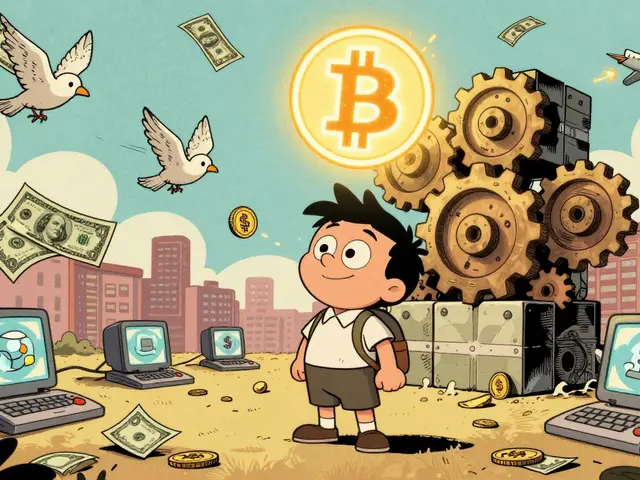
Imagine you have a single dollar bill. You can hand it to your friend for coffee, and once they have it, you cannot use that same bill to buy a sandwich at the next store. Physical cash has a built-in limitation: it exists in one place at one time. Digital data, however, is different. If I send you a file, I still keep my copy. If I send you a photo, I still have mine. This ease of duplication creates a nightmare scenario for digital money known as the double-spending problem. Without a way to stop it, anyone could spend the same digital coin twice, or ten times, effectively printing their own money out of thin air.
This isn't just a theoretical glitch; it was the primary hurdle that stopped digital currencies from working before Bitcoin arrived. Before 2009, every attempt at digital cash relied on a central server-like a bank-to track who owned what. If the server went down, got hacked, or was censored, the money vanished. The breakthrough wasn't just inventing a new coin; it was figuring out how to prevent duplication without a middleman. Let's look at why this happens, why it breaks traditional systems, and how modern blockchains actually solve it.
Why Digital Money Is Fragile
Digital information is non-rivalrous. That’s a fancy way of saying that my using a digital file doesn’t stop you from using it too. In a physical world, scarcity is enforced by physics. In a digital world, scarcity must be enforced by code. If a system doesn't strictly verify ownership history, a user named Alice could broadcast two transactions simultaneously: sending 1 BTC to Bob and 1 BTC to Charlie. Since both messages hit the network at roughly the same time, different nodes might see them in different orders. Node A might accept the payment to Bob first, while Node B accepts the payment to Charlie. Now, Alice has spent 1 BTC but received goods worth 2 BTC. She just created value from nothing, diluting the trust everyone else places in the currency.
The core issue stems from latency and decentralization. In a centralized bank, there is one source of truth. When you swipe your card, the bank checks its database instantly and denies the second transaction if funds are low. In a decentralized peer-to-peer network, there is no single source of truth. Instead, thousands of computers (nodes) hold copies of the ledger. These copies aren't always perfectly synchronized. There is a tiny window-a few seconds or minutes-where conflicting transactions exist. If malicious actors exploit this timing gap, they can trick the network into accepting invalid transfers.
The Pre-Bitcoin Failures
Before Satoshi Nakamoto published the Bitcoin whitepaper, several projects tried to solve this. Systems like DigiCash and e-gold existed, but they all shared a fatal flaw: they required a trusted third party. If you wanted to send digital gold, you had to trust the company holding the vaults. This reintroduced the very problems cryptocurrency aims to fix: censorship, seizure risk, and single points of failure. If the central authority decided to freeze your account, your "digital" money was gone. If their servers crashed during peak traffic, you couldn't pay for anything.
Other attempts focused purely on cryptography. They used digital signatures to prove you owned the coins, but signatures alone don't tell the network which transaction came first. A signature proves identity, not sequence. Without a way to agree on the order of events globally, double-spending remained unsolved. It took a combination of cryptographic proofs and economic incentives to crack the nut.
How Blockchain Solves Double-Spending
Bitcoin solved this by introducing a public, distributed ledger called the blockchain. Think of the blockchain as a transparent notebook that everyone holds a copy of. Every transaction ever made is written in ink. Once a page (block) is full and sealed, it gets chained to the previous page. You can't erase old entries without destroying the entire chain.
The magic lies in the consensus mechanism. When Alice broadcasts her transaction, miners (specialized nodes) pick it up. They don't just accept it blindly; they check the entire history of the blockchain to ensure Alice hasn't already spent those specific coins. If the coins are unspent, the miner bundles the transaction with others into a candidate block. But here is the catch: multiple miners try to create blocks at the same time. Who wins?
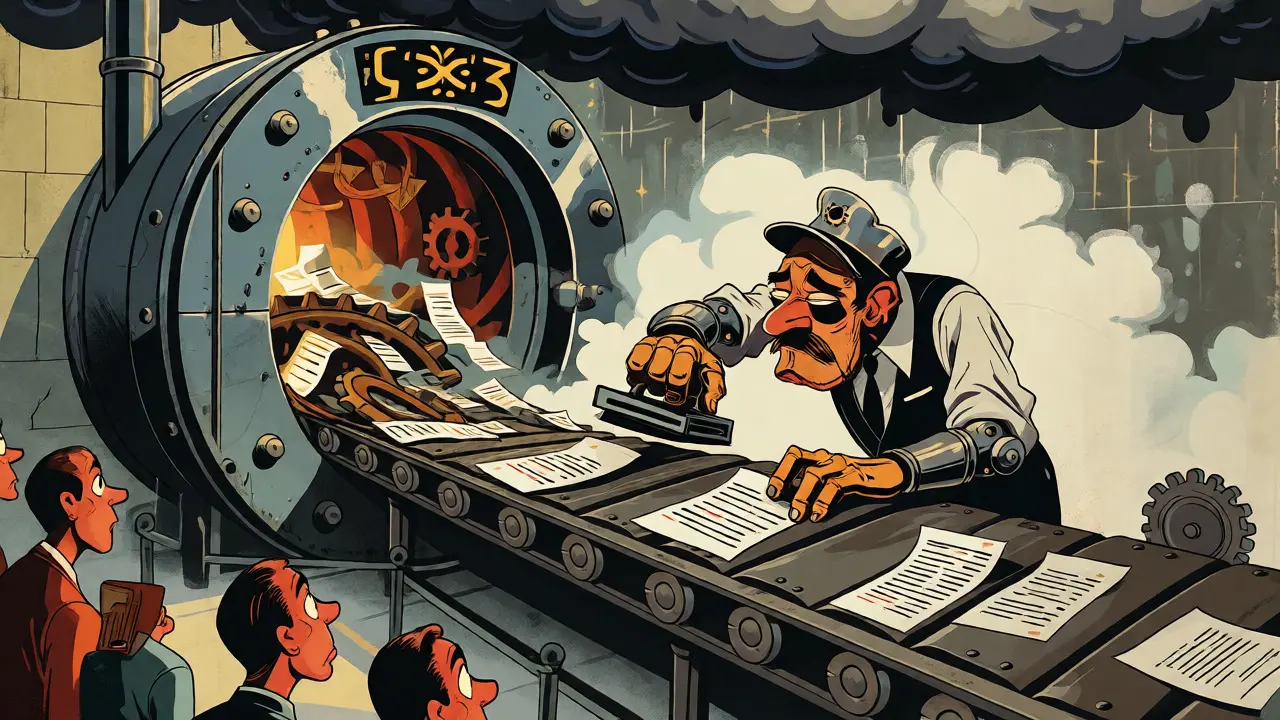
Miners race to solve a complex mathematical puzzle known as Proof-of-Work. This requires massive computational power. The first miner to find the solution broadcasts their block to the network. Other nodes verify the math and the transactions within the block. If valid, they add it to their local copy of the blockchain. Any other miner who tried to include a conflicting transaction (the double-spend) now finds their block orphaned because the network has already agreed on the first version of history. The losing transaction is discarded.
The Role of Confirmations
Is a transaction safe the moment it appears in a block? Technically, yes, but practically, users wait for confirmations. Each new block added after your transaction strengthens its position. If you send Bitcoin, waiting for six confirmations (about an hour) makes reversing the transaction nearly impossible. To reverse a confirmed transaction, an attacker would need to out-mine the rest of the network combined to rewrite the history back to before the transaction occurred. This is known as a 51% attack, and for major networks like Bitcoin, it is prohibitively expensive.
Let's break down the timeline of a secure transaction:
- Broadcast: Alice signs and sends the transaction to the network.
- Mempool: Nodes check validity and store it in a waiting area (memory pool).
- Block Creation: Miners select transactions and solve the Proof-of-Work puzzle.
- Consensus: The winning block is propagated. Nodes verify and append it.
- Finality: As more blocks stack on top, the cost to reverse the transaction grows exponentially.
Alternative Solutions: Proof-of-Stake and DAGs
Not all cryptocurrencies use Proof-of-Work. Ethereum, for example, shifted to Proof-of-Stake. Here, validators stake their own coins as collateral. If they try to validate a double-spend, they lose their stake. This economic penalty replaces the energy cost of mining as the deterrent against fraud.
Some newer architectures, like Hedera Hashgraph or IOTA, use Directed Acyclic Graphs (DAGs). Instead of linear blocks, transactions link directly to each other. Consensus is reached through voting mechanisms rather than mining. While these systems claim faster speeds, they still face challenges in achieving absolute finality compared to Bitcoin's robust model. The fundamental goal remains identical: establish a single, agreed-upon order of transactions across a decentralized network.
| Mechanism | How It Works | Security Model | Speed/Finality |
|---|---|---|---|
| Centralized Server | Single database updates sequentially. | Trust in entity; vulnerable to hacks/censorship. | Instant, but reversible by admin. |
| Proof-of-Work (Bitcoin) | Miners compete to solve puzzles; longest chain wins. | Economic cost of energy/hardware; 51% attack threshold. | Slow (minutes); high finality after ~6 blocks. |
| Proof-of-Stake (Ethereum) | Validators stake coins; slashing penalties for misbehavior. | Economic loss of staked capital; social coordination. | Faster (seconds/minutes); probabilistic finality. |
| DAG (IOTA/Hedera) | Voting/Gossip protocols on graph structure. | Mathematical probability of consensus convergence. | Very fast; near-instant confirmation. |

Why This Matters for Your Wallet
Understanding double-spending helps you assess risk. When you buy coffee with crypto, you are trusting the protocol's ability to reject duplicates. For small amounts, zero-confiidence transactions (accepting payment immediately) are risky but convenient. For large purchases, like buying a car or real estate, waiting for confirmations is essential. You are paying for certainty.
Moreover, this problem highlights why blockchain is more than just a database. Traditional databases can handle concurrency, but they require a central controller. Blockchains achieve consistency without control. This distinction is crucial for developers building decentralized apps (dApps). If your app logic assumes instant, irreversible settlement, you might encounter edge cases where reorgs (reorganizations of the chain) temporarily reverse transactions. Smart contracts often include safeguards, such as checking `tx.origin` or requiring multiple confirmations, to mitigate these risks.
Economic Implications of Failure
If double-spending weren't solved, cryptocurrency would fail as money. Money relies on three properties: medium of exchange, unit of account, and store of value. Double-spending destroys the store of value. If I can print infinite units of my own wallet balance, the supply becomes infinite. Infinite supply means zero value. Hyperinflation sets in immediately. Trust evaporates. Merchants stop accepting the token. The network dies.
This is why the security budget of a blockchain matters. Bitcoin spends billions annually on electricity to secure the network. This isn't waste; it's the insurance premium against double-spending. Cheaper networks with lower security budgets are more susceptible to attacks. During periods of low hash rate, smaller altcoins occasionally suffer double-spend incidents, forcing exchanges to halt withdrawals until stability returns.
Can double-spending happen on any blockchain?
Yes, theoretically. Any decentralized network has a window where consensus is forming. However, robust networks make it economically irrational. An attacker would need to control over 50% of the network's mining power (or staked capital) to successfully double-spend. On Bitcoin, this costs billions of dollars in hardware and electricity, making it impractical for most attackers.
Does waiting for confirmations guarantee safety?
It guarantees high probability, not absolute certainty. After six confirmations on Bitcoin, the chance of reversal is less than 0.0001%. For most practical purposes, this is considered safe. However, in extreme scenarios involving a coordinated 51% attack, even confirmed transactions can be reversed if the attacker mines a longer chain faster than the honest network.
How do merchants protect against double-spending?
Most point-of-sale systems integrate with blockchain explorers or wallets that display real-time status. Merchants typically wait for at least one confirmation for small retail purchases. For higher-value items, they may wait for multiple confirmations. Some services offer instant settlement via layer-2 solutions like the Lightning Network, which uses off-chain channels to lock funds before broadcasting to the main chain.
What is a 51% attack?
A 51% attack occurs when a single entity or group controls more than half of the network's hashing power (in Proof-of-Work) or staked amount (in Proof-of-Stake). With this majority, they can dictate the order of transactions, enabling them to double-spend their own coins and potentially censor others' transactions. It does not allow them to steal other people's coins, only to manipulate recent history.
Did fiat currency have a double-spending problem?
Fiat currency avoids this through physical tangibility and centralized ledgers. Banknotes are hard to duplicate due to advanced printing techniques, and electronic bank transfers are managed by central banks that maintain a single authoritative record. The trade-off is reliance on centralized institutions, whereas cryptocurrency solves it through decentralized consensus algorithms.