
Imagine holding a crypto asset that pays you in Solana just for keeping it in your wallet. No staking, no locking up funds, and no clicking "claim" buttons. That is the core promise of Print Protocol, a Solana-based reflection token launched on January 18, 2024, designed to provide passive income through automated reward distribution. The project aims to pioneer a decentralized financial ecosystem by leveraging the speed and scalability of the Solana blockchain.
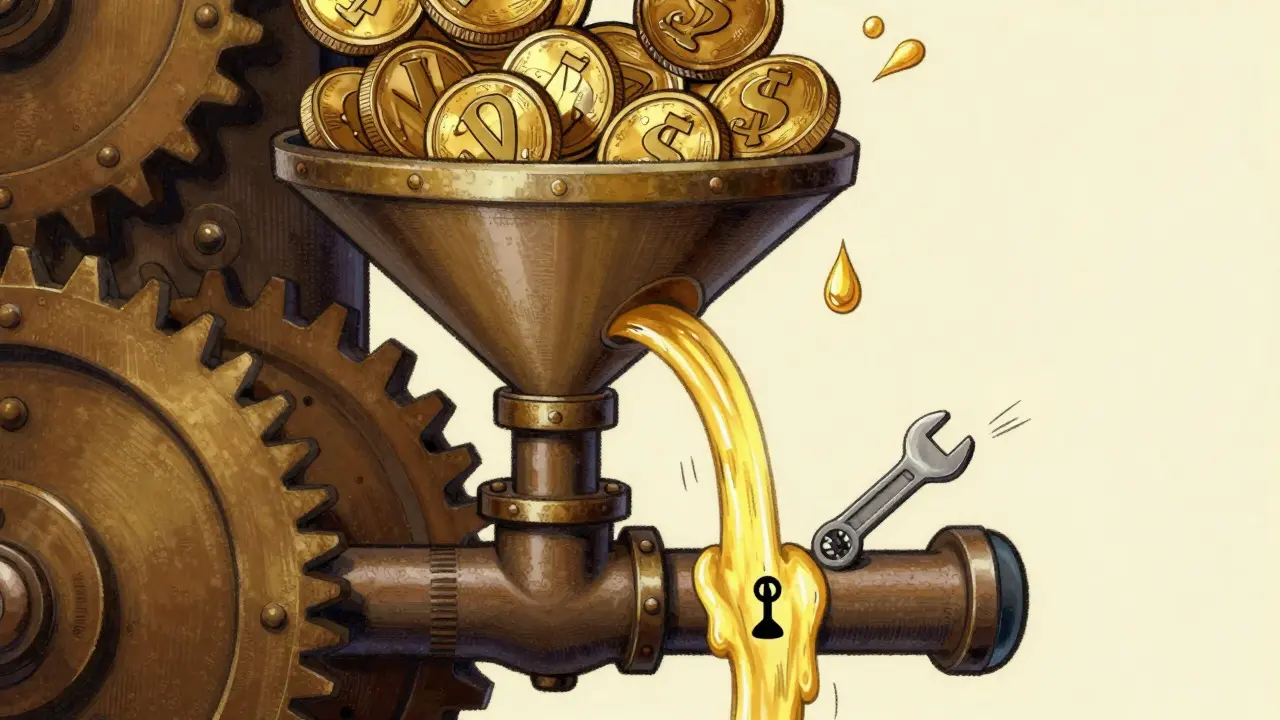
Unlike traditional reflection tokens that require manual intervention to collect rewards, Print Protocol uses a unique auto-swap script. This mechanism converts transaction taxes directly into SOL and distributes them straight to holders' wallets. For investors looking for hands-off yield strategies, this automation represents a significant shift in user experience within the Solana ecosystem.
Key Takeaways
- Automated Rewards: PRINT holders receive SOL automatically from an 8% transaction tax, with 6% going to holders and 2% to operations.
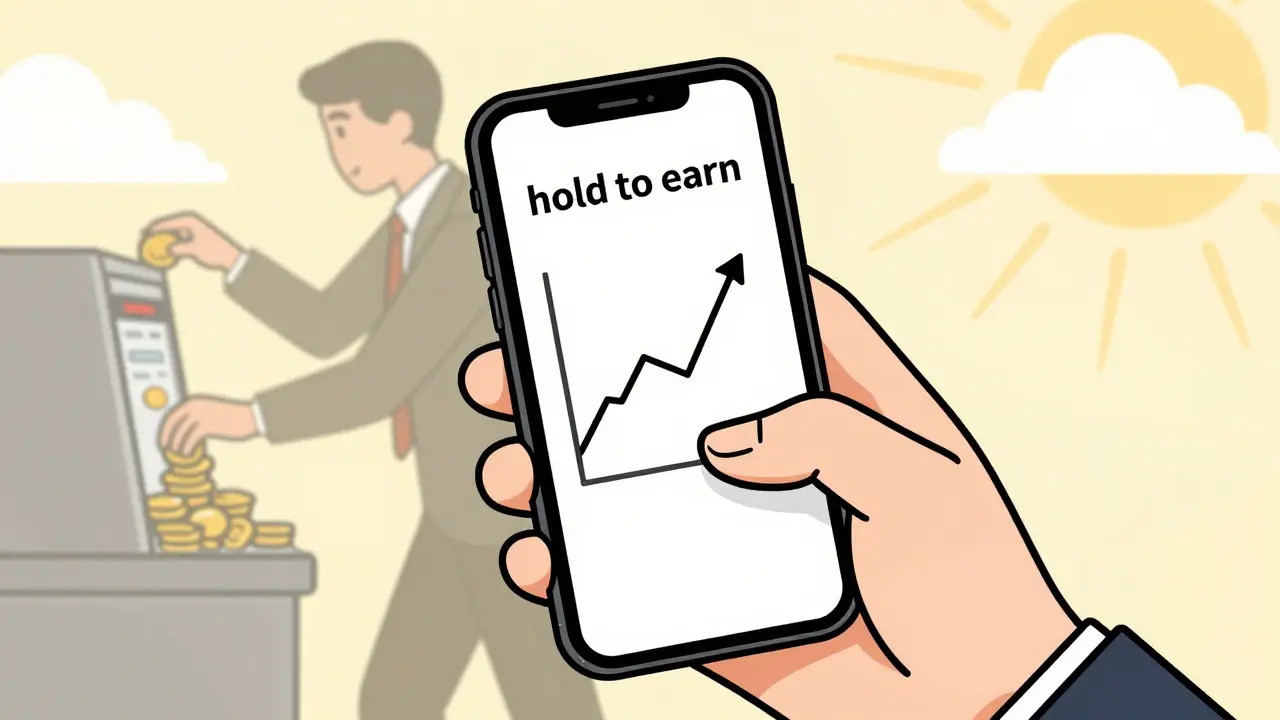
- No Staking Required: It is a "Hold to Earn" model, not a proof-of-stake network; you just need to hold the token in your wallet.
- Fixed Supply: The total supply is capped at 9.95 billion PRINT tokens, all of which are currently circulating.
- Solana Native: Built on the Solana blockchain to ensure low fees and high-speed micro-transaction processing for rewards.
- Early Adoption Phase: Launched in early 2024 with initial distribution to Solana Mobile users, positioning it as a community-driven project.
How the Print Protocol Mechanism Works
To understand the value proposition, you need to look at the technical architecture. Print Protocol operates on the Solana Token 2022 standard. The core engine driving the passive income is a specific tax structure applied to every trade.
When you buy or sell PRINT, an 8% transaction tax is applied. Here is how that tax is split:
- 6% Holder Rewards: This portion is automatically swapped into SOL and distributed proportionally to all existing holders of the token.
- 2% Operations Wallet: This goes to the project team to fund development, marketing, and maintenance.
The critical innovation here is the "auto-swap." In many other DeFi projects, rewards accrue in the native token or a separate reward pool, requiring you to perform a second transaction to claim them. With Print Protocol, the smart contract handles the conversion from PRINT to SOL instantly upon each trade. This means if trading volume is high, your wallet receives small SOL deposits frequently without you doing anything.
| Action | Total Tax | Holder Reward (SOL) | Operations Fund |
|---|---|---|---|
| Purchase | 8% | 6% | 2% |
| Sale | 8% | 6% | 2% |
Technical Infrastructure and Blockchain Choice
Why did the developers choose Solana? The answer lies in the economics of frequent micro-transactions. If you were running this same model on Ethereum, the gas fees for distributing rewards to thousands of holders could eat up the entire reward amount. Solana offers transaction costs measured in fractions of cents and high throughput.
This infrastructure allows the "Hold to Earn" (H2E) mechanism to be economically viable. The system excludes the deployer wallet and liquidity pools from receiving a disproportionate share of rewards, aiming for a more egalitarian distribution. You can monitor your accumulated earnings through the project's decentralized application (dApp), but unlike other platforms, you don't need to execute a "claim" transaction, saving you further gas fees.
It is important to note that Print Protocol is not a proof-of-stake network. You do not stake PRINT to earn interest from validator emissions. Instead, the yield comes purely from market activity. This distinction matters for risk assessment: your returns are directly tied to trading volume, not network inflation.
Tokenomics and Market Positioning
Understanding the supply dynamics is crucial for any investment decision. According to CoinMarketCap data, the total supply of PRINT is 9.95 billion tokens. Both the maximum supply and the circulating supply are listed at this same figure, indicating that no additional tokens will be minted in the future. This fixed supply cap prevents infinite dilution, a common pitfall in some meme coins.
At its launch in January 2024, the project gained visibility through a strategic distribution to Solana Mobile users. Approximately 10,000 PRINT tokens were distributed to every user of the new mobile device, introducing the token to hundreds of thousands of tech-forward individuals simultaneously. Early community reports suggested that buyers who acquired tokens within the first two days received approximately 2 SOL in rewards, though this rate fluctuates based on real-time trading volume.
The project positions itself against what it perceives as "extractive fee models" in other Solana projects. Through its broader initiative called PrintFun, the team aims to build on-chain infrastructure that prioritizes creators and holders, using automated and transparent systems to counter abandoned communities and unfair fee extraction.
How to Buy and Manage PRINT Tokens
If you decide to participate, the process is straightforward but requires familiarity with Solana tools. You cannot buy PRINT directly on major centralized exchanges like Coinbase or Binance spot markets yet; it is primarily traded on decentralized exchanges (DEXs).
Here is the step-by-step process to acquire PRINT:
- Set up a Wallet: Use Phantom wallet or another compatible Solana wallet.
- Acquire SOL: Buy SOL on a centralized exchange and transfer it to your Phantom wallet address.
- Access DEX: Navigate to Flux Beam, a DEX built on Solana where PRINT is listed.
- Execute Trade: Swap your SOL for PRINT tokens.
Once purchased, simply leave the tokens in your wallet. The auto-swap script will handle the rest. However, keep an eye on the project's official channels for updates. The primary website is printsolana.com, and the community is active on X (formerly Twitter) under @PrintProtocol and on Telegram.
Risks and Considerations for Investors
While the automation is appealing, you must weigh the risks inherent in mid-tier Solana tokens. The sustainability of the reward model depends entirely on maintaining sufficient trading volume. If people stop trading PRINT, the 8% tax generates less SOL, and your passive income drops significantly or stops altogether.
Additionally, because the rewards are paid in SOL, you are exposed to the price volatility of both PRINT and SOL. If SOL crashes, your "income" loses value even if the number of SOL received remains consistent. Critics of reflection tokens often raise concerns about whether these models create sustainable long-term value or just short-term speculative pumps. As with any cryptocurrency, do your own research and only invest what you can afford to lose.
Frequently Asked Questions
Do I need to stake PRINT tokens to earn rewards?
No. Print Protocol uses a "Hold to Earn" model. You simply need to hold the PRINT tokens in your wallet. The rewards are generated from transaction taxes on buys and sells, not from staking validators.
How often are SOL rewards distributed?
Rewards are distributed automatically after every trade. The frequency depends on trading volume. If there is high activity, you may receive multiple small SOL deposits per day. If volume is low, distributions will be less frequent.
Where can I buy the PRINT token?
You can buy PRINT on decentralized exchanges (DEXs) like Flux Beam. You will need SOL in a Phantom wallet to perform the swap. It is not currently available on major centralized exchanges.
Is the total supply of PRINT limited?
Yes. The total supply is capped at 9.95 billion tokens. All of these tokens are already in circulation, meaning no new tokens will be created in the future.
What happens if trading volume drops?
If trading volume drops, the total amount of SOL generated from the 8% tax decreases. Consequently, the individual reward amount per holder will shrink. The passive income is directly proportional to market activity.


Comments (21)
nic c
Oh, look at this shiny new toy, folks. It’s another one of those 'hold to earn' schemes that sounds like a dream but tastes like ash in your mouth once the hype dies down. They tell you it's passive income, but really it's just a fancy way of saying 'your money is trapped in a liquidity pool while the devs sip margaritas.' The auto-swap script? Cute. Very clever. But have you actually checked if the contract is audited by anyone who isn't their own cousin? Probably not. Because if it were, they'd be screaming it from the rooftops instead of hiding behind vague promises of 'decentralized financial ecosystems.'
The fact that 6% goes to holders and 2% to operations is a classic move. It makes you feel like a VIP while quietly bleeding the life out of the token price with every single trade. You buy, you pay tax. You sell, you pay tax. Your 'passive income' is just a tiny crumb thrown to keep the dogs quiet so they don't realize the meat has already been taken. It's theater, pure and simple. And we are all just sitting in the audience, clapping for the magic trick.
Kevin Payette
It's a Ponzi scheme wearing a tuxedo.
You think holding a token gets you rich? No. It gets you stuck. The only way you win is if someone else buys in at a higher price. That's the math. Don't pretend otherwise. The 'auto-swap' is just a mechanism to make the exit liquidity look smoother for the insiders. Wake up.
Rebecca Springer
I think there is some merit to the automation aspect, especially for people who find manual claiming tedious. However, as always with these Solana-based projects, the volatility is the real story here. If SOL dips, your 'income' dips with it, which can be quite disheartening if you are relying on this for any sort of steady cash flow. It feels less like a financial product and more like a speculative bet on the continued popularity of the Solana ecosystem itself. I would proceed with caution, perhaps treating it as a small experimental allocation rather than a core holding.
J Shepherd
From a DeFi architecture perspective, the Token 2022 standard choice is solid. It allows for the specific program logic needed to handle the auto-swap without bloating the transaction size too much. The key metric to watch is the TVL (Total Value Locked) versus the daily volume. If the volume doesn't sustain, the reward rate per holder will decay exponentially. We need to see consistent DEX activity on Flux Beam to validate the thesis. Right now, it's a beta test for the community.
Steve Sulley
everyone is an expert now huh? i dont get why people complain about taxes when its just how crypto works. the supply is fixed at 9.95b which is good right? no more inflation messing with your bag. also the solana mobile distribution was a smart move to get eyeballs on it. stop being so negative and just do your own research instead of copying what some random guy on twitter says. the future is bright for those who hold the line.
Linda Jevne
There is something poetic about a token that pays you in the very currency that powers the chain it lives on. It creates a circular economy of sorts, where the health of the network directly impacts the yield of the asset. It reminds me of the old days of dividend stocks, except without the corporate bureaucracy. But then again, poetry doesn't pay the bills, does it? We are left wondering if this 'circularity' is a feature or a bug in the long run. Perhaps it is both. A beautiful trap.
Carey Thornton
Finally, a project that understands the nuance of micro-transactions. Most of these memecoins are garbage, but this one has a certain... elegance to it. The use of Solana is obviously the correct choice for high-frequency reward distribution. One wonders if the team has considered expanding into other L1s later, but for now, let us appreciate the craftsmanship. It is a rare gem in a sea of diamond hands and rug pulls. Truly, a testament to what can be done when one takes the time to build properly.
David Powell
Sure, it's 'innovative.' Just like the wheel was innovative until everyone had one. The 8% tax is a bloodletting for anyone trying to rotate capital. If you want to trade actively, you are effectively paying a toll to cross the bridge. It's designed for zombies, not traders. Enjoy your 'passive' poverty.
Ellie Brooks
Ooh, I love the idea of not having to click claim buttons! It saves so much time, right? I mean, who wants to sit there waiting for a transaction to confirm when you could be doing something fun? The fact that it's on Solana means the fees are super low, which is great for my wallet. I think it's really cool that they distributed tokens to Solana Mobile users because it shows they care about the community. I'm definitely going to keep an eye on this one, maybe even dip my toes in a little bit. It feels like the next big thing in the space, don't you think?
Dave Worth
They are tracking your wallet movements 🕵️♂️📉 The 'operations wallet' is where the rug pull funds go. Wait for the liquidity to thin out and then BAM 💥💸. It's all part of the plan to drain the retail investors. The auto-swap is just a distraction to keep you busy counting pennies while they count dollars. Stay safe out there folks 👀🚨.
Kelechi Precious Nwachukwu
It is interesting to see how different cultures approach risk. In my experience, many people back home would never touch a token with such a high tax rate. They prefer stability over speculation. But here, in the global market, we see people willing to take these chances for the promise of high returns. It is a dramatic shift in mindset. We must respect the choices of others, even if they seem risky to us. The world is changing fast, and we must adapt or be left behind. This token is just one example of that rapid change.
Sean Dalton
Why are we even talking about this? It's a US-centric mess built on American tech standards. Why should we care about a token that only benefits those with access to Phantom wallets and Flux Beam? It's another example of the West dictating the terms of the blockchain game. Let them play with their 'reflection tokens' while we build our own sovereign digital assets. It's a waste of time and energy. Typical American greed disguised as innovation.
Rajni Mathur
Dear Community Members, 📊
One must carefully analyze the sustainability of the 8% tax model. While the initial APY may appear attractive, it is inversely proportional to the trading volume. As the novelty wears off, the volume will inevitably decrease, leading to a significant drop in rewards. This is a fundamental flaw in the design. 📉 Furthermore, the reliance on SOL for payouts introduces a dual-layered volatility risk that is often overlooked by casual investors. Therefore, one should consider this not as a stable income source, but as a highly speculative position. Best regards, Rajni.
Bill Patterson
boring
same old same old
just another meme coin with extra steps
nobody cares about the tech stack anymore they just care about the chart
so why bother reading all this fluff
just show me the price action
or better yet show me nothing at all
Rachel Etheridge
Wow this post really opened my eyes to the mechanics of reflection tokens! I never realized how important the auto-swap script was for user experience. It's so nice that we don't have to worry about claiming rewards manually anymore. It just makes everything so much easier and stress free. I think more projects should follow this lead because it really does make a difference for the average person. Thanks for sharing all this info!
Matt Reckdenwald
It is easy to dismiss these projects as mere speculation, but there is a genuine desire for simplicity in the DeFi space. Many of us are tired of complex staking mechanisms and multi-step claiming processes. The appeal of Print Protocol lies in its reduction of friction. By automating the reward distribution, it respects the time of the holder. Whether it succeeds or fails is secondary to the innovation in user experience. We should celebrate the attempts to make decentralized finance more accessible, even if the outcome is uncertain. It is a step towards a more intuitive future.
Melanie Armijo
In the end, we are all just chasing ghosts. The token exists, the code runs, but the value? That is a matter of perception. If you believe it pays you, it does. If you doubt it, it doesn't. It is a mirror reflecting your own beliefs back at you. Embrace the uncertainty. It is the only honest thing in this chaotic market. So hold on tight, or let go. Either way, you are playing the same game.
Laine Van Sickle
i mean its fine i guess? but why do i have to trust a script to send me money? feels like a lot of faith to put in code that could break at any moment. plus the 8% tax is kind of steep if you ask me. i feel like most people would just sell after getting the first few rewards and then the whole thing collapses. but hey maybe im wrong. i hope im wrong. lets see what happens i guess.
Ashwin Bhandurge
This is a fantastic opportunity for those looking to diversify their Solana portfolio! The integration with the Solana Mobile launch was a brilliant strategic move. It demonstrates a clear understanding of how to drive adoption through hardware partnerships. For investors, the key takeaway is the importance of monitoring trading volume metrics closely. If you are new to DeFi, this is a great entry point to understand how reflection tokens work in practice. Keep learning and stay engaged with the community updates!
Teresa Watson
ugh another one of these? seriously? i thought we were past the phase where every token thinks it can pay you in sol just for holding. its so basic. like did no one think of this before? probably not because it doesnt work in the long run. just wait until the volume drops and then we will all be crying about our 'passive income'. save your money people. this is a trap.
Nadia Christian
Well, hello there! Isn't it wonderful to see a project that prioritizes the holder experience?! I am so glad they chose Solana, because we know it's the best chain for speed and low fees, right?! I think this is a huge win for the American crypto scene, showing that we can innovate faster than anyone else. Let's support our domestic tech leaders and keep pushing forward! Hooray for progress!