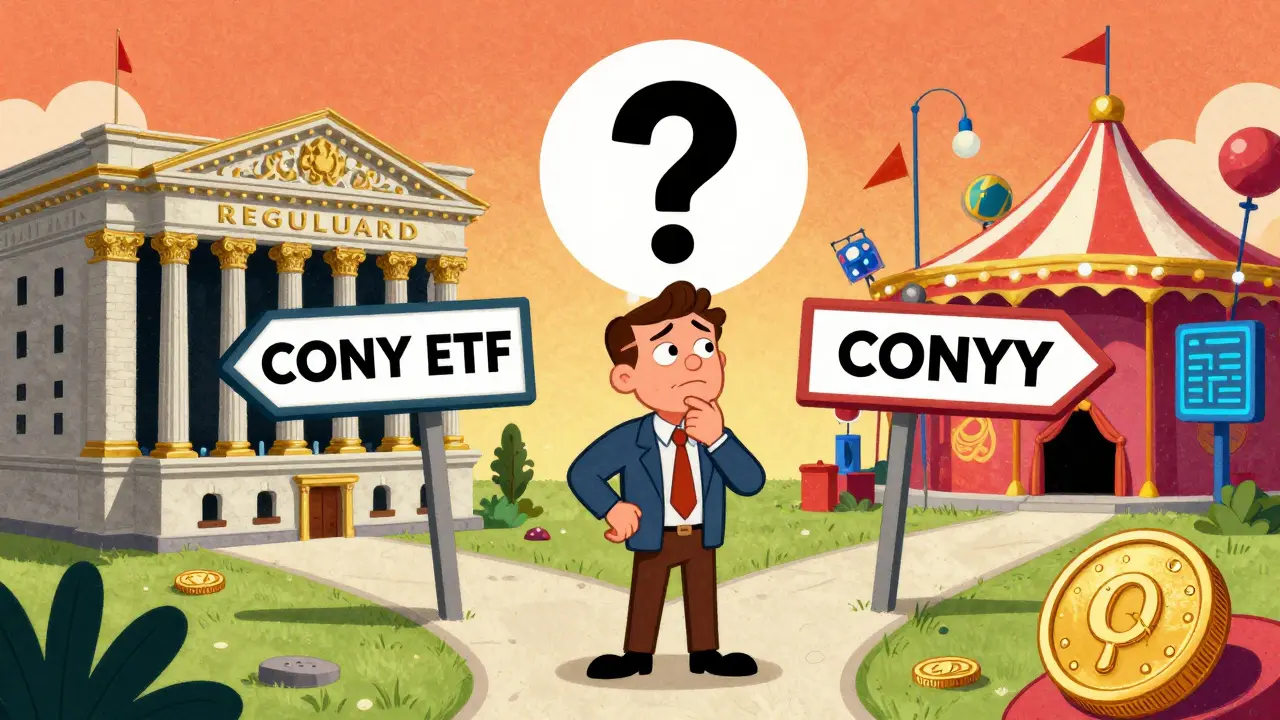
If you've come across Cony (CONY) crypto while browsing social media or a price tracker, you might be wondering if it's the next big thing or just another digital distraction. Before you put a single cent into it, there is a massive point of confusion you need to be aware of: there are actually two completely different things called "CONY." One is a regulated investment fund on the stock market, and the other is a highly speculative meme coin on the blockchain. Confusing the two has cost a lot of people money.
| Feature | Cony (CONY) Cryptocurrency | YieldMax COIN Option Income Strategy ETF |
|---|---|---|
| Type | Meme Coin (ERC-20 Token) | Exchange-Traded Fund (ETF) |
| Platform | Ethereum Blockchain | NYSE American |
| Regulation | Unregulated | SEC Regulated |
| Purpose | Speculation / Pop Culture | Income Generation via Options |
What Exactly is the CONY Token?
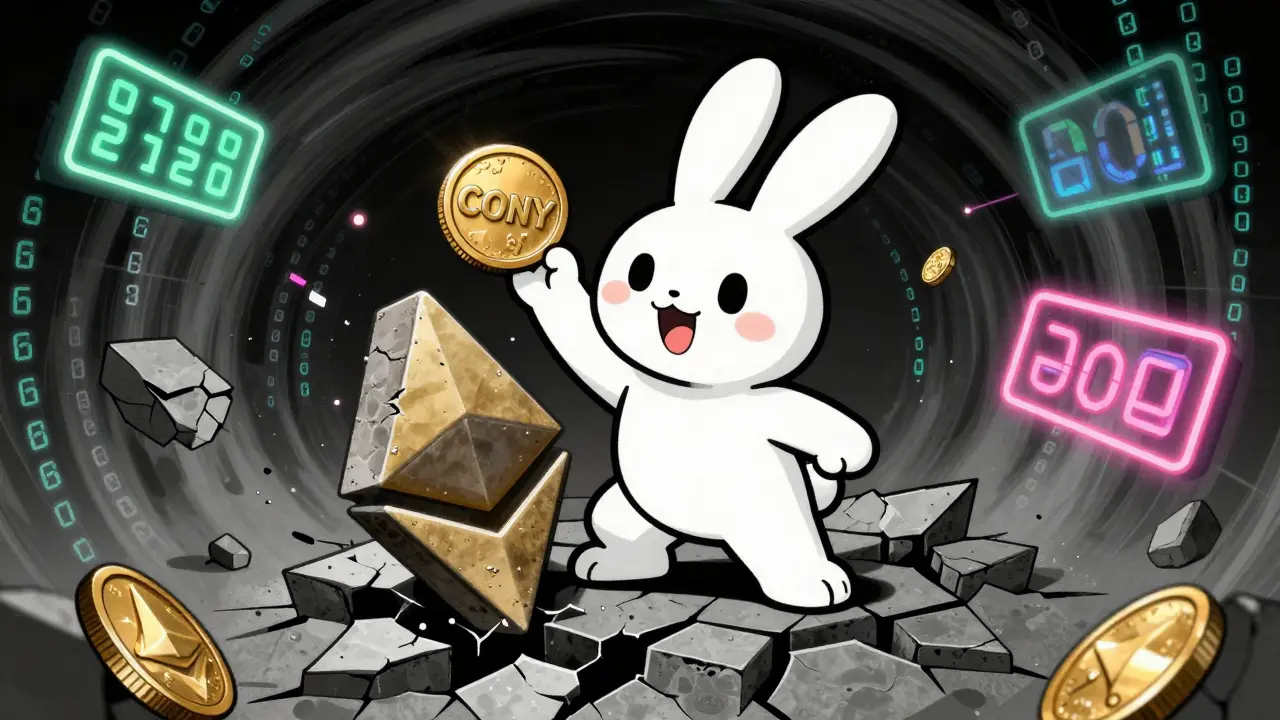
The Cony (CONY) is an Ethereum-based meme coin launched in October 2023 that uses the image of Cony the Rabbit, a popular character from the LINE Friends universe. It is a standard ERC-20 token, which means it doesn't have its own blockchain but instead hitches a ride on the Ethereum network. If you look at the contract address (0x002b68e699ab6cedc81e74e47f8a511dac6ecb11) on Etherscan, you'll see it's a very basic setup with no complex smart contracts or special features.
The project tries to market itself as a "pop culture ICON taking over Web3." It's banking on the fact that the LINE messaging app has millions of users who love these characters. However, here is the catch: there is absolutely no official partnership between the LINE Corporation and this cryptocurrency. The creators essentially "borrowed" the fame of a corporate character to create hype, which is a common tactic in the world of meme coins.
The Hard Truth About its Tokenomics and Value
When you look at the numbers, the picture gets pretty bleak. The coin has a maximum supply of 1 billion tokens. While that sounds like a lot, the actual distribution is a red flag. Most of the tokens are locked in liquidity pools, and a tiny fraction is spread across a few hundred wallets. This means a handful of people essentially control the entire market.
The price history is a cautionary tale. After hitting an all-time high in November 2023, the value plummeted. By December 2025, the price sat around $0.00001532-a staggering 99.96% drop from its peak. In the world of investing, this is what we call a "dead coin." While some people might see this as a "discount," it usually just means the market has realized the token has no fundamental value.
Why Experts are Warning Against CONY
Blockchain experts and analysts have been pretty blunt about this one. Dr. Evelyn Rodriguez from the MIT Media Lab has pointed out that CONY displays all the classic signs of a pump-and-dump scheme. When you combine minimal liquidity with a borrowed identity and a massive price crash, you have a recipe for retail investor loss.
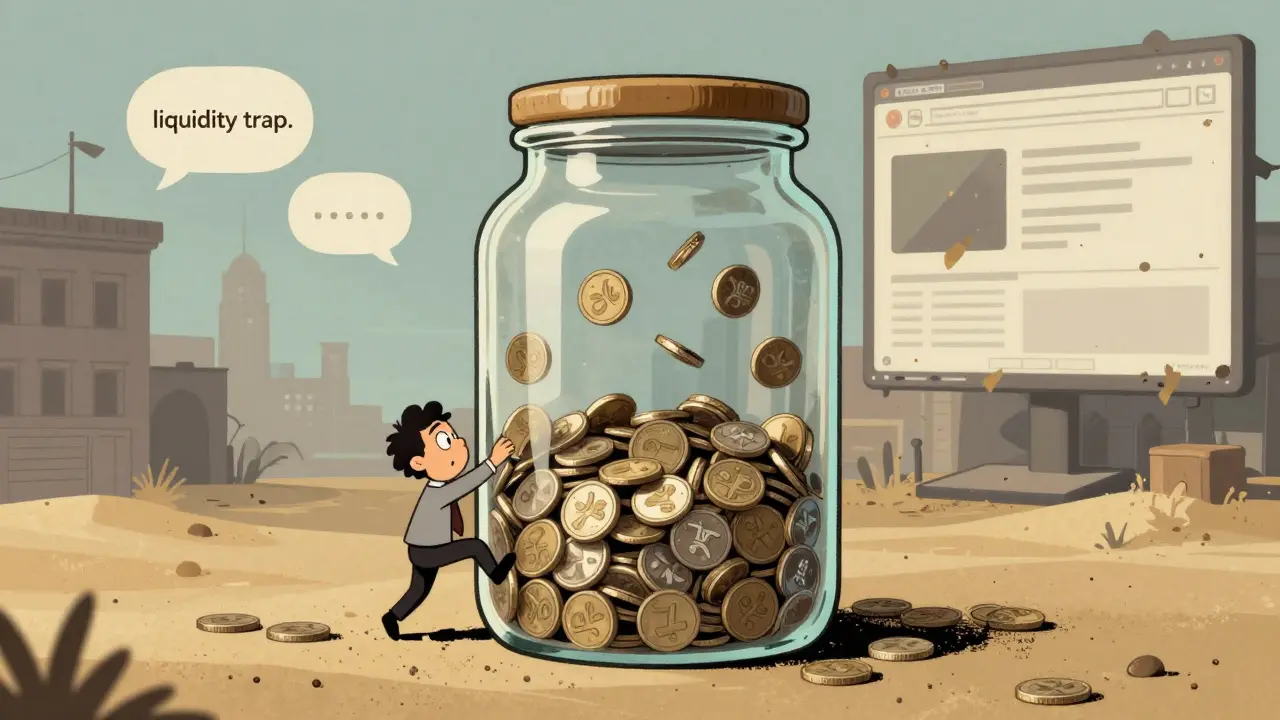
One of the biggest dangers is the "liquidity trap." Because the 24-hour trading volume is so low (sometimes only a few thousand dollars), it is incredibly hard to sell your tokens once you buy them. If you try to sell a large amount, you'll experience "slippage," where the price drops significantly as you execute the trade, meaning you get far less money than the current market price suggests.
Comparing CONY to Successful Meme Coins
To understand why CONY is struggling, it helps to look at the coins that actually worked. Look at Dogecoin (DOGE) or Shiba Inu (SHIB). Those coins started as jokes, sure, but they built massive, organic communities and, in Shiba Inu's case, actually developed their own layer-2 network called Shibarium to provide real utility.
CONY has none of that. There are no decentralized apps (dApps), no NFT collections, and no governance rules. It's essentially a digital ticket to a lottery where the odds are stacked against you. While coins like Pepe (PEPE) have managed to maintain billions in market cap through sheer internet momentum, CONY's market cap has shriveled to a tiny fraction of that, often ranking in the bottom 0.5% of all tracked cryptos.
What Happens if You Try to Trade It?
If you're determined to gamble on this, you'll likely find it on Uniswap (v2). Since it's not on major centralized exchanges, you'll need a Web3 wallet like MetaMask. But be careful-many beginners have reported losing money just on gas fees. Because the liquidity is so thin, transactions often fail. When a transaction fails on Ethereum, you still pay the gas fee, which can be a painful experience when the token itself is worth almost nothing.
The "support" for this project is practically nonexistent. The official website is a basic one-page site, and the Telegram group has been a ghost town since late 2024. There is no team to contact, no roadmap to follow, and no one to help you if your funds get stuck.
Is There Any Upside?
The only real "bull case" for CONY is a fluke. If LINE Corporation suddenly decided to endorse the project (which is highly unlikely given how protective they are of their intellectual property), the price could spike. However, analysts estimate the probability of this happening is less than 2%. Most of the remaining activity in the coin comes from people who are still confused, thinking they are buying the YieldMax ETF, or a few speculators hoping for a random "dead cat bounce."
Is CONY crypto a scam?
While the smart contract itself is a standard ERC-20 token without obvious "backdoors," the project behaves like a classic pump-and-dump. It uses borrowed IP without permission, has no utility, and the creators have largely abandoned it. Most experts view it as an extremely high-risk asset with characteristics typical of a scam.
How is CONY crypto different from the CONY ETF?
They are completely unrelated. The CONY ETF is a regulated financial product traded on the NYSE that generates income through options strategies on Coinbase stock. The CONY crypto is an unregulated meme coin on the Ethereum blockchain. Buying one does not give you ownership of the other.
Where can I buy CONY tokens?
You can generally find CONY on decentralized exchanges like Uniswap v2. However, be warned that due to extremely low liquidity, you may experience high slippage and a high rate of failed transactions.
Why is the price of CONY so low?
The price has dropped over 99% since its peak because there is no actual demand or utility for the token. Once the initial hype of the "LINE Friends" name wore off, there was nothing left to support the valuation.
Can I sell my CONY tokens?
Technically yes, but practically it's very difficult. Because the order books are so thin, selling a significant amount of tokens can crash the price further, and you may find that the gas fees to sell are higher than the value of the tokens you hold.
Final Word of Caution
If you're looking for a safe way to enter the crypto market, this isn't it. The "zombie" status of CONY-meaning it's technically alive on the blockchain but has no actual growth or activity-makes it a textbook example of what to avoid. In a market filled with thousands of micro-cap tokens, the ones that survive are the ones with a real community or a real use case. CONY has neither.


Comments (17)
Sandeep Bhoir
Oh look, another 'revolutionary' token based on a drawing of a rabbit. Truly a masterclass in financial innovation.
Trudy Morse
It is fascinating how humans mistake a ticker symbol for a value proposition. The duality of CONY is just a metaphor for our own confused desires in the digital age.
Alex Long
Trash coin. Absolute garbage. Why do people even bother with this stuff.
Nishant Goyal
Still a good lesson for beginners to learn early on.
Yuhan Mo
The slippage on Uniswap v2 for these low-cap assets is absolutely brutal. If you aren't managing your gas limits and slippage tolerance, you're basically donating your ETH to the network.
Sean Mitchell
The sheer audacity of creators to 'borrow' IP from LINE is simply breathtaking. It is a tragedy of errors that anyone actually fell for this farce.
Thomas Jewett
This is why we need real amerrican regulation to stop these foreign scammers from stealing money from hardworking peple who just want to invest thier savings into something safe!!! Its a discrace to the whole market that this is even allowed to trade on a blockchain and we need to purge this garbage nowww
Anna Grealis
The 'official' website is probably just a front for something deeper... they want us to think it is a failed coin so we stop looking into who actually controls the wallets. Typical shadow play.
Tracy Sperandio
Let's turn this disaster into a win by learning how to spot these red flags! Knowledge is the only real currency that never crashes, so keep your eyes peeled and your wallets locked!
Vicky Duffala
Exactly! 🚀 we can all grow from this. Just imagine if we used this energy to find projects with actual utility instead of chasing rabbits. Let's get those gains the right way! ✨
Robert Preston
I've seen a lot of people get burned by the ETF/Crypto confusion. It's critical to check if you're on a brokerage app or a DEX before hitting buy. If the UI looks like a casino, it probably is.
Andrew Southgate
I actually think there is a silver lining here because this serves as a perfect case study for students entering the DeFi space. If you look at the contract on Etherscan, you can see exactly how a lack of liquidity creates a death spiral, which is an incredibly valuable lesson in market dynamics that you won't find in a traditional textbook. I always encourage people to use small 'learning' amounts of money to understand these pitfalls so they don't make a life-changing mistake later on when they have more capital to deploy.
Prachi Bhadarge
Imagine thinking a 2% chance of a corporate endorsement is a 'bull case'. Truly peak crypto brain.
Joshua Salwen
ARE YOU KIDDING ME?? I ALMOST BOUGHT THIS THINKING IT WAS THE ETF!! This is a total disastrrr and the people who made this are absolute geniuses at scamming!! I can't even believe the lack of warnings on some sites!! UNBELIEVABLE!!
Michelle Stanish
I don't see why everyone is panicking. It's just a coin.
Jeff Barlett
Oh, please, it's not just a coin, it's a masterpiece of failure. I love watching these things crash because it proves that most of the 'moon' talk is just noise.
Keri Pommerenk
thanks for the heads up everyone stay safe and do your research