
Imagine if your neighbor’s Wi-Fi router could earn them money, or if your idle gaming PC could help render movies for Hollywood while you sleep. That isn’t science fiction anymore. It is the core promise of DePIN, which stands for Decentralized Physical Infrastructure Networks. This emerging sector in cryptocurrency is changing how we build and pay for the physical things that keep our digital lives running.
If you have been hearing buzzwords like Web3, blockchain, and tokenomics but feel lost on how they apply to the real world, you are not alone. Most crypto concepts stay inside computers. DePIN is different because it connects code to concrete, cables, and electricity. In this guide, we will break down exactly what DePIN is, how it works, and whether it is a viable way to earn passive income or just another hype cycle.
The Core Concept: What Exactly Is DePIN?
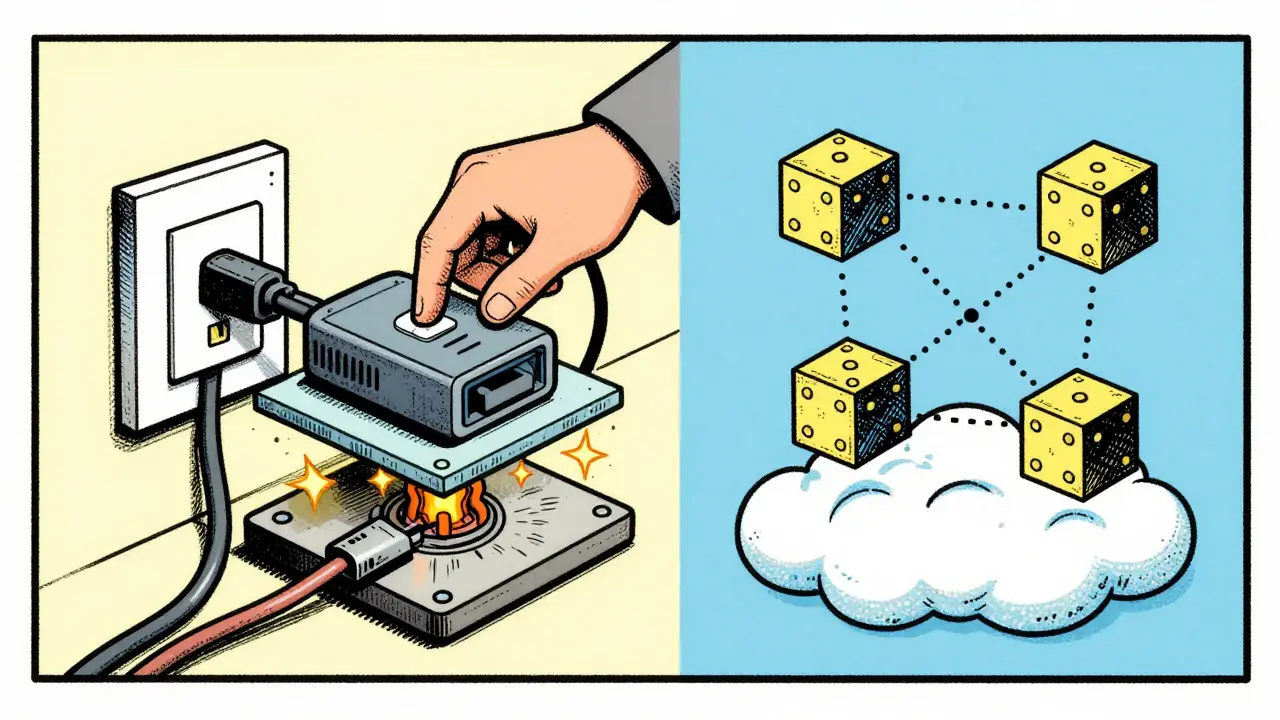
At its simplest, DePIN is a network where regular people contribute physical resources to a shared system. Instead of a big corporation building every cell tower or data center, individuals provide these services. In return, they get paid in cryptocurrency tokens. Think of it as Airbnb, but instead of renting out spare rooms, you are renting out bandwidth, storage space, computing power, or even solar energy.
CoinGecko defines DePIN as a network of crowd-sourced providers offering certain real-world services to users and leveraging a public ledger (blockchain) to keep a record of the services rendered and also receive remitted rewards for these services via cryptocurrencies. This definition highlights two key elements: the physical service and the blockchain payment layer.
Why does this matter? Traditional infrastructure is expensive and slow to deploy. Building a new cellular tower can cost between $1 million and $2 million, according to Federal Communications Commission (FCC) data from 2022. With DePIN models, coverage can be expanded using individual hotspots that cost only $300 to $500 each. This drastic reduction in capital expenditure allows networks to grow faster, especially in rural or underserved areas where big companies see little profit potential.
How DePIN Works: The Three-Layer Architecture
To understand how DePIN functions without collapsing under fraud or inefficiency, you need to look at its three-layer architecture. This structure ensures that contributors are paid fairly and users receive reliable service.
- The Off-Chain Network: This is the physical world. It includes the hardware devices (like routers or GPUs), the people who own them, and the end-users who consume the service. For example, a user might connect their laptop to a local DePIN Wi-Fi hotspot to save on mobile data.
- The Blockchain Layer: This acts as the trusted ledger. Every time a service is provided-say, 1 GB of data transferred or 1 hour of GPU rendering-the transaction is recorded on the blockchain. This creates an immutable record that prevents double-spending or fake claims.
- The Protocol Layer: These are the smart contracts and rules that govern the network. They determine eligibility, security measures, and how tokens are distributed. If a device goes offline, the protocol automatically stops payments. If it performs well, it triggers automatic rewards.
This setup removes the middleman. Normally, a telecom company buys equipment, hires engineers, and sells service to customers, keeping the profit margin. In a DePIN model, the provider owns the equipment and gets paid directly by the user, with the blockchain handling the trust and payment logistics.
Two Main Types of DePIN Networks
Not all DePIN projects are the same. They generally fall into two categories based on the type of resource being shared. Understanding this distinction helps you decide which type fits your interests or investment strategy.
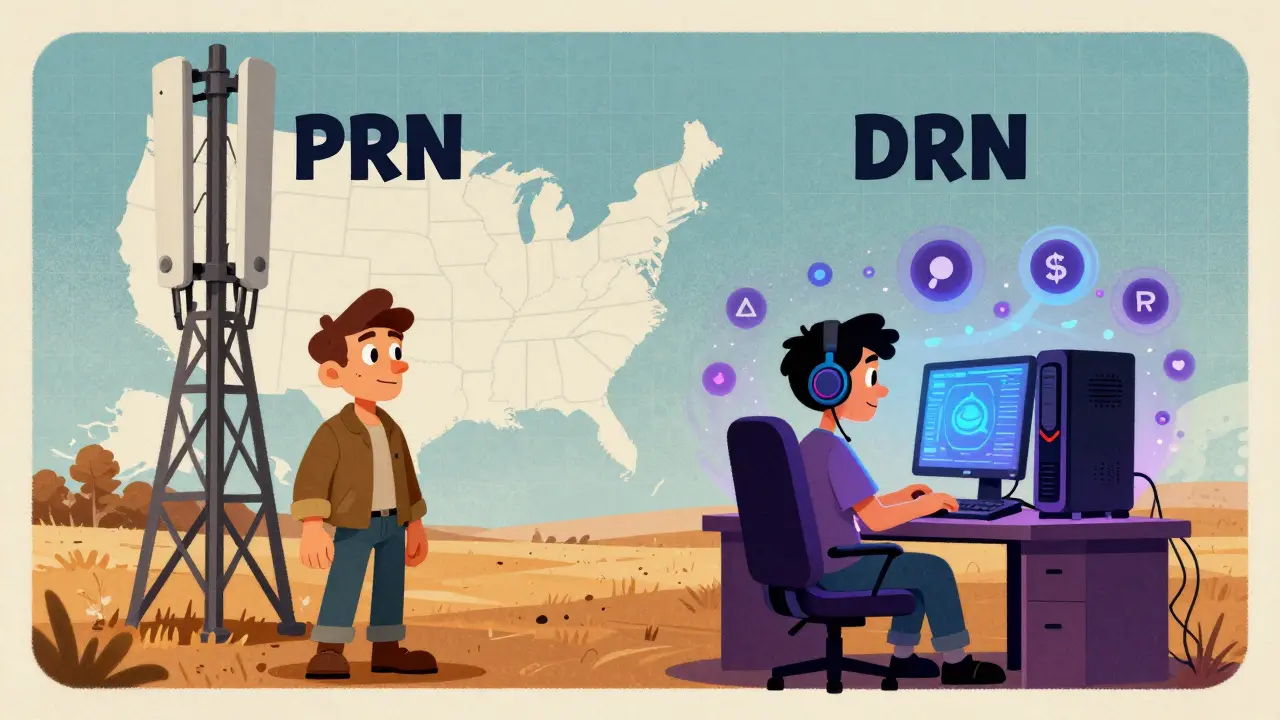
| Feature | Physical Resource Networks (PRN) | Digital Resource Networks (DRN) |
|---|---|---|
| Resource Type | Hardware tied to a location (e.g., Wi-Fi hotspots, EV chargers) | Digital assets not tied to location (e.g., GPU compute, cloud storage) |
| Portability | Low (fixed to a specific place) | High (can run anywhere with internet) |
| Example Projects | Helium Network, Hivemapper | Render Network, Filecoin |
| Barrier to Entry | Medium (requires specific hardware placement) | Low to Medium (requires powerful existing hardware) |
| Primary Use Case | Connectivity, mobility, energy distribution | AI training, video rendering, data backup |
Physical Resource Networks (PRNs) rely on location. If you install a Helium hotspot in your backyard, it provides coverage to your neighborhood. You cannot move that value easily to another city. These networks often face regulatory hurdles related to zoning and spectrum licenses.
Digital Resource Networks (DRNs) deal with fungible digital resources. If you have a high-end NVIDIA RTX 4090 graphics card, you can rent out its processing power to artists or AI developers regardless of whether you are in Dublin, Dubai, or Detroit. The resource is purely computational, making it easier to scale globally.
Real-World Examples and Earnings Potential
Let’s look at how this plays out in practice. Two of the most prominent DePIN projects are Helium and Render Network.
Helium Network started as a wireless connectivity project. Users buy LoRaWAN-compatible hotspots (costing around $300-$500) and place them outdoors. As devices in the area send data through the hotspot, the owner earns HNT tokens. According to community reports from Reddit’s r/DePIN forum, operators in suburban areas with moderate density report earning between $45 and $120 per month after electricity costs. One user in Texas noted consistent earnings of $75 monthly. However, earnings drop significantly in dense urban areas due to competition among nearby hotspots.
Render Network focuses on decentralized GPU rendering. Artists and studios need massive computing power to render 3D animations. Instead of paying Amazon Web Services (AWS) high fees, they use Render’s network. Providers with compatible GPUs join the network and complete tasks. While exact earnings vary wildly based on hardware specs and network demand, some providers report significant returns during peak usage periods, though they must account for high electricity bills and hardware depreciation.
It is crucial to manage expectations. DePIN is not a "get rich quick" scheme. The initial hardware investment is real, and token prices are volatile. If the value of the reward token drops by 50%, your effective earnings halve overnight. Success requires treating it like a small business: calculate your ROI based on current token prices, electricity rates, and hardware lifespan.
Challenges and Risks You Must Know
Despite the excitement, DePIN faces serious headwinds. Ignoring these risks is a recipe for financial loss.
- Regulatory Uncertainty: Infrastructure is heavily regulated. Telecoms, energy grids, and data privacy laws vary by country. A Deloitte survey from 2023 found that 78% of global jurisdictions lack clear frameworks for DePIN. In some regions, operating a private Wi-Fi network without a license is illegal.
- Technical Complexity: Setting up nodes requires more than plugging in a USB drive. Troubleshooting connection issues, updating firmware, and managing wallets can be daunting. Surveys indicate that 65% of potential participants find the learning curve too steep.
- Token Volatility: Your revenue is paid in crypto. If the market crashes, your passive income becomes negligible. This volatility makes long-term planning difficult for both providers and users.
- Scalability and Coordination: Vitalik Buterin, co-founder of Ethereum, has pointed out that DePIN projects struggle with coordination problems. Ensuring quality of service across thousands of independent providers is harder than managing a centralized fleet.
Additionally, there is the risk of hardware obsolescence. Just like smartphones, DePIN hardware may become unsupported within a few years. You need to factor replacement costs into your calculations.
The Future Outlook: Hype or Here to Stay?
Where is DePIN heading? Market data suggests strong growth. Messari reported that DePIN market capitalization grew from $470 million in January 2023 to over $3.2 billion by September 2023. Gartner predicts the sector could reach $12.7 billion by 2025.
Institutional interest is rising. Major players like Chainlink, Filecoin, and Render have formed the DePIN Alliance to establish interoperability standards. We are also seeing new verticals emerge, such as decentralized electric vehicle (EV) charging networks and satellite-based internet coverage projects like SpaceMesh.
However, consolidation is likely. Experts predict that 60% of current DePIN projects may fail or merge by 2025, with the top five networks capturing the majority of market share. This means choosing the right platform early is critical. Look for projects with strong developer communities, clear roadmaps, and partnerships with established enterprises.
For now, DePIN remains in the "Peak of Inflated Expectations" phase according to Gartner’s Hype Cycle. This doesn’t mean it won’t succeed; it means we are still figuring out the best practices. The technology offers a compelling alternative to centralized monopolies, promising cheaper, faster, and more resilient infrastructure. But until regulations clarify and user interfaces simplify, it will remain a niche opportunity for tech-savvy individuals.
Getting Started: A Practical Checklist
If you want to experiment with DePIN, follow these steps to minimize risk:
- Research Thoroughly: Don’t buy hardware based on hype. Read whitepapers, check GitHub activity, and join Discord communities to gauge sentiment.
- Calculate Costs: Add up hardware price, monthly electricity usage, and internet bandwidth limits. Compare this against current token earnings.
- Start Small: Begin with one device. Test the setup, monitor performance, and understand the maintenance requirements before scaling up.
- Secure Your Wallet: Use a hardware wallet for storing earned tokens. Never leave large amounts on exchange platforms.
- Stay Updated: DePIN protocols update frequently. Keep your firmware and software current to avoid missing rewards or getting disconnected.
Remember, DePIN is a long-term play. It rewards patience and technical diligence. By contributing to decentralized infrastructure, you are not just earning tokens; you are helping build a more open and accessible digital future.
Is DePIN legal?
Legality varies by country and network type. Digital Resource Networks (DRNs) like Render are generally legal as they involve standard computing tasks. Physical Resource Networks (PRNs) like Helium may face regulatory hurdles regarding telecommunications licenses and zoning laws. Always check local regulations before deploying hardware that transmits radio signals or stores personal data.
How much money can I make with DePIN?
Earnings vary widely. Helium hotspot owners typically report $45-$120 per month after electricity costs, depending on location density. GPU providers on Render Network can earn more during high-demand periods but face higher electricity and hardware costs. Token volatility significantly impacts actual fiat value, so treat earnings as variable rather than guaranteed.
What hardware do I need for DePIN?
What hardware do I need for DePIN?
Requirements depend on the network. For Helium, you need a LoRaWAN-compatible hotspot ($300-$500). For Render Network, you need a powerful GPU like an NVIDIA RTX 3080 or better. Storage networks like Filecoin require large hard drives and stable internet connections. Always verify specific hardware compatibility lists on the project’s official website.
Is DePIN safe?
Technically, yes, as transactions are secured by blockchain. However, financial risks exist due to token volatility and potential project failure. Regulatory risks also apply, especially for PRNs. Ensure you use secure wallets and keep your hardware firmware updated to prevent security vulnerabilities.
Can I use DePIN for my business?
Yes, businesses can benefit by reducing infrastructure costs. Companies can use DePIN for cheaper cloud computing, data storage, or connectivity solutions. However, ensure the service level agreements (SLAs) meet your operational needs, as decentralized networks may have variable uptime compared to enterprise-grade centralized providers.