Most traders dread the "gas war" on Ethereum or the sudden liquidity droughts that happen right when a market crashes. If you've ever had a trade fail or paid more in network fees than you actually made on a scalp, you know the frustration. Kine Protocol is a decentralized peer-to-pool derivatives trading platform that removes the need for a counterparty to execute trades. By leveraging a unique liquidity model and expanding onto the Polygon network, it claims to solve the three biggest headaches in crypto trading: high fees, slippage, and liquidity gaps.
Quick Summary: What You Need to Know
- The Big Win: Zero gas fees on transactions and virtually no slippage.
- Leverage: Massive power with options up to 100x (some sources suggest up to 200x).
- Accessibility: Choose between a no-KYC DEX version or a verified CEX version.
- Liquidity: Peer-to-pool system means you aren't waiting for another human to take the other side of your trade.
- Main Drawback: No spot trading available; it is strictly for derivatives.
How the Peer-to-Pool Model Actually Works
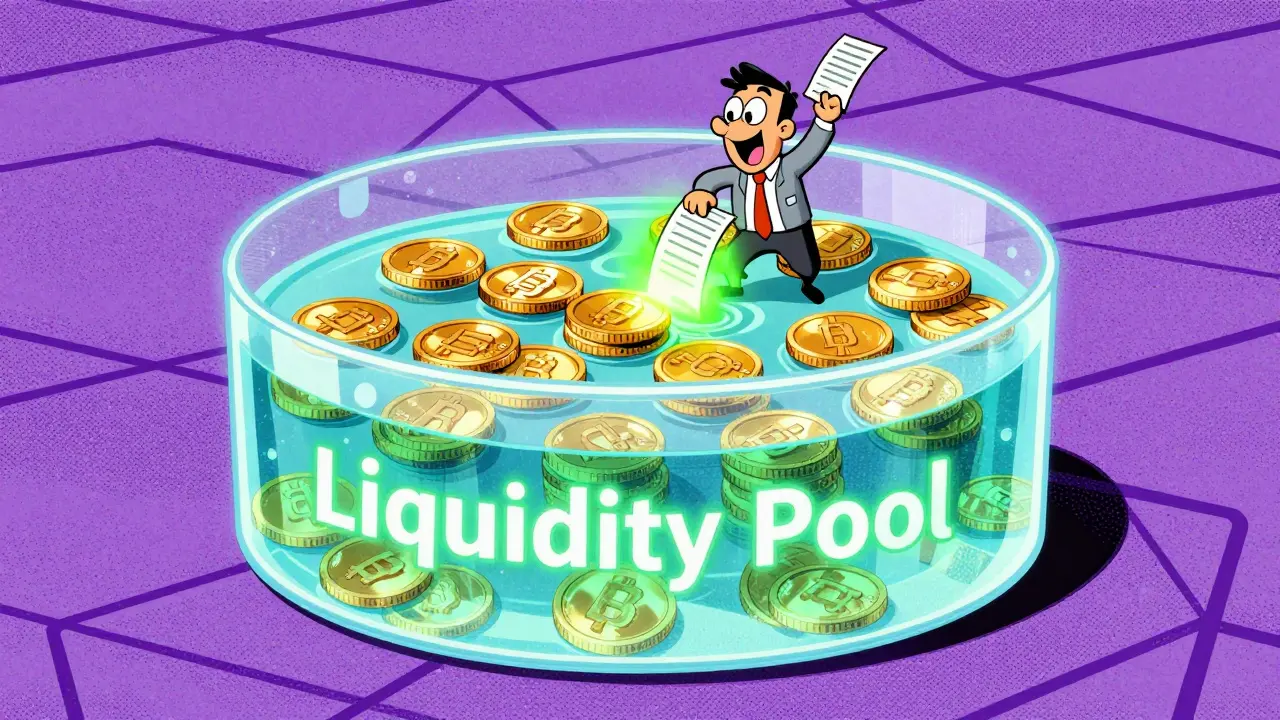
In a traditional exchange, you need a buyer for every seller. If no one wants to buy your token at your price, you're stuck or you have to drop your price-that's slippage. Kine Protocol utilizes a peer-to-pool mechanism. Instead of matching you with another trader, you trade against a large, over-collateralized liquidity pool backed by a portfolio of digital assets.
This means the pool acts as the house, but a house that is mathematically guaranteed to have the funds to cover your trade. Because the pools are over-collateralized, execution is instant. You aren't fighting for a slot in an order book; you're interacting with a smart contract that executes based on trusted price feeds. For the user, this results in a smooth experience where slippage consistently stays below 1%, even during volatile swings.
The Polygon Advantage: Why It Matters
While Kine works on Ethereum, BSC, and Avalanche, the integration with Polygon is where the platform really hits its stride. Polygon is a scaling solution that allows Kine to offer its zero-gas-fee trading model without compromising security. If you're trading on the Ethereum mainnet, a single transaction can cost you a chunk of your profit. On Polygon, those costs vanish.
Beyond just the fees, being on Polygon allows Kine to play nice with other DeFi giants. You can move assets between Kine and platforms like Aave or Sushiswap with minimal friction. It turns the exchange from a standalone tool into part of a larger, interconnected financial ecosystem where you can farm liquidity and hedge positions across different apps simultaneously.
Trading Features and User Experience
Kine doesn't feel like a basic "swap" interface; it's built for people who actually stare at candles all day. The platform provides a professional-grade layout with technical indicators, customizable time intervals, and drawing tools. You can set trailing stops, take-profit levels, and stop-loss orders, which are non-negotiable for anyone using 100x leverage.
One of the more interesting features is copy-trading. If you're new to derivatives but see a whale consistently hitting home runs, you can replicate their positions. This lowers the barrier to entry for beginners who understand the assets but not the complex mechanics of perpetual contracts.
| Feature | Value/Detail |
|---|---|
| Trading Fee | 0.1% fixed (Standard) / 0.8% (HT, OKB, WOO) |
| Gas Fees | 0 (Zero) |
| Max Leverage | 100x to 200x |
| KYC Requirement | Optional (DEX version = None; CEX version = Required) |
| Supported Wallets | MetaMask, BitKeep, MathWallet |
| Slippage | Typically < 1% |
The Ecosystem Roles: Who Does What?
The protocol isn't just for traders. It functions as a three-sided economy:
- Traders: The primary users who open perpetual contracts (perps) to speculate on price movements using leverage.
- Stakers: These are the backbone of the system. They provide the collateral that fills the liquidity pools. In exchange for taking on the risk of backing trades, they earn rewards.
- Liquidators: When a trader's position becomes insolvent (their collateral no longer covers the potential loss), liquidators step in to close those positions, keeping the pool healthy and solvent.
This structure ensures that the platform doesn't rely on a central company's balance sheet, but rather on a distributed set of incentives governed by smart contracts.
The Trade-offs: Where Kine Falls Short
It isn't all sunshine and zero fees. If you are looking for a one-stop shop for all your crypto needs, Kine might frustrate you. The most glaring omission is the lack of spot trading. You cannot simply buy a coin and hold it in your wallet through Kine; you are strictly trading contracts. This means you have to use a different exchange if you want to accumulate a long-term portfolio.
Additionally, the asset list is lean. While they support the majors, you won't find the thousands of micro-cap gems that you'd see on a massive centralized exchange like Binance. It's a streamlined tool for high-efficiency derivatives trading, not a broad marketplace.

Security and Trust
When you're dealing with 100x leverage, security is everything. Kine uses bank-level security systems and smart contract governance for all deposits and withdrawals. Because it's a decentralized protocol, the rules are written in code, not decided by a CEO in a boardroom. The over-collateralized nature of the pools serves as a buffer, ensuring that even in a flash crash, there is enough backing to prevent the system from collapsing.
Do I need to provide my ID to use Kine Protocol?
No, if you use the DEX version. You simply connect your crypto wallet (like MetaMask) and start trading. However, if you prefer the CEX version for specific account management features, you will need to provide personal identification details.
How does Kine offer zero gas fees?
Kine uses a layer 2 network infrastructure. By processing trades off the main Ethereum chain and settling them efficiently, they eliminate the expensive gas costs usually associated with smart contract interactions.
What is the risk of using 100x leverage on Kine?
High leverage is a double-edged sword. While it amplifies gains, a very small price move in the opposite direction can lead to an immediate liquidation of your collateral. Always use stop-loss orders to manage this risk.
Which blockchains support Kine Protocol?
The protocol is currently live on Ethereum, Binance Smart Chain (BSC), Polygon, and Avalanche.
How does the peer-to-pool model differ from an order book?
An order book requires a matching buyer and seller. If there's no one to take the other side of your trade, you experience slippage or a failed order. The peer-to-pool model lets you trade against a collateralized pool, ensuring instant execution regardless of other traders' activity.
Final Verdict and Next Steps
If you are a professional trader or a high-leverage enthusiast, Kine Protocol on Polygon is a powerhouse. The combination of zero gas fees and guaranteed liquidity makes it a top contender for derivatives. Just remember to keep a separate account or exchange for your spot holdings, as Kine won't help you with that.
For beginners: Start with the DEX version, use a small amount of collateral, and experiment with the copy-trading feature before attempting high leverage.
For pros: Connect your MetaMask to the Polygon network to maximize the fee advantages and integrate your Kine positions with other Polygon DeFi tools for a more robust hedging strategy.