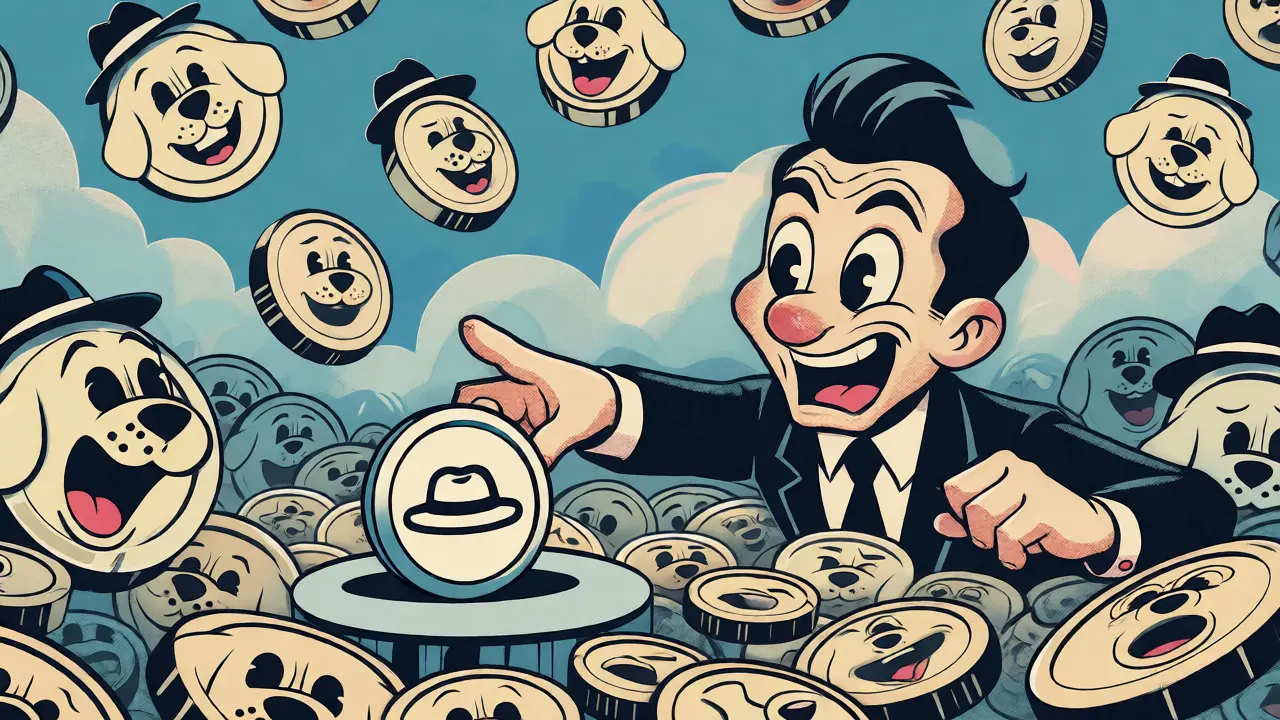
You see a ticker symbol like CAN and assume it’s the next big thing. It sounds catchy, right? "Can wif hat." But before you throw your hard-earned euros into this token, you need to look under the hood. What is canwifhat (CAN) crypto coin, really? Is it a hidden gem waiting to explode, or is it just digital dust floating in the vast ocean of the Solana blockchain?
The short answer might disappoint you: CAN is a classic example of what happens when hype outpaces substance. Launched in 2024 as a self-proclaimed "brother" to the famous dogwifhat (WIF) token, CAN tried to ride the coattails of one of the most successful meme coins ever made. But unlike its sibling, which built a massive community and ecosystem, CAN has largely faded into obscurity. With a market cap hovering around $62,000 and trading volumes that often hit zero, this isn’t an investment-it’s a lottery ticket with extremely poor odds.
Canwifhat (CAN) is a speculative SPL token on the Solana blockchain launched in 2024, designed as a derivative meme coin capitalizing on the popularity of dogwifhat (WIF). Unlike established cryptocurrencies with utility or robust development teams, CAN operates primarily as a vehicle for short-term speculation within the high-risk meme coin sector.
The Origin Story: Riding the WIF Wave
To understand CAN, you have to understand the context of early 2024. The Solana network was experiencing a meme coin frenzy. Tokens were popping up daily, some reaching billion-dollar valuations overnight. dogwifhat (WIF) became the face of this movement, peaking at a market capitalization of approximately $1.8 billion. Investors were desperate for the "next WIF," and developers were quick to supply the demand.
Enter Canwifhat. The project explicitly marketed itself as the "brother" of dogwifhat. This wasn’t a technical relationship; there was no shared codebase, no joint team, and no official partnership. It was purely a branding play. By associating itself with a recognizable name, CAN hoped to trick algorithms and casual investors into thinking it had similar potential. The total supply was fixed at exactly 100,000,000 tokens, all minted at launch. There were no vesting schedules for insiders, which is good, but also no burn mechanism to reduce supply over time. It was a simple, static asset with a flashy name.
Tokenomics: A Ghost Town Economy
If you’re looking for complex economics, you won’t find them here. CAN is a standard SPL token, meaning it functions like any other basic asset on Solana. It doesn’t have smart contract innovations, staking rewards, or governance rights. You buy it, you hold it, and you hope someone else buys it from you at a higher price later. That’s it.
The real issue lies in the liquidity. As of late 2025, data from major tracking platforms like CoinMarketCap showed CAN’s market capitalization sitting at roughly $62,030. To put that in perspective, if you bought $100 worth of CAN, you might own a significant percentage of the entire circulating market value. When you try to sell, even small trades can crash the price because there are so few buyers. This is known as slippage, and in CAN’s case, it’s severe.
Trading volume tells an even bleaker story. On many days, the 24-hour trading volume registers as $0. This means nobody is buying or selling. The token is effectively illiquid. If you want to exit your position, you might not find a buyer at all, or you might have to accept a much lower price than the listed rate. This lack of activity suggests that the initial speculative interest has completely evaporated.
Price History: The Rise and Fall
Let’s look at the numbers. CAN reached its all-time high of $0.07771 on March 29, 2024. At that moment, early adopters felt like geniuses. They had caught the wave. But then came the inevitable correction. Meme coins without fundamental utility tend to bleed value once the social media buzz dies down.
By November 2025, the price had plummeted to around $0.00062. That is a decline of over 99% from its peak. If you invested $1,000 at the top, you’d be left with less than $10 today. Some data sources even report an all-time low of $0.00056, though discrepancies between platforms like Binance, CoinStats, and LiveCoinWatch suggest inconsistent data aggregation. This inconsistency is another red flag. In a healthy market, prices converge across exchanges. When they don’t, it usually points to thin markets where a single trade can skew the average.
| Metric | Canwifhat (CAN) | dogwifhat (WIF) | Dogecoin (DOGE) |
|---|---|---|---|
| Blockchain | Solana | Solana | Dogecoin Chain |
| Peak Market Cap | ~$7.7 Million (Est.) | ~$1.8 Billion | ~$80+ Billion |
| Current Status | Near-Zero Liquidity | Active Community | Established Asset |
| Utility | None | Community/Merch | Tipping/Payment |
| Risk Level | Extreme | High | Moderate-High |

Community and Development: Where Are They?
A cryptocurrency lives or dies by its community. Bitcoin has miners and holders. Ethereum has developers. Dogecoin has Elon Musk and internet culture. What does CAN have? Honestly, very little.
Searches on Reddit yield almost no dedicated discussion threads for CAN. Twitter mentions are sparse, totaling fewer than 150 posts in recent months according to social analytics tools. Compare this to dogwifhat, which generates thousands of interactions daily. The silence around CAN is deafening. It suggests that the initial buyers were speculators who dumped their holdings as soon as the price dipped, leaving behind a ghost town.
Development activity is equally non-existent. There is no active GitHub repository pushing code updates. There is no official whitepaper detailing a roadmap. There is no verified website providing regular developer communications. The project appears to be "abandonware." Once the initial pump-and-dump cycle finished, the creators likely moved on to the next token, leaving CAN holders stranded with an asset that has no future catalysts.
Is CAN a Scam or Just Bad Luck?
Calling something a scam implies malicious intent. While we can’t prove the creators intended to rug pull CAN, the structure looks suspiciously like a typical pump-and-dump scheme. The token was created specifically to mimic a popular brand (WIF). It had no unique value proposition. And now, it sits with negligible volume.
Regulatory bodies are also taking notice. In late 2025, U.S. SEC officials highlighted that thousands of tokens under $100 million market cap could be classified as unregistered securities. CAN fits this profile perfectly. If regulators crack down harder on these micro-cap tokens, CAN could face delisting from the few remaining exchanges that track it, further reducing its already tiny liquidity.
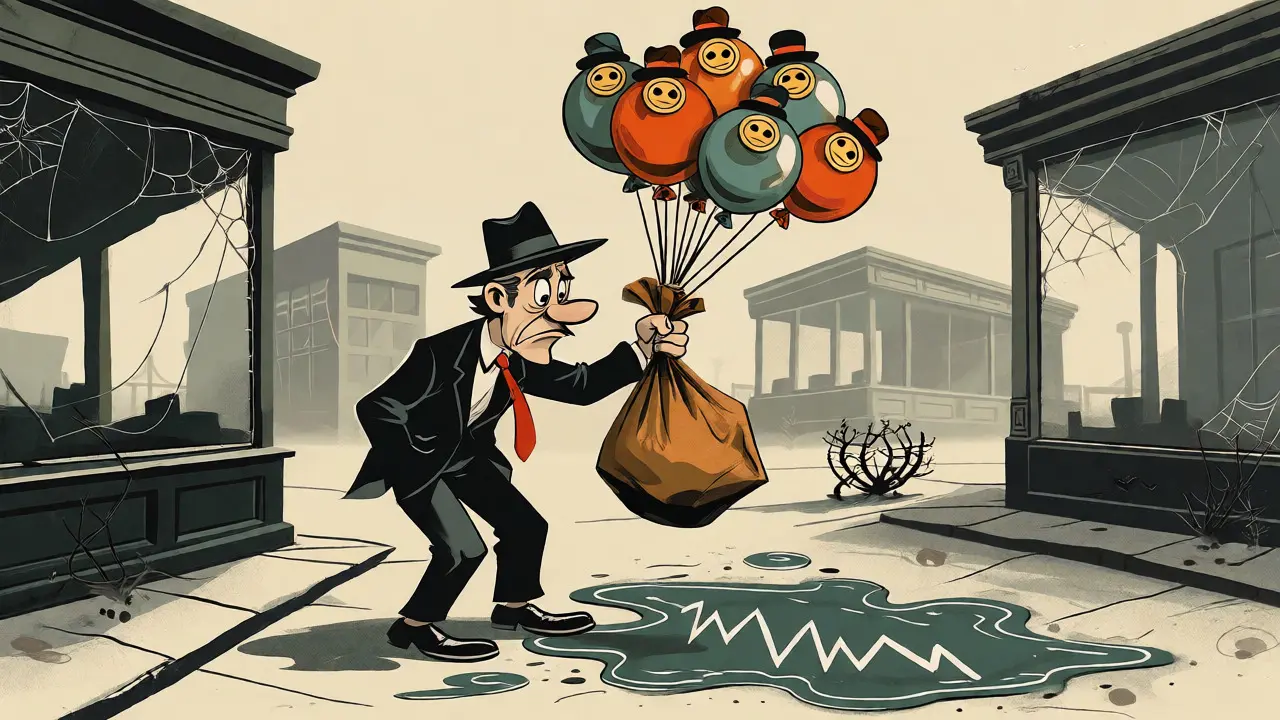
For the average investor, CAN represents the danger of chasing narratives. People saw WIF succeed and assumed anything with "wif" in the name would follow suit. They ignored the fundamentals: no community, no dev team, no utility. They bought the logo, not the technology. Now, they are holding a bag of tokens that may never recover their original value.
How to Trade CAN (If You Must)
So, you still want to trade CAN? Maybe you’re hoping for a miracle bounce. Here’s how you’d actually do it. Since CAN isn’t listed on major centralized exchanges like Coinbase or Kraken prominently for active trading, you’ll need to use decentralized exchanges (DEXs) on Solana, such as Raydium or Orca.
- Set up a Solana Wallet: Use Phantom or Solflare. Ensure you have SOL for gas fees.
- Find the Contract Address: Verify the address carefully (starting with FF4dN8...). Scammers create fake tokens with identical names.
- Check Liquidity Pools: Look at the pool size on Raydium. If the liquidity is under $1,000, avoid trading large amounts.
- Accept Slippage: Set your slippage tolerance high (maybe 5-10%) because the spread is wide.
- Exit Strategy: Have a plan. Don’t hold and hope. If you get a small gain, take it.
Be warned: even a $100 trade might move the price significantly due to the thin order book. You are swimming in shallow water.
Final Verdict: Should You Buy?
If you are asking "what is canwifhat crypto," the answer is clear: it is a cautionary tale. It is a token that capitalized on a trend but failed to sustain interest. For serious investors, CAN offers no upside justification. The probability of it becoming completely illiquid within 18 months is estimated at over 97% by industry analysts using meme coin sustainability frameworks.
Don’t confuse volatility with opportunity. Volatility means the price swings wildly. Opportunity means there’s a reason for those swings to go up. CAN has neither. Stick to assets with proven communities, active development, and transparent tokenomics. Leave CAN to the gamblers who enjoy losing money quickly.
Is Canwifhat (CAN) related to dogwifhat (WIF)?
No, there is no official technical or organizational connection. CAN marketed itself as the "brother" of WIF to capitalize on its popularity, but they are separate projects with different creators and goals.
Why is the trading volume for CAN so low?
The low volume indicates a lack of interest and liquidity. After the initial hype died down, traders moved on to newer memes, leaving CAN with virtually no active buyers or sellers.
Can I buy CAN on Binance?
Binance lists CAN for price tracking, but active trading pairs are limited or non-existent on the main exchange. Most trading occurs on decentralized exchanges like Raydium or Orca on the Solana network.
Does CAN have any utility?
No, CAN is a pure meme coin. It lacks staking, governance, payment integration, or any other functional utility beyond speculative trading.
Is CAN a good long-term investment?
Most analysts consider it high-risk abandonware. With no development activity and near-zero community engagement, the likelihood of long-term growth is minimal compared to established cryptocurrencies.