Ever wondered what happens when a Wall Street legend’s bullish spirit gets turned into a digital asset? You’re looking at Tom Lee (TOM), a cryptocurrency that tries to capture the essence of famous strategist Tom Lee’s market optimism. But here’s the kicker: it’s not backed by a new technology or a complex business model. It’s a meme coin. And if you’re thinking about buying it, you need to know exactly what you’re getting into before you swap your ETH for trillions of these tiny tokens.
The Origin Story: Bullish Spirit on the Blockchain
At its core, Tom Lee (TOM) is a speculative meme token built primarily on the Ethereum network, with versions also trading on PulseChain. Unlike utility tokens that power decentralized apps or store value like Bitcoin, TOM doesn’t promise a specific function. Instead, it leans heavily on the persona of Tom Lee himself-the co-founder of Fundstrat Global Advisors and a guy who has famously called for Bitcoin to hit $100,000. The project markets itself as "conviction made liquid," aiming to unite traders who believe in an endless bull run.
There is no whitepaper detailing a revolutionary protocol. There is no team roadmap promising upcoming features. The entire value proposition rests on social sentiment and the recognition of Tom Lee’s name. If you follow financial news, you know Lee is a fixture on CNBC and a major voice in institutional crypto adoption. This token attempts to monetize that visibility. It’s a bet on his reputation, not on code innovation.
Tokenomics: Why Are There So Many Zeros?
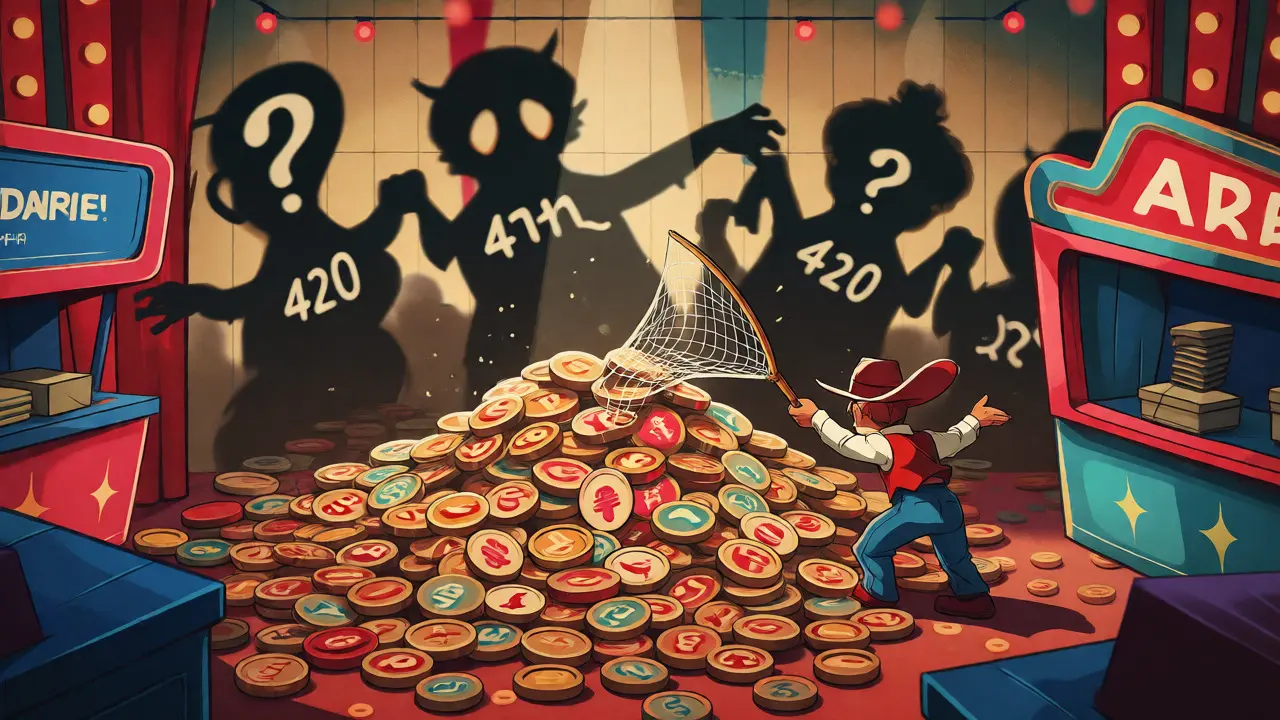
If you look up TOM on data sites, the numbers will confuse you. The total supply is fixed at 420 quadrillion tokens. Yes, you read that right. This massive number is a nod to internet culture (the "420" meme), but it creates a tricky situation for investors. Because there are so many tokens, the price per single TOM is incredibly small-often less than a fraction of a cent.
Here is how the supply data looks across different platforms as of late 2025 and early 2026:
| Metric | Value / Status | Source Context |
|---|---|---|
| Total Supply | 420 Quadrillion | Fixed cap, no inflation |
| Circulating Supply | Data Conflicts | Bitget reports 0; CMC reports full supply |
| Fully Diluted Valuation | ~$17,400 USD | Extremely micro-cap status |
| Price Range | $0.0000000000004 | Micro-fraction valuations |
Notice the discrepancy in circulating supply. Some trackers say zero tokens are circulating, while others claim the full amount is out. This lack of clarity is common in obscure meme coins where on-chain analysis isn’t robust. It means you can’t rely on standard market cap calculations to gauge the project's health. You are essentially buying a lottery ticket with a very high number of entries.
Where Can You Buy TOM? No Binance Spot Trading
You won’t find TOM listed for spot trading on major centralized exchanges like Binance or Coinbase. If you try to buy it directly on their main interfaces, you’ll come up empty-handed. To acquire TOM, you have to go through decentralized finance (DeFi) channels.
Most purchases happen via Web3 wallets connected to decentralized exchanges (DEXs). On the Ethereum network, this might involve using Uniswap or similar routers. However, much of the active trading volume appears to be on PulseChain, specifically on the PulseX DEX. PulseChain is a fork of Ethereum created by Richard Heart, known for lower transaction fees compared to Ethereum mainnet.
- Ethereum Network: Requires paying gas fees in ETH. Good for security, bad for small trades due to cost.
- PulseChain Network: Requires paying gas fees in PLS. Lower costs make it more accessible for meme coin traders.
- Binance Web3 Wallet: You can use Binance’s Web3 feature to bridge funds and trade on DEXs, but it’s not a direct listing.
This setup adds friction. You need to manage private keys, understand slippage, and navigate cross-chain bridges if you want to move assets between networks. It’s not a one-click buy experience.
Risks and Red Flags: What Could Go Wrong?
Let’s be honest: this is a high-risk asset. Here are the specific dangers you face with Tom Lee (TOM):
- No Utility: The token does nothing. It doesn’t pay dividends, it doesn’t grant voting rights on a protocol, and it doesn’t solve a technical problem. Its value is purely psychological.
- Liquidity Issues: With a fully diluted valuation under $20,000, liquidity pools are thin. Selling a large position could crash the price instantly because there aren’t enough buyers on the other side.
- Data Inconsistencies: As seen in the table above, different data providers report vastly different prices and supply figures. This suggests poor tracking and potential manipulation in low-volume pairs.
- Impersonation Risk: Is Tom Lee officially involved? Most sources indicate this is a fan-made or opportunistic project capitalizing on his name. There is no clear announcement from Fundstrat or BitMine Immersion Technologies endorsing this specific token. Don’t assume the person behind the brand is backing the coin.
Volatility is extreme. Price snapshots show swings from $0.000037 down to $0.000024 within short periods. For a normal investor, these fluctuations are noise. For a meme coin trader, they are the game. But remember, volatility cuts both ways.
How Does It Compare to Other Meme Coins?
It helps to see TOM in context with other personality-driven or character-based tokens. While DOGE and SHIB have established communities and billions in market cap, TOM is in the basement tier.
| Feature | Tom Lee (TOM) | TOMCoin (Tom & Jerry) | Dogecoin (DOGE) |
|---|---|---|---|
| Inspiration | Wall Street Strategist | Cartoon Character | Internet Meme Dog |
| Market Rank | #5000+ (Obscure) | #4500+ (Niche) | Top 10 |
| Main Chain | Ethereum / PulseChain | Ethereum | Own Blockchain |
| Utility | Speculative Only | Community Benefits | Payments / Tipping |
Unlike DOGE, which Elon Musk has tweeted about, or SHIB, which has a massive DAO structure, TOM lacks a clear leadership narrative beyond the borrowed credibility of Tom Lee. It competes for attention in a saturated market where thousands of new tokens launch every week.
Should You Invest in Tom Lee (TOM)?
If you are a serious investor looking for long-term growth based on fundamentals, this is probably not for you. There is no revenue, no product, and no audit trail mentioned in major reports. However, if you are a degen trader looking for a quick pump based on a viral tweet or a sudden surge in interest around Tom Lee’s latest price prediction, then TOM offers the kind of explosive potential (and downside risk) that meme coins provide.
Before you buy, check the contract address carefully. Ensure you are interacting with the correct token on the correct chain. Use a hardware wallet or a secure software wallet, and never invest money you can’t afford to lose completely. In the world of ultra-micro-cap meme coins, going to zero is a very real possibility.
Is Tom Lee officially associated with the TOM crypto coin?
No, there is no public evidence suggesting that Tom Lee, the founder of Fundstrat, officially launched or endorses the TOM token. It appears to be a community-created meme coin that uses his name and bullish reputation for branding purposes.
Can I buy Tom Lee (TOM) on Binance?
You cannot buy TOM directly on Binance's centralized spot exchange. You must use a Web3 wallet connected to decentralized exchanges (DEXs) like those on PulseChain or Ethereum to purchase the token.
Why is the price of TOM so low?
The price is low because the total supply is extremely high, set at 420 quadrillion tokens. This large supply divides the market value across a vast number of units, resulting in a fractional price per token.
Does Tom Lee (TOM) have a whitepaper?
Major data aggregators do not list a detailed technical whitepaper for TOM. The project relies on social media descriptions and meme culture rather than formal technical documentation.
Is Tom Lee (TOM) a good investment?
It is a highly speculative, high-risk asset. It lacks fundamental utility and has very low liquidity. It may offer short-term gains during hype cycles but carries a significant risk of losing all value.