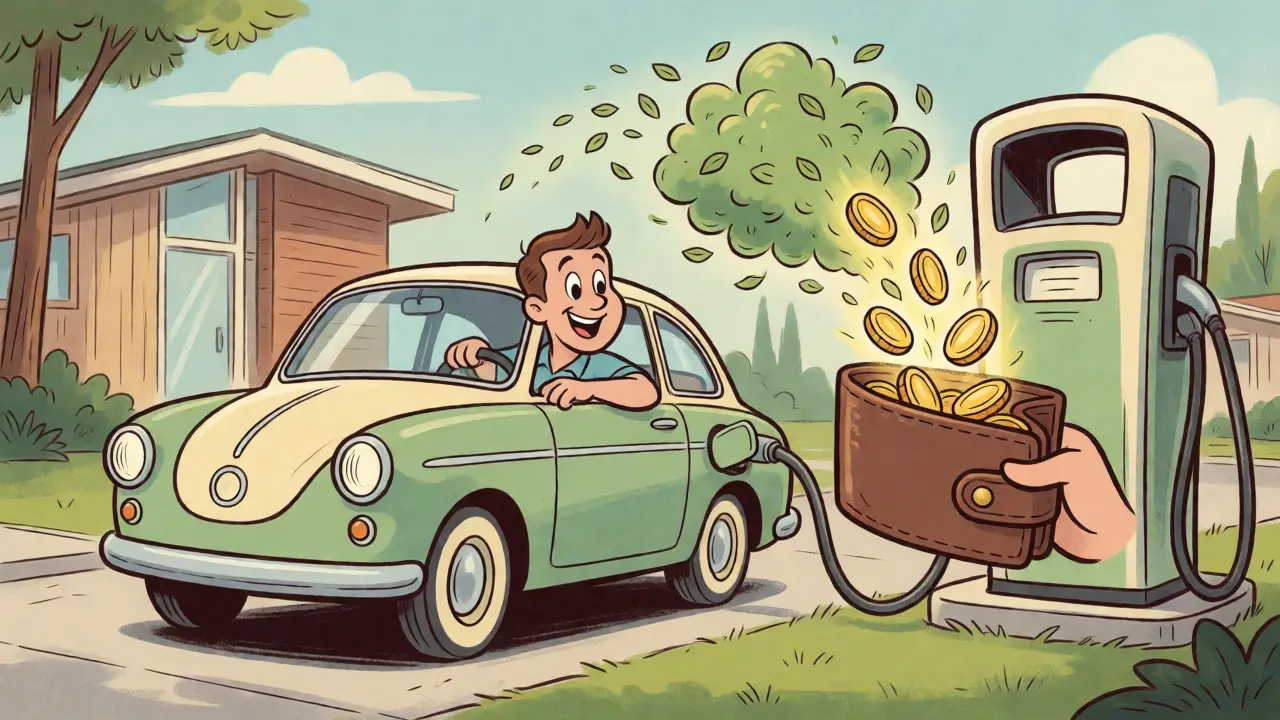
Imagine plugging in your electric car and getting paid for it. Not just with cash back, but with actual tradable assets that represent the environmental impact of your drive. That’s the core pitch behind C+Charge, a project attempting to bridge the gap between everyday electric vehicle usage and the complex world of carbon credit markets. If you’ve seen the ticker CCHG pop up in your feed or on a decentralized exchange, you might be wondering: Is this a legit utility token, or just another hype cycle? Let’s break down exactly what C+Charge does, how its tokenomics work, and whether its promise of democratizing carbon credits holds water.
The Core Concept: Driving Green, Earning Crypto
At its heart, C+Charge is a peer-to-peer payment platform designed specifically for electric vehicle charging stations. Unlike traditional charging networks where you pay via credit card or app subscription, C+Charge uses its native cryptocurrency, CCHG, as the medium of exchange. But here’s the twist: every time you use CCHG to pay for a charge, you don’t just get electricity. You earn tokenized carbon credits.
This isn’t just a loyalty points system. The project partners with Flowcarbon, a company specializing in on-chain carbon assets. Through this integration, a portion of transaction fees is converted into Flowcarbon’s Goodness Nature Token (GNT), which represents verified carbon credits. These credits are then distributed pro-rata to both EV drivers who use the service and passive holders of the CCHG token. It’s an attempt to make the $851 billion carbon credit market accessible to regular people, not just big corporations.
Technical Specs: Built on BNB Smart Chain
For those interested in the technical underpinnings, CCHG is a BEP-20 utility token. This means it lives on the BNB Smart Chain (formerly Binance Smart Chain). Why does this matter? Because BSC uses a Proof-of-Stake consensus mechanism, making it significantly more energy-efficient than older Proof-of-Work chains like Bitcoin. For an ESG-focused project, building on a low-energy blockchain is a logical step.
The token has a maximum supply of 1 billion CCHG. However, the circulating supply fluctuates due to burn mechanisms. As of recent data, approximately 71 million tokens have been burned, reducing the total supply to around 929 million. The smart contract address on BNB Smart Chain is 0x24F2f371D74B25da7597AdEAe55895fe6B5c2FDE. If you’re looking to hold or trade CCHG, you’ll need a wallet compatible with BNB Smart Chain, such as MetaMask configured for BSC or Trust Wallet.
| Attribute | Detail |
|---|---|
| Token Type | BEP-20 Utility Token |
| Blockchain | BNB Smart Chain |
| Max Supply | 1,000,000,000 CCHG |
| Total Supply (Post-Burn) | ~929,000,000 CCHG |
| Consensus Mechanism | Proof-of-Stake (PoS) |
| Primary Partner | Flowcarbon (GNT Token) |

How the Rewards System Actually Works
Let’s walk through a real-world scenario. You download the C+Charge mobile app and fund your built-in wallet with CCHG tokens bought from an exchange like BitMart. You find a partner charging station using the app’s locator feature. When you plug in and start charging, you pay for the session using CCHG.
Here’s where the magic happens. A small percentage of that transaction fee-specifically 1%-is taxed by the protocol. This tax is used to buy GNT tokens from Flowcarbon. These GNT tokens are then sent to your C+Charge wallet. So, you effectively earned a piece of the carbon market just by driving. Passive holders benefit too; if you just hold CCHG in a compatible wallet, you receive these "reflections" of carbon credits without even owning an EV. This dual-reward structure aims to incentivize both active users and long-term investors.
Market Performance and Liquidity Risks
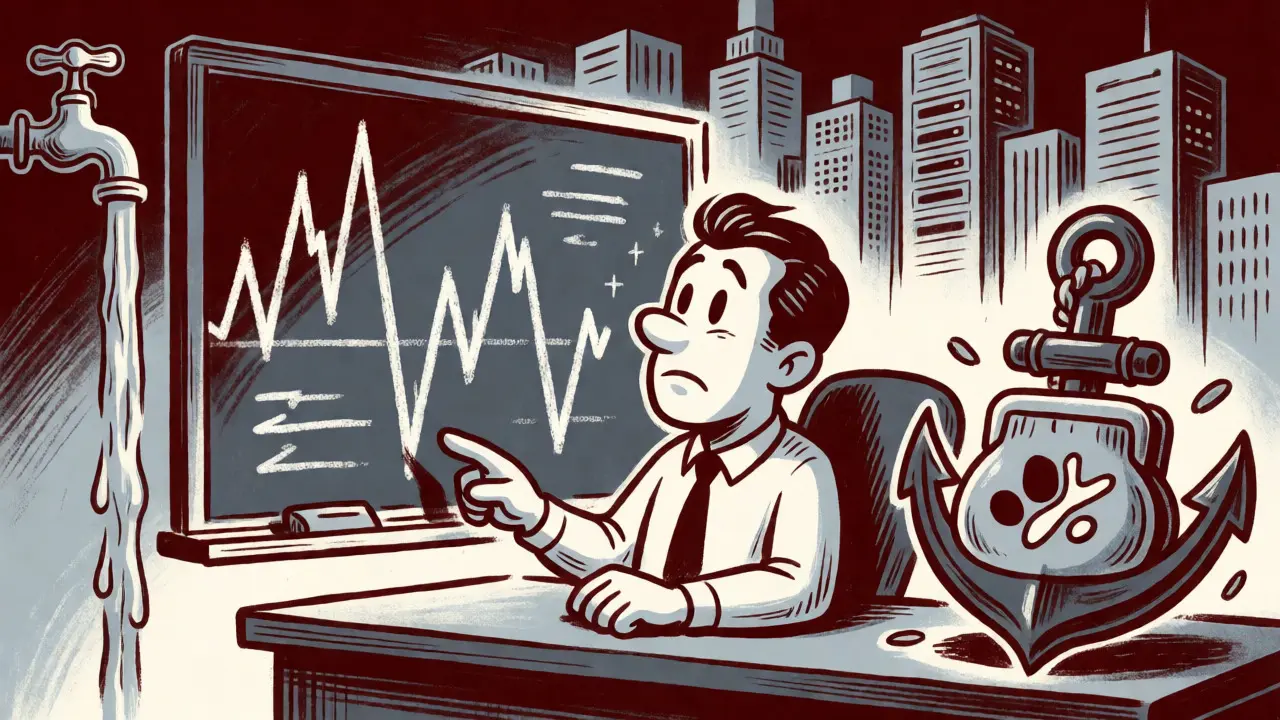
Now, let’s talk numbers, because this is where things get tricky. C+Charge raised between $2.45 million and $3.25 million during its presale stages in early 2023. The token listed on BitMart in March 2023 at a price of roughly $0.0235. Fast forward to mid-2025, and the price had dropped significantly, hovering around $0.000044 to $0.0002 depending on the aggregator.
Why such a steep decline? Liquidity. Data from CoinCodex showed daily trading volumes as low as $16.29 at one point. Coinbase reported $0 volume on certain dates. This extreme illiquidity means that while the concept is solid, exiting a position can be difficult. If you try to sell a large amount of CCHG, you might crash the price due to thin order books. It’s a classic micro-cap risk: high potential upside if adoption grows, but severe downside if interest wanes.
Is It Different From Other EV Tokens?
You might ask, "Aren't there other crypto projects trying to fix EV charging?" Yes, but most focus purely on payment processing or hardware ownership. C+Charge distinguishes itself by integrating directly with the carbon credit economy. Most competitors treat carbon credits as an afterthought or a vague marketing claim. C+Charge uses Flowcarbon’s verifiable on-chain assets, providing transparency and auditability that many competitors lack.
However, it doesn’t compete on physical infrastructure. C+Charge doesn’t build its own chargers. It relies on partnerships with existing networks. This asset-light model reduces overhead but introduces dependency risk. If key partners drop out or fail to integrate properly, the user experience suffers. Currently, public metrics on actual kilowatt-hours charged through the app are sparse, making it hard to gauge true adoption versus speculative holding.
Who Should Consider CCHG?
If you’re an EV owner already comfortable with crypto wallets and BNB Smart Chain transactions, CCHG offers a tangible utility case. You’re earning rewards for something you already do. For crypto investors, it’s a high-risk, high-reward play on the intersection of ESG and DeFi. The bet is that regulatory pressure will force more companies to buy carbon credits, increasing demand for GNT, which in turn drives value to CCHG holders.
But be warned: this is not a stable investment. The token’s price volatility is extreme, and liquidity is poor. It’s suitable only for capital you can afford to lock up or lose. Always check the latest supply figures on multiple aggregators, as discrepancies exist between platforms regarding burned tokens and circulating supply.
What is the main purpose of the CCHG token?
The CCHG token serves two primary functions: it acts as a medium of exchange for paying for electric vehicle charging sessions within the C+Charge ecosystem, and it allows holders to earn tokenized carbon credits through transaction reflections.
Which blockchain does C+Charge operate on?
C+Charge operates on the BNB Smart Chain (BSC). The CCHG token is a BEP-20 standard token, which ensures compatibility with popular wallets like MetaMask and Trust Wallet when configured for BSC.
How do I earn carbon credits with C+Charge?
You earn carbon credits in two ways: actively, by using the C+Charge app to pay for EV charging with CCHG tokens, or passively, by holding CCHG in a compatible wallet. A 1% tax on transactions is used to purchase GNT tokens from Flowcarbon, which are then distributed to eligible users.
Where can I buy CCHG tokens?
CCHG was initially listed on BitMart. Due to its micro-cap status, availability may vary across other centralized exchanges. Decentralized exchanges (DEXs) on BNB Smart Chain, such as PancakeSwap, are also common venues for trading, though liquidity can be very low.
Is C+Charge a good investment?
It depends on your risk tolerance. CCHG has shown significant price volatility and low trading volume, indicating high liquidity risk. While the utility proposition is strong, widespread adoption metrics are still emerging. It is best viewed as a speculative asset rather than a stable store of value.


Comments (18)
Eugene McGrath
Look, I get the ESG hype train is running hot, but let's cut through the jargon. CCHG on BSC? That's a low-fee chain, sure, but it screams 'retail bagholder' to me. The liquidity metrics are abysmal-$16 daily volume is basically dead on arrival for institutional money. If you're not buying at the presale floor, you're just providing exit liquidity for the whales dumping their GNT reflections. It’s a classic pump-and-dump structure wrapped in greenwashing packaging. Don't fall for the 'democratization' narrative when the smart contract tax mechanism just bleeds your principal while the devs hold the keys.
Sonya Kirkwood
The timing of this launch was too perfect. Right as the EU started cracking down on carbon accounting loopholes, suddenly there's a tokenized solution ready to go? Flowcarbon has been around, but why partner with a micro-cap BEP-20 now? It smells like regulatory arbitrage. They know the big players need verifiable on-chain credits to avoid fines, so they created a retail-facing wrapper. But who audits the underlying physical offsets? We never see the raw data from the charging stations. It’s all opaque until the rug pull happens. Keep your eyes open; nothing in DeFi is free, and 'reflections' are just delayed dilution.
Jess Emmerson
I've actually used the app in a few pilot cities. The UX is surprisingly smooth compared to some legacy EV networks that still require three different apps. The integration with MetaMask for BSC is straightforward if you already have your wallet set up. Just remember to bridge your funds carefully because gas fees can eat into small transactions if you aren't careful. It's niche, but for early adopters who want to experiment with DeFi and EVs simultaneously, it works. The carbon credit distribution is visible on-chain, which adds a layer of transparency that traditional loyalty programs lack. Worth a small allocation if you believe in the long-term convergence of mobility and blockchain.
Christian Pasamonte
The fundamental flaw here isn't the tech, it's the economic model sustainability. You are relying on transaction volume to generate yield via GNT purchases, but if the token price drops due to low liquidity-which it has-the perceived value of the reward decreases even if the absolute number of tokens stays the same. This creates a negative feedback loop where lower prices discourage new users, leading to fewer transactions, which leads to fewer rewards, further discouraging users. Unless there is significant external capital inflow or a major partnership announcement that brings actual utility demand beyond speculation, the burn mechanism won't save the price. It’s a structural issue common in many 'utility' tokens that fail to decouple their value from speculative trading volume.
Ferdinand Friday
We must consider the philosophical implications of tokenizing environmental impact. By converting carbon sequestration into a tradable asset, we are essentially commodifying the very essence of ecological balance. Is it ethical to allow market forces to dictate the value of clean air and reduced emissions? On one hand, C+Charge democratizes access, allowing the individual driver to participate in the global carbon economy, which is a noble endeavor. On the other hand, it risks turning moral duty into a financial instrument, where people drive electric cars not out of altruism, but for yield farming opportunities. This shift from intrinsic to extrinsic motivation could undermine the cultural shift towards sustainability. We are replacing genuine concern with algorithmic incentives, and history shows that when morality becomes a commodity, its true value often diminishes in the public consciousness.
Gabriela Gonzalez
This is such a cool concept! 🌱 Driving my EV and earning crypto feels like winning twice! 💪 Even if the price is volatile, the idea of supporting green energy while getting rewarded is amazing. Don't let the naysayers stop you from trying it out! 🚗⚡️ #EVLife #CryptoGreen
Matthew O'Neill
It is intellectually lazy to dismiss the liquidity issues as mere 'market conditions.' A project claiming to bridge real-world assets (RWA) and DeFi must demonstrate robust market-making strategies. The fact that Coinbase reports zero volume on certain dates indicates a complete lack of organic interest. This isn't a bug; it's a feature of projects that prioritize marketing over product-market fit. Until C+Charge secures partnerships with major automotive OEMs that mandate this payment method, it remains a speculative toy for degens. Stop pretending this is a serious investment vehicle for risk-averse individuals.
Jess Emmerson
Fair point on the liquidity, but dismissing it entirely ignores the growth phase of these networks. Early-stage infrastructure often suffers from thin order books before adoption hits critical mass. The key metric to watch isn't just daily volume, but active user count and kWh processed. If those numbers are trending up, the liquidity will follow as market makers enter the space. It’s risky, yes, but calling it a 'toy' overlooks the tangible utility being built.
Rachel Aldaco
Why do we always look for external validation? The car charges, the earth breathes easier. That is enough. The coin is just noise. We seek meaning in numbers because we fear the silence of nature. But the wind blows regardless of the ticker symbol. Be present. Drive. Feel the quiet hum of the engine. That is the real return.
Abid Bhatti
Everyone talking about 'utility' is missing the bigger picture. Who controls the oracle data? If the charging station logs are manipulated, the carbon credits are worthless. And since it's on BSC, the centralization risk is high. Binance could delist it tomorrow and the ecosystem collapses. It's all fragile. I bet the founders are already selling quietly. 🙄
Kathy Siew
Honestly, the whole 'earn while you sleep' vibe gives me the creeps. 😐 I tried holding a similar token last year and got rekted by gas fees alone. The UI looked nice, but the backend felt sketchy. Not worth the headache unless you really love losing money slowly. 📉
Stephen McElreavy
From a cross-border perspective, the use of BNB Smart Chain is strategic for regions with high mobile penetration but limited banking infrastructure. In Southeast Asia and parts of Latin America, crypto wallets are more accessible than credit cards for EV payments. C+Charge could potentially leapfrog traditional fintech rails in these emerging markets. The challenge will be localizing the app and ensuring hardware compatibility across diverse charging standards. However, the potential for financial inclusion here is far greater than the speculative gains for US-based holders. It’s a story of global accessibility, not just Wall Street speculation.
Ted Thoroughgood
I think the main thing is just having fun with it. Don't put rent money in. Just try it out. See if you like the app. If you earn a little extra, great. If not, no big deal. Keep it simple and don't stress about the charts. 😊
Sasha Wilde
Liquidity is the only metric that matters. Everything else is narrative. 📉📉📉
Charlotte Richardson
I appreciate the detailed breakdown provided in the post. It is important to approach emerging technologies with both optimism and caution. For those interested in participating, starting with a small amount allows for learning without significant financial pressure. Remember that community support and education are key components of any successful network. If you are feeling overwhelmed by the technical aspects, seeking out beginner-friendly resources or joining discussion groups can provide valuable guidance. Your journey into decentralized finance should be empowering, not stressful. Take your time to understand the mechanisms before making larger commitments.
Dominic Jones
One must also consider the regulatory landscape... specifically, how the SEC might view 'reflections' as securities... if the expectation of profit is derived primarily from the efforts of others... then compliance becomes a massive hurdle... yet, many ignore this... focusing solely on the 'green' branding... which is, frankly, insufficient for institutional adoption... without clear legal frameworks... the volatility will remain extreme... and retail investors will continue to bear the brunt of uncertainty...
Kathryn Haber
i feel like everyone is overthinking it. just drive. just charge. the coin comes later. dont worry about what it means. just do it. its simpler than we make it.
liam & the bees
Hey folks! 🐝 Great discussion here. From an Irish perspective, we’re seeing similar initiatives with renewable energy credits. The key is trust. If the blockchain provides immutable proof of the charge and the offset, then it’s solid. But yeah, check the volume! Don’t buy something you can’t sell. Good luck everyone, hope your EVs run smooth! 🇮🇪⚡️