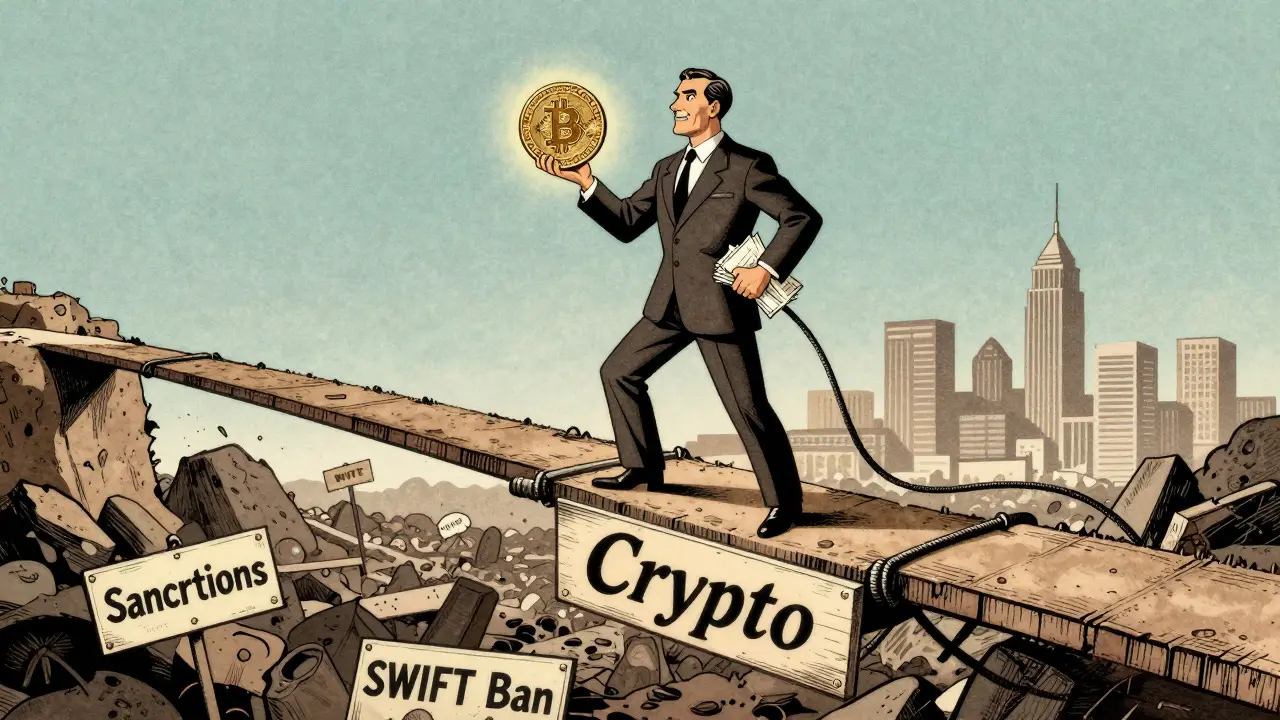
For years, trying to send money out of Russia using cryptocurrency felt like walking through a minefield. You had the coins, you had the wallet, but the legal ground beneath your feet was shifting constantly. One day it was tolerated; the next, it was technically illegal. But if you are a business owner or an investor looking at the landscape in August 2026, the map has changed. The era of total prohibition is over, replaced by a structured, albeit strict, pilot program that allows specific entities to use Bitcoin and other digital assets for international trade.
This isn't just about tech enthusiasts buying tokens on weekends. This is a state-sanctioned mechanism designed to keep Russian commerce moving despite heavy Western sanctions. If you are wondering whether you can now legally pay for imports or receive export revenues in crypto, the answer is yes-but only if you fit into a very narrow box. Let’s break down exactly how these new rules work, who they help, and where the traps still lie.
The Legal Foundation: Federal Law No 221-FZ
To understand where we stand today, we have to look at the law that made this possible. In September 2024, amendments to the Federal Law On Digital Financial Assets (No 259-FZ) came into force. This wasn't just a minor tweak; it was a fundamental shift authorized by President Vladimir Putin’s directive to balance regulation with economic necessity.
The core mechanism is the Federal Law No 221-FZ, which established a pilot program. Think of this as a controlled sandbox. For three years, legal entities-meaning registered companies, not individual freelancers-can use cryptocurrencies and stablecoins for cross-border settlements. The goal? To bypass traditional SWIFT banking channels that have been largely cut off from many Russian institutions.
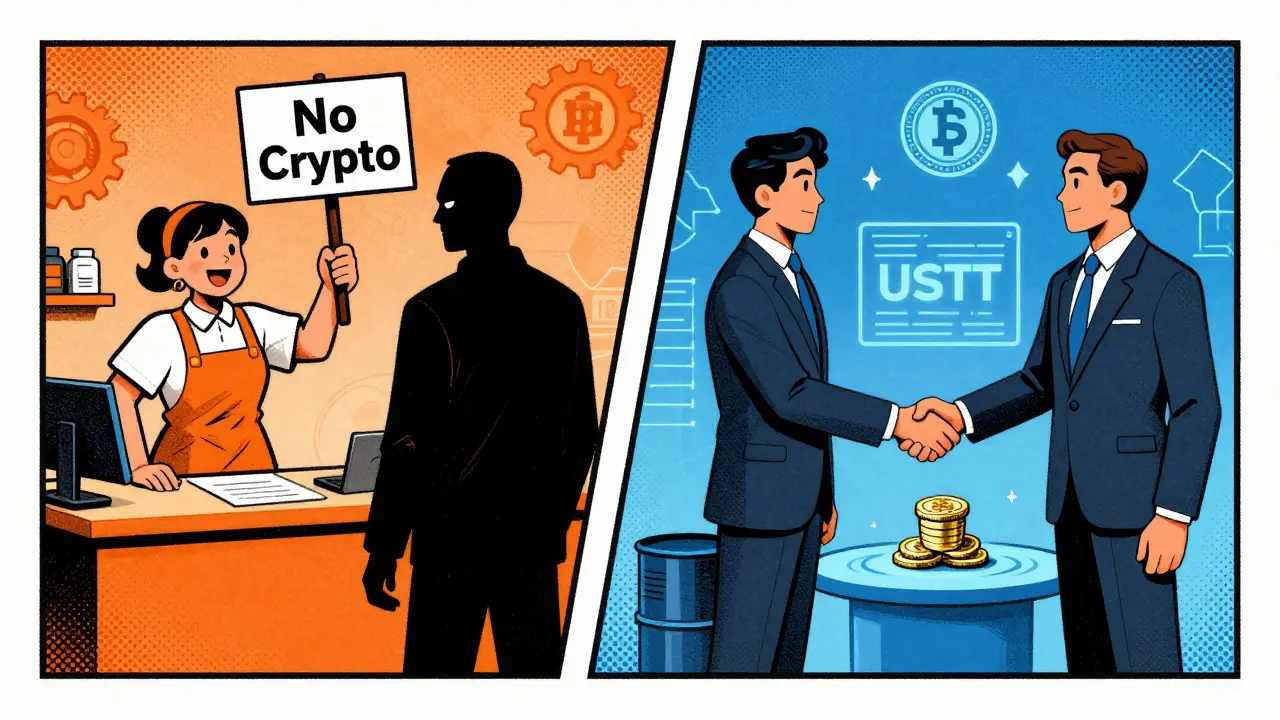
Here is what matters most: domestic payments remain strictly prohibited. You cannot buy groceries in Moscow with Bitcoin. You cannot pay your local supplier in Ethereum. The law explicitly separates internal circulation from external trade. If you try to use crypto inside Russia for everyday transactions, you are still breaking the law. The green light is only for crossing borders.
Who Can Actually Use These Payments?
You might be thinking, "Great, I’m a small exporter, can I start accepting USDT now?" Not yet. The access is highly gated. The pilot program requires participants to operate through certified digital asset platform operators. These aren't just any exchanges; they are platforms vetted and approved in coordination with the Bank of Russia.
There are two main groups benefiting from this framework right now:
- Export-Oriented Companies: Energy firms, particularly those selling oil and gas to countries like China and India, were the first to capitalize on this. By early 2025, major energy players were invoicing exports in cryptocurrencies to ensure payment flow despite banking restrictions.
- Highly Qualified Investors: For individuals, the door is barely cracked open. As of May 2025, the Bank of Russia permitted qualified investors to purchase crypto-based products, such as Bitcoin futures. But the definition of "qualified" is steep. You need securities and deposits exceeding 100 million rubles or an annual income over 50 million rubles. This keeps the retail market mostly out, preserving stability while allowing institutional capital to test the waters.
If you don’t meet these criteria, you are effectively locked out of the legal framework. Most Russians still hold their $25 billion+ in digital assets on foreign platforms because domestic centralized exchanges are virtually non-existent due to regulatory hurdles.
The Role of Stablecoins and the Digital Ruble
While Bitcoin gets the headlines, the real workhorse of this new system is likely to be stablecoins. The A7 Group, partially owned by a sanctioned bank, has already demonstrated the utility of using Tether (USDT) and ruble-backed stablecoins for international transactions. Why? Because volatility is the enemy of trade. When you are settling a contract for machinery or raw materials, you want currency stability, not the wild swings of BTC.
Simultaneously, the state is pushing its own solution: the Digital Ruble. Launched in a pilot phase in August 2023, the Digital Ruble has processed over 100,000 transactions across 2,500 wallets by mid-2024. The rollout is aggressive. Starting September 1, 2026, large enterprises will be required to accept Digital Ruble payments. By 2028, all merchants are expected to join.
Here is the tension: The government wants the Digital Ruble to dominate domestic and eventually international trade, offering full transparency and control. Meanwhile, private businesses are flocking to decentralized options like Bitcoin and USDT to maintain autonomy and bypass geopolitical friction. The future will likely see a hybrid model, but for now, the Digital Ruble is the state’s preferred instrument.
Compliance: The Price of Legality
Getting into the pilot program isn't just about signing up. It comes with a heavy compliance burden. The Bank of Russia is obsessed with transparency. Every transaction must have a clear origin of funds. You need robust Anti-Money Laundering (AML) measures and strict Know Your Customer (KYC) protocols.
In March 2025, the Central Bank reinforced this stance by recommending criminal liability for violations outside the experimental regime. They issued methodological recommendations for identifying suspicious peer-to-peer transactions. If your company joins the pilot, expect enhanced monitoring and mandatory information exchange between tax and financial authorities. There is no anonymity here. The state trades permission for visibility.
| Scenario | Legality | Key Requirements | Risks |
|---|---|---|---|
| Cross-Border Trade (Pilot) | Legal | Certified operator, KYC/AML, reporting | Regulatory changes, audit scrutiny |
| Domestic Retail Payment | Illegal | N/A | Fines, criminal liability |
| Individual Investment | Limited | Qualified investor status (>100M RUB assets) | Market volatility, platform risk |
| P2P Trading | Grey Area | Foreign platforms often used | Account freezes, lack of recourse |

Why This Matters for Global Trade
This isn't just a local Russian story. With crypto-facilitated trade hitting 1 trillion rubles in 2025, Russia is becoming a significant node in the global crypto economy. By forcing a pivot away from the dollar and euro, Russia is accelerating the adoption of blockchain technology for settlement layers worldwide.
Companies trading with Russia now have a new option. Instead of navigating complex correspondent banking networks that may reject their transfers, they can settle in Bitcoin or stablecoins. However, they must ensure their counterparty in Russia is part of the official pilot program to avoid secondary sanctions or compliance issues on their end.
The Ministry of Finance is considering easing the criteria for "highly qualified" investors, which suggests the net will widen. But for now, the structure remains tight. The Central Bank’s Regulatory Agenda 2025-2026 lists cryptoassets as a strategic priority, signaling long-term commitment rather than a temporary fix.
What Comes Next?
We are in year two of the three-year pilot. The permanent rules are expected to follow after the trial concludes. Industry experts predict continued expansion, but the pace depends on two things: the success of the current pilot and the intensity of international sanctions.
If the pilot proves that crypto can reliably handle billions in trade volume without crashing the financial system, expect broader access. The Central Bank plans to allow investment funds to purchase cryptocurrency derivatives in 2026, further integrating crypto into the formal financial sector. But don't expect freedom for the average citizen anytime soon. The state’s primary concern remains control and anti-money laundering.
For businesses, the advice is simple: if you are eligible, get into the pilot. The infrastructure is being built now, and early adopters will set the standards. If you are outside the program, wait. The regulatory environment is still volatile, and stepping out of line carries real consequences.
Can individuals in Russia legally buy Bitcoin in 2026?
Yes, but with restrictions. Individuals can hold Bitcoin, but purchasing it through legal domestic channels is limited to "highly qualified" investors who have over 100 million rubles in assets or 50 million rubles in annual income. Most regular citizens still buy via foreign platforms, which operates in a grey area legally.
Is it legal to pay for goods in Russia using cryptocurrency?
No. Domestic payments in cryptocurrency remain strictly prohibited. The new regulations under Federal Law No 221-FZ only authorize crypto for cross-border settlements between legal entities. Using Bitcoin to pay a local vendor is still illegal.
Which cryptocurrencies are approved for cross-border trade?
The pilot program currently supports major assets including Bitcoin (BTC), Ethereum (ETH), and stablecoins like Tether (USDT). The specific list is managed by certified digital asset platform operators in coordination with the Bank of Russia.
When does the pilot program end?
The experimental legal regime is a three-year framework starting in 2024. Therefore, it is scheduled to conclude in 2027. Permanent regulations are expected to be drafted based on the results of this trial period.
How does the Digital Ruble differ from Bitcoin in this context?
The Digital Ruble is a central bank digital currency (CBDC) issued by the Bank of Russia, offering full state oversight and intended for both domestic and international use. Bitcoin is a decentralized asset used primarily for cross-border trade evasion. The Digital Ruble is mandatory for large enterprises from September 2026, while Bitcoin usage is voluntary but restricted to pilot participants.
What happens if a company violates the crypto regulations?
Violations can lead to severe penalties. The Bank of Russia has proposed criminal liability for transactions conducted outside the experimental legal regime. Fines and operational bans are also common enforcement tools for non-compliant entities.





Comments (16)
Don Fizy
Hey there! It's actually pretty cool to see the landscape shifting like this. :D I've been following the crypto space for a while, and seeing Russia try to integrate it into actual trade is fascinating. It shows that even under heavy sanctions, people find a way to move value. Just remember to keep your security tight if you're looking at these platforms. Stay safe out there! :)
Phil Babb
THIS IS ABSOLUTELY HUGE!!! Can anyone else see the writing on the wall?! The dollar is dying! Everyone needs to wake up right now!!! This isn't just about Russia; this is about the entire global financial order collapsing!!! If you aren't paying attention, you are losing money every single second!!! Buy Bitcoin before it's too late!!! The banks are scared because they know they can't control it anymore!!!
Dominic Greco
Don't be fooled by the 'legal' facade 🚩👀 They want total surveillance through the Digital Ruble while letting the elites play with BTC. It's a classic trap. The 'pilot program' is just a data harvesting operation to track who is moving money outside their controlled channels. Once they have all the keys, they'll freeze everything. Trust nothing from the state 💀📉
Sean Rowland
One must critically examine the underlying epistemological framework of this so-called 'liberalization.' The imposition of stringent KYC/AML protocols effectively nullifies any notion of financial sovereignty. Furthermore, the exclusion of retail participants suggests an oligarchic consolidation of capital rather than genuine democratization of access. The semantic drift in defining 'qualified investors' reveals a systemic bias towards entrenched power structures.
Sus Sawyer
Honestly, its kinda wild how they are forcing the digital ruble on everyone but letting big corps use bitcoin. Its a double standard for sure. But hey, if you can get in the pilot, go for it! Just dont get caught doing p2p stuff illegally or you will be in deep trouble. Keep your head down and your wallet secure. Its a brave new world out there folks!
Aryan MISHRA
The regulatory arbitrage here is significant!! Central bank digital currencies (CBDCs) offer traceability which is antithetical to the core ethos of decentralization!! However, for cross-border settlement efficiency, stablecoins remain superior due to lower volatility!! Retail participation remains constrained by high entry barriers!!
Ryan Robinson
i mean its not that surprising really. they needed a way to bypass swift so they did what they had to do. i guess we will see if it actually works long term or if the sanctions get too tight even for crypto. seems like a messy situation but maybe it opens doors for other countries too who know?
Earl Kott65
Ah, the irony is palpable! 😂 They ban crypto for the little guy but build a golden highway for the energy giants. Typical! 🎭 I wonder if the average Joe in Moscow can afford to buy $100M in assets to qualify? Probably not! So much for 'financial freedom,' huh? 🙄🔥
Ethan Yuwono
It is interesting to consider the philosophical implications of state-controlled versus decentralized currency. The desire for control is inherent in governance yet the market seeks freedom. Perhaps this hybrid model is the inevitable compromise between order and chaos. We shall see how history judges this experiment.
Jack Delasquez
so basically if u r not rich u cant touch it lol. thats kinda funny. but also scary bcuz what happens when they change the rules again? i heard the digital ruble is gonna be mandatory soon which sounds like a nightmare for privacy. lets hope for the best i guess.
Harman Singh
why does this always happen to us?? first they take our savings then they make it illegal to trade properly. my uncle lost money on p2p last year and now he is stuck. its so unfair that only the big companies get to use crypto while normal people suffer. i feel so drained thinking about it.
Qolbina Islami
AMERICA WILL CRUSH THIS ATTEMPT!!! The West will never allow Russia to escape the dollar system!!! Sanctions will tighten until their economy collapses completely!!! Bitcoin is a scam designed to destabilize nations!!! Support our troops and boycott Russian goods!!! Victory is ours!!!
SUBHAM CHOUDHURY
It's good to see some progress being made slowly. Maybe things will improve for everyone eventually. Let's stay positive and keep learning about these new technologies. Who knows, maybe one day regular people can use it too without all the restrictions. Hope for the best.
Joy Kwant
This whole system feels morally bankrupt. Allowing corporations to bypass sanctions while criminalizing individual transactions is just class warfare disguised as regulation. It's disgusting how they prioritize profit over people. The average citizen is left holding the bag while the elite dance around the law.
amy miranda
The sheer audacity of this policy is staggering. While ordinary citizens are told to wait and watch, the wealthy are given a free pass to exploit loopholes. It is a blatant display of inequality wrapped in bureaucratic jargon. One has to wonder who exactly benefits from this 'structured' approach.
Billy Cunningham
Looks like another layer of complexity added to an already broken system. 📉 Not sure if this helps anyone except the insiders. 🤷♂️