
If you are thinking about promoting cryptocurrency services to an audience in Egypt, stop. The consequences are not just fines; they include real prison time. Egypt has established one of the strictest regulatory environments for digital assets in the world. Unlike many nations that are drafting guidelines for integration, Egypt has chosen a path of total prohibition for unauthorized activities. This stance is backed by severe legal mechanisms designed to crush unlicensed promotion and trading.
The core of this restriction lies in Law No. 194 of 2020. This legislation codified what had previously been warnings from central authorities into hard criminal law. It explicitly bans issuing, trading, or promoting cryptocurrencies without explicit authorization. Since no such authorization exists for general public promotion, anyone engaging in these activities steps directly into legal jeopardy. The Central Bank of Egypt (CBE) and the Egyptian Financial Regulatory Authority (FRA) enforce these rules with zero tolerance.
Understanding the Legal Framework
To grasp why the penalties are so harsh, you need to look at the timeline. The current strictness didn't appear overnight. It began with initial warnings issued by the Central Bank of Egypt (CBE) in January 2018. At that time, the bank specifically targeted Bitcoin, labeling it a threat to national security and financial stability. These warnings were clear but lacked the teeth of criminal statutes.
That changed with the passage of Law No. 194 of 2020. This law transformed regulatory warnings into criminal offenses. It prohibits any entity or individual from operating crypto exchanges, facilitating trades, or engaging in promotional activities related to virtual assets. The scope is incredibly broad. It covers everything from running a website that solicits investment in crypto projects to posting content on social media that encourages users to buy specific tokens. If you are promoting a project without a license from the relevant Egyptian authorities, you are breaking the law.
The Egyptian Financial Regulatory Authority (FRA) plays a crucial role here. They reinforce the CBE’s position by monitoring capital markets. Under Capital Market Law No. 95 of 1992, Article 4, any public offering requires an FRA-approved prospectus. Since cryptocurrencies cannot obtain this approval due to their unregulated nature, any promotion of them as an investment vehicle is automatically illegal. This creates a double-layered legal trap for promoters: they violate banking regulations under the CBE and securities laws under the FRA.
The Severity of Imprisonment and Fines
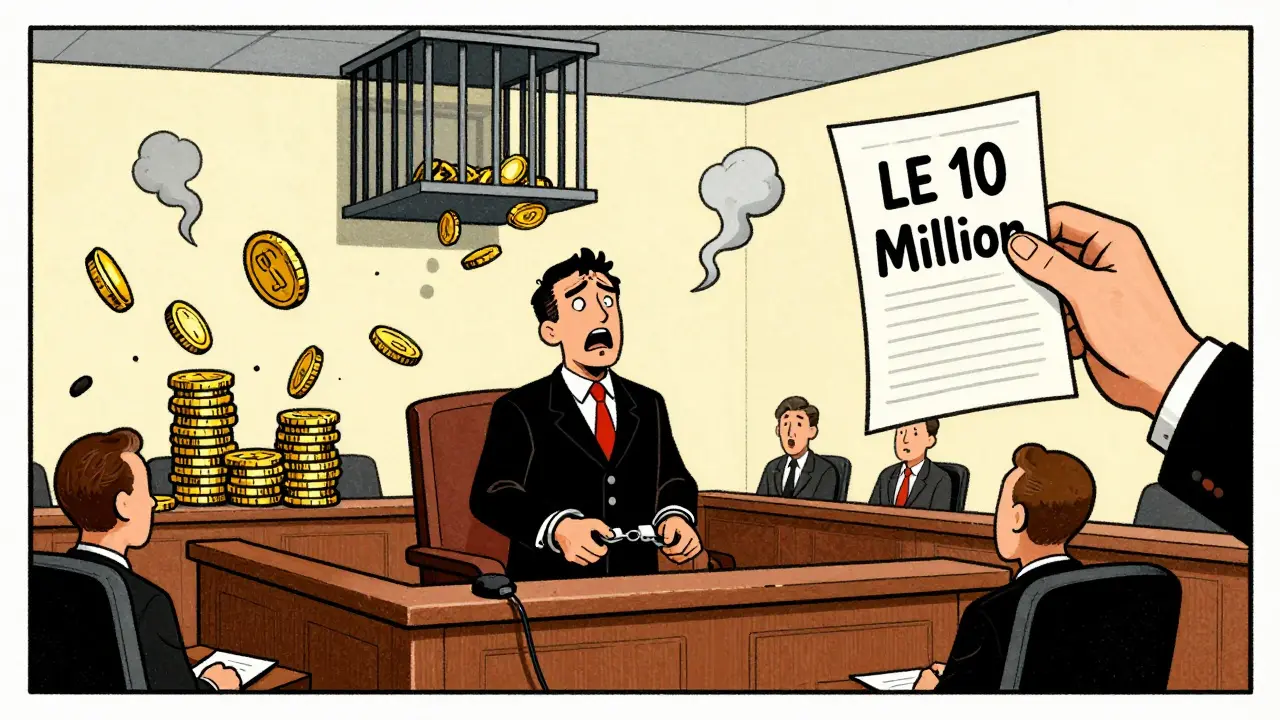
Let’s talk numbers, because they are staggering. The penalty structure under Law No. 194 of 2020 is designed to be a massive deterrent. The CBE’s official statement outlines a dual-penalty system. Violators face imprisonment and a fine ranging from LE1 million to LE10 million (approximately $516,340 USD). Alternatively, courts can impose one of these two penalties independently.
This means there is no "slip-up" clause for minor infractions. Promoting a meme coin on Twitter could theoretically land you in prison or cost you half a million dollars. The FRA echoes this severity, stating that Egyptian law prescribes imprisonment and/or significant fines for anyone trading, promoting, or offering activities related to these currencies without prior authorization. The upper limit of LE10 million is intended to cripple the financial viability of unauthorized operations.
| Violation Type | Imprisonment Risk | Financial Penalty Range | Enforcing Body |
|---|---|---|---|
| Promotion/Marketing | Yes | LE1M - LE10M ($516k+) | CBE / FRA |
| Operating Exchanges | Yes | LE1M - LE10M ($516k+) | CBE / FRA |
| Unauthorized Staking | Yes | LE1M - LE10M ($516k+) | CBE |
Scope of Prohibited Activities
You might think that simply talking about crypto is safe, but the definition of "promotion" in Egypt is expansive. The FRA targets unlicensed entities and online platforms that receive or pool funds for investment. This includes websites and social media accounts that solicit public investment in exchange for returns. If your content encourages others to invest in blockchain projects, NFTs, or decentralized finance (DeFi) protocols, you are likely crossing the line.
The restrictions extend beyond traditional coins. The Banking Law specifically prohibits the use of virtual assets, including Non-Fungible Tokens (NFTs), for financial purposes without prior CBE licensing. This means promoting an NFT marketplace or encouraging staking rewards is also prohibited. Staking is considered inherently linked to cryptocurrency activities and falls under the category of prohibited actions unless a proper license is secured-which currently does not exist for general public participation.
The regulatory framework leaves no room for ambiguity regarding intent. Whether you are educating, marketing, or facilitating transactions, if the end result involves Egyptian citizens interacting with unauthorized crypto assets, you are liable. The authorities view these activities as lacking underlying value, exposing users to fraud, and posing risks of cyber piracy and financial crime.
The Enforcement Challenge
Here is the paradox: despite the threat of prison, Egypt has one of the highest cryptocurrency usage rates in Africa and the Middle East. A January 2022 report by TripleA highlighted that Egypt ranked second among Arab countries in crypto ownership. Approximately 1.79 million Egyptians owned crypto assets, representing 1.75% of the population. More recent estimates suggest this number has grown to around 3 million users.
This widespread adoption creates a significant enforcement challenge. How do you imprison millions of people? You don’t. Instead, the authorities focus on the supply side-promoters, exchanges, and influencers. By targeting those who facilitate access, the state aims to choke off the flow of information and capital. The FRA maintains a "negative list" of unlicensed entities and actively monitors digital platforms. They encourage citizens to report unlicensed product solicitations, turning the user base into a surveillance network.
The disconnect between high adoption and strict prohibition highlights the practical difficulties for regulators. With over 100 million people in Egypt, policing every transaction is impossible. However, the risk for promoters remains existential. Authorities position crypto promotion as a threat to monetary sovereignty. The narrative is that these assets lack governmental guarantee and support, making them dangerous for the average citizen. This ideological opposition drives the aggressive enforcement tactics.
Risks for International Promoters
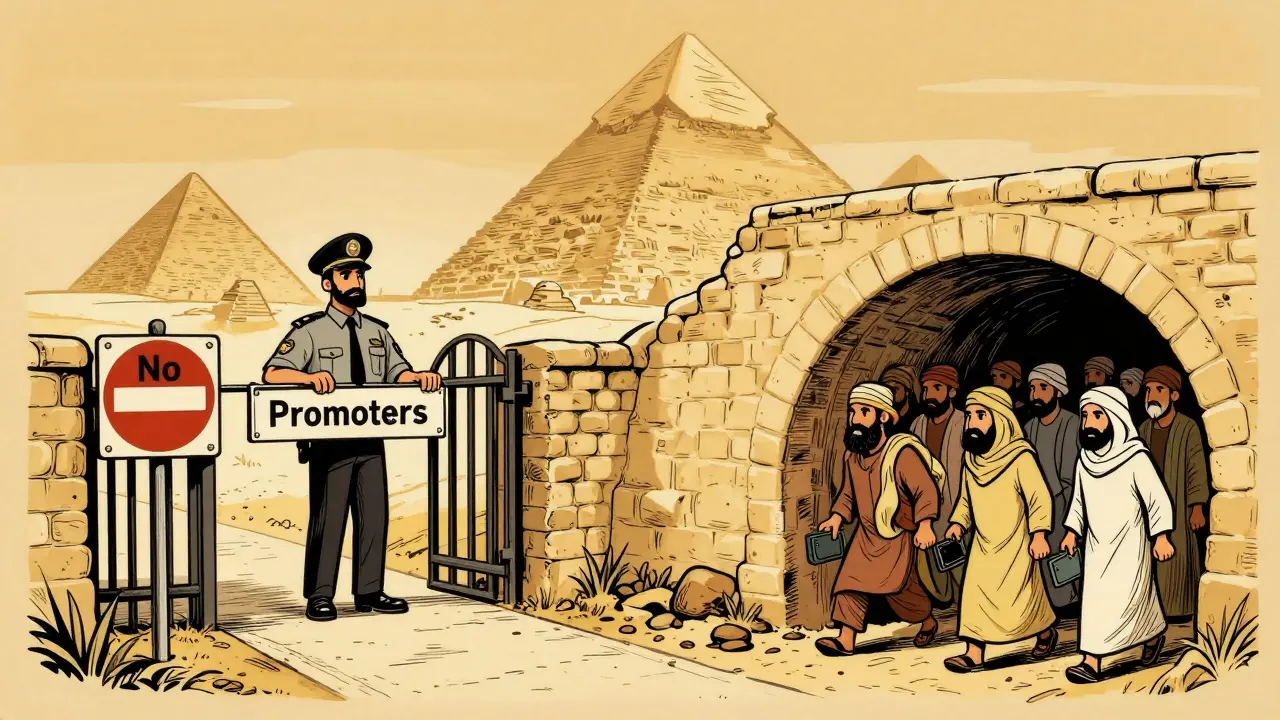
If you are based outside Egypt, you might assume you are immune. Think again. Digital borders are porous, but legal jurisdiction is not. If your promotional materials target Egyptian residents, or if your platform allows Egyptian IP addresses to engage with your content, you are subject to Egyptian law. The CBE and FRA have demonstrated willingness to collaborate with international bodies and local telecom providers to block access to unauthorized platforms.
Many international crypto projects have faced sudden blocks within Egypt. Websites get blacklisted, and social media accounts get suspended. For businesses, this isn't just a compliance issue; it's a reputational and operational nightmare. Legal experts note that the broad language of the regulations creates extensive liability. There is no "safe harbor" for educational content if it can be interpreted as solicitation. The burden of proof often shifts to the promoter to demonstrate they did not encourage investment, a difficult task in the fast-paced world of crypto marketing.
Furthermore, the lack of clear licensing pathways means that even legitimate blockchain businesses cannot operate openly. There is no application process for a "crypto promotion license." The answer is always no. This forces all activity underground, increasing the risk of scams and fraud, which in turn justifies the government's continued crackdown. It is a vicious cycle that benefits no one except those already entrenched in the traditional financial system.
Navigating the Grey Areas
Are there any grey areas? Technically, personal ownership is not explicitly criminalized in the same way promotion is. You can hold Bitcoin in your wallet. You can trade it privately. But the moment you speak publicly about it, you enter the danger zone. The line between sharing knowledge and promoting investment is razor-thin in Egypt. Mentioning price predictions, recommending wallets, or explaining how to use a DeFi protocol can all be construed as promotion.
For journalists and analysts, this creates a chilling effect. Reporting on crypto trends becomes risky if the reporting includes links to exchanges or detailed instructions on how to participate. The safest approach is to avoid the topic entirely or stick to high-level, abstract discussions that offer no actionable advice. Even then, the interpretation rests solely with the regulator. There is no independent judiciary to appeal to if you disagree with their assessment of your content.
Businesses looking to expand into emerging markets often overlook Egypt due to its size and potential. But the regulatory risk is too high. The cost of compliance is infinite because compliance is impossible. You cannot get a license. Therefore, you cannot legally operate. Any attempt to do so invites the full force of Law No. 194 of 2020. The imprisonment penalties are not theoretical; they are a tool of policy enforcement.
Can I be imprisoned for promoting crypto in Egypt?
Yes. Under Law No. 194 of 2020, promoting cryptocurrencies without authorization is a criminal offense punishable by imprisonment and/or fines up to LE10 million. The Central Bank of Egypt strictly enforces this against unlicensed promoters.
Is owning cryptocurrency illegal in Egypt?
Owning cryptocurrency is not explicitly criminalized for individuals, but trading, exchanging, and promoting it are banned. The primary legal risk comes from engaging in transactions or public promotion rather than simple possession.
What is the maximum fine for crypto promotion violations?
The maximum fine is LE10 million (approximately $516,340 USD). Courts may impose this fine alongside imprisonment or as an alternative punishment, depending on the severity of the violation.
Does Egypt allow licensed crypto exchanges?
No. Currently, there is no licensing regime for cryptocurrency exchanges or promotional activities. The Central Bank of Egypt prohibits all such activities, meaning no entity can legally obtain a license to promote or trade crypto.
How does the FRA enforce crypto bans?
The Egyptian Financial Regulatory Authority (FRA) enforces bans by maintaining a negative list of unlicensed entities, monitoring social media and websites for solicitation, and collaborating with telecom providers to block access to unauthorized platforms.
Are NFTs regulated differently than cryptocurrencies?
No. The Banking Law prohibits the use of virtual assets, including NFTs, for financial purposes without CBE licensing. Promoting NFT marketplaces or financial NFT projects carries the same imprisonment risks as promoting cryptocurrencies.
Why is Egypt so strict on cryptocurrency?
Egypt views cryptocurrencies as a threat to national security, financial stability, and monetary sovereignty. The government argues that crypto lacks tangible backing and regulatory oversight, exposing citizens to fraud and undermining the Egyptian Pound.
Can foreign companies promote crypto to Egyptians?
Foreign companies targeting Egyptian residents are subject to Egyptian law. Promoting crypto to an Egyptian audience without authorization violates Law No. 194 of 2020, regardless of where the company is headquartered.
Conclusion
The landscape for cryptocurrency in Egypt is defined by exclusion. While global trends move toward regulation and integration, Egypt moves in the opposite direction. The imprisonment penalties for promotion are not just a legal formality; they are a central pillar of the country's financial policy. For anyone involved in the crypto space, understanding this reality is critical. Ignorance of the law is not a defense, especially when the stakes involve freedom and substantial financial loss. Until the regulatory framework changes-and there are no signs of liberalization-Egypt remains a closed door for legitimate crypto promotion.





Comments (22)
Jan Gilmore
Let's get one thing straight right off the bat because people always get this wrong. The Central Bank of Egypt isn't just making up rules for fun. They are protecting the Egyptian Pound from hyperinflation and capital flight. You think you can just tweet about Bitcoin and ignore sovereign monetary policy? Please. The law is clear, Law 194 of 2020 is not a suggestion it is a criminal statute. If you are an influencer thinking you are above the law because you have followers in Cairo you are delusional. The FRA has been tracking these accounts for years. They know who you are. They know your IP address. They know where you live. Stop pretending that crypto is some kind of freedom movement when it is just unregulated speculation that threatens national stability. The prison sentences are there to scare you into compliance because fines alone were not enough to stop the reckless promoters flooding the market.
Tricia Alach
i feel like we are forgetting the human element here its so sad that people go to jail for talking about money online
but also maybe they should listen more carefully to the warnings before jumping in head first
Caique Muniz
typical government overreach lol
they want to control everything even what coins you buy on your phone
imprisonment for tweeting?? thats insane
robert Whitehead
You people are absolutely disgusting for supporting this illegal activity. It is not 'freedom' it is fraud waiting to happen. Look at how many scams have originated from unregulated crypto platforms targeting developing nations. Egypt is doing the world a favor by shutting this down. The moral bankruptcy of those promoting these assets is staggering. They don't care about the elderly losing their life savings or students going into debt. They only care about their own enrichment. This ban is a necessary evil to protect the vulnerable from predators like you. Shame on everyone who thinks they have a right to gamble with other people's financial security.
Mike S
Oh look another article telling us what we already know because nobody reads the fine print apparently. The drama surrounding this is hilarious really. You think you are clever posting memes about Dogecoin but the state has resources you can't even imagine. They will find you. They will block you. And then they will send the police to your door. It is almost poetic how quickly the internet heroes crumble when faced with actual legal consequences. Keep dreaming about your decentralized utopia while I enjoy my regulated bank account that doesn't vanish overnight.
H F
I actually think this is quite brave of them to take such a strong stance. Most countries are too afraid to act because of lobbying from tech giants. Egypt is saying no thank you to the chaos. It might seem harsh but order is better than anarchy. We need to respect local laws if we want global cooperation. Maybe other nations will follow suit and create a more stable financial environment for everyone involved.
Michael Berggren
Look I get the fear but let's keep perspective 🌍
Education is key here. If you are learning about blockchain technology that is different from selling tokens. The line is blurry yes but intent matters. We should encourage responsible discussion rather than total silence. Knowledge empowers people to make better decisions. Let's not demonize the entire industry just because some bad actors exist. There is room for innovation and regulation to coexist peacefully 😊
Kiran CS
The sheer ignorance displayed in this thread is truly remarkable. One must understand that the Egyptian legal framework is designed to preserve the sanctity of the nation's currency. To suggest otherwise is to display a profound lack of cultural and economic awareness. The imprisonment penalties are not merely punitive; they are a statement of sovereignty. Those who engage in such frivolous digital pursuits do so at their own peril and deserve the consequences that follow. It is pathetic to watch individuals whine about censorship when they are simply being protected from their own incompetence.
Bijan Das
you guys are all idiots
just stop posting about crypto
its not that hard
why do you need to be so stupid
Ashley Rodriguez
i mean i guess if they say its illegal then its illegal but it feels weird to me because i have friends who use crypto for small things and nothing happened to them yet so maybe the enforcement is not as strict as they say or maybe they just pick on big names and regular people fly under the radar which is kinda scary but also makes sense in a way
Bridget Coogle
lets try to stay calm about this okay
everyone has different views
but safety is important
Zara Zaman
This is exactly why foreign companies need to stay out of our business. We do not need your cryptocurrency schemes ruining our economy. The US and Europe can keep their chaotic markets. Egypt knows what is best for its citizens. Do not come here trying to sell your worthless tokens. We will block you. We will ban you. And we will imprison you if you try to trick our people. Stay away from our borders and our wallets.
Larry Port
I was wondering how they enforce this across the border. It seems like they use IP blocking and work with telecom providers. That is pretty standard for authoritarian regimes but effective nonetheless. For anyone thinking of hosting a server in Dubai and targeting Egypt you need to be very careful. The jurisdictional reach is surprisingly broad. They can subpoena international exchanges for user data. So anonymity is not as secure as you think.
Jocelyn Garcia
the regulatory arbitrage here is fascinating from a legal standpoint. The distinction between promotion and education is practically non-existent in their interpretation. This creates a chilling effect that extends beyond mere compliance. It stifles discourse entirely. The risk-reward ratio for any content creator is severely skewed. One post could lead to extradition proceedings depending on bilateral agreements.
Amit Varpe
India should learn from this. Our regulators are too soft. Crypto is gambling and it ruins lives. Jail time is the only way to stop the madness. Good job Egypt 👍
Bronwen Butler
actually the history of currency shows that bans never work
look at prohibition
people still drink
they still trade crypto
it just goes underground
and becomes more dangerous
so this law is useless
Pauline Larocco71
i traveled to cairo last year and saw so many ads for crypto on billboards even though it was banned which was confusing
maybe the enforcement is selective
or maybe the government turns a blind eye to certain types of promotions
it felt like a wild west situation despite the strict laws
beti macedo
It is imperative that we adhere to the regulations set forth by the governing bodies. The integrity of the financial system depends on strict compliance. Any deviation from the established norms is unacceptable and must be addressed with the utmost severity. We must support the authorities in their efforts to maintain order and stability within the marketplace.
Michelle Bonahoom
ugh why does everyone have to complain
just follow the rules
if you cant handle basic laws dont participate
its not rocket science
stop being so dramatic
Matt Davis
This is absolute nonsense. The idea that a tweet can land you in prison is the stuff of dystopian fiction yet here we are living it. The arrogance of the state is breathtaking. They believe they can control the flow of information in the digital age. They cannot. Every ban only drives more users to decentralized platforms. The more they crack down the stronger the resistance becomes. This is not protection it is oppression disguised as regulation. The courts will eventually have to address the constitutionality of such vague and sweeping powers.
Albert Lee
I hear you guys and I understand the frustration. It is tough when you feel restricted. But remember that every country has its own path. We can advocate for change through proper channels. Let's support each other in navigating these complex waters. Your voice matters even if it feels silenced. Keep fighting for what you believe in but stay safe please.
Ankush Pokarana
the philosophical implications of banning knowledge are profound. When a state decides that certain truths are too dangerous for its citizens to access it reveals a deep insecurity. The ban on crypto promotion is essentially a ban on alternative economic theories. It forces conformity. It suppresses dissent. Over time this erodes trust in the institutions meant to serve the people. We must consider whether short term stability is worth the long term loss of intellectual freedom and innovation.