Quick Summary
- Bullshit Inu (BULL) is a micro-cap meme token on the BNB Smart Chain with effectively zero market cap and near-zero trading volume.
- The project claims to be building a "global marketplace" but lacks disclosed founders, technical audits, or active user data as of mid-2026.
- Multiple contract addresses exist for tokens named "Bullshit Inu," creating a high risk of buying the wrong asset.
- It is classified by several aggregators as a "shitcoin" due to lack of utility and reliance on hype rather than technology.
- Trading involves extreme slippage risks and potential total loss of capital due to illiquidity.
You’ve probably seen it pop up in a Telegram group or a spam email: Bullshit Inu. The name alone tells you this isn’t Bitcoin or Ethereum. It’s a meme coin. But before you click "buy" because someone promised a 10,000% return, you need to know what you’re actually holding. Is it a hidden gem? Or is it exactly what its name suggests?
Let’s cut through the noise. We’ll look at the hard data behind Bullshit Inu (BULL), its shaky market position, and why most experienced crypto investors treat it with extreme caution.
What Exactly Is Bullshit Inu?
Bullshit Inu is a community-driven meme cryptocurrency launched in 2022. Unlike serious blockchain projects that solve specific problems-like faster transactions or private voting-BULL was created primarily for entertainment and speculation. Its official pitch describes itself as building a "global Marketplace" that rewards users who contribute to the "Bullshit Ecosystem."
That sounds grand until you dig deeper. The project welcomes "creators, members, couch potatoes, and anyone who wants to join the movement." This inclusive, humorous branding is typical of meme coins like Dogecoin or Shiba Inu in their early days. However, unlike those giants which have evolved into cultural phenomena with real adoption, BULL remains stuck in the shadows.
Technically, it operates as a BEP-20 token on the BNB Smart Chain (formerly Binance Smart Chain). This means it relies on the BNB network for security and transaction processing. You don’t need your own server to run BULL; you just need a wallet compatible with BNB, like MetaMask or Trust Wallet, and some BNB to pay for gas fees.
The Numbers Don’t Lie: Supply and Market Cap
If you want to understand the value of any cryptocurrency, you have to look at its supply and demand metrics. For Bullshit Inu, these numbers paint a picture of a dormant project.
| Metric | Value |
|---|---|
| Total Supply | 1,000,000,000,000 BULL |
| Circulating Supply | 0 BULL (Reported) |
| Market Cap | $0.00 USD |
| Fully Diluted Valuation (FDV) | ~$8,000 - $9,000 USD |
| 24-Hour Volume | $0 - $1.27 USD |
| Global Rank | #6,000 - #11,000+ |
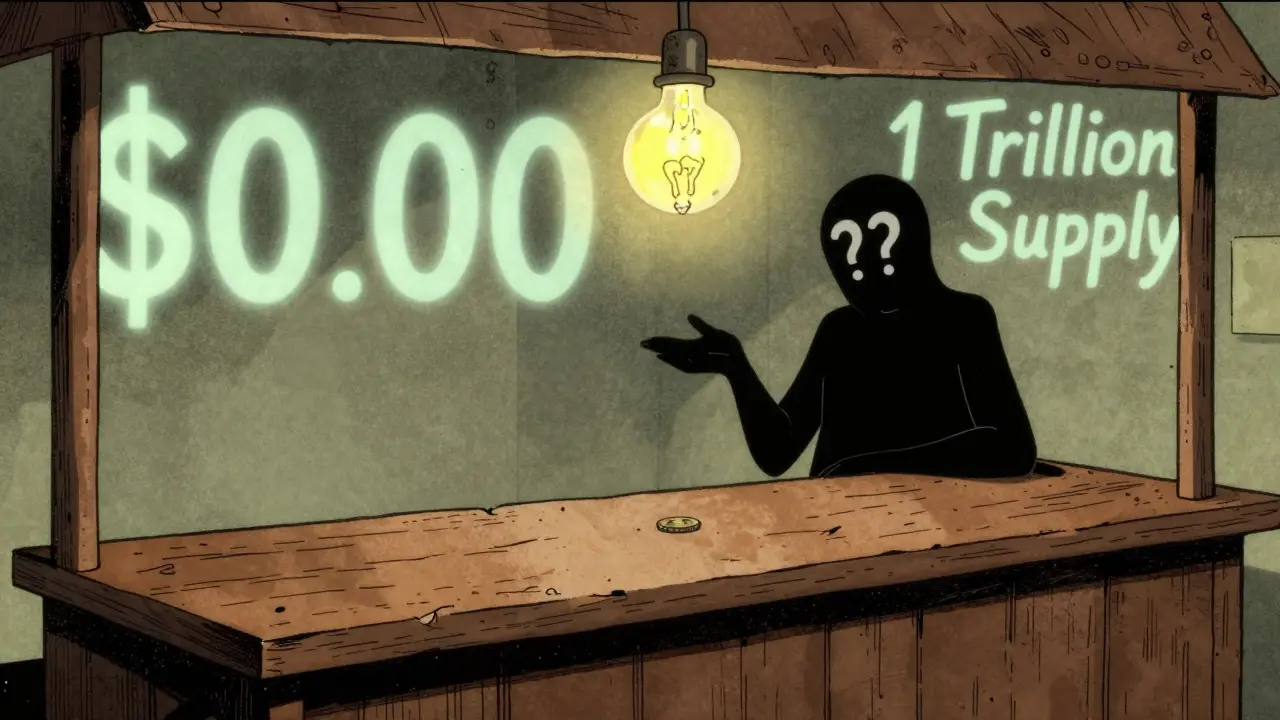
Notice the circulating supply? It’s listed as zero on major trackers like Coinbase and Bitget. How can a token exist with no circulation? Usually, this happens when all tokens are locked in a liquidity pool, held by a few wallets, or simply not actively traded enough to register on-chain activity. A market cap of $0.00 means that if you tried to sell your entire holdings instantly, you wouldn’t move the needle. There is essentially no public money backing this asset.
The Fully Diluted Valuation (FDV)-what the project would be worth if all 1 trillion tokens were in play-is roughly $8,000 to $9,000. To put that in perspective, a single developer’s salary for one week could buy the entire theoretical value of the project. That’s not an investment; that’s a lottery ticket where the house hasn’t even opened yet.
Price Volatility and Data Confusion
Trying to find the exact price of BULL is frustrating because different platforms show wildly different numbers. One site might list it at $0.00000001, while another shows $0.002. Why the discrepancy?
In highly illiquid markets, a single trade can skew the price. If someone buys $10 worth of BULL, the price might spike temporarily because there are so few sellers. Then, minutes later, it crashes back down. Coinranking lists BULL at position #49 on its "Shitcoins List" with a price of $0.002, which is 200,000 times higher than the micro-prices seen on Coinbase or CoinPaprika. This suggests that either Coinranking is tracking a different contract, or it captured a brief, anomalous spike.
Most reliable aggregators place the price around $0.000000008 per token. At that rate, you’d need billions of tokens to equal a single dollar. This extreme fragmentation makes it nearly impossible to track real value. When you see a green arrow indicating a +5% gain, ask yourself: gained from what? From zero? From a single cent trade? The context matters more than the percentage.
Where Can You Actually Trade It?
If you’re determined to interact with BULL, you won’t find it on major exchanges like Coinbase Pro or Kraken. Instead, you’ll likely encounter it on decentralized exchanges (DEXs) or smaller centralized ones.
- PancakeSwap: The primary DEX on the BNB Chain. Most BEP-20 tokens start here.
- BullShitSwap: A project-branded swap platform mentioned in listings. Be cautious: custom DEXs often have higher fees or less liquidity.
- MEXC: A smaller centralized exchange that has listed BULL. Listings here don’t guarantee quality; they just mean the team paid a listing fee.
Trading on these platforms requires you to connect your wallet directly. This exposes you to smart contract risks. If the code has a bug-or worse, a malicious function-the developers could theoretically drain your funds. Always check the contract address twice.
The "Shitcoin" Label and Community Sentiment
Let’s address the elephant in the room. Coinranking explicitly categorizes Bullshit Inu as a "shitcoin." In crypto slang, this doesn’t just mean "bad." It refers to tokens that lack credible technology, real-world utility, or long-term value. They are often launched as cash grabs using copy-paste code, flashy websites, and big promises.
The description fits BULL perfectly. There are no named founders. No whitepaper details beyond vague marketing speak about a "marketplace." No third-party security audits from firms like CertiK or Hacken. The community feedback is virtually non-existent outside of generic Telegram groups promising pumps.
Compare this to established meme coins. Dogecoin has payment processing integrations. Shiba Inu has built a layer-2 blockchain called Shibarium. What has BULL built? According to current data, nothing tangible. The "ecosystem" remains a concept, not a product.
Risks You Need to Know Before Buying
Investing in micro-cap meme coins is gambling, not investing. Here are the specific dangers associated with Bullshit Inu:
- Contract Impersonation: Research shows at least two different contract addresses for tokens named "Bullshit Inu" on the BNB Chain. One is
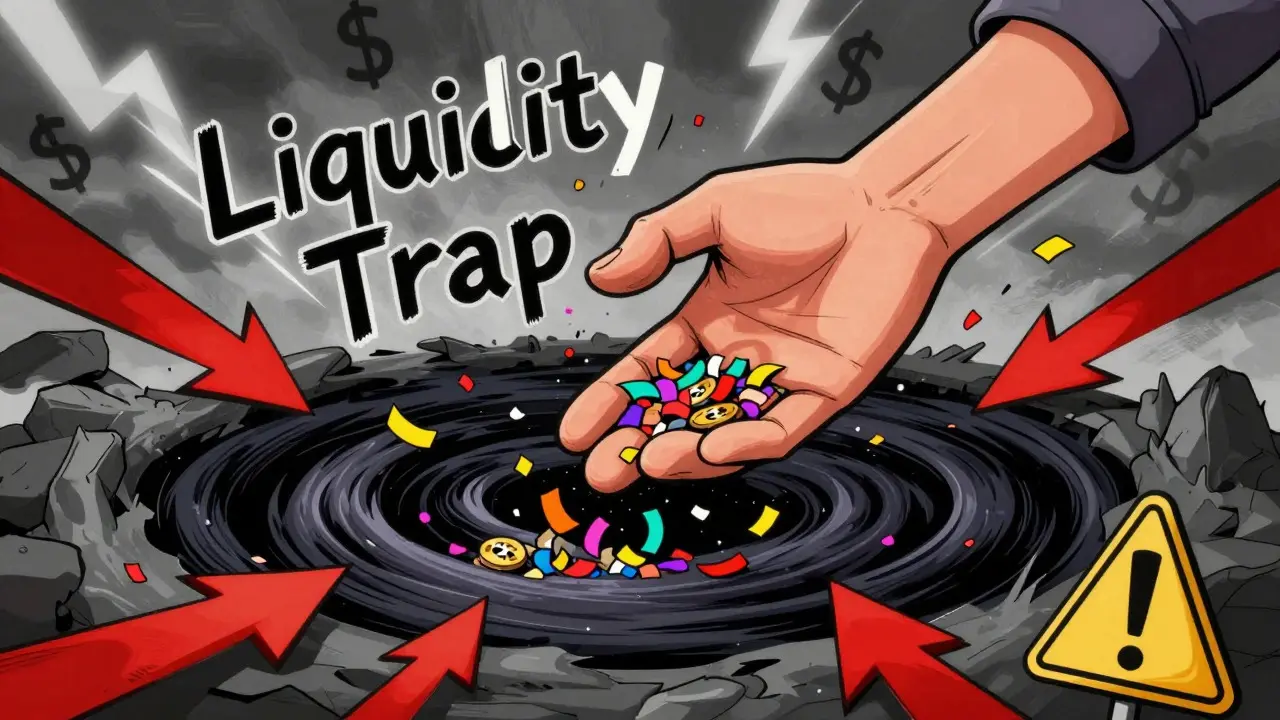
0x99cd7207...and another is0xf577cf4.... If you send money to the wrong one, it’s gone forever. Scammers often create fake tokens with similar names to catch inexperienced buyers. - Liquidity Traps: With daily volumes under $2, selling large amounts is impossible without crashing the price. You might hold tokens worth $100 on paper, but when you try to sell, the order book is empty. You get pennies back, if anything.
- Rug Pull Potential: Since the team is anonymous and unverified, they control the liquidity pools. They could remove the liquidity at any moment, leaving holders with worthless tokens. This is common in unmemeaudited projects.
- Opportunity Cost: Money tied up in dead projects is money not working for you elsewhere. Even keeping it in stablecoins earns yield; holding BULL earns nothing.
Is There Any Future for BULL?
Could it bounce back? Anything is possible in crypto, but probability favors the status quo. For BULL to succeed, it needs three things: a clear roadmap execution, a visible development team, and genuine user adoption. Currently, it has none.
The last significant data points date back to 2025, showing stagnant prices and zero volume. Without new features, partnerships, or marketing pushes, interest will continue to fade. Meme coins live and die by attention. Once the internet moves on to the next joke, forgotten tokens disappear into obscurity.
If you’re looking for exposure to the meme coin sector, consider assets with proven track records and higher liquidity. If you insist on chasing the thrill of a 1-trillion-supply token, treat it as entertainment expense, not an investment. Never spend more than you can afford to lose completely.
Is Bullshit Inu (BULL) a scam?
While not definitively proven as a fraudulent scheme, BULL exhibits many red flags associated with scams: anonymous team, multiple conflicting contract addresses, zero utility, and classification as a "shitcoin." The risk of losing all invested capital is extremely high.
Which blockchain does Bullshit Inu use?
Bullshit Inu operates on the BNB Smart Chain (formerly Binance Smart Chain) as a BEP-20 token. This means you need BNB to pay for transaction fees when buying or selling it.
Why is the market cap of BULL zero?
The market cap is calculated by multiplying the current price by the circulating supply. Since the circulating supply is reported as 0 and trading volume is negligible, the effective market value is $0. This indicates almost no active trading or public ownership.
How do I verify the correct BULL contract address?
Always cross-reference the contract address from the project’s official website and multiple trusted aggregators like CoinMarketCap or CoinGecko. Beware of copycat contracts. The most commonly cited address is 0x99cd7207d1cbe59033a01892c06889adae47b0e5, but verify this yourself before connecting your wallet.
Can I buy Bullshit Inu on Coinbase?
Coinbase lists data for BULL but typically does not offer direct fiat-to-BULL trading pairs for such low-cap tokens. You would likely need to buy BNB on Coinbase, transfer it to a self-custody wallet like MetaMask, and then swap it for BULL on a decentralized exchange like PancakeSwap.
What is the maximum supply of BULL?
The maximum and total supply of Bullshit Inu is fixed at 1,000,000,000,000 (1 trillion) tokens. No new tokens can be minted beyond this amount, assuming the contract functions as intended.