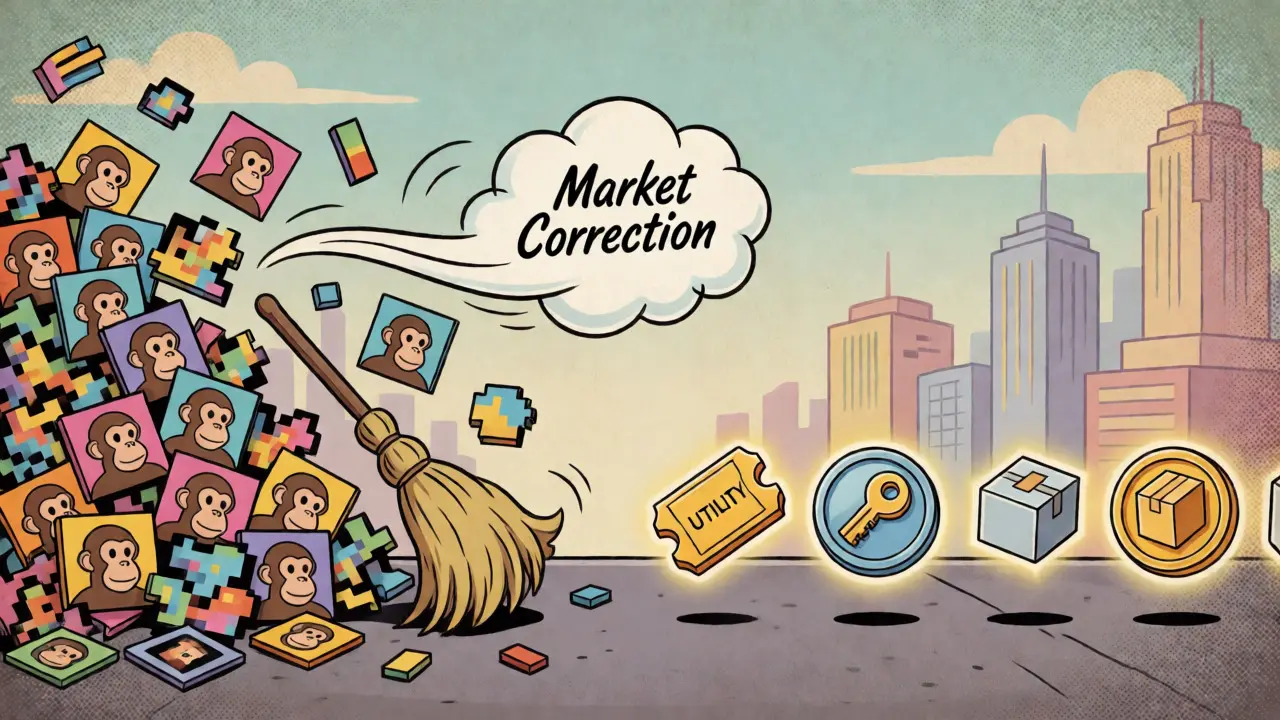
Remember when an NFT was just a JPEG of a monkey you bought for thousands? That era is over. If you are still thinking about non-fungible tokens as speculative art pieces, you are missing the bigger picture. The future of NFT technology isn't about flipping pictures; it's about infrastructure. We are seeing a massive shift toward utility-driven assets that actually do something for you.
This evolution, often called NFT 2.0, changes how we interact with digital ownership. It’s no longer just about proving you own a file. It’s about unlocking experiences, verifying authenticity in supply chains, and even letting artificial intelligence own its own creations. Let’s look at what is actually happening in the market right now and where this tech is heading.
The Shift from Speculation to Utility
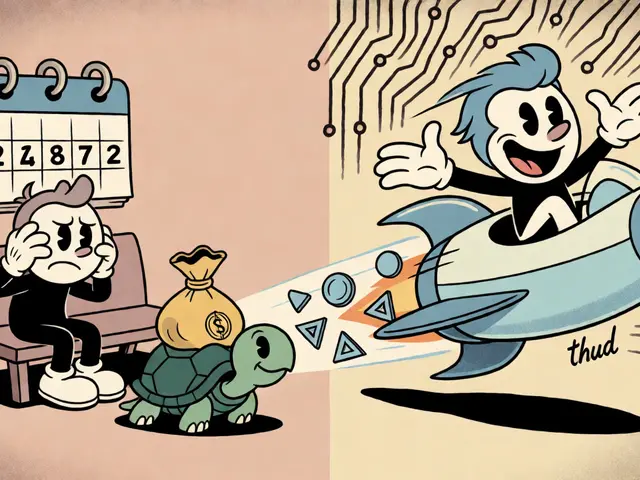
The market has cooled down, but that’s a good thing. In Q1 2024, trading volumes hit a record $3.9 billion, but by early 2025, those numbers dropped by about 24%. Don’t panic. This drop wasn't a crash; it was a cleanup. Speculative money left the room, leaving behind projects with real use cases.
What survived? Things like gold-standard NFTs, event tickets, and membership cards. These aren't things you buy hoping they go up 10x overnight. You buy them because they give you access. For example, holding a specific token might get you into a private wine tasting or let you skip the line at a virtual concert. The value is in the experience, not the resale price.
| Feature | NFT 1.0 (2021-2022) | NFT 2.0 (2025-2026) |
|---|---|---|
| Primary Value | Speculative Collectibility | Functional Utility & Access |
| Interoperability | Low (Chain-Specific) | High (Cross-Platform Standards) |
| Integration | Marketplaces Only | Gaming, Retail, AI Agents |
| User Motivation | FOMO / Resale Profit | Community / Service Access |
AI Meets Blockchain: The Rise of Intelligent NFTs
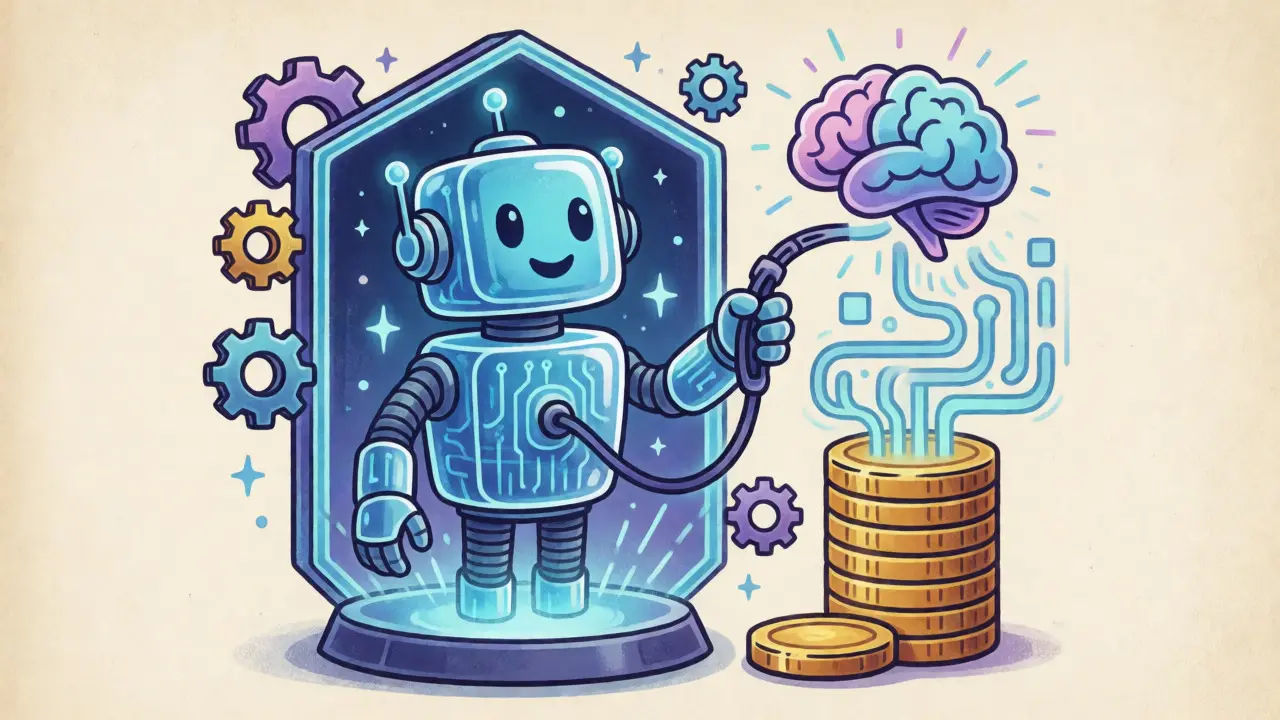
Here is where things get really interesting. Artificial intelligence and blockchain are colliding, and it’s creating a new category: Intelligent NFTs (iNFTs). In January 2025, 0G Labs announced the ERC-7857 standard. Why should you care? Because this standard allows for the secure transfer of AI agents.
Think about it. Right now, if you build a custom AI bot, it lives on your server or in a centralized cloud. With iNFTs, you can tokenize that agent. You can sell it, trade it, or rent it out, and the smart contract handles the permissions and data encryption automatically. This solves a huge problem: how do you prove ownership of a piece of code or an AI model?
Search interest for "AI NFT" has surged since late 2024. We are already seeing AI-generated designs being minted directly onto the chain. But it goes deeper than art. Imagine an AI-powered customer service agent for a brand, owned as an NFT. The holder gets priority support, and the brand gets a verifiable asset on the ledger. It reduces fraud and streamlines inventory management for digital goods.
Fashion and Luxury: The Phygital Revolution
You might think luxury brands ignored crypto after the hype died. Wrong. They doubled down, but they changed the strategy. The NFT fashion market is projected to generate nearly $950 million by the end of 2025. Brands like Gucci, Louis Vuitton, and Prada aren't just selling digital sneakers anymore. They are using NFTs as proof of authenticity for physical items.
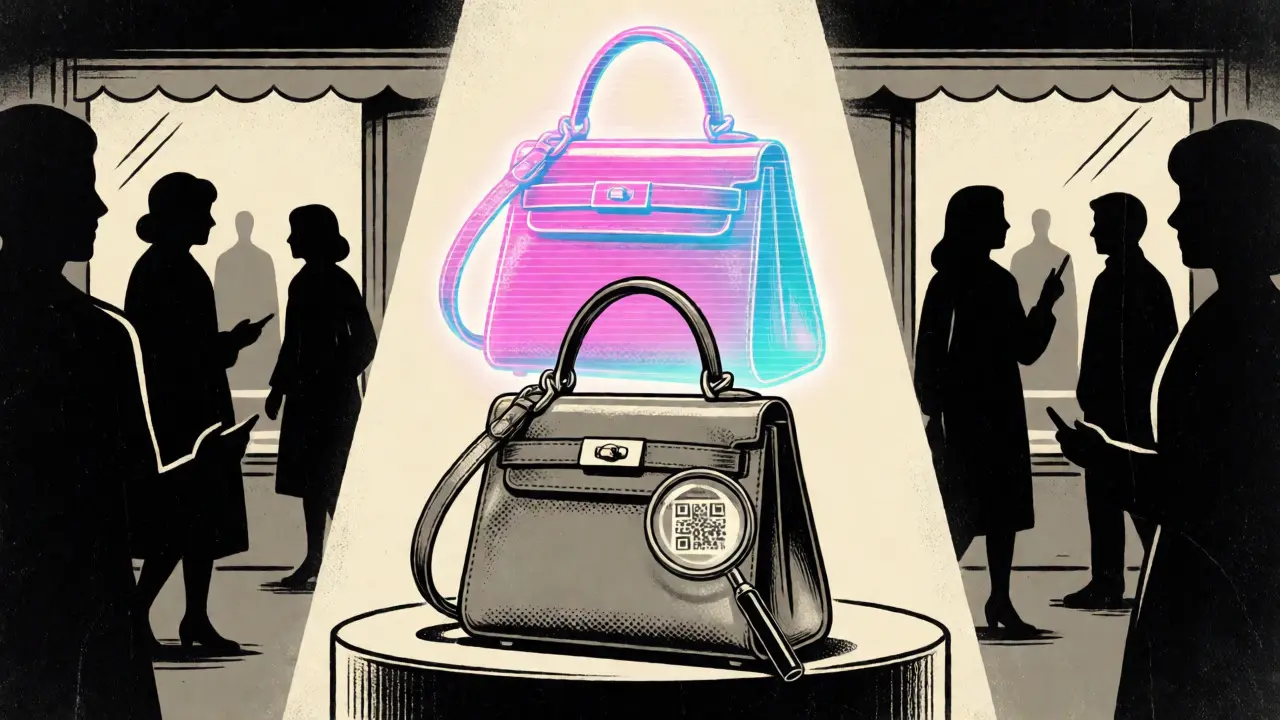
This is the concept of "phygital"-a blend of physical and digital. When you buy a limited-edition handbag, you also get an NFT. This token acts as a digital twin. It tracks the bag’s provenance, repairs, and ownership history on the blockchain. If you resell the bag, the NFT transfers too, ensuring the buyer knows it’s genuine. This kills counterfeiting, which is a massive issue in luxury retail.
According to ND Labs, over 42% of luxury brands have incorporated NFT strategies. These aren't gimmicks; they are essential parts of brand loyalty programs. Crypto-enabled e-commerce channels report up to 3x higher conversion rates than traditional stores. Why? Because customers feel more engaged when they own a piece of the brand’s ecosystem.
Interoperability: Breaking Down Silos
One of the biggest complaints about early NFTs was that they were stuck. Your Bored Ape couldn't talk to your Axie Infinity pet. They lived on different blockchains, in different wallets, and didn't share any data. The future of NFT technology fixes this through improved interoperability.
New standards allow NFTs to move between platforms more easily. This means your gaming skin could potentially be used in multiple metaverse environments. Or your ticket for a music festival could double as a discount card for a related merchandise store. This cross-platform compatibility increases the utility of every token you hold.
Developers are focusing on protocols that allow smart contracts to read data from other chains. This makes the user experience smoother. You don’t need five different wallets to manage your digital life. You need one interface that sees all your assets across Ethereum, Solana, Polygon, and emerging Layer-2 solutions.
Regional Growth and Emerging Markets
While the US and Europe started the fire, Asia is fueling the next wave. Search volume for NFT-related queries is exploding in India and Southeast Asia. This isn't just about young traders gambling. It’s about cultural integration. In these regions, NFTs are being used for community building and local identity verification.
In France, there is strong interest in art and gaming applications. But globally, the trend is moving toward practical adoption. Businesses in emerging markets are using NFTs for supply chain tracking and digital certificates. This suggests that NFT technology will become invisible infrastructure. You won't know you're using an NFT; you'll just know that your product arrived faster and you verified its origin instantly.
Challenges Ahead: Scalability and Regulation
It’s not all smooth sailing. As usage grows, so does the strain on networks. Even with Layer-2 scaling solutions, high transaction volumes can lead to congestion. Gas fees remain a barrier for small-scale users who want to mint simple tickets or receipts.
Regulation is another wildcard. Governments are still figuring out how to classify these assets. Are they securities? Commodities? Property? The lack of clear legal frameworks in some jurisdictions creates uncertainty for businesses wanting to integrate NFTs into their core operations. However, clearer guidelines are emerging in the EU with MiCA regulations, providing a blueprint for others to follow.
Security is also critical. As AI agents become tradable assets, protecting sensitive data during transfers becomes paramount. The ERC-7857 standard helps here by re-encrypting data for new owners, but users must still be vigilant about wallet security and phishing scams targeting high-value iNFTs.
Key Takeaways
- Utility Over Hype: Successful NFT projects now focus on access, services, and functionality rather than pure speculation.
- AI Integration: The ERC-7857 standard enables the creation and trading of Intelligent NFTs (iNFTs), merging AI capabilities with blockchain ownership.
- Luxury Adoption: Major brands use NFTs for provenance tracking and anti-counterfeiting, driving significant revenue in the phygital sector.
- Interoperability: New technical standards allow NFTs to function across multiple platforms and blockchains, enhancing user convenience.
- Global Expansion: Adoption is accelerating in Asian and European markets, driven by practical applications in supply chain and community engagement.
Frequently Asked Questions
What is the main difference between NFT 1.0 and NFT 2.0?
NFT 1.0 focused primarily on digital collectibles and speculative trading, such as profile pictures and art. NFT 2.0 emphasizes utility, interoperability, and integration with real-world applications like gaming, retail, and AI agents. The value proposition shifts from potential resale profit to tangible benefits like exclusive access, authentication, and functional services.
How does the ERC-7857 standard impact AI technology?
The ERC-7857 standard allows for the tokenization of AI agents, known as Intelligent NFTs (iNFTs). It enables secure transfer of these agents between owners while re-encrypting sensitive data for the new holder. This facilitates the creation of decentralized AI marketplaces where creators can monetize their models and users can own personalized AI assistants.
Why are luxury brands using NFTs if the market is cooling down?
Luxury brands use NFTs for provenance tracking and anti-counterfeiting rather than speculation. By attaching a digital twin to physical products, brands ensure authenticity and streamline the resale process. This enhances customer trust and loyalty, leading to higher conversion rates in crypto-enabled e-commerce channels compared to traditional online stores.
Is NFT technology only for gamers and collectors?
No, NFT technology is expanding into various sectors including supply chain management, healthcare records, real estate, and enterprise software. Its ability to verify ownership and track history makes it valuable for any industry requiring transparent and immutable records. Emerging markets in Asia and Europe are adopting NFTs for practical business applications beyond entertainment.
What are the main challenges facing NFT adoption today?
Key challenges include network scalability, high transaction costs (gas fees) on certain blockchains, regulatory uncertainty regarding asset classification, and security risks such as phishing attacks. Additionally, improving user experience to make blockchain interactions seamless for non-technical users remains a significant hurdle for mass adoption.