Thinking about trading or mining crypto in Canada? You might assume the rules are the same everywhere. They aren't. While Cryptocurrency is legal nationwide, the regulatory landscape shifts dramatically depending on which province you're in. This isn't just bureaucratic red tape; it directly impacts your electricity bills, your ability to list tokens, and how much tax you owe.
As of 2026, Canada remains a top-tier jurisdiction for digital assets, but the complexity has grown. The federal government sets the baseline through FINTRAC (Financial Transactions and Reports Analysis Centre of Canada) for anti-money laundering, while provinces handle securities regulation and energy policy. If you're an investor, trader, or miner, understanding these local nuances is the difference between smooth operations and costly compliance headaches.
The Federal Baseline: What Applies Everywhere
Before diving into provincial quirks, let's look at the rules that apply across all ten provinces. At the federal level, crypto is treated as a commodity, not currency. This classification drives most of the tax and reporting requirements you'll face.
- Taxation: Capital gains tax applies at 50% of your profit, added to your regular income tax. This triggers when you sell, spend, or swap crypto. Buying with CAD or moving coins between your own wallets is generally tax-free.
- AML Compliance: Since 2014, businesses dealing in virtual assets must register as Money Service Businesses (MSBs) with FINTRAC. This includes exchanges, custodians, and miners above certain thresholds.
- Securities Oversight: The Canadian Securities Administrators (CSA) coordinates national standards, but enforcement happens at the provincial level. This means a token might be a security in Ontario but a commodity in Alberta, depending on local interpretation.
One major update to note: In April 2025, the CSA amended National Instrument 81-102 Investment Funds. This clarified rules for Public Crypto Asset Funds, specifying exactly which types of crypto assets they can hold and setting strict custody requirements. If you invest in crypto funds, this change ensures more transparency but also tighter restrictions on what those funds can buy.
Provincial Energy Rules: The Big Differentiator for Miners
If you mine crypto, your province matters more than almost anything else. Energy costs and access determine profitability. Two provinces stand out for their aggressive recent actions: British Columbia and Quebec.
British Columbia: Tightening the Screws
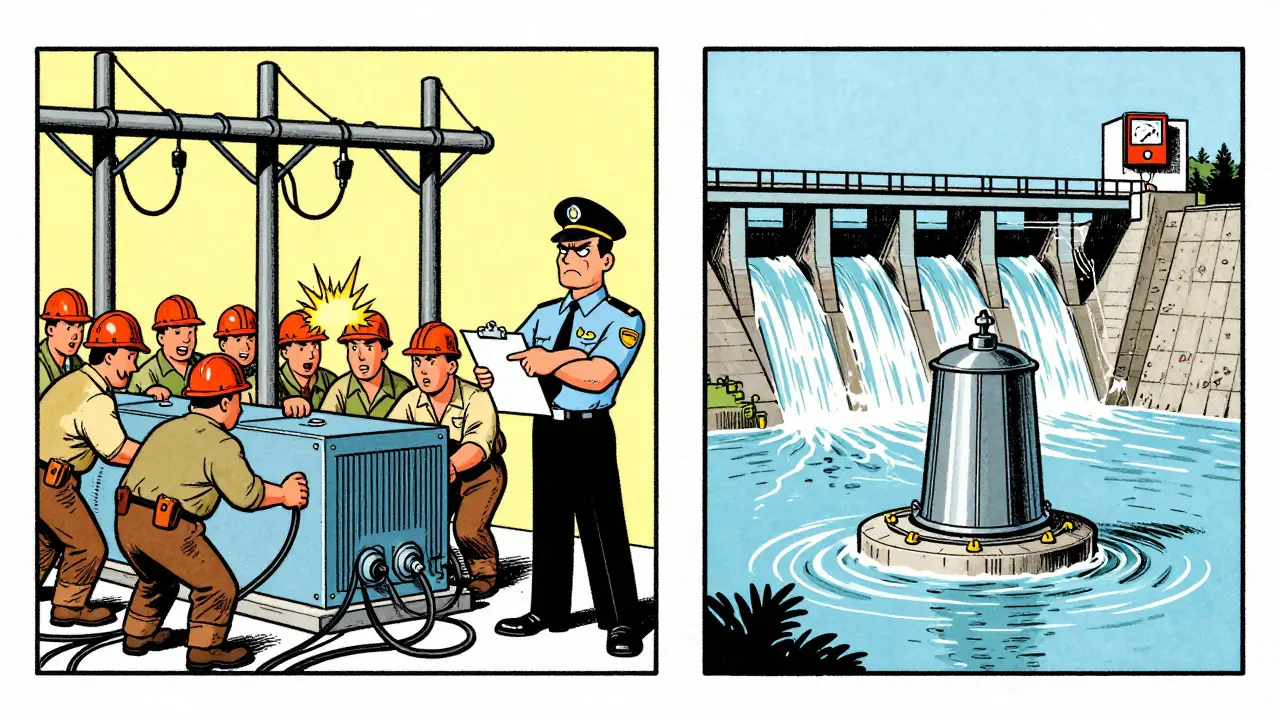
BC was once a haven for miners due to cheap hydro power. That changed in 2024. Legislative amendments to the BC Utilities Commission Act, effective May 17, 2024, gave regulators permanent authority to restrict electricity supply to crypto miners. Previously, BC Hydro could only suspend new projects temporarily. Now, they can prohibit or regulate service indefinitely if they deem mining to be straining the grid.
What does this mean for you? If you're planning a new mining operation in BC, don't assume you can plug in and start hashing. You need explicit permission, and that permission comes with conditions. Existing miners should watch for rate changes or capacity caps, as the government actively manages load to prevent blackouts during peak winter months.
Quebec: Specific Rates for New Projects
Quebec took a different approach. In January 2023, the Régie de l'énergie suspended the standard capacity allocation process for blockchain mining. Instead, new projects using at least 50 kilowatts of installed capacity now pay a specific rate of 16.603¢ per kWh. This is higher than the general industrial rate but provides a predictable cost structure.
For miners, this creates a clear financial boundary. If your hash rate efficiency doesn't justify that specific tariff, Quebec might no longer be viable. It’s a deliberate move to ensure miners contribute fairly to the grid without blocking innovation entirely.
Trading Platform Authorization: Who Can You Trust?
Not every exchange operating in Canada is fully authorized. Provincial securities regulators maintain lists of approved platforms. Operating without authorization can leave you unprotected if something goes wrong. As of 2025-2026, several major players have secured approvals across multiple provinces, but coverage varies.
| Platform / Entity | Provinces Authorized | Key Decision Date |
|---|---|---|
| Kraken (Payward Canada Inc.) | Alberta, BC, Manitoba, Saskatchewan | Multiple dates |
| Crypto.com (Foris DAX CAN ULC) | National scope via CSA coordination | May 8, 2025 |
| Newton Crypto Ltd. | Specific jurisdictions | Amended March 12, 2025 |
| Ndax Canada Inc. | Ontario, others | April 1, 2025 |
| Fidelity Digital Assets Services | Exempt Marketplace status | January 18, 2023 |
| Netcoins Inc. | Multiple provinces | Amended October 6, 2023 |
Notice how Kraken operates in four western/prairie provinces, while Fidelity holds an "Exempt Marketplace" status. This distinction matters. Exempt marketplaces often have fewer reporting burdens but may offer less consumer protection than fully regulated exchanges. Always check the specific decision documents for your province to understand your recourse if a platform fails.
Why Fragmentation Hurts Innovation
You might wonder why Canada doesn't just have one set of rules. The answer lies in constitutional law: securities regulation is primarily a provincial power. This leads to a fragmented oversight structure involving the CSA, IIROC (Investment Industry Regulatory Organization of Canada), FINTRAC, and Bank of Canada.
For startups, this is a nightmare. Imagine building a DeFi protocol. You need to satisfy FINTRAC for AML, get approval from the Ontario Securities Commission for token sales, and then figure out if your energy usage complies with BC Hydro rules if you host nodes there. Expert analysis suggests this overlap stifles growth. Many Canadian crypto startups either delay launches or relocate headquarters to jurisdictions with clearer single-window processes.
However, for established players, this fragmentation offers a competitive edge. By securing approvals in multiple provinces early, companies like Crypto.com create barriers to entry for smaller rivals who can't afford the legal fees to navigate each regulator individually.

Practical Steps for Investors and Businesses
So, how do you navigate this maze? Here’s a practical checklist based on your role:
- If You’re a Retail Investor: Stick to platforms listed on your provincial securities commission’s website. Don’t rely solely on global brand recognition. Check if your province requires additional registration for cross-border trades.
- If You’re a Miner: Calculate your energy costs using provincial-specific tariffs. In BC, get written confirmation of your power supply before buying hardware. In Quebec, use the 16.603¢/kWh rate for your ROI models.
- If You’re a Startup: Engage a lawyer specializing in Canadian securities law early. Map out which entities you touch (exchange, fund, miner) and identify every regulator involved. Budget for multi-province filings even if you plan to expand later.
- Tax Planning: Keep detailed records of every transaction. Remember, swapping BTC for ETH is a taxable event. Use software that tracks cost basis automatically to avoid manual errors.
Looking Ahead: What’s Next for 2026?
Canada hasn’t introduced a blanket crypto bill yet, but the trend is clear: tightening existing rules rather than creating new ones. The focus remains on preventing criminal activity while supporting legitimate business. Expect more provincial energy regulations as climate goals tighten. Also, watch for potential harmonization efforts by the CSA to reduce some of the duplication between provinces, though full unification is unlikely in the near term.
For now, the best strategy is local awareness. Your neighbor in Vancouver faces different rules than someone in Montreal or Toronto. Stay informed, keep your records clean, and always verify your platform’s authorization status in your specific province.
Is crypto legal in all Canadian provinces?
Yes, cryptocurrency is legal in all ten provinces. However, the regulations governing its use-especially for mining and trading platforms-vary significantly by location. There is no single national crypto law; instead, a mix of federal tax/AML rules and provincial securities/energy laws applies.
How much tax do I pay on crypto gains in Canada?
You pay capital gains tax on 50% of your profit. This amount is added to your regular income and taxed at your marginal federal and provincial rate. For example, if you make $10,000 profit, $5,000 is added to your taxable income. Selling, spending, or swapping crypto triggers this tax; buying or holding does not.
Can I still mine Bitcoin in British Columbia?
Yes, but it’s harder. Since May 2024, BC regulators can permanently restrict electricity supply to miners. You need explicit approval from BC Hydro or the utilities commission. Existing miners should monitor for rate increases or capacity limits, especially during high-demand seasons.
Do I need to register my crypto business with FINTRAC?
If your business acts as a Virtual Asset Service Provider (VASP)-such as an exchange, custodian, or dealer-you likely need to register as a Money Service Business with FINTRAC. This requirement has been in place since 2014 and covers most commercial crypto activities. Pure personal investing does not require registration.
Which provinces have the strictest mining regulations?
British Columbia and Quebec currently have the most specific and restrictive rules. BC allows permanent suspension of power for miners, while Quebec imposes a specific higher tariff (16.603¢/kWh) for new large-scale projects. Other provinces have looser energy policies but stricter securities oversight.