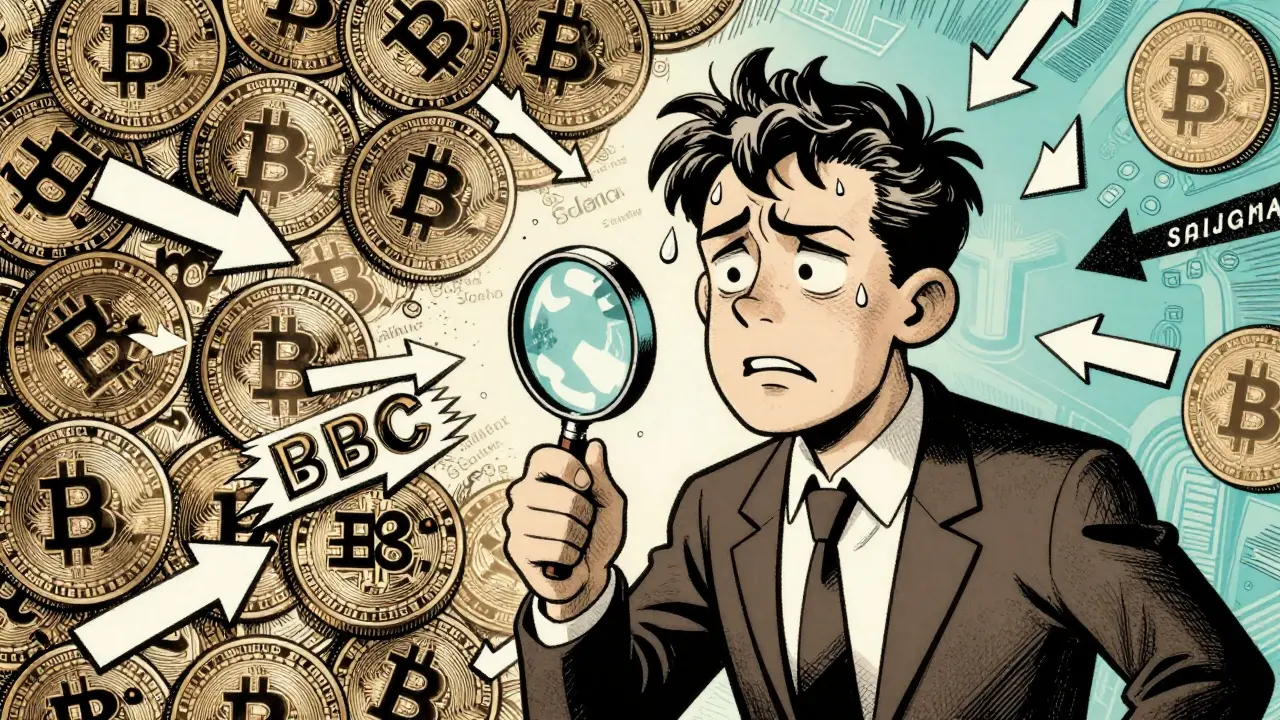
Buying a cryptocurrency because it has a familiar ticker symbol can be one of the most expensive mistakes you make in the digital asset space. You might have seen BBC listed on a trading platform or heard about it from a friend, assuming it’s tied to the British Broadcasting Corporation or some major institutional project. The reality is much more complicated and significantly riskier.
There is no single "BBC" coin. Instead, there are multiple, completely unrelated tokens using the same three-letter abbreviation across different blockchains. This confusion isn't an accident; it's a common tactic used by low-effort projects to ride the coattails of recognizable brands or simply to create noise in the market. If you are looking at BBC tokens today, you need to understand that you are likely looking at micro-cap assets with near-zero liquidity and massive downside risk.
The Identity Crisis: Which BBC Are You Looking At?
The biggest problem with the BBC Token is that the ticker symbol belongs to several distinct entities. In the world of finance, tickers like AAPL or TSLA refer to specific companies. In crypto, especially on decentralized exchanges, anyone can mint a token called "BBC." Here are the main versions currently circulating:
- Big Bonus Coin (BBC): This is the most tracked version, primarily operating on the BNB Smart Chain. It launched in 2024 and is often cited in market data aggregators.
- Bull BTC Club (BBC): A separate entity listed on platforms like CoinMarketCap, often associated with meme-style community efforts rather than utility.
- Solana-based BBC: A token built on the Solana blockchain, leveraging Solana’s speed but lacking significant adoption.
- Legacy BBC Tokens: Older iterations that may have been abandoned years ago, with last trades recorded as far back as 2022.
Because these tokens exist on different networks-such as BEP20 (BNB Chain) versus SPL (Solana)-they cannot be swapped directly without complex bridging processes. This fragmentation makes tracking their true value nearly impossible for the average user. When you see a price for "BBC," you must check the contract address to ensure you are looking at the exact token you intend to buy.
Market Performance: A Story of Decline
If you believe in buying low and selling high, the history of BBC tokens suggests you would need exceptional timing and luck. The data for Big Bonus Coin, the most prominent variant, paints a grim picture for investors who bought in during its hype cycle.
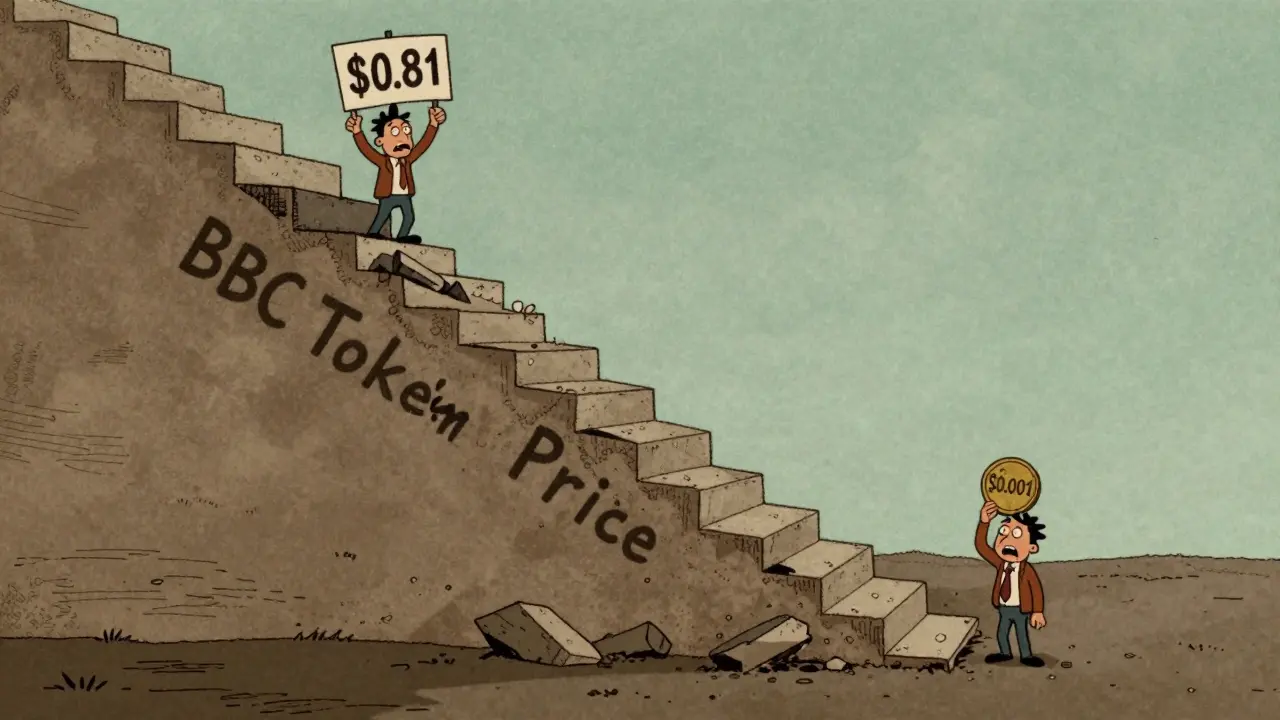
In April 2024, Big Bonus Coin reached an all-time high of $0.8147. By May 2026, the price had crashed to approximately $0.00105 USD. That represents a decline of over 99%. To put this in perspective, if you invested $1,000 at the peak, your investment would now be worth roughly $1.30. This isn't just normal market volatility; it indicates a complete loss of confidence in the project.
| Metric | Value | Context |
|---|---|---|
| Current Price | $0.00105 | Extremely low valuation |
| All-Time High | $0.8147 | Reached in April 2024 |
| 24-Hour Volume | $57.22 | Negligible trading activity |
| Market Rank | #15,453 | Far below top 100 coins |
| Blockchain | BNB Smart Chain | BEP20 standard |
Other variants fare even worse. The Bull BTC Club version trades at fractions of a cent ($0.000001139) with zero recorded volume in many periods. This lack of volume means that even if you manage to buy the token, you might not be able to sell it later. Liquidity is the lifeblood of any tradeable asset, and BBC tokens are essentially dehydrated.
Liquidity Traps and Trading Risks
When you look at the trading venues for BBC, you will notice they are almost exclusively found on decentralized exchanges (DEXs) like 9inch or smaller aggregators. You won't find BBC on major centralized exchanges like Coinbase, Binance, or Kraken. This absence is a huge red flag.
Centralized exchanges perform rigorous due diligence before listing a token. They require proof of development teams, legal compliance, and active communities. The fact that BBC tokens are relegated to DEXs means they bypassed these safety checks. On a DEX, you are trading directly against a liquidity pool. If the pool is small-which it is for BBC-the act of buying or selling large amounts can cause the price to slip dramatically. This is known as slippage.
Imagine trying to sell $100 worth of BBC. Because the daily volume is sometimes less than $100, your sale could wipe out a significant portion of the pool, crashing the price further and leaving you with far less than $100 in return. This is why "zero volume" days are common for these tokens. There is simply no one willing to take the other side of the trade.
The Missing Foundation: No Team, No Roadmap
Successful cryptocurrencies usually have a clear narrative. Bitcoin offers digital scarcity. Ethereum offers programmable money. Solana offers speed. What does BBC offer? According to available data, there is no public information regarding the founding team, governance structure, or development roadmap for any of the major BBC variants.
This anonymity is typical of "rug pulls" or abandoned projects. A rug pull occurs when developers create a token, hype it up to attract buyers, and then withdraw all the liquidity from the pool, stealing the funds. While we don't know if the original creators of BBC explicitly pulled the rug, the result is similar: the project is dead, the code is unmaintained, and the token is worthless.
Without a development team, there are no updates, no security patches, and no new features. Smart contracts on the BNB Smart Chain or Solana can contain vulnerabilities. If a BBC token has a bug in its code, there is no one to fix it. This leaves holders exposed to potential exploits by hackers who scan for inactive, vulnerable contracts.
Why Do These Tokens Exist?
You might wonder why anyone creates a token with such poor fundamentals. The answer lies in the low barrier to entry for creating tokens on chains like BNB Smart Chain and Solana. It costs very little to deploy a smart contract and mint millions of tokens. Speculators create these tokens hoping to catch a wave of FOMO (Fear Of Missing Out) from retail investors who see a name they recognize or a promising chart pattern.
Additionally, some of these tokens may have started as genuine community experiments that failed to gain traction. Over time, as interest waned, the remaining holders were left holding bags of depreciating assets. The current state of BBC tokens is a graveyard of early crypto speculation.
Regulatory Reality Check
As of 2026, regulatory scrutiny on cryptocurrencies has intensified globally. Agencies like the SEC in the US and various EU bodies are cracking down on unregistered securities. Tokens like BBC, which have no underlying utility, no revenue model, and no identifiable issuer, fall into a dangerous gray area. They are unlikely to receive regulatory approval and could be delisted from any remaining platforms if regulations tighten further.
Investing in unregulated tokens carries the risk of total loss without any recourse. Unlike stocks, where you have shareholder rights, or bank deposits, which are insured, crypto holdings are protected only by cryptography. If the private keys are lost or the contract is exploited, there is no customer support line to call.
Alternatives to Consider
If you are drawn to the idea of investing in lower-market-cap tokens, you should direct your attention toward projects with verified fundamentals. Look for tokens that:
- Are listed on top-tier centralized exchanges (Tier 1 CEXs).
- Have transparent, doxxed development teams.
- Provide regular updates and have an active GitHub repository.
- Solve a real-world problem or provide unique utility within a blockchain ecosystem.
Instead of chasing obscure tickers like BBC, consider exploring established ecosystems. For example, the BNB Smart Chain itself has robust DeFi protocols like PancakeSwap that offer legitimate yield opportunities. Similarly, the Solana ecosystem hosts numerous innovative projects in gaming and NFTs that have survived market cycles.
Is BBC crypto affiliated with the British Broadcasting Corporation?
No. There is absolutely no affiliation between the BBC cryptocurrency tokens and the British Broadcasting Corporation. The use of the ticker symbol "BBC" is coincidental or intentional misdirection by anonymous developers. The BBC organization has not issued any official cryptocurrency.
Which blockchain network does BBC run on?
There are multiple versions. The most tracked version, Big Bonus Coin, runs on the BNB Smart Chain (BEP20). Another version exists on the Solana blockchain. Because they are on different networks, they are not interchangeable. Always verify the contract address before trading.
Can I buy BBC on Coinbase or Binance?
Generally, no. Major centralized exchanges like Coinbase, Binance, and Kraken do not list BBC tokens due to their low liquidity, lack of transparency, and high risk profile. Trading is mostly limited to decentralized exchanges (DEXs) like 9inch or smaller aggregators.
Why is the price of BBC so low?
The price is low because the token has lost over 99% of its value since its all-time high in 2024. This crash was caused by a lack of fundamental utility, minimal trading volume, and likely abandonment by the original developers. Low prices in crypto do not indicate "cheap" value; they often indicate dying projects.
Is it safe to invest in BBC tokens?
It is highly unsafe. Investing in BBC tokens is considered extremely speculative. The risks include total loss of capital, inability to sell due to illiquidity, potential smart contract vulnerabilities, and the possibility of being scammed by fake tokens with similar names. Only risk-tolerant investors who can afford to lose 100% of their investment should consider such assets.