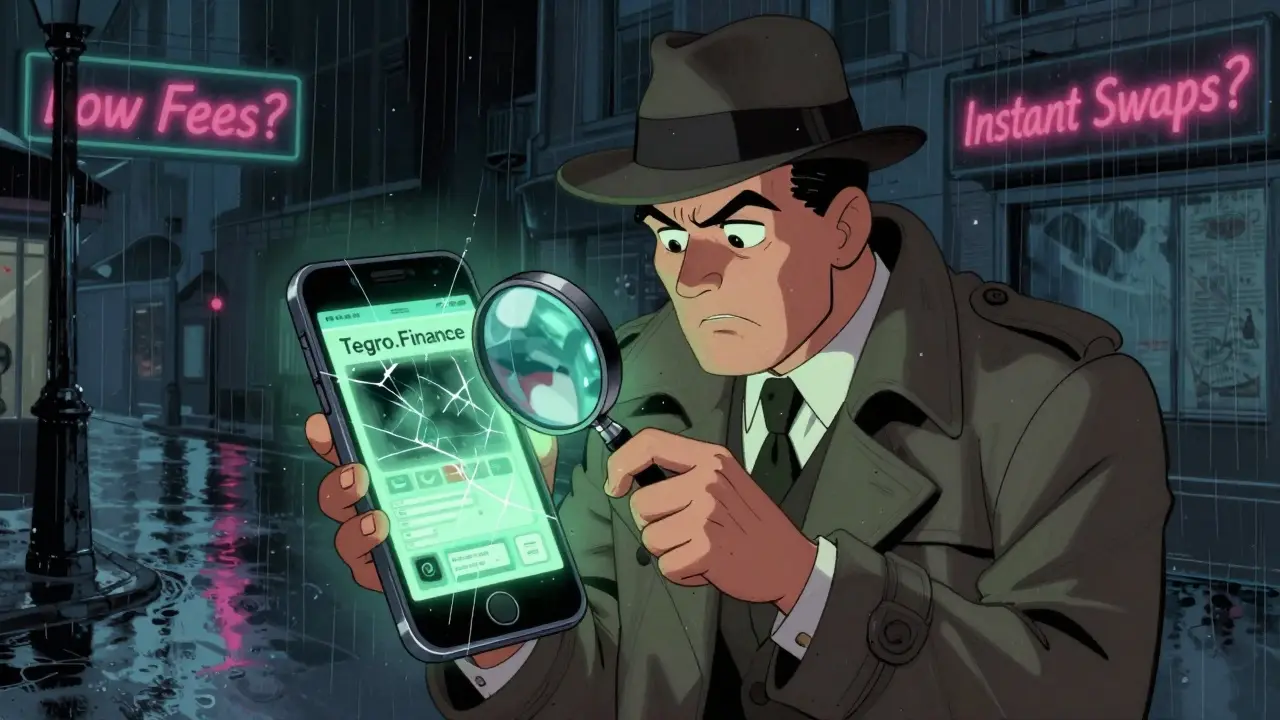
Have you ever clicked on an ad for a crypto exchange promising "lowest fees" and instant swaps, only to find yourself stuck with a wallet full of tokens that no one else wants to buy? That is exactly the situation many users face when they encounter Tegro.Finance, a decentralized exchange (DEX) built on the TON Blockchain.
In 2026, the crypto landscape is brutal. If an exchange doesn't have deep liquidity, it’s not just inconvenient-it’s dangerous. Tegro.Finance markets itself as a hub for new projects on The Open Network (TON), but the data tells a much darker story. Before you connect your wallet, you need to know if this platform is a legitimate tool for early-stage investing or a trap designed to lock up your capital.
What Is Tegro.Finance?
Tegro.Finance is a decentralized exchange and NFT marketplace launched in 2022. It operates without a central authority, meaning there is no customer support team to call if things go wrong. Instead, it relies on smart contracts on the TON blockchain to facilitate trades.
The platform was developed by Tegro LLC, a company that also runs a cryptocurrency wallet called Tegro Money. Their native token is TGR. The pitch is simple: Tegro claims to be the best place to trade "newborn projects" on TON. They argue that big exchanges like Uniswap or PancakeSwap are too mainstream for tiny, risky startups, so they offer a niche alternative.
However, being "niche" has a downside. In the world of decentralized finance (DeFi), niche often means illiquid. Illiquidity means you can buy a token easily, but selling it might crash the price or leave you waiting forever for a buyer.
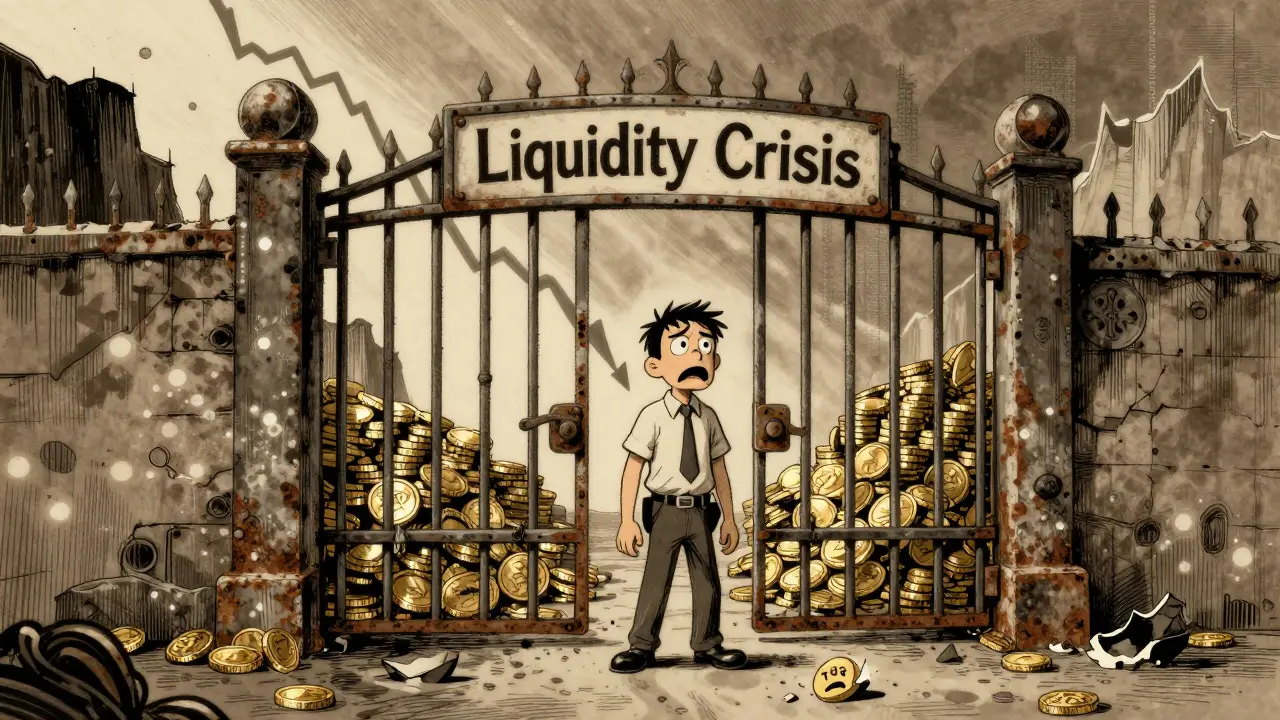
The Liquidity Crisis: Why Your Money Might Get Stuck
Liquidity is the lifeblood of any exchange. It represents the amount of cash available to buy and sell assets instantly. Without it, slippage-the difference between the expected price of a trade and the price at which the trade is executed-becomes massive.
Let’s look at the hard numbers for Tegro.Finance:
- Daily Trading Volume: As of mid-2024, the daily volume for its native TGR token was roughly $5,816. For context, top-tier DEXs like Uniswap handle over $1.5 billion daily. Even smaller, successful DEXs handle millions per day. $5,000 is essentially zero.
- Market Status: CoinMarketCap lists Tegro.Finance as "Untracked." This isn’t a minor oversight; it means the exchange fails to meet minimum standards for trading volume and reliability to be monitored by major financial data aggregators.
- Token Performance: The TGR token hit an all-time high of $0.22 in January 2023. By May 2024, it had crashed to approximately $0.015-a decline of nearly 93%. This suggests that once investors tried to exit, there wasn't enough demand to support the price.
If you deposit funds into a pool on Tegro.Finance hoping to earn yield, you risk facing "impermanent loss" combined with the inability to withdraw because there are simply no buyers on the other side. You aren't just losing value; you're losing access to your own money.
| Feature | Tegro.Finance | STON.fi (Leading TON DEX) | Uniswap (Industry Leader) |
|---|---|---|---|
| Blockchain | TON | TON | Ethereum/Multi-chain |
| Daily Volume (Approx.) | $5,800 | $15.2 Million+ | $1.5 Billion+ |
| CoinMarketCap Status | Untracked | Tracked & Verified | Tracked & Verified |
| Primary Focus | Newborn/Niche Projects | Mainstream TON Tokens | All Major Assets |
| Security Audits Public? | No clear evidence | Yes, multiple audits | Yes, extensive history |
How Tegro.Finance Works (And Where It Fails)
Tegro.Finance uses an Automated Market Maker (AMM) model. This means you don't trade against another person directly; you trade against a pool of funds provided by other users. The platform also integrates an NFT marketplace called Libermall Marketplace.
Here is the user journey:
- Connect Wallet: You link a TON-compatible wallet (like Tonkeeper or Telegram Wallet). No KYC (Know Your Customer) verification is required.
- Select Token: You choose a token to swap. Most of these are low-cap "jettons" (TON's term for tokens).
- Execute Swap: The smart contract processes the trade. Fees are taken from the transaction.
While the process sounds simple, the lack of transparency is a red flag. Tegro.Finance claims to have the "lowest fees," but they do not publish exact fee structures. Compare this to SushiSwap or 1inch, which clearly state their 0.3% base fees. When a platform hides its costs, it often means they are taking a larger cut than advertised.
Furthermore, the platform promotes a binary referral program. Users earn commissions from direct referrals and team-level rewards. While multi-level marketing (MLM) structures aren't illegal, they are heavily associated with pump-and-dump schemes in crypto. If the primary way to make money on the platform is recruiting others rather than trading profitably, the business model is fundamentally flawed.
Is Tegro.Finance a Scam?
This is the question everyone asks. Legally, calling something a "scam" requires proof of intent to defraud. Currently, Tegro.Finance is not listed on major scam databases like Cryptolegal.uk. Tegro LLC is a registered entity, and some reviewers on sites like Revieweek claim it is "not a scam."
However, "not a scam" does not mean "safe investment." Here is the distinction:
- Scam: The developers steal your funds via a hack or rug pull.
- Failed Project: The project is legitimate code, but it fails due to poor market fit, lack of liquidity, and bad management.
Tegro.Finance appears to fall into the second category, which is arguably worse for retail investors. A scam takes everything at once. A failed project bleeds your value slowly until it hits near-zero. With TGR down 93% from its peak, early investors have lost most of their capital. The absence of active community channels (no significant Reddit discussions, no large Discord servers) indicates that the user base has abandoned ship.
Better Alternatives on the TON Blockchain
If you are interested in the TON ecosystem-which is growing rapidly with over 2.3 million daily active addresses-you should use platforms that actually have liquidity and security.
STON.fi is currently the leading DEX on TON. It handles millions in daily volume, has undergone security audits, and is tracked by major data providers. It offers better prices, lower slippage, and a higher chance of actually selling your assets when you want to exit.
DeDust.io is another established player on TON that provides robust liquidity pools and a transparent interface. Both STON.fi and DeDust have active development teams and visible roadmaps, unlike Tegro.Finance, whose planned improvements from 2023 never materialized in meaningful ways.
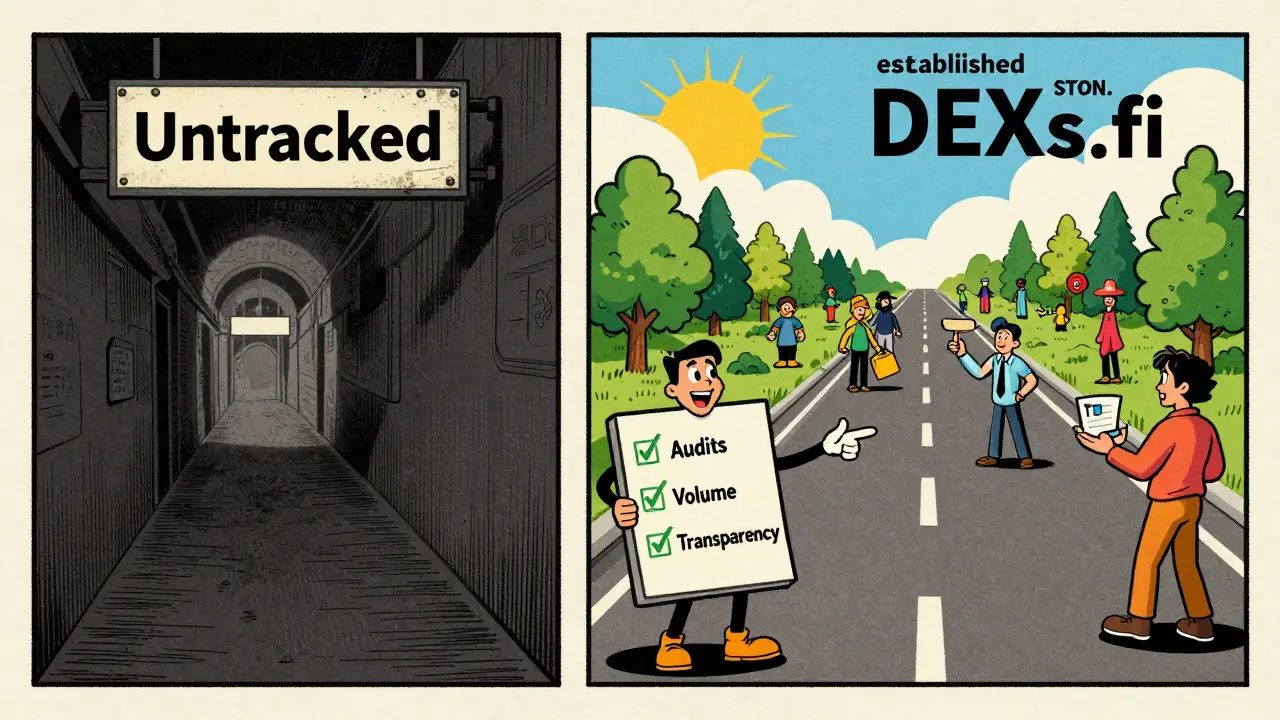
Red Flags Checklist for New DEXs
Before using any new decentralized exchange, run it through this checklist. If Tegro.Finance fails three or more, stay away.
- Volume Check: Does it have at least $100k+ daily volume? (Tegro: Fail - ~$5k)
- Tracking Status: Is it tracked on CoinGecko or CoinMarketCap? (Tegro: Fail - Untracked)
- Audit Transparency: Are smart contract audits public and recent? (Tegro: Fail - No clear evidence)
- Community Activity: Is there an active Telegram/Discord with real users? (Tegro: Fail - Minimal presence)
- Fee Clarity: Are fees explicitly stated? (Tegro: Fail - Vague claims)
Final Verdict: Avoid Tegro.Finance in 2026
Tegro.Finance may have had potential in 2022 when the TON ecosystem was younger and less competitive. Today, it is a relic. The combination of negligible liquidity, untracked status, and a crashing native token makes it unsuitable for trading, staking, or NFT purchases.
Do not connect your main wallet to Tegro.Finance. If you must experiment with niche TON tokens, use a burner wallet with funds you are willing to lose entirely, and consider moving your activity to STON.fi or DeDust where your capital has a fighting chance of retaining value.
Is Tegro.Finance safe to use in 2026?
While Tegro.Finance is not officially classified as a scam, it is highly risky due to extremely low liquidity and lack of tracking on major financial platforms. There is a high risk of slippage and inability to withdraw funds.
Why is Tegro.Finance listed as 'Untracked' on CoinMarketCap?
CoinMarketCap marks exchanges as 'Untracked' when they fail to meet minimum criteria for trading volume, reliability, or data transparency. This indicates that Tegro.Finance has insufficient activity to be considered a viable trading venue.
What happened to the TGR token price?
The TGR token peaked at $0.22 in January 2023 and dropped to around $0.015 by mid-2024, representing a 93% decline. This crash reflects a loss of investor confidence and lack of buying pressure.
Are there better alternatives for trading on the TON blockchain?
Yes. STON.fi and DeDust.io are the leading decentralized exchanges on TON. They offer significantly higher liquidity, better security audits, and are fully tracked by major data aggregators.
Does Tegro.Finance require KYC verification?
No, Tegro.Finance does not require KYC. Users connect via cryptocurrency wallets. However, the lack of KYC also means there is no recourse if issues arise, as there is no verified identity behind the transactions.