For years, holding Bitcoin or Ethereum in Nigeria felt like walking a tightrope. You could own the coins, but trying to move money through banks was nearly impossible. That era ended abruptly. As of January 1, 2026, the rules have changed completely. The Nigeria Tax Act 2025 is now law.
If you are trading, mining, or running a crypto business in Nigeria, this isn't just paperwork-it's survival. The government has moved from ambiguity to strict enforcement. You can no longer ignore your digital assets. This guide breaks down exactly what you need to pay, who collects it, and how to stay compliant without getting penalized.
The Legal Shift: From Ban to Regulation
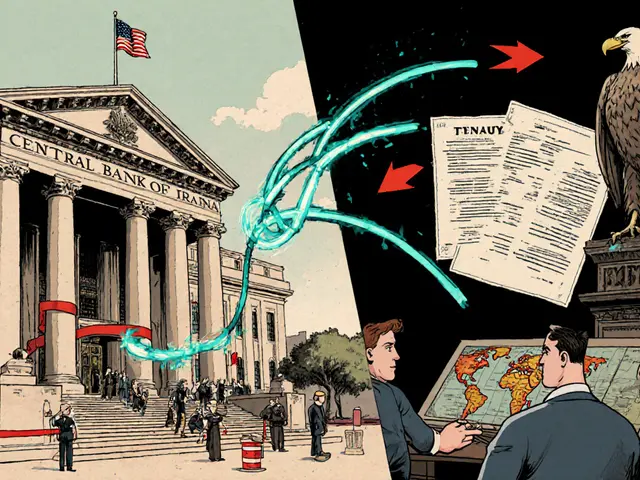
To understand the taxes, you first need to understand the status of crypto itself. For a long time, the Central Bank of Nigeria (CBN) banned banks from dealing with crypto exchanges. This created a black market where transactions were hard to track.
That changed with two major pieces of legislation. First, the Investments and Securities Act (ISA) 2025 officially classified digital assets as securities. This means cryptocurrencies are now regulated by the Securities and Exchange Commission (SEC), not ignored by them. Second, the Nigeria Tax Act 2025 (NTA 2025), signed by President Bola Ahmed Tinubu in June 2025, explicitly states that profits from digital assets are taxable.
This shift aligns Nigeria with international standards. The goal is clear: stop multinational firms and individuals from hiding profits abroad. If you hold crypto, you are now part of the formal financial system.
What Counts as a Taxable Event?
Not every action with cryptocurrency triggers a tax bill. You need to know when the clock starts ticking. Under the NTA 2025, the primary taxable event is the disposal of digital assets. This falls under Capital Gains Tax (CGT).
Here is what constitutes a disposal:
- Selling cryptocurrency for Nigerian Naira (NGN) or other fiat currencies.
- Exchanging one cryptocurrency for another (e.g., swapping Bitcoin for Ethereum).
- Using crypto to purchase goods or services.
- Gifting crypto to someone else (in some contexts, this may be treated as a disposal).
If you simply buy Bitcoin and hold it in your wallet, you do not owe tax yet. The tax liability arises only when you realize a gain by disposing of the asset. However, if you are a business, receiving payment in crypto for services rendered is considered income, which is subject to Company Income Tax or Personal Income Tax depending on your structure.
Who Collects Your Crypto Taxes?
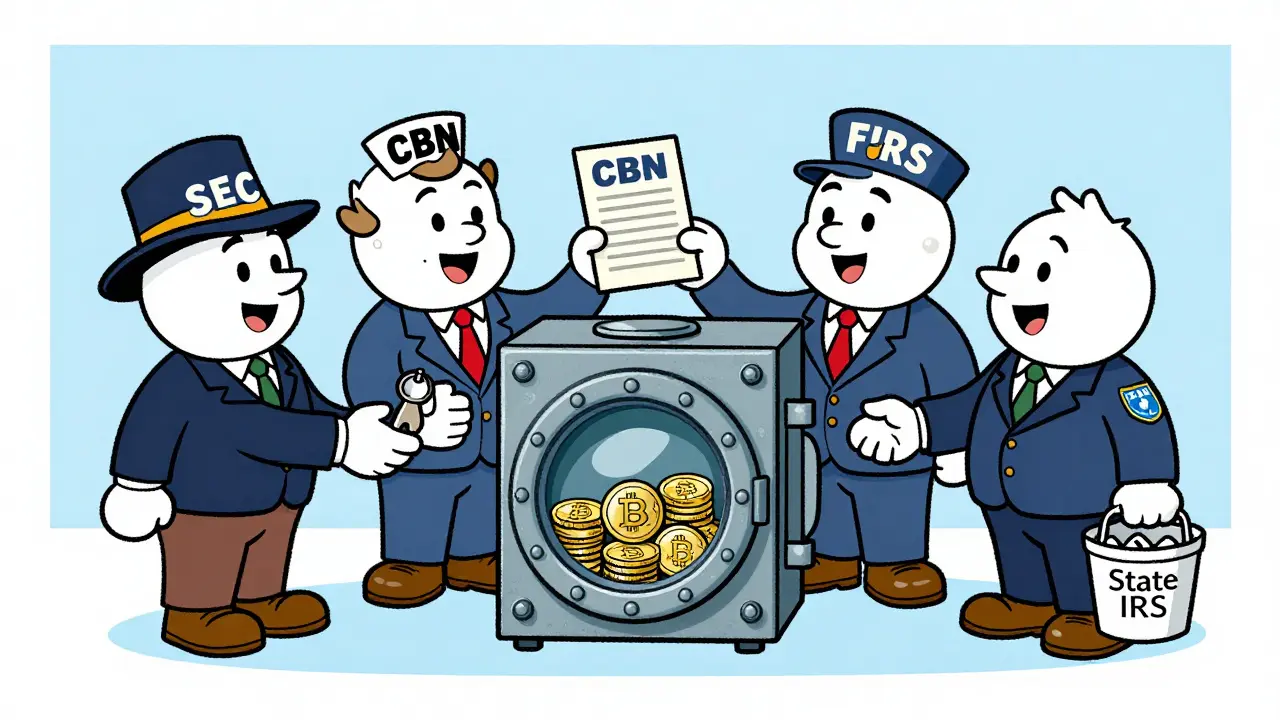
Tax collection in Nigeria involves multiple agencies, which can be confusing. Here is how the roles are divided:
| Agency | Role in Crypto Regulation | Tax Responsibility |
|---|---|---|
| Securities and Exchange Commission (SEC) | Regulates Virtual Asset Service Providers (VASPs); classifies crypto as securities. | Ensures entities are licensed; does not directly collect individual taxes but enforces compliance structures. |
| Central Bank of Nigeria (CBN) | Issues VASP Guidelines; allows banks to serve licensed crypto firms. | Monitors financial flows to ensure traceability; supports tax collection via banking channels. |
| Federal Inland Revenue Service (FIRS) | National tax authority. | Collects Capital Gains Tax and Company Income Tax from crypto businesses and high-net-worth individuals. |
| State Internal Revenue Services (SIRS) | Regional tax authorities. | Collects Personal Income Tax and Value Added Tax (VAT) from residents within their states. |
The key takeaway is that while the SEC licenses your exchange, the FIRS or your state revenue service collects the actual money. You must file returns with the appropriate tax authority based on your residency and business registration.
Banking Access and the VASP License
A critical part of this new framework is the link between taxation and banking. In December 2023, the CBN issued VASP Guidelines. This reversed the previous ban on banks serving crypto companies. Now, banks can offer accounts to licensed Virtual Asset Service Providers (VASPs).
Why does this matter for you? Because traceability equals compliance. If you use an unlicensed offshore exchange, your bank may flag your transactions. The government encourages using local, licensed exchanges like Busha or Quidax. These platforms are integrated with the regulatory framework, making it easier for the tax authorities to see your transaction history.
If you are a business, you must obtain a VASP license from the SEC to operate legally. Without this license, you cannot open corporate bank accounts for crypto activities, effectively shutting down your ability to scale. For individual traders, using a licensed platform ensures your records are standardized, which simplifies filing your tax returns.
Calculating Your Capital Gains Tax
Capital Gains Tax (CGT) applies to the profit you make, not the total amount you receive. The formula is straightforward:
Taxable Gain = Proceeds from Disposal - Cost Base
The "Cost Base" includes:
- The price you paid to acquire the crypto.
- Transaction fees paid to the exchange.
- Wallet storage fees (if applicable and documented).
For example, if you bought 1 BTC for ₦10,000,000 and sold it for ₦15,000,000, your gain is ₦5,000,000. You pay tax on the ₦5,000,000, not the full sale price. The current CGT rate for individuals is 10% on chargeable gains. For companies, it is typically 20%. Always consult a tax advisor, as rates can change and exemptions may apply for small-scale investors.

Compliance Checklist for 2026
To avoid penalties, follow these steps immediately:
- Register Your Entity: If you run a crypto business, ensure you have a VASP license from the SEC.
- Update Accounting Systems: Integrate crypto transactions into your standard financial records. Do not keep separate ledgers for crypto and fiat.
- Track Every Transaction: Use software that logs date, value in NGN at the time of transaction, and purpose. This is crucial for calculating cost basis.
- Hire a Specialist: General accountants may not understand crypto nuances. Work with a tax advisor experienced in digital assets.
- File On Time: Submit your annual tax returns to the FIRS or your State IRS before the deadline. Late filings incur significant penalties.
Risks of Non-Compliance
The NTA 2025 strengthened enforcement mechanisms. The government now has digital filing systems and better data-sharing agreements between the SEC, CBN, and tax authorities. Ignoring these rules carries serious risks:
- Fines and Penalties: Late filing and underreporting result in steep fines, often calculated as a percentage of the unpaid tax.
- Asset Freezes: Regulators can freeze accounts associated with non-compliant entities.
- Criminal Charges: Willful tax evasion can lead to criminal prosecution.
- Bank Account Closure: Banks are required to report suspicious activities. Unexplained large transfers related to crypto can lead to account closure.
The days of operating in the shadows are over. The infrastructure for tracking and taxing crypto is fully operational as of 2026.
International Alignment and Future Outlook
Nigeria’s move to tax crypto aligns it with global trends. Countries like the UK, Canada, and several EU nations already tax digital assets. By adopting the NTA 2025, Nigeria signals to international investors that its financial system is transparent and stable. This can attract legitimate foreign investment into the local crypto ecosystem.
However, it also means stricter scrutiny. Multinational crypto firms operating in Nigeria must adhere to transfer pricing rules to prevent profit-shifting. Local users must be equally vigilant. The focus will likely expand to include DeFi (Decentralized Finance) interactions and NFT (Non-Fungible Token) sales in future amendments. Stay informed, keep detailed records, and treat your crypto portfolio with the same seriousness as your traditional investments.
Is it illegal to own cryptocurrency in Nigeria?
No, owning cryptocurrency is not illegal in Nigeria. The Nigeria Tax Act 2025 and the Investments and Securities Act 2025 recognize digital assets as securities and taxable properties. While ownership is legal, all transactions and profits are subject to regulation and taxation.
Do I pay tax if I hold crypto but don't sell it?
Generally, no. Capital Gains Tax applies only when you dispose of the asset (sell, swap, or spend it). Simply holding cryptocurrency in a wallet does not trigger a tax liability. However, if you receive crypto as income (e.g., salary or payment for services), that is taxable as ordinary income.
Which agency should I file my crypto taxes with?
Individual residents typically file with their State Internal Revenue Service (SIRS) for Personal Income Tax and Capital Gains Tax. Businesses and multinational corporations file with the Federal Inland Revenue Service (FIRS). Ensure you are registered with the correct agency based on your location and business structure.
Can I use offshore exchanges like Binance in Nigeria?
While not explicitly banned for individuals, using offshore exchanges makes compliance difficult. The CBN and SEC encourage using licensed local Virtual Asset Service Providers (VASPs) like Busha or Quidax. Offshore exchanges may not provide the necessary transaction reports for tax filing, increasing your risk of non-compliance penalties.
What happens if I fail to declare my crypto gains?
Failure to declare crypto gains can result in significant fines, penalties, and potential criminal charges for tax evasion. With enhanced data sharing between banks, the SEC, and tax authorities, undeclared transactions are increasingly detectable. It is safer to disclose and pay the correct tax than face enforcement actions.