Imagine waking up to find your entire cryptocurrency portfolio frozen. Not because of a hack, but because the government decided those assets were connected to illegal activity. This is no longer a dystopian fiction; it is the new reality of global finance. As we move through 2026, the landscape of asset forfeiture has shifted dramatically. Governments are not just seizing crypto anymore; they are holding onto it, studying it, and in some cases, treating it as a national treasure.
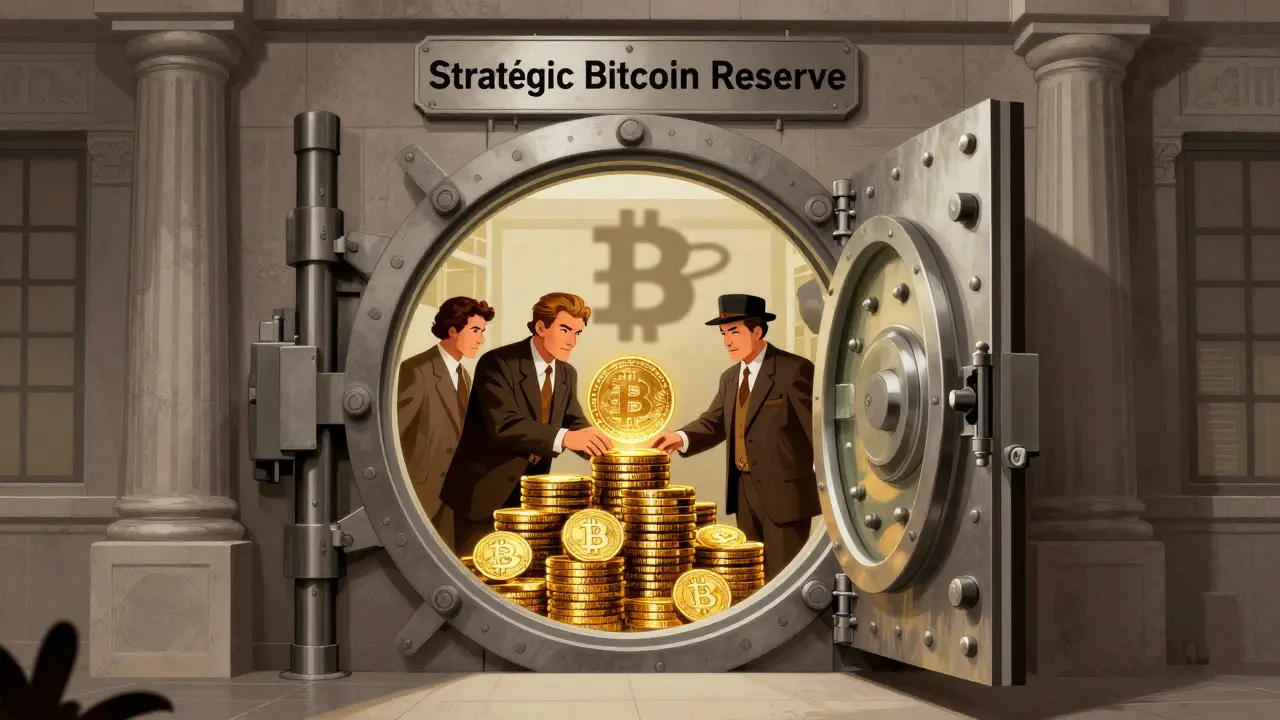
The year 2025 was a turning point. The United States established the Strategic Bitcoin Reserve, which centralizes over 207,000 BTC worth approximately $17 billion. This marked a fundamental shift from liquidating seized assets to retaining them as sovereign reserves. But what does this mean for you? If you live in Ukraine, where crypto adoption is highest, or in Namibia, where exchanges are banned, the rules of engagement are vastly different. Let’s break down how different countries handle these high-stakes seizures.
The New Era of Strategic Retention
For decades, when law enforcement seized cash or property linked to crimes, they sold it off quickly. With crypto, that approach changed. The U.S. administration’s directive to retain forfeited cryptocurrency in the Strategic Bitcoin Reserve serves multiple purposes. It acts as a hedge against inflation, funds future enforcement actions, and prevents market flooding that could depress prices.
This strategy reflects a broader understanding of digital assets. They are no longer seen as fleeting contraband but as valuable property. Federal agencies now treat digital assets-including cryptocurrencies and stablecoins-as "property" for forfeiture purposes. This legal classification expands the reach of existing forfeiture statutes. You need to understand that if your wallet interacts with illicit flows, even indirectly, you might face scrutiny under these new frameworks.
Global Crime Patterns and Victim Hotspots
To understand why seizures are increasing, look at the theft data. In the first half of 2025 alone, over $2.17 billion was stolen from cryptocurrency services. That figure exceeds the total theft for all of 2024. The geographic distribution of these crimes reveals where enforcement is most aggressive.
| Metric | Leading Countries | Key Insight |
|---|---|---|
| Highest Victim Counts | USA, Germany, Russia, Canada, Japan | High adoption correlates with higher absolute victim numbers. |
| Highest Value Stolen Per Victim | UAE, Chile, India, Lithuania, Iran | Targeting high-net-worth individuals or sophisticated actors. |
| Rapid Growth in Victimization | Eastern Europe, MENA, CSAO regions | Expanding criminal networks in emerging markets. |
| Bitcoin & Altcoin Theft Leader | North America | Dominates both categories due to substantial user base. |
| Ethereum & Stablecoin Theft Leader | Europe | Preference for liquid, easily transferable assets. |
Notice the regional variations. North America leads in Bitcoin theft, while Europe tops the charts for Ethereum and stablecoins. This suggests attackers adapt to local preferences. If you hold ETH in Europe, you might be part of a larger target pool. Sub-Saharan Africa ranks lowest in value stolen, likely reflecting lower wealth levels rather than safety from crime. Don’t mistake low theft volume for low risk.
Country-Specific Legal Landscapes
Your location dictates your exposure. Some countries embrace crypto, others restrict it, and a few ban it entirely. Here is how major jurisdictions handle cryptocurrency seizures and legal status.
United States: From Enforcement to Compliance
In early 2025, the U.S. climbed to sixth place globally for digital asset regulation. Executive orders created the President's Working Group on Digital Asset Markets. The SEC and CFTC shifted from an enforcement-first stance to structured compliance. They relaunched the Crypto Task Force and established the Cyber and Emerging Technologies Unit. This unit specializes in adapting traditional law enforcement for digital asset crimes. If you operate in the U.S., expect clearer rules but stricter KYC and AML requirements.
Spain: International Cooperation
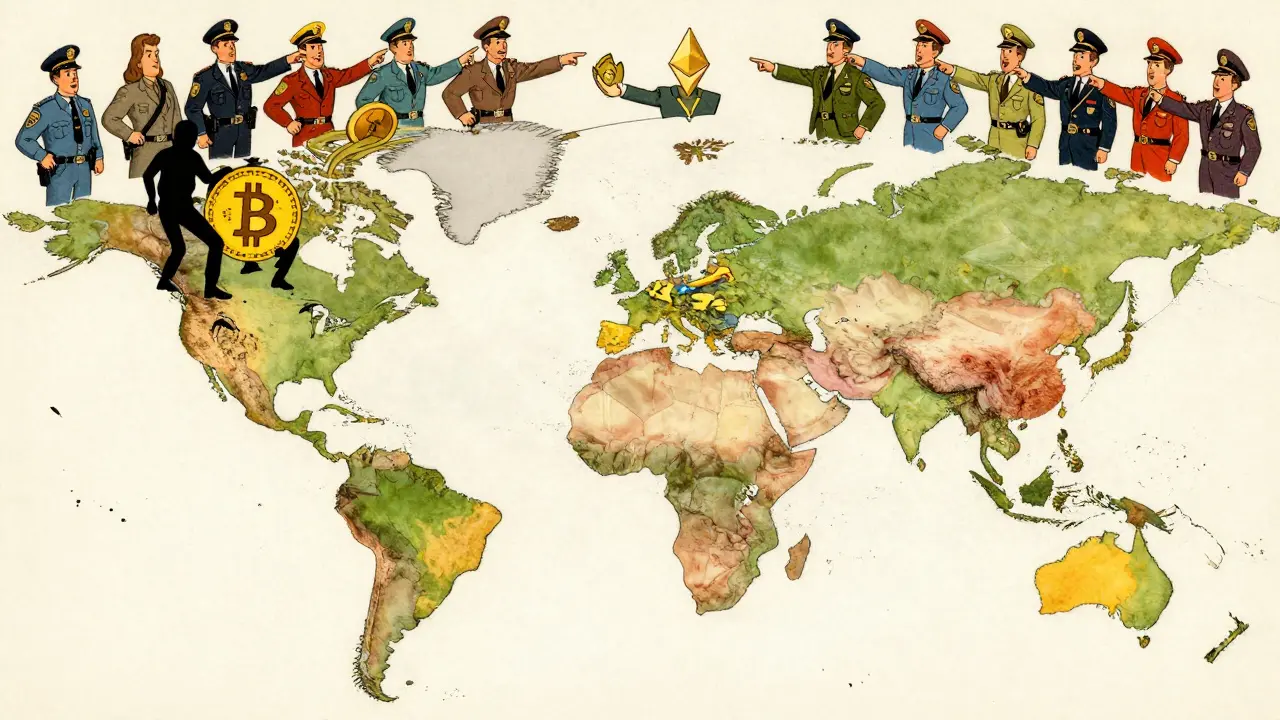
Spain demonstrated the power of cross-border enforcement. The Guardia Civil conducted a landmark seizure operation in 2025, supported by U.S. law enforcement. This shows that borders matter less in crypto. If you think hiding assets in a different jurisdiction protects you, think again. International cooperation is growing rapidly.
Africa: Divergent Approaches
- Mauritius: Treats crypto as regulated Digital Assets under the Financial Services Act 2007. Full legality, but investors get no statutory compensation if things go wrong.
- South Africa: The Reserve Bank declared virtual currencies have "no legal status" in 2014. However, the Revenue Service classifies Bitcoin as an intangible asset for tax purposes. This creates a gray area for forfeiture.
- Angola: Full legality, despite officials advising against Bitcoin use. No legislation prohibits activities.
- Namibia: Highly restrictive. The Bank of Namibia bans cryptocurrency exchanges and prohibits accepting crypto for goods and services.
Asia and the Middle East
Ukraine leads the 2025 Global Crypto Adoption Index, followed by Moldova, Georgia, Jordan, and Hong Kong SAR. High adoption often means high scrutiny. Vietnam, Latvia, Montenegro, Venezuela, and Slovenia also rank high. In these regions, enforcement agencies are prioritizing recovery of stolen assets. The rapid growth in victimization in Eastern Europe and the MENA region suggests expanding criminal networks. Authorities are responding with increased surveillance and seizure capabilities.
Technical Challenges in Seizure
Seizing crypto is not like seizing cash. You can’t just take physical bills. Courts are now recognizing the applicability of forfeiture laws to non-fungible tokens (NFTs) and decentralized finance (DeFi) tokens. This expansion complicates matters. How do you seize a token that exists only on a blockchain? Agencies are developing technical protocols to freeze wallets and track transactions across chains. The rise of stablecoins adds another layer. Circle, issuer of USDC, filed for an IPO in April 2025. Publicly listed companies face stricter oversight, making their tokens easier to trace and potentially seize.
What This Means for Your Portfolio
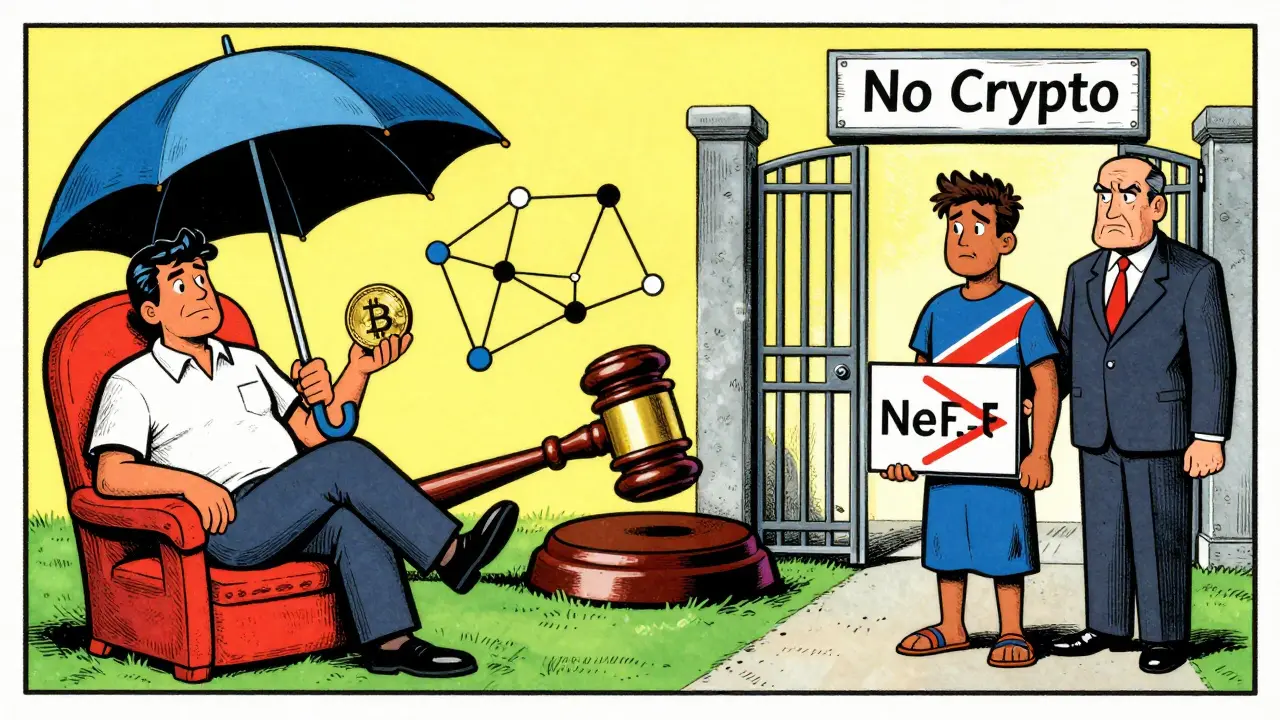
If you hold crypto, you need to be proactive. First, ensure your transactions are clean. Mixers and tumblers are red flags for law enforcement. Second, understand the legal status in your country. In Namibia, holding crypto might put you at immediate legal risk. In Mauritius, you are protected but lack compensation rights. Third, consider the geopolitical angle. The U.S. Strategic Bitcoin Reserve signals that governments see long-term value in these assets. They are not going away. They are becoming part of state balance sheets.
Don’t ignore the human element. Over $2 billion stolen in six months means real people are losing life savings. Enforcement is toughening because victims are demanding action. The shift from punitive measures to structured compliance in places like the U.S. suggests that playing by the rules is the best defense. Clear regulations benefit everyone, including legitimate holders.
Future Trends and Predictions
Expect more international cooperation. The Spanish-U.S. collaboration is just the beginning. Cross-border task forces will become standard. Also, look for expanded authority to seize DeFi assets. As courts clarify NFT and token classifications, more assets will fall under forfeiture laws. Transparency requirements may increase, forcing agencies to publish more details about seized holdings. Finally, the concept of "budget-neutral" acquisition strategies, like selling gold for Bitcoin, could spread to other nations. This would further integrate crypto into national economies.
The bottom line? Crypto is no longer the Wild West. It is a regulated, monitored, and increasingly state-controlled asset class. Know your local laws, keep your records clean, and stay informed about global enforcement trends.
What is the Strategic Bitcoin Reserve?
The Strategic Bitcoin Reserve is a U.S. government initiative established in March 2025. It centralizes over 207,000 BTC (worth ~$17 billion) seized from criminal activities. Instead of selling these assets, the government retains them as sovereign reserves to hedge against inflation and fund future enforcement.
Which countries have the highest crypto theft rates?
In terms of victim counts, the USA, Germany, Russia, Canada, and Japan lead. For value stolen per victim, the UAE, Chile, India, Lithuania, and Iran are highest. Eastern Europe, MENA, and CSAO regions saw the fastest growth in victimization from H1 2024 to H1 2025.
Is cryptocurrency legal in Namibia?
No. The Bank of Namibia declared in September 2017 that cryptocurrency exchanges are not allowed and crypto cannot be accepted as payment for goods or services. This makes it one of the most restrictive jurisdictions in Africa.
How does the U.S. regulate crypto in 2026?
The U.S. shifted to structured compliance via executive orders. The SEC and CFTC relaunch the Crypto Task Force and created the Cyber and Emerging Technologies Unit. Rules clarify token classifications, expand ETF options, and impose stricter KYC/AML requirements. The U.S. ranks sixth globally for digital asset regulation.
Can NFTs and DeFi tokens be seized?
Yes. Courts increasingly recognize the applicability of forfeiture laws to NFTs and DeFi tokens. Agencies are developing technical protocols to freeze wallets and track transactions, expanding the scope of seizable digital assets beyond traditional cryptocurrencies.
Which country leads in crypto adoption?
Ukraine leads the 2025 Global Crypto Adoption Index. It is followed by Moldova, Georgia, Jordan, and Hong Kong SAR. High adoption often correlates with higher enforcement scrutiny and theft volumes.
Why did the U.S. stop liquidating seized crypto?
Liquidation floods the market and depresses prices. By retaining assets in the Strategic Bitcoin Reserve, the government avoids market disruption, hedges against inflation, and potentially benefits from long-term appreciation. It also provides funding for future enforcement actions.
What happened to Circle and Coinbase in 2025?
Circle, the issuer of USDC stablecoin, filed for an IPO in April 2025. Coinbase trades under the COIN ticker on Nasdaq. Their public listings subject them to stricter regulatory oversight, impacting how stablecoins are tracked and potentially seized.