Fractional Property Ownership in Crypto: How Tokenized Real Estate Works
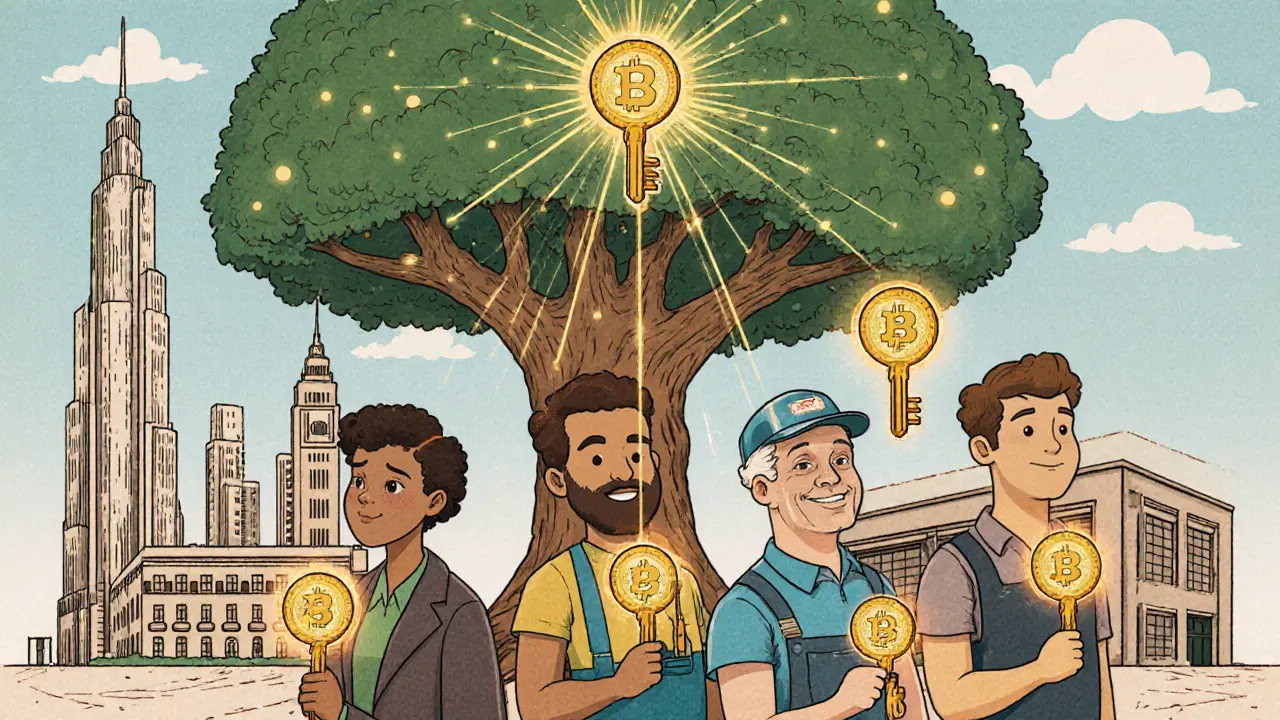
When you hear fractional property ownership, a system where multiple people own small shares of a single property using digital tokens. Also known as tokenized real estate, it turns a $500,000 house into 10,000 tokens you can buy for $50 each. This isn’t theory—it’s happening right now, and crypto is making it real.
Before crypto, owning part of a building meant legal paperwork, big money, and banks in the middle. Now, you can buy a slice of a warehouse in Dubai, a farm in Texas, or an apartment in Berlin using Ethereum or Solana tokens. The property is locked into a smart contract, and your token proves you own 0.02% of it. You get rent payments, a share of the sale profit, and full control—no middlemen. NFT property, a digital deed tied to a real-world asset on the blockchain is the engine behind this. Unlike old-school deeds, NFTs can’t be lost, forged, or locked in a bank vault. They’re yours, instantly transferable, and visible to anyone on the chain.
This system works because of DeFi real estate, a network of decentralized protocols that handle buying, renting, and selling tokenized property without banks. Platforms like RealT, Propy, and Real Estate Token (RET) let you trade shares like stocks, but backed by bricks and mortar. You’re not betting on a company—you’re owning part of a physical asset. And unlike stocks, you can actually live in or rent out your slice if the contract allows. But here’s the catch: most of these projects are still new. Some are scams. Others have zero liquidity. You might buy a token today and not find a buyer for months. That’s why the posts below dig into real cases—what worked, what failed, and who actually made money.
You’ll find reviews of tokenized real estate platforms, breakdowns of failed NFT property projects, and warnings about fake rental yields. Some posts show how people in Venezuela and Pakistan use fractional ownership to bypass broken local systems. Others expose crypto projects that promised real estate but delivered nothing but empty smart contracts. This isn’t about hype. It’s about what’s real, what’s risky, and what you need to check before you invest your crypto in land you can’t even see.
Tokenized real estate lets you own fractions of properties using blockchain, with lower costs, higher liquidity, and global access. See how it works, why returns are rising, and who’s investing now.
Continue reading