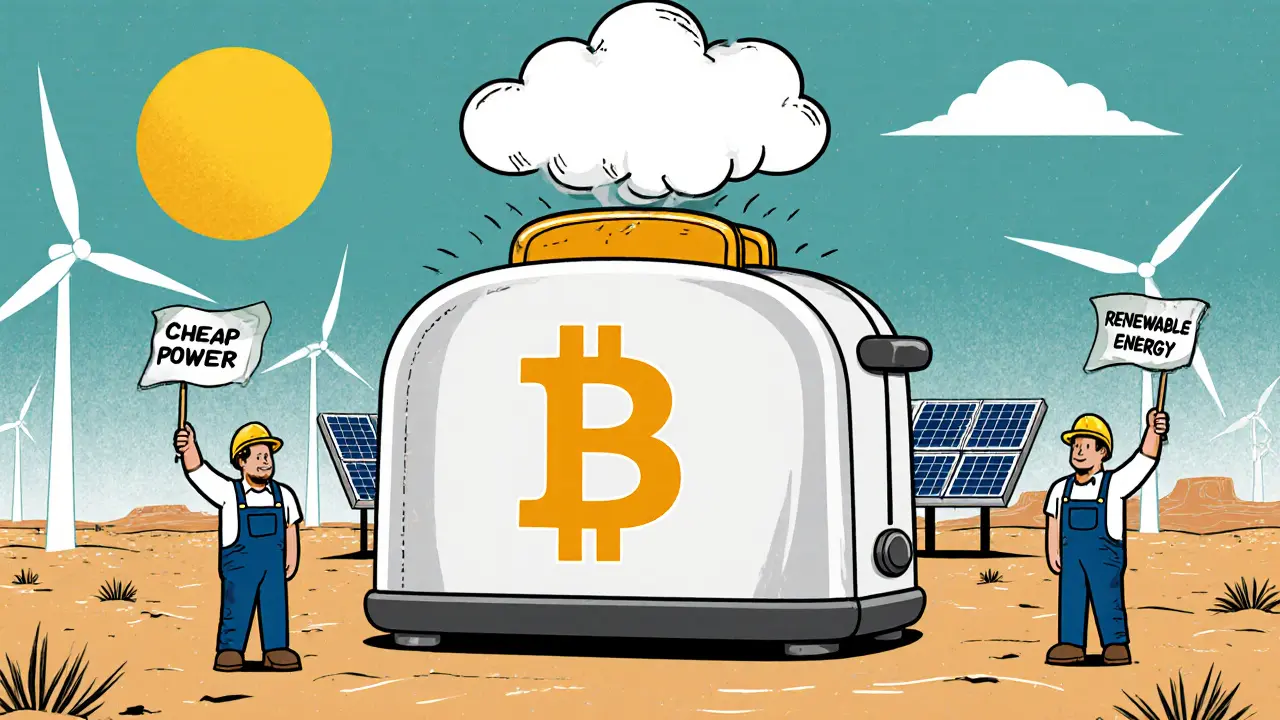
Bitcoin mining countries: Where it happens and why it matters
When you think of Bitcoin mining, the process of validating Bitcoin transactions and adding them to the blockchain using powerful computers. Also known as cryptocurrency mining, it's not some abstract digital ritual—it’s a real-world industry that needs electricity, space, and cold air. It doesn’t happen in data centers in New York or Silicon Valley. It happens where power is cheap and rules are loose. And that’s where the real story begins.
Iceland, a small island nation powered almost entirely by geothermal and hydroelectric energy. Also known as crypto mining haven, it was once the top spot for Bitcoin miners thanks to freezing temperatures and nearly free electricity. But now, the government has shut the door on new mining projects. Energy is too valuable to waste on computers. Meanwhile, Venezuela, a country where the national currency collapsed and people turned to crypto just to buy food. Also known as hyperinflation survival crypto, miners there use stolen or subsidized power to run rigs, trading Bitcoin for USDT to pay rent and feed families. It’s not about profit—it’s about survival.
Then there’s the UAE, a nation that didn’t just accept crypto—it built a legal and tax-friendly system to attract mining firms and exchanges. Also known as crypto regulatory hub, it offers licenses, zero capital gains tax, and infrastructure for large-scale operations. This isn’t a grassroots movement. It’s corporate mining, backed by governments that see crypto as economic leverage. These are the three poles of the mining world: one shutting down, one fighting to survive, and one building the future.
Most people think Bitcoin mining is all about hash rates and ASICs. But the real battle is over energy, regulation, and geography. You can’t mine Bitcoin without power. And power isn’t free everywhere. That’s why the map of Bitcoin mining changes every year. Some places get banned. Others get built. Some miners move to Kazakhstan. Others try Georgia. A few still hide in rural China. But the big players? They’re watching where the lights stay on and the laws stay clear.
What you’ll find below isn’t a list of countries with the most rigs. It’s a collection of real stories—about power cuts in Iceland, crypto as cash in Venezuela, and how the UAE turned crypto into a national strategy. These aren’t theoretical debates. They’re lived experiences. And they tell you more about Bitcoin’s future than any whitepaper ever could.
As of 2025, the U.S. leads global Bitcoin mining with 44% of the hash rate, followed by Kazakhstan, Russia, and Canada. Learn where mining power is concentrated, why geography matters for security, and how renewable energy is reshaping the industry.
Continue reading