When you think of blockchain, you picture decentralization, tamper-proof ledgers, and smart contracts running without middlemen. But what if the data feeding those smart contracts isn’t trustworthy? That’s where Oracle security comes in - and why it’s one of the biggest hidden risks in blockchain today.
Blockchains can’t access real-world data on their own. They need oracles - external services that bring in price feeds, weather reports, sports results, or even payment confirmations. Oracle Corporation’s enterprise software powers a huge chunk of the world’s business systems. And when those systems get hacked, the damage doesn’t stop at corporate networks. It spills into blockchain applications that rely on them.
The Oracle That Broke the Chain
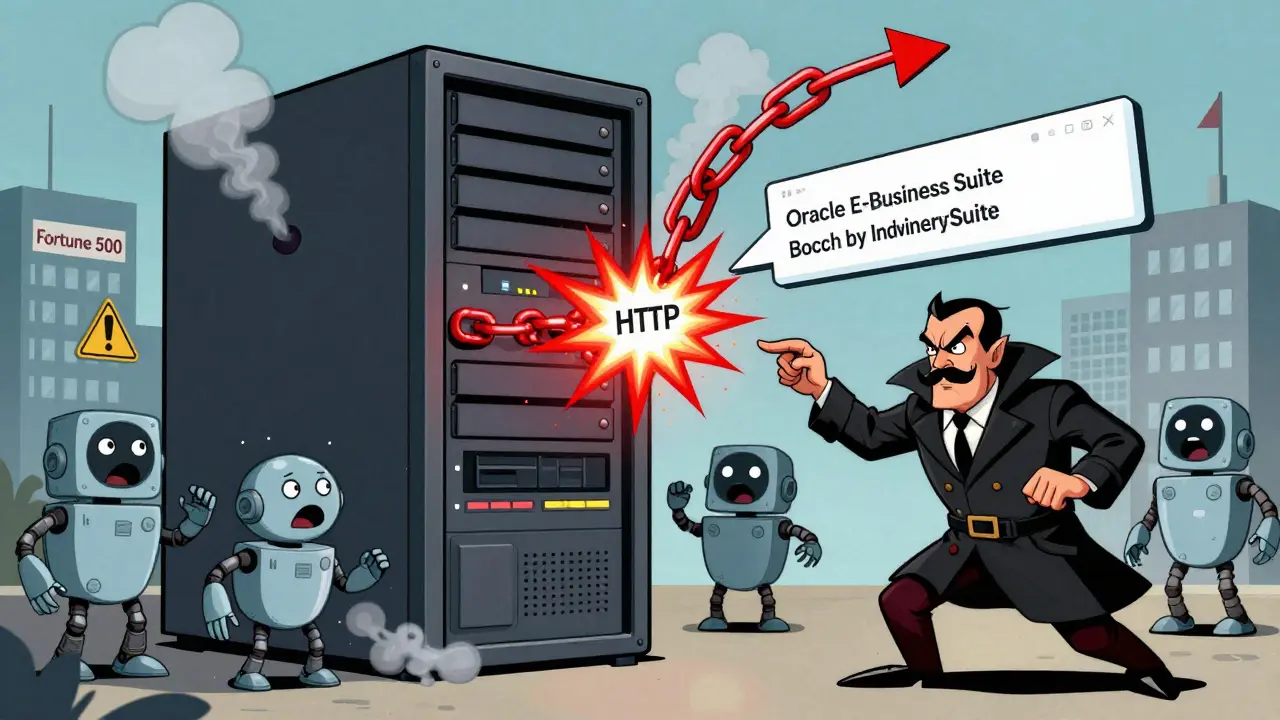
In October 2025, security researchers uncovered a critical flaw called CVE-2025-61882. It targeted Oracle E-Business Suite, a system used by over 60% of Fortune 500 companies to manage inventory, payroll, and supply chains. The flaw allowed attackers to take full control of these systems - without needing any login credentials.
This wasn’t just a bug. It was a chain reaction. Attackers combined five separate vulnerabilities into one attack path. They didn’t need to break into a server. They just sent a single HTTP request over the internet. Boom - full system access. And because Oracle E-Business Suite connects directly to financial systems, inventory databases, and logistics networks, hackers could manipulate the data flowing into smart contracts.
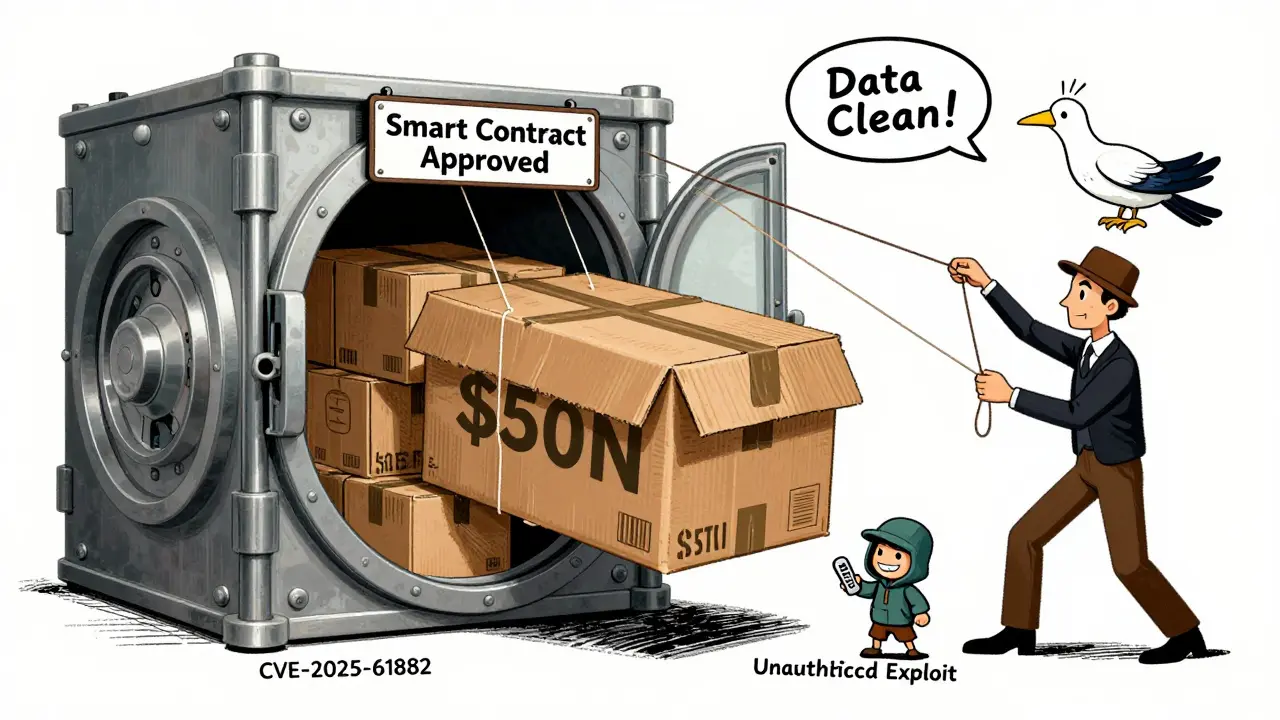
Imagine a DeFi loan platform that uses Oracle’s system to verify a company’s inventory levels before approving a loan. If an attacker alters those numbers through CVE-2025-61882, they could make a company look like it has $50 million in stock when it really has $5 million. The smart contract approves the loan. The attacker walks away with $10 million. Then they vanish. The blockchain records the transaction as valid. No one can undo it.
Why Oracle Systems Are Prime Targets
Oracle’s software isn’t just big - it’s everywhere. It runs hospitals, banks, government agencies, and logistics hubs. And it’s all interconnected. A single vulnerability in Oracle’s E-Business Suite can affect hundreds of downstream systems, including blockchain oracles that pull data from it.
Between April and July 2025, Oracle released patches for at least 17 vulnerabilities across its product line. Six of them allowed remote code execution without authentication. That’s not a coincidence. It’s a pattern. The architecture of Oracle’s enterprise software has deep, hidden layers that are hard to secure. Each component talks to another. One weak link can collapse the whole chain.
And threat actors noticed. Before Oracle even published the fix for CVE-2025-61882, attackers were already using it. They launched data extortion campaigns - stealing financial records, customer lists, and supply chain data - then demanding ransom. Some of that stolen data was used to feed false information into blockchain oracles. The result? Manipulated price feeds, fake transaction histories, and broken smart contracts.
The Ripple Effect on Blockchain
Blockchain relies on trust. But trust in what? In the code? In the consensus? Or in the data coming from outside?
If the oracle is compromised, the entire chain becomes unreliable. Decentralized exchanges could see fake token prices. Insurance smart contracts could deny legitimate claims. Supply chain trackers could show goods arriving when they never left the warehouse. All because a single server running Oracle E-Business Suite got hacked.
Security firm WatchTowr Labs confirmed they had a working exploit for CVE-2025-61882 within hours of its discovery. That means the code was already circulating in underground markets. Attackers don’t need to be geniuses anymore. They just need to buy the exploit and point it at a public-facing Oracle server. The rest happens automatically.
And here’s the scary part: most blockchain projects don’t even know which enterprise systems their oracles depend on. They assume the data is clean. They don’t audit the source. They don’t check if the oracle provider uses Oracle E-Business Suite. And if they do - they assume it’s patched. But patching is slow. Many companies wait months. Some never patch at all.
What You Can Do
If you’re building or using a blockchain application that relies on external data, here’s what matters:
- Know your oracle source - Don’t just use any data feed. Ask: Where does this data come from? Is it pulled from an Oracle E-Business Suite system? If yes, verify the patch status.
- Use multiple oracles - Relying on one data source is like trusting one guard at a vault. Use at least three independent data feeds. If two agree, trust the data. If one disagrees, flag it.
- Implement delay mechanisms - Don’t execute smart contracts immediately after receiving data. Add a 5-10 minute delay. That gives time to detect anomalies or conflicting reports.
- Monitor for exploitation signs - Look for unusual HTTP traffic to Oracle servers. Unusual login attempts. Unexpected data changes in inventory or financial logs. These could signal an oracle attack in progress.
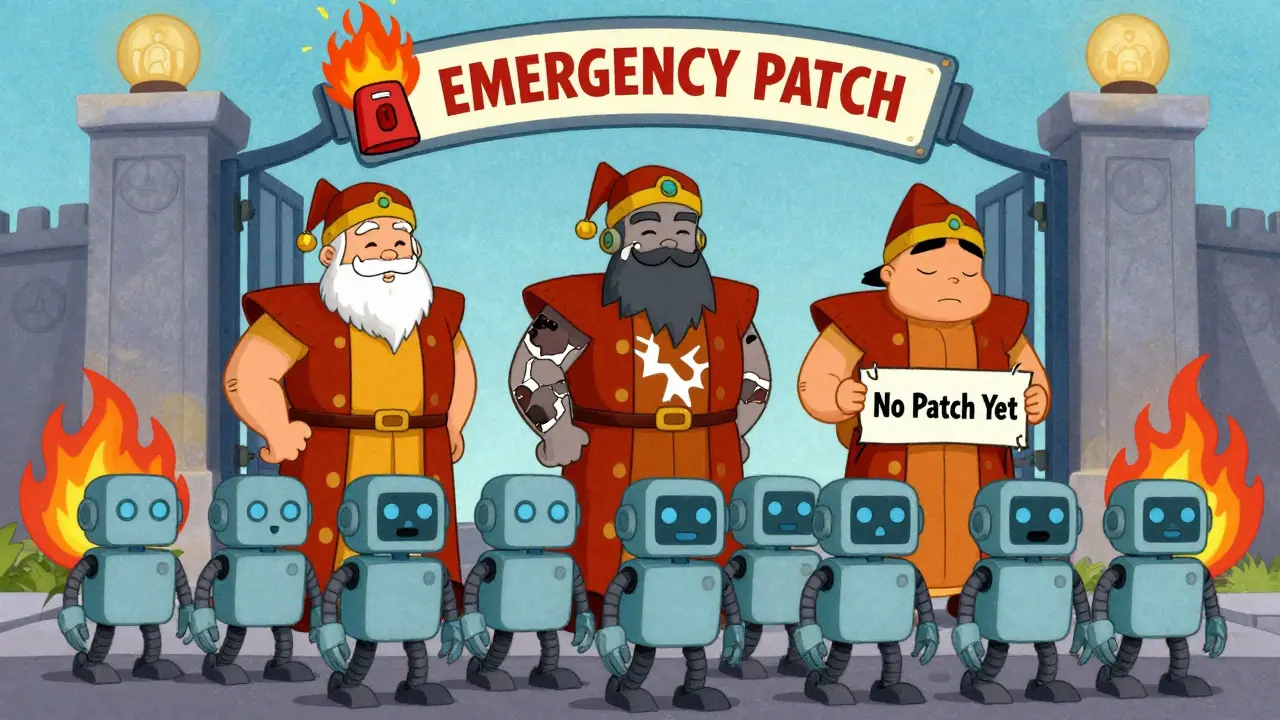
Companies that run Oracle E-Business Suite need to act now. Oracle’s emergency patch for CVE-2025-61882 is available. Apply it. Immediately. And don’t wait for the next quarterly update. This isn’t a routine patch. It’s a fire alarm.
The Bigger Picture
This isn’t just about Oracle. It’s about how we trust data in decentralized systems. Blockchain was supposed to remove intermediaries. But we just replaced them with new ones - and we didn’t secure them.
Oracles are the new weak link. And enterprise software like Oracle’s is the most common source. Until we treat oracle security with the same urgency as blockchain code security, we’re building castles on sand.
The future of blockchain doesn’t lie in faster consensus or bigger blocks. It lies in trustworthy data. And that starts with securing the systems behind the curtain - the ones no one talks about until they’re already hacked.
Can blockchain be hacked through Oracle vulnerabilities?
Yes. Blockchain itself can’t be hacked directly through Oracle flaws, but the data feeding into it can. If an oracle pulls corrupted or manipulated data from a compromised Oracle system, smart contracts will execute based on that false information. This leads to financial loss, fake transactions, and broken agreements - all recorded permanently on the blockchain.
What is CVE-2025-61882 and why is it dangerous?
CVE-2025-61882 is a zero-day vulnerability in Oracle E-Business Suite that allows unauthenticated attackers to execute code remotely over HTTP. It combines five separate bugs into one exploit chain, making it easy to use and extremely powerful. It affects versions 12.2.3 through 12.2.14 and has been actively used in ransomware and data extortion attacks before Oracle released a patch.
Are all blockchain oracles at risk?
Not all - but many are. Oracles that pull data from enterprise systems like Oracle E-Business Suite, SAP, or Microsoft Dynamics are vulnerable if those systems aren’t patched. Oracles that use public, decentralized data sources (like Chainlink’s aggregated price feeds) are far safer. The risk depends on the oracle’s data source, not the blockchain it serves.
How can I check if my oracle provider uses Oracle software?
Ask them directly. Reputable oracle providers disclose their infrastructure. Look for public documentation, whitepapers, or security audits. If they don’t say where their data comes from, assume it’s risky. Avoid oracles that won’t answer this question.
Is there a way to protect against oracle manipulation?
Yes. Use multi-oracle setups, add time delays before contract execution, and verify data consistency across independent sources. Also, monitor the security status of any enterprise systems your oracle depends on. Patching Oracle software is critical - don’t wait for a breach to happen first.



Comments (21)
Patty Atima
Honestly? This is why I stopped trusting DeFi. Not because of the code, but because of the invisible hand pulling strings behind the scenes. Oracle systems? Yeah, they’re the silent killers.
Lucy de Gruchy
This isn't a vulnerability. It's a feature. Oracle designed this system to be exploitable - so they can sell you the ‘patch’ at 300% markup. Classic corporate entrapment.
Lauren J. Walter
Wow. So we built a blockchain to remove middlemen… and then we just gave all our data to Oracle. Because why not? 🤡
Carol Lueneburg
I’m so glad someone finally said this out loud 💖 You’re not crazy for being scared - this is terrifying, and we need to talk about it more. Let’s build better systems, not just faster ones. You got this!
Brenda White
wait so oracle just… lets people hack it with one http request? no cap? that’s wild. like why even have a firewall?
Tobias Wriedt
Blockchain is just a fancy word for ‘trust the internet’ now. We’re all just waiting for the next ‘I told you so’ moment. 😇
Ernestine La Baronne Orange
This is the exact reason I stopped investing in anything blockchain-related after 2021 - because I knew the data feeds were garbage. They don’t audit the backend. They don’t care. They just want your money while the whole thing collapses under the weight of corporate negligence. And now? Now it’s official. We’re all just collateral damage in a $200 billion corporate cover-up. And no one’s going to jail. Not one person.
Manali Sovani
The structural inefficiencies of enterprise software integration are a well-documented phenomenon in post-industrial economies. The reliance on monolithic systems for decentralized infrastructure represents a fundamental misalignment of architectural paradigms.
Konakuze Christopher
They knew. They knew and they did nothing. This was a target, not a bug.
S F
America built this. Now we’re paying for it. Time to stop outsourcing security to corporations who think ‘patch Tuesday’ is a holiday.
Angelica Stovall
So let me get this straight. The blockchain is unhackable… unless the data comes from a system that’s been known to be broken for months? That’s not security. That’s a joke with a blockchain logo.
Taylor Holloman.
I read this whole thing… and I just felt… sad. Not angry. Not shocked. Sad. Like we had this beautiful idea - trustless, transparent, decentralized - and we went and built it on top of a leaky pipe that’s been dripping since 2012. We didn’t fix the pipe. We just painted it gold and called it innovation.
Bryan Roth
If you're building something on blockchain, don't just ask 'is it decentralized?' Ask 'where does the data come from?' And if the answer is 'some company's internal ERP' - walk away. Seriously. This isn't FOMO. This is a landmine.
Sahithi Reddy
Use multiple oracles always
George Hutchings
I’ve worked in logistics for 15 years. Oracle EBS? It’s the backbone of half the world’s supply chains. And yeah - it’s a house of cards. But here’s the thing: most people don’t even know it’s running. That’s the real danger.
Henrique Lyma
The notion that blockchain can be ‘secure’ while relying on opaque enterprise software ecosystems is not merely naive - it is an intellectual failure of the highest order. The epistemological foundations of decentralized systems collapse under the weight of centralized data dependencies.
Steph Andrews
I think we need to stop pretending blockchain is some magical solution and just admit we’re all just trying to make money off other people’s ignorance
Prakash Patel
Actually, I think this is overblown. Oracles aren’t the problem. People who don’t understand basic cybersecurity are.
Elizabeth Kurtz
I’ve seen this before. When the first major Oracle breach hit in 2021, everyone panicked. Then they patched it. Then they forgot. Now? Same script. We’re not learning. We’re just recycling fear.
john peter
The failure is not technological. It is moral. We have created a system where profit is prioritized over integrity. The blockchain does not corrupt - it merely reflects the corruption of its architects.
Marc Morgan
I’m Australian. We’ve got a saying: ‘She’ll be right.’ Not this time. This is the kind of thing that ends in tears. And someone’s gonna have to pay.