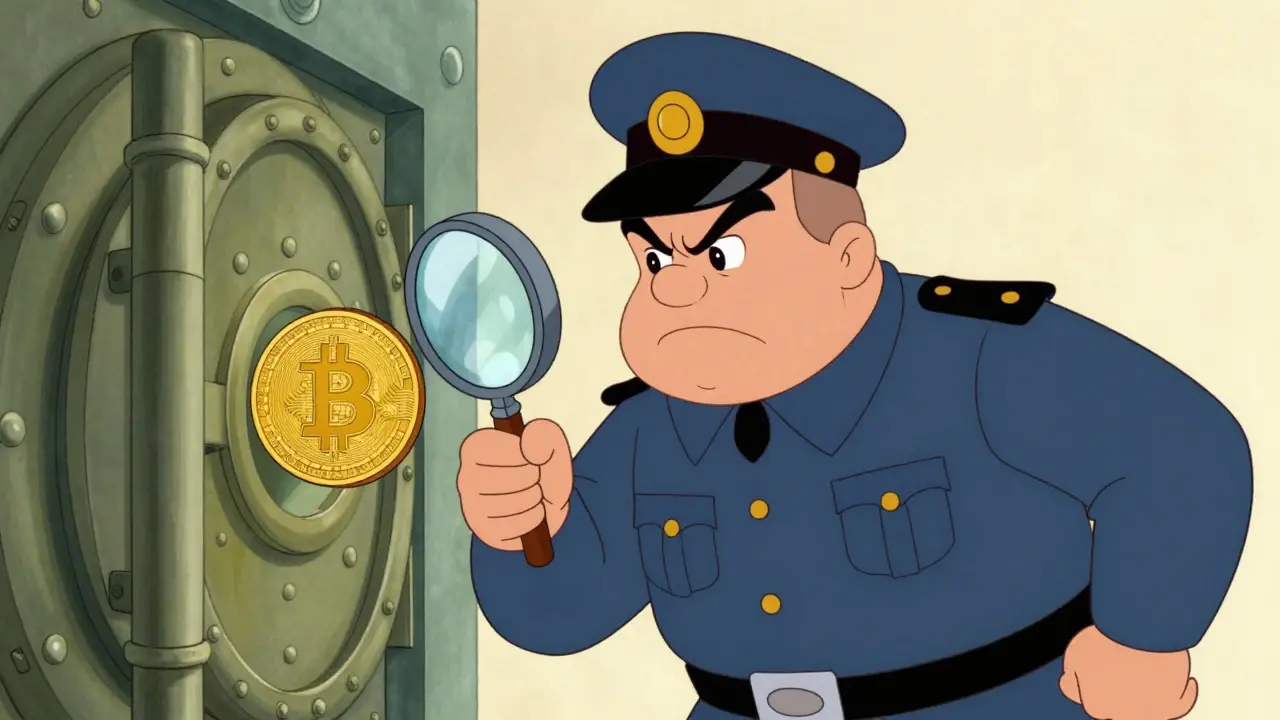
Think you can just swap your Bitcoin for Naira and slide it into your bank account without a hitch? In Nigeria, the answer is a complicated "maybe." While the days of an outright ban are over, your bank isn't exactly rolling out the red carpet for crypto traders. The reality is that banks now act more like security guards than service providers, meticulously watching every kobo that moves from a digital wallet to a traditional account.
If you're planning to cash out, you need to understand that the game changed significantly between 2023 and 2025. We've moved from a period of total prohibition to a era of "conditional acceptance." This means your bank won't necessarily block the transaction, but they might ask a lot of questions-or in the worst case, freeze your funds if they smell something fishy. Let's break down how this actually works on the ground today.
The New Rules of the Game
For a long time, the Central Bank of Nigeria (CBN) kept banks far away from anything smelling like blockchain. But that ended on December 22, 2023, when the CBN lifted the ban and released new guidelines for Virtual Asset Service Providers. Then came the big one: the Investments and Securities Act 2025 (ISA 2025), which officially recognized cryptocurrencies as securities. This shifted the oversight from just the central bank to the Securities and Exchange Commission (SEC).
So, why does this matter for your withdrawal? Because banks now only trust a specific type of transaction. If your money is coming from a platform that the SEC has licensed, the bank sees it as a legitimate transfer from a regulated financial entity. If the money is coming from an unverified P2P trade or a platform that's being hunted by the government, the bank views it as a high-risk red flag.
What Actually Happens When You Hit 'Withdraw'?
When you withdraw crypto to fiat, the bank's reaction depends entirely on the "path" the money takes. Here is how different scenarios typically play out:
- Licensed Exchanges (e.g., Luno): If you use an SEC-approved platform, the process is usually smooth. The exchange sends the Naira via a bank transfer, and it hits your account within a few hours. Banks treat this like any other electronic payment, though they still monitor the volume.
- Unlicensed Platforms: If you use an international exchange that hasn't bothered with local licensing, you're entering the danger zone. Banks may flag these transfers as coming from suspicious sources, which can lead to temporary account holds.
- Peer-to-Peer (P2P) Trading: This is where most Nigerians get into trouble. When a random individual sends you Naira in exchange for crypto, the bank doesn't see a "crypto trade"-they see a transfer from another person. If that person is being investigated for fraud or market manipulation, your account could be frozen by association.
| Method | Bank Perception | Risk Level | Typical Outcome |
|---|---|---|---|
| SEC-Licensed Exchange | Regulated Financial Transfer | Low | Fast processing, few questions |
| Unlicensed Global Platform | Unverified Source | Medium/High | Potential flags, documentation requests |
| Informal P2P Trade | Private Transfer | High | Risk of "guilt by association" freezes |

The 'Hidden' Restrictions You Should Know
Just because it's legal doesn't mean it's unrestricted. Banks have implemented several "silent" barriers to protect themselves from regulatory heat. First, there's the issue of cash. Most banks will let you receive crypto-to-fiat transfers electronically, but they might block you from withdrawing that specific money as physical cash over the counter. They want a digital paper trail for every single Naira.
Then there are the transaction limits. You might notice that your daily transfer limit is lower for accounts heavily linked to crypto activity. Banks call these "prudent limits." They aren't advertised in any brochure, but they exist to prevent massive, sudden movements of money that could trigger Anti-Money Laundering (AML) alerts.
Speaking of alerts, the Economic and Financial Crimes Commission (EFCC) is very active. In late 2024, they froze over 20 accounts linked to USDT sellers on platforms like Bybit and KuCoin, totaling hundreds of millions of Naira. The accusation? Market manipulation. If your withdrawal pattern looks like you're running a shadow exchange or manipulating the exchange rate, the EFCC can order your bank to lock your funds instantly.
Taxes and the Paper Trail
Don't expect the government to ignore your gains. The Federal Inland Revenue Service (FIRS) views crypto transactions as capital gains. While the specific tax laws are still being polished in various Finance Bills, the intent is clear: if you make a lot of money from crypto and move it into a bank, the government wants a cut.
Banks are increasingly required to report suspicious or unusually large inflows. If you suddenly deposit 10 million Naira from a crypto sale into an account that usually handles 50,000 Naira a month, don't be surprised if your bank asks for a "Source of Funds" declaration. You'll need to prove where the crypto came from and that it wasn't obtained through illegal means.

How to Cash Out Without Losing Your Mind
You can't stop the regulators, but you can avoid being an easy target. If you want to minimize friction, stop treating your bank account like a wild west trading hub. Follow these practical steps:
- Stick to the Licensed Crowd: Use platforms that have the SEC stamp of approval. It's the safest way to ensure the bank recognizes the sender as a legitimate business.
- Keep a Paper Trail: Save your trade history, screenshots of transactions, and KYC documents. If the bank asks why you suddenly have a windfall, you can show them exactly how you earned it.
- Avoid "Spiky" Transfers: Instead of one massive 5-million-Naira withdrawal, consider breaking it into smaller, more natural amounts that align with your usual banking behavior.
- Diversify Your Banking: Don't put all your eggs in one basket. Use a mix of traditional commercial banks and fintech-oriented digital banks. The latter are often more comfortable with the digital nature of crypto flows.
- Verify Your KYC: Ensure your bank account and your exchange account have the exact same name and details. Mismatched names are the fastest way to get a transaction flagged for manual review.
Can the bank freeze my account for withdrawing crypto?
Yes. While crypto is legal under ISA 2025, banks can freeze accounts if they suspect money laundering, fraud, or if the EFCC provides evidence of market manipulation. This most commonly happens with P2P trades where the sender's funds are flagged.
Is it legal to use P2P in Nigeria in 2026?
It is not illegal to trade, but it is high-risk. The government prefers you use SEC-licensed exchanges. Using unregulated P2P channels increases the likelihood of your bank account being flagged by AML systems.
Do I have to pay tax on my crypto withdrawals?
Yes, the FIRS considers crypto gains as capital gains. While enforcement varies, banks may report large withdrawals to tax authorities, especially under new Finance Bill regulations.
Which banks are most crypto-friendly?
Generally, fintech-driven digital banks are more lenient and have smoother processing for electronic transfers from exchanges compared to old-school commercial banks.
What should I do if my account is frozen?
Immediately contact your bank to find out if the freeze was internal or ordered by the EFCC/SEC. Be prepared to provide full documentation of your trades, including the exchange used and the source of the original funds.
Next Steps for Different Users
For the Casual Holder: If you're just cashing out a small amount of savings, stick to a licensed exchange like Luno. It's the path of least resistance.
For the Active Trader: Start separating your "trading" bank account from your "lifestyle" account. If your trading account gets flagged or frozen, you'll still have a way to pay your rent and buy groceries.
For High-Net-Worth Individuals: Before moving millions of Naira, consult a tax professional. The FIRS is getting better at tracking digital assets, and a voluntary disclosure is always better than an investigation.


Comments (13)
James Bone
Imagine thinking the government actually cares about 'regulation' when they just want a piece of the pie. It's the classic state paradox where they call it security until they can figure out how to tax it into oblivion. This whole 'conditional acceptance' thing is just a leash to make sure you don't get too rich without paying the toll.
Tyler Webb
That part about P2P being a risk is honestly terrifying. Just imagine working hard for your gains and then losing everything because some random guy on the other end was doing something shady. 😟
Rebecca Violette
omg this is literally so stressful i cant even deal with the thout of my account being frozen just because of some random glich or some dude doing fraud... like why is life so hard for us??
Adam Auksel
Separating your trading account from your lifestyle account is a pro move! 🚀 It keeps your daily life stable even if the regulators decide to have a bad day. Keep those boundaries clear, everyone! 💎
william manes
USA does it better 🇺🇸. This is why you stick to real systems. 🙄
Lane Montgomery
How much you making? 💸
James Bone
Look at the blind curiosity here. The money isn't the point, the control is. We're just NPCs in a game where the house always wins, especially when the house is the EFCC.
Emily H
The transition from total prohibition to a framework of conditional acceptance is a significant development in the Nigerian financial landscape. It is imperative that users maintain meticulous documentation of all transactions to mitigate the risk of administrative freezes. Adherence to the guidelines provided by the Securities and Exchange Commission will undoubtedly facilitate a more seamless transition for those moving assets into fiat currency. Furthermore, the implementation of the Investments and Securities Act of 2025 provides a necessary legal foundation that was previously absent. It is highly advisable to utilize licensed entities to ensure compliance with Anti-Money Laundering protocols. By doing so, individuals can protect their capital from unnecessary volatility. The emphasis on a digital paper trail is not merely a banking preference but a regulatory necessity. One must also be cognizant of the capital gains implications as defined by the Federal Inland Revenue Service. Proper tax planning is essential for high-net-worth individuals to avoid legal complications. Diversifying across multiple banking institutions remains a prudent strategy for risk management. The use of fintech-driven digital banks often provides a more agile experience. Ultimately, the shift toward regulation is a sign of market maturity. It encourages a more stable environment for long-term investment. Those who adapt quickly to these rules will be best positioned for success in the coming years.
Stanly Hayes
The P2P scene is a complete mess right now! You can't just trust some random guy to send you money and hope for the best. It's absolute insanity that people still risk their whole bank accounts on a wing and a prayer!
Swati Sharma
Integrating these KYC workflows into a broader liquidity management strategy is key. If we optimize the on-ramp and off-ramp pipelines by leveraging SEC-compliant gateways, we can basically eliminate the friction in the fiat-crypto loop.
Jonathan Chamma
It's like walking through a minefield with a blindfold on if you use P2P. Just keep it simple and stay on the sunny side of the law so you can sleep at night.
Aaliyah BROTHERS
THEY ARE TRACKING EVERYTHING!!! It's not just about taxes, it's a total surveillance dragnet!!! The ISA 2025 is just a front for the globalists to lock down our wealth!!! WAKE UP!!! 🚨🚨🚨
Scott Fenton
I would strongly recommend that any individual experiencing an account freeze refrain from making hasty decisions and instead seek professional legal counsel to navigate the EFCC's requirements.