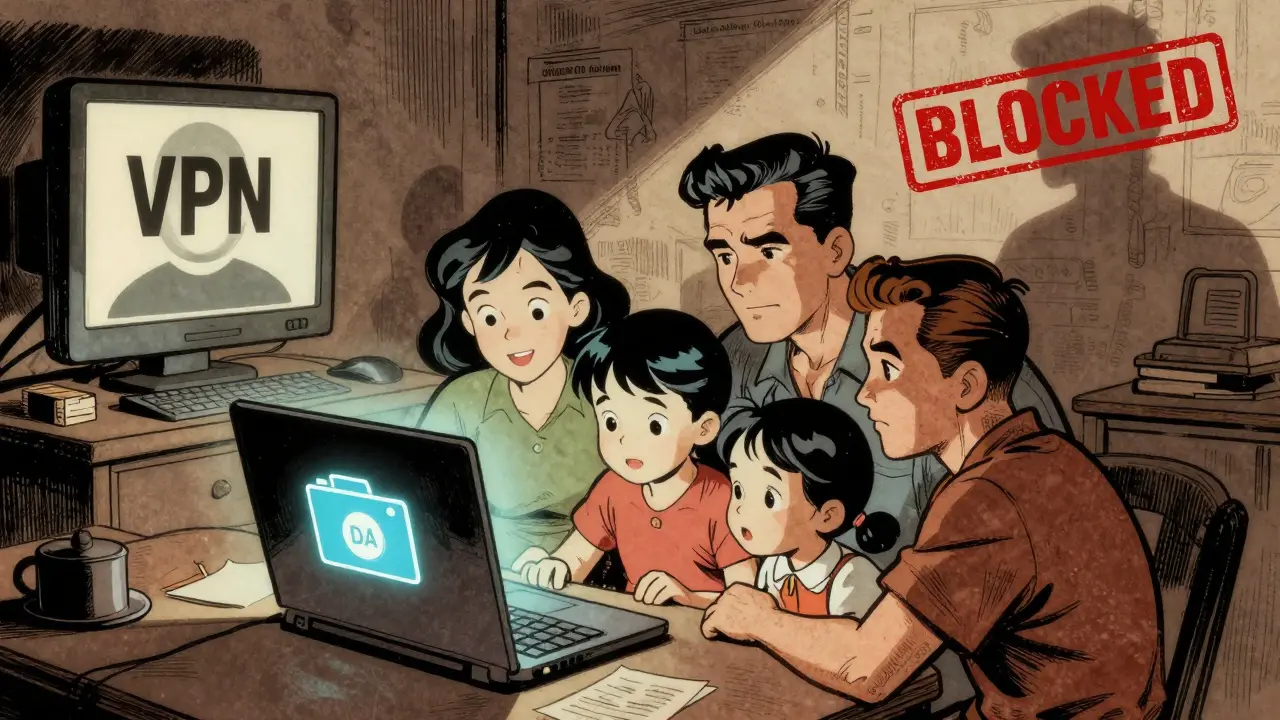
For Iranians trying to protect their savings from hyperinflation and sanctions, decentralized exchanges aren’t just a technical option-they’re a lifeline. With banks frozen, foreign transactions blocked, and centralized platforms like Nobitex under government control, many Iranians have turned to DEXs to buy, sell, and hold crypto without asking for permission. But it’s not simple. The Iranian government doesn’t just discourage crypto-it monitors it, taxes it, and tries to shut it down. Still, people keep finding ways in. In January 2025, Iran’s Central Bank took full control of the crypto market. Every Iranian who trades, mines, or even holds digital assets must now register with the bank and give them access to every transaction. That sounds like a total shutdown. But here’s the catch: decentralized exchanges don’t have accounts. They don’t ask for ID. They don’t store your money. They run on code. And code can’t be locked by a law. So how are Iranians still using DEXs? The answer lies in networks, tools, and smart shifts. After Tether froze over 40 Iranian-linked wallets in July 2025-many tied to Nobitex-users didn’t panic. They switched. Fast. They moved from USDT on Ethereum to DAI on Polygon. Why? Because Polygon is cheaper, faster, and harder to track. And DAI, being a decentralized stablecoin, isn’t controlled by any single company like Tether. This wasn’t random. Crypto influencers, Telegram groups, and even state-aligned channels pushed the shift. Within weeks, DAI usage on Polygon jumped by over 300% in Iran. It became the new default. Why? Because it works. You can swap ETH for DAI on Uniswap or SushiSwap using a wallet like MetaMask. No sign-up. No KYC. No bank. Just your private key and a VPN. Speaking of VPNs-those are essential. The Iranian government blocks access to most foreign crypto sites. But a good VPN lets users connect to servers outside Iran, bypassing censorship. It’s not perfect. Speeds drop. Some services detect and block VPN traffic. But for many, it’s the only way to reach DEXs like Uniswap, PancakeSwap, or Curve. The tech isn’t new. The use case is. The real challenge isn’t access-it’s safety. Iran’s new capital gains tax, passed in August 2025, treats crypto like gold or real estate. If you make money on a DEX swap, you owe taxes. And because the Central Bank can see all on-chain activity through domestic gateways, they know if you’re trading. That’s why most users keep small amounts on DEXs, trade quickly, and move funds offline. Some use mixers, though they’re risky. Others break trades into tiny chunks across multiple wallets. It’s not foolproof, but it’s working. Then there’s the hardware. Many Iranians use air-gapped devices-phones or laptops never connected to the internet-to generate wallets. They write down seed phrases by hand. They store them in locked drawers. They don’t trust cloud backups. Why? Because in 2025, Nobitex got hacked for $90 million. The breach wasn’t just a loss of funds-it was proof that even state-approved platforms aren’t safe. So people moved away. Hard. The government’s crackdown on mining also tells you something. In December 2024, rolling blackouts hit Tehran and Isfahan. Officials blamed illegal Bitcoin miners for draining the grid. They raided homes, seized rigs, and jailed operators. That didn’t stop mining. It just pushed it underground. The same is true for DEX use. People aren’t giving up. They’re adapting. One of the smartest moves Iranians made was avoiding USDT entirely. After the July 2025 freezes, USDT became toxic. Even if you got it from a non-Iranian source, Tether could freeze it later. DAI, backed by collateral on-chain and governed by smart contracts, doesn’t have that risk. It’s not perfect-its value can dip slightly-but it’s trustless. And that’s the whole point. There are no official DEX apps for Iran. No Iranian-made DEXs. But that’s not the point. The DEXs that work are global: Uniswap, SushiSwap, Curve, and Trader Joe. You don’t need permission to use them. You just need a wallet, a little knowledge, and a way around the firewall. The Iranian government wants crypto under its thumb. But DEXs operate outside its reach. That’s why they’re the only real option left. Not because they’re easy. But because they’re the last thing that still works. Here’s what you need to get started:
- Install a non-custodial wallet like MetaMask or Trust Wallet
- Use a reliable VPN (NordVPN, ExpressVPN, or ProtonVPN work best)
- Buy ETH or MATIC from a peer-to-peer market like LocalCryptos or through a trusted contact
- Swap ETH for DAI on Uniswap or SushiSwap via the Polygon network
- Keep your seed phrase offline-on paper, not in the cloud
- Never send large amounts to one wallet. Split trades across multiple addresses
- Avoid USDT. Stick with DAI, FRAX, or USDC on non-Ethereum chains
Why DEXs Are the Only Real Option for Iranians
Centralized exchanges like Nobitex look safe. They’re local. They have Persian interfaces. They even offer customer support. But they’re also monitored. Every deposit. Every withdrawal. Every trade. All logged. And handed over to the Central Bank. That’s why Nobitex’s $90 million hack in June 2025 wasn’t just a security failure-it was a warning. If a state-backed exchange can be breached, what hope do regular users have? The answer: none. That’s why so many moved out. DEXs have no servers to hack. No employees to bribe. No headquarters to raid. They’re just code on a blockchain. If you control your keys, you control your money. No government can freeze it unless they shut down the whole internet-which they can’t.How Iranian Users Bypassed the USDT Freeze
When Tether froze over 40 Iranian-linked addresses in July 2025, panic hit. USDT was the backbone of Iran’s crypto economy. But users didn’t wait for help. They acted. They swapped USDT for DAI on Polygon. Why Polygon? Because it’s cheap. A swap costs less than $0.10. Ethereum? Too expensive. BSC? Too centralized. Polygon offered speed, low fees, and a network that wasn’t under Tether’s direct control. DAI, created by MakerDAO, is collateralized by crypto assets, not by a company. That means Tether can’t freeze it. No one can. And since Polygon’s blockchain is public but not monitored by Iranian authorities, it became the perfect escape route.The Role of VPNs and Non-Custodial Wallets
You can’t access Uniswap from Iran without a VPN. The government blocks it. So do many ISPs. But a good VPN masks your IP. It makes you look like you’re in Germany, Turkey, or Canada. And once you’re in? You need a non-custodial wallet. That means no exchange holds your money. You do. MetaMask, Phantom, or Rabby Wallet-all let you sign transactions yourself. No third party. No backdoor. No government access. This isn’t advanced tech. It’s basic. But it’s the only thing that keeps people in control.Why DAI Over USDC or USDT
USDC is issued by Circle, a U.S. company. It’s subject to U.S. sanctions. If you hold USDC, you’re at risk. USDT is issued by Tether, which froze Iranian wallets in 2025. It’s not safe. DAI is different. It’s governed by a decentralized autonomous organization (DAO). No single company controls it. No government can shut it down. And it’s available on Polygon, which is fast and cheap. For Iranians, DAI isn’t just a stablecoin. It’s insurance.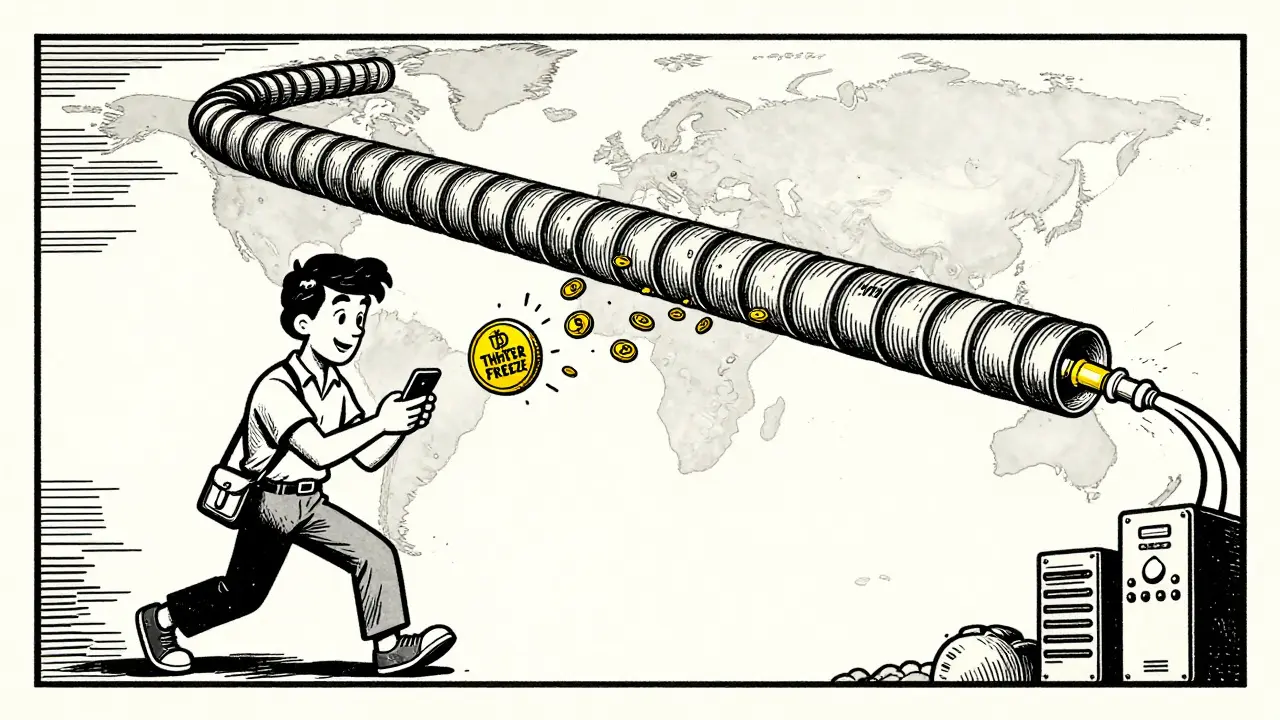
What Happens If the Government Finds Out?
The law says you must report crypto gains. The tax rate? Up to 35% on profits. But enforcement is messy. Most users trade in small amounts. They don’t file. They don’t report. The government can’t monitor every wallet. They can only see activity that flows through Iranian banks or domestic exchanges. If you use a DEX with a VPN and never touch Nobitex, you’re invisible. That’s not legal. But it’s practical.What Not to Do
- Don’t use Nobitex or other Iranian exchanges for long-term storage
- Don’t hold large amounts of USDT or USDC
- Don’t use the same wallet for every trade
- Don’t store your seed phrase on your phone or cloud
- Don’t trust anyone who promises “guaranteed access” to foreign exchanges
Is This Legal?
Technically, no. Iran’s laws say you need a license to trade crypto. And you must report everything. But laws on paper don’t always match reality. Thousands of Iranians use DEXs every day. The government can’t catch them all. It’s a gray zone. And in gray zones, people find ways to survive.
What’s Next?
Iran’s government will keep tightening. More taxes. More surveillance. More blackouts. But users will keep adapting. New chains will emerge. New stablecoins will rise. The tools will get better. The real battle isn’t between Iran and the U.S. It’s between control and freedom. And right now, blockchain is winning.Common Questions
Can Iranians legally use decentralized exchanges?
No, not under current Iranian law. The Central Bank requires all crypto activity to be licensed and reported. Using a DEX without permission violates regulations. However, enforcement is nearly impossible because DEXs have no central authority to shut down. Many Iranians use them anyway, relying on VPNs and non-custodial wallets to stay under the radar.
Which DEXs work best for Iranians?
Uniswap (on Polygon), SushiSwap, and Curve are the most reliable. These platforms support DAI, FRAX, and other stablecoins that aren’t tied to U.S. companies. Avoid platforms that require KYC or are hosted on Ethereum mainnet due to high fees. Polygon is preferred because of its low cost and faster transaction times.
Why is DAI better than USDT for Iranians?
Tether froze over 40 Iranian-linked wallets in July 2025, cutting off access to USDT holdings. DAI, created by MakerDAO, is decentralized and not controlled by any single company. No entity can freeze DAI. That makes it far safer for Iranians who need stable value without risking seizure.
Do I need a VPN to use a DEX in Iran?
Yes. The Iranian government blocks access to most foreign crypto platforms, including Uniswap and PancakeSwap. A reliable VPN masks your IP address and lets you connect as if you’re outside Iran. Without one, you won’t be able to reach these services.
Can the Iranian government track my DEX trades?
They can track activity if you use Iranian-based services like Nobitex or link your wallet to a local bank. But if you use a DEX via a VPN, hold funds in a non-custodial wallet, and avoid any Iranian financial ties, your trades are nearly impossible to trace. The blockchain is public, but your identity isn’t unless you reveal it.
Is it safe to store crypto in a MetaMask wallet in Iran?
Yes-if you follow basic security rules. Never store your seed phrase online. Write it down on paper. Keep it in a safe place. Use a separate wallet for each trade. Don’t send large sums. Use a hardware wallet if possible. MetaMask itself is secure; the risk comes from user error, not the wallet.
What happens if I’m caught using a DEX?
There are no confirmed cases of individuals being punished solely for using a DEX. The government focuses on large-scale operations, mining farms, or exchanges linked to sanctioned entities. For average users who trade small amounts with a VPN and no bank ties, the risk is very low. But the law is clear: it’s illegal. Proceed with caution.




Comments (15)
Konakuze Christopher
This is why the state always loses. Code doesn't care about borders or sanctions. They can jail miners, freeze banks, and tax your dreams-but they can't delete a blockchain.
Angelica Stovall
DAI on Polygon? Please. This is just another crypto cult pretending it’s resistance. The moment you use a VPN, you’re already flagged. The government sees everything. You’re not clever-you’re predictable.
Taylor Holloman.
I’ve watched this unfold for years. People think it’s about tech… but it’s really about dignity. When your currency collapses and your government turns your savings into a liability, you don’t ask for permission-you find a way. These aren’t hackers. They’re just trying to eat.
Bryan Roth
I love how this community keeps adapting. No central bank, no corporate middleman, no third-party gatekeeper. Just code. Just truth. Just freedom. Keep going. You’re not just trading crypto-you’re rewriting the rules.
sai nikhil
The fact that Iranians are using DAI instead of USDT shows real financial literacy. Most people don’t even know the difference between centralized and decentralized stablecoins. This is education in action.
Sahithi Reddy
VPN + MetaMask + DAI on Polygon that’s it no more no less
Henrique Lyma
Let’s be honest-this isn’t innovation. It’s desperation dressed up as a tech tutorial. You call it ‘survival’? I call it a workaround for a failed economy. The fact that you need a VPN to access Uniswap proves the system is broken-not that blockchain is superior. It just means the state is incompetent, not that decentralization is righteous.
Steph Andrews
I’m from the US and I didn’t realize how much people here take for granted. The idea that you have to risk your safety just to hold your own money… it’s humbling. I’m not a crypto person, but I respect this.
Prakash Patel
You all think this is clever. But what if the government starts blocking Polygon nodes? Or forces ISPs to detect MetaMask traffic? This is a house of cards built on a single assumption-that they won’t catch up.
Zachary N
There’s a lot here worth unpacking. First-DAI on Polygon is smart because it avoids both Tether’s centralized control and Ethereum’s gas fees. Second-air-gapped wallets aren’t just paranoid; they’re necessary after Nobitex’s hack. Third-splitting trades across wallets isn’t just security, it’s behavioral camouflage. And fourth? The real win isn’t the tech-it’s the collective learning. People are teaching each other, not just reading guides. That’s how movements start. Not with apps. With trust.
Elizabeth Kurtz
I’ve seen this pattern before. When people are cut off from traditional systems, they build their own. It’s beautiful, really. Not because crypto is perfect-but because humans refuse to stay powerless. Keep going. You’re not alone.
Manali Sovani
I find it rather tiresome how Western tech enthusiasts romanticize the plight of Iranians as if it were some kind of avant-garde crypto performance art. The reality is far less glamorous: it’s a population trapped between hyperinflation and authoritarian surveillance, fumbling with outdated phones and unstable internet connections. This isn’t innovation. It’s survival with a tutorial.
john peter
You think this is about finance? No. This is about control. The Central Bank doesn’t care about taxes or tracking-it wants to break the spirit of autonomy. Every DEX user is a threat not because they’re rich, but because they’re independent. That’s why they’ll keep tightening. And eventually, they’ll shut it all down. This isn’t a revolution. It’s a countdown.
Marc Morgan
So Iran’s government is trying to control crypto… and people are using Polygon because it’s cheap. That’s like trying to stop a flood with a rubber duck. I mean… congrats? You turned a financial crisis into a meme.
George Hutchings
This isn’t just about Iran. It’s about what happens when trust in institutions dies. People don’t turn to DEXs because they love blockchain-they turn to it because the system lied to them. The same thing is happening in Argentina, Nigeria, Lebanon. This is the new global underground. And it’s quiet. And it’s working.