
Most people jumping into new decentralized exchanges are looking for one of two things: a way to save on gas or a ticket to a massive airdrop. When you look at Kyo Finance V2 is a specialized decentralized exchange (DEX) built on the Soneium blockchain network. It isn't trying to be the next Uniswap; instead, it's a niche tool designed specifically for the Soneium ecosystem. If you're trading on a major chain like Ethereum or Solana, this probably isn't for you. But if you're already deep in the Soneium world, it offers some technical tricks that could actually save you money.
Key Takeaways
- Best For: Soneium-native users who do frequent small trades and want to minimize gas costs.
- The Big Draw: Batch transaction support and a credit-based reward system for potential airdrops.
- The Trade-off: Extremely low liquidity and a very limited selection of tokens compared to industry giants.
- Technical Level: Moderate to High; requires a Web3 wallet and knowledge of bridging assets.
The Soneium Connection and Batch Transactions
To understand why Kyo Finance V2 exists, you have to understand the Soneium blockchain. Kyo Finance didn't just appear out of nowhere; it actually won the Soneium Spark Incubation program back in early 2025. This gives the project a level of legitimacy because the network's own developers essentially gave it a thumbs-up.
The standout feature here is the batch transaction support. In a typical DEX, if you want to swap ETH for USDC and then add that USDC to a liquidity pool, you have to sign two separate transactions and pay gas twice. Kyo Finance allows you to bundle these actions into one. This isn't just a convenience; for someone doing ten small trades a day, it drastically cuts down the overhead costs. It's a a smart move for a network that's still growing and trying to attract active traders.
Understanding the ve(3,3) Tokenomics
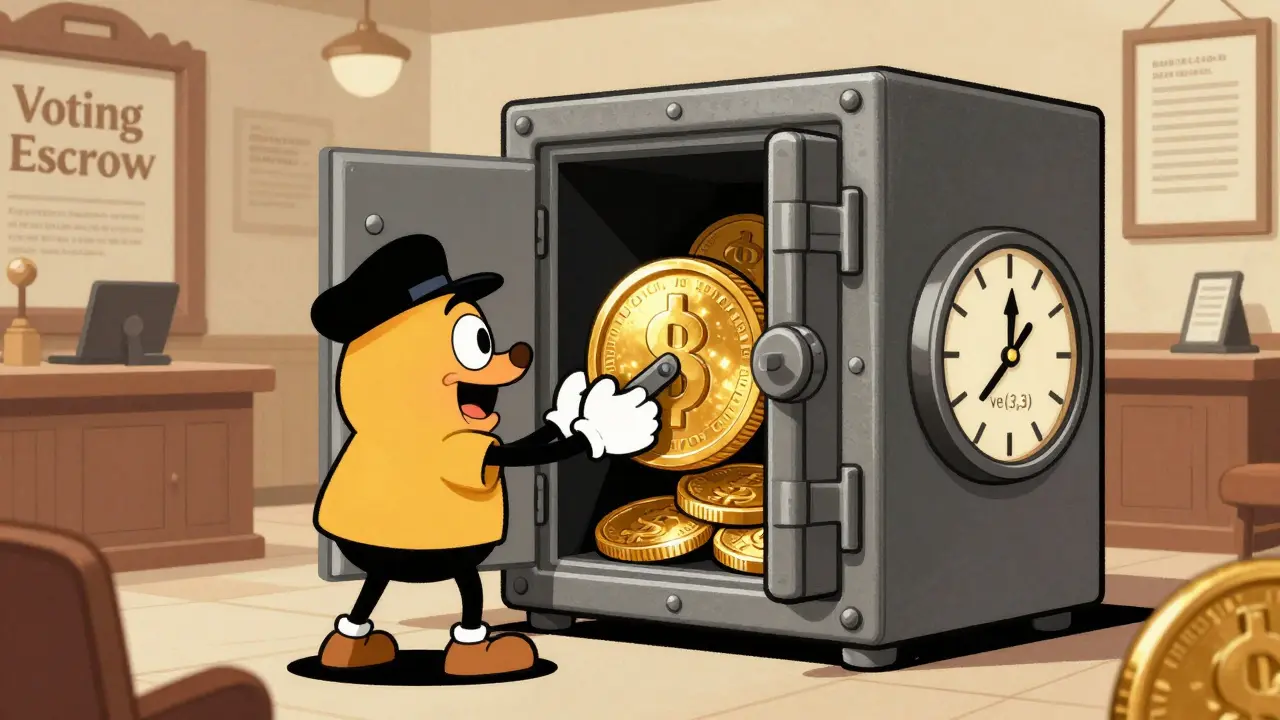
Kyo Finance uses a ve(3,3) model, which is a bit of a mouthful but essentially means "voting escrow." Unlike a basic automated market maker (AMM) where you just dump tokens in and hope for the best, ve(3,3) encourages you to lock your tokens for a long time. The longer you lock, the more power you have over the protocol's governance and the better your rewards become.
This creates a tug-of-war between liquidity and governance. The platform wants you to stay long-term, which helps stabilize the pools. For the average user, this means you can't just "hop in and out" if you want to maximize your returns. You're essentially betting on the long-term growth of the Soneium ecosystem. If the network takes off, your locked positions become gold; if it stalls, your assets are stuck in a locked vault.
Liquidity and Token Availability
Here is where the reality check hits. If you're used to the thousands of pairs on a platform like Uniswap, Kyo Finance V2 will feel like a ghost town. Even as it evolved into V3, the selection remained slim-only about 14 coins and 25 trading pairs. While the volume grew to around $3.5 million in 24 hours by late 2025, that is a drop in the bucket compared to the billions seen on top-tier exchanges.
Low liquidity means one major problem: slippage. If you try to move a large amount of money in a low-liquidity pool, you'll end up paying a premium because there aren't enough orders to fill your trade at the current price. This makes Kyo Finance a tool for small-to-mid-sized trades. If you're a whale, you'll find the lack of depth frustrating.
| Feature | Kyo Finance V2/V3 | Uniswap / PancakeSwap |
|---|---|---|
| Daily Volume | ~$3.5M (V3 peak) | $800M - $1.2B |
| Token Selection | ~14 Coins | Thousands |
| Gas Optimization | High (Batching) | Standard |
| Network Scope | Soneium Only | Multi-chain / Cross-chain |
| Entry Barrier | High (Bridging needed) | Low (Wide support) |
The Airdrop Gamble: Credits and Rewards
Let's be honest: a lot of the activity on Kyo Finance is driven by the "airdrop chase." The platform implemented a credit-based reward system. Your credits grow based on how much you deposit and how long you leave it there. This is the classic DeFi playbook-incentivize early adopters with the promise of future tokens.
However, as of late 2025, an official token launch has remained unconfirmed. This puts users in a speculative position. You are essentially providing liquidity (and taking on the risk of impermanent loss) in exchange for "credits" that might actually be worth something one day. It's a high-risk, high-reward game that appeals to DeFi degens but would terrify a conservative investor.
User Experience and Technical Setup
Setting up Kyo Finance isn't as simple as creating an account on Coinbase. Since it's a non-custodial DEX, you're in charge of everything. This means you need a Web3 wallet like MetaMask and you have to manually configure it for the Soneium network.
The biggest hurdle for beginners is bridging. You can't just send money from your bank; you have to move assets from another chain (like Ethereum) over to Soneium using a bridge. For a tech-savvy user, this takes about an hour. For a beginner, it can be a nightmare of incorrect network settings and failed transactions. Furthermore, there's no "customer support" phone line-if you have a problem, you're headed to a Discord channel and hoping a moderator is online.
Is it Safe?
From a regulatory standpoint, Kyo Finance is a ghost. Because it's a decentralized protocol without KYC (Know Your Customer) requirements, it doesn't operate like a traditional company. It hasn't appeared on major scam databases, which is a good sign, but that doesn't mean it's risk-free. The primary risks here aren't regulatory, but technical: smart contract bugs or the potential for the Soneium ecosystem itself to fail to gain traction.
What is the main advantage of Kyo Finance over other DEXs?
The primary advantage is its batch transaction support on the Soneium network. This allows users to combine multiple actions-like swapping and adding liquidity-into a single transaction, which significantly reduces gas fees for frequent traders.
Does Kyo Finance have its own token?
As of late 2025, no official token has been launched. However, the platform uses a credit system to track activity, which many users believe will be used to determine future airdrop allocations.
Can I use Kyo Finance for cross-chain trading?
No. Kyo Finance is exclusively built for the Soneium blockchain. To use it, you must bridge your assets from other networks into Soneium first.
Who should avoid this exchange?
Beginners who are uncomfortable with Web3 wallets, traders moving very large sums (due to low liquidity/slippage), and anyone not interested in the Soneium ecosystem should likely stick to larger, multi-chain exchanges.
What is ve(3,3) tokenomics?
It is a model where users lock their tokens for a specific period in exchange for voting power and boosted rewards. This is designed to prevent short-term dumping and incentivize long-term liquidity provision.
Next Steps for New Users
If you've decided to try Kyo Finance, don't just jump in with your entire portfolio. Start with these steps:
- Setup: Install a compatible Web3 wallet (like MetaMask) and add the Soneium network RPC settings.
- Bridge: Use an official Soneium bridge to move a small amount of assets over to the network.
- Test: Perform a small swap first to ensure your gas settings are correct and the transaction goes through.
- Farm: If you're looking for airdrops, look into the eligible pools and check the credit requirements before locking your assets for long periods.


Comments (13)
Nishant Goyal
Soneium is definitely an interesting play for the long term. Batching transactions is a nice touch for the small fish.
Alex Long
Literally just another ghost town DEX. Why do people even care about this trash?
Michael Harms
Glad to see some focus on gas optimization! If you're new to the Soneium space, just take it slow and use a burner wallet first. It's a great way to learn the ropes without stressing over your main bag!
Ankit Sindhu
I've been helping a few friends bridge over to Soneium recently. It can be tricky, but once you get the RPC settings right, Kyo's interface is actually pretty intuitive for a V2.
Sandeep Bhoir
Oh sure, because "credits" are totally a guarantee of a token launch. I'm sure the devs have the best intentions while your liquidity just sits there in a vault. Truly a masterpiece of modern finance.
Gaurav Undirwade
It is utterly lamentable that the common investor is lured by the siren song of "airdrops" without comprehending the fundamental instability of ve(3,3) models. One must exercise an extraordinary degree of moral fortitude and intellectual rigor before committing assets to such a speculative venture. The lack of transparency regarding the token launch is not merely a technical oversight; it is a systemic failure of ethics within the project's leadership. I find it abhorrent that such risks are presented as "gambles" rather than the reckless abandon they truly are. True financial wisdom requires the avoidance of such volatility.
siddharth narula
The pursuit of digital wealth often blinds the soul to the ephemeral nature of these protocols. 🌀 We chase credits while the void of liquidity swallows our patience. One must wonder if the "batching" of transactions is merely a metaphor for the batching of our collective delusions. 🧘♂️
Thomas Jewett
I dont see why anyone cares about these forign blockchains when we should be focusing on stuff built right here in the US and actually regulated by peple who speak english and not some random dev in a basement somewhere across the ocean who just wants to steal your eth with a smart contract bug that no one will fix because there is no actual company to sue!! its a total joke that people fall for this over and over again when the answer is just to stick to the gold standard of real american finance and stop tryin to be "degens" with money you probably dont even have in the first place lol.
Luke George
Soneium is probably just a front for some larger corporate surveillance project anyway. They want you to bridge your assets so they can map your wallet clusters. Only a few of us actually see the pattern. The "Spark Incubation" is just a fancy word for a controlled experiment. I'll keep my assets in cold storage, thanks.
Anna Grealis
The slippage on those 14 coins is actually insane. Total joke.
Karen Mogollon Gutierrez
The sheer audacity of requiring a user to manually configure RPC settings in this day and age is an absolute travesty! It is simply unacceptable that the onboarding process is designed as a labyrinth of technical hurdles. One would expect a modicum of professionalism from a project that claims to be "incubated." The emotional toll of a failed bridge transaction is something the developers clearly disregard in their pursuit of "credits." I am utterly appalled!
Tracy Sperandio
Let's get this hype train moving! 🚀 Even if the liquidity is slim now, the potential for an early-bird airdrop is an electrifying opportunity! Who cares if it's a niche tool? Being a pioneer in the Soneium ecosystem is where the real magic happens. Just bridge a tiny bit, play around with the batching, and ride the wave! It's all about that high-energy growth phase, baby!
Chintu Parikh
I completely agree with the sentiment that early adoption requires a balance of risk and reward. While the technical barriers are present, the community's willingness to collaborate on bridging guides is truly commendable. We should all strive to support these burgeoning networks with an open mind and a spirit of mutual cooperation, ensuring that the evolution of DeFi remains inclusive for everyone involved in the ecosystem.