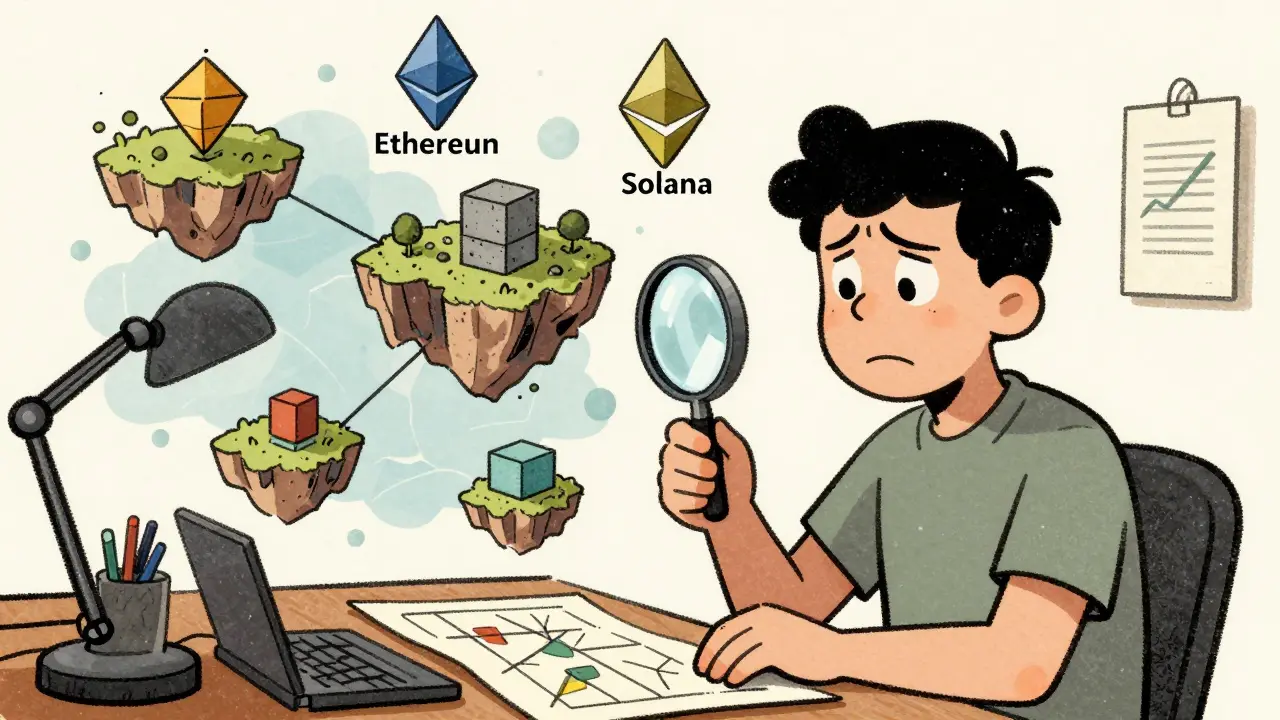
Imagine needing to move your funds from Ethereum to Solana. Usually, this is a nightmare of finding a reliable bridge, paying multiple gas fees, and praying your assets actually arrive on the other side. Elk Finance is a decentralized exchange (DEX) designed to kill that friction by acting as a one-stop shop for cross-chain swapping. By using a proprietary routing engine, it lets you swap tokens across different blockchains in a single transaction, effectively hiding the "bridge" part of the process from the user. But is it actually a viable alternative to the giants of the DeFi world, especially on the Avalanche network?
The Core Engine: How Elk Finance Actually Works
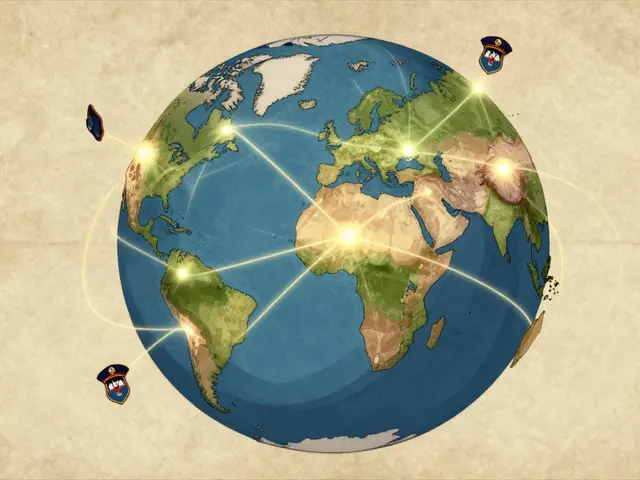
Most exchanges keep you locked within one ecosystem. If you're on Avalanche, you trade Avalanche tokens. Elk Finance takes a different approach. It deploys smart contracts across over 15 different networks, including Ethereum, Binance Smart Chain, and Solana. These contracts are linked by a routing engine that calculates the cheapest and fastest path to get your tokens from Point A to Point B.
If a direct pool doesn't exist for your specific pair, the engine doesn't just give up. It splits your trade into multiple "hops," moving your assets through intermediate pools to ensure the trade completes. This means you don't have to manually bridge assets-a process that often scares off beginners and wastes time for pros. For someone moving assets between disparate chains, this is a massive quality-of-life improvement.
The ELK Token and Ecosystem Incentives
The entire platform is powered by the ELK token. It's not just a speculative asset; it has a few specific roles. First, it handles governance. Second, if you stake your ELK, you can get fee rebates of up to 50%, which is a nice perk if you're a high-volume trader. Third, it rewards liquidity providers who lend their assets to the pools.
To keep the wheels turning, Elk Finance uses a proprietary USD-pegged stablecoin to pad its liquidity pools, ensuring there's always a baseline of stability. They also utilize cross-chain liquidity vaults. These are essentially "baskets" of assets held on specific networks to make sure swaps remain efficient even when the market gets volatile.
| Allocation Category | Token Amount | Purpose/Condition |
|---|---|---|
| Team Members | 20 Million ELK | Vested over 4 years |
| Community Vault | 30 Million ELK | General community growth |
| Ecosystem Development | 25 Million ELK | Platform upgrades and scaling |
| Liquidity Mining | 25 Million ELK | Rewards for asset providers |
Comparing Elk Finance to the Competition
When you look at the broader Decentralized Finance (DeFi) landscape, Elk Finance is playing a specific game: cross-chain agility. If you compare it to something like XY FINANCE, you'll see similar DNA. Both support a wide array of chains and integrate with common wallets like MetaMask. However, Elk Finance slightly edges them out in reach, supporting 15+ blockchains compared to XY's 10+.
However, there is a massive gap when you compare them to the "Blue Chips." For example, Uniswap or PancakeSwap handle billions in volume daily. Elk Finance's Avalanche instance, by contrast, has seen daily volumes as low as $886. This is a critical point. In a DEX, volume equals liquidity. Low liquidity means higher "slippage"-the difference between the price you expect and the price you actually get. If you're trading a few hundred dollars, it's fine. If you're moving six figures, you'll likely find the liquidity here insufficient.
Pros and Cons: The Honest Trade-off
Using Elk Finance is a trade-off between convenience and depth. On one hand, the ability to swap ETH to SOL in one click is a game-changer. It removes three or four manual steps and the associated stress of using multiple bridges. For a user, this transforms a 20-minute ordeal into a few seconds of waiting for a confirmation.
On the other hand, the platform struggles with "thin" pairs. If you're trading a niche token that isn't the ELK token itself, you might encounter routing failures during network congestion. Furthermore, while the interface is clean and supports WalletConnect and FOX Wallet, the lack of a dedicated mobile app makes it less convenient for those who don't use mobile browser wallets.
The Avalanche Connection and Future Outlook
The synergy with Avalanche is interesting. Avalanche has seen a surge in tokenized real-world assets (RWA), with some reports showing $400 million in assets deployed in a single month. As more people move these assets onto Avalanche, the demand for a smooth cross-chain gateway like Elk Finance should logically grow. To capitalize on this, Elk recently integrated with Avalanche's subnet architecture to make routing even faster.
Looking ahead to 2026, the roadmap focuses on Layer 2 expansions. They are targeting Arbitrum, Optimism, and zkSync. If they can capture even a fraction of the L2 traffic, their current volume issues might disappear. But until then, it remains a niche tool for a specific purpose: effortless cross-chain movement.
Final Verdict: Should You Use It?
If you are a DeFi power user who frequently moves assets between five or more different chains, Elk Finance is a tool you should have in your kit. The time saved on bridging is worth the slightly lower liquidity. However, if you only trade on Avalanche and want the best possible prices with the lowest slippage, you're better off sticking with a dominant local DEX like Pangolin.
Is Elk Finance safe to use?
Like any DEX, safety depends on the smart contracts. Elk Finance uses audited contracts across multiple chains, but because it is decentralized, there is no central authority to recover funds if you send them to the wrong address. Always double-check your wallet connection via MetaMask or WalletConnect.
What are the trading fees on Elk Finance?
The platform doesn't have a flat pricing tier. You pay the standard network gas fees for the blockchain you are using. However, ELK token stakers can receive fee rebates of up to 50%, effectively lowering the cost of trading over time.
Do I need to bridge my tokens before using Elk Finance?
No, that is the main selling point. The platform's routing engine handles the movement between chains automatically. You can swap from one network to another in a single transaction without manually using an external bridge.
How does the ELK token provide value?
The ELK token serves three primary purposes: governance (voting on platform changes), staking for fee rebates, and providing rewards for those who supply liquidity to the exchange's pools.
Which wallets are compatible with Elk Finance?
It supports most major web3 wallets, including MetaMask, WalletConnect, and FOX Wallet. Since it's a web-based platform, you just need a browser-compatible wallet to connect.

Comments (16)
Jason Davis
Bridging is honestly the worst part of DeFi so anything that abstracts that away is a win. Just be carefull with the slippge if youre moving a lot of funds because thin pools will eat your profits fast. I've used similar routing engines before and they're great for small swaps but risky for whale moves. Its basically a trade off between your time and a few extra percentage points of cost. Most people dont even realize how much gas they waste doing it manually anyway. Just make sure you check the final quote before confirming the tx on your wallet
Agnessa Dale
This sounds like a great way to make crypto more accessible for everyone!
Prasanna Shembekar
omg the stress of bridging is literally a nightmare i cant even handle it lol
Jessie Tayaban
Oh my gosh yes!! I totally agree about the bridging struggle!! Its like a whole mission just to move some tokens and I always get so nervouse i'll lose them in the void. Elk sounds like a total lifesaver for people like me who just want things to work without a million steps. I love that it handles the hops automatically because who actually has the patience to do that manually?? Its just so much bettter to have one click and be done with it!
Emily H
The integration of the subnet architecture on Avalanche is a sophisticated move. It is imperative to note that while convenience is paramount, the underlying liquidity depth remains the primary determinant of a DEX's long-term viability. One must exercise caution when executing large-scale transactions to avoid suboptimal pricing.
Swati Sharma
The cross-chain liquidity vaults are definitely the MVP here to mitigate slippage. By optimizing the routing engine and maintaining these baskets, they can really solve the fragmented liquidity problem across L1s and L2s. It's all about reducing the friction in the user experience to drive TVL growth.
Rob Mitchell
Spot on. Convenience beats depth for most retail users.
James Bone
Imagine thinking a DEX with 800 bucks in daily volume is actually "viable". It's a ghost town. People love to pretend these "routing engines" are magic, but it's just a fancy way of saying you're trading in a puddle. The philosophy of "convenience" is just a trap for people who don't understand how liquidity pools actually work. You're basically paying a "convenience tax" through slippage and calling it innovation. It's honestly pathetic how some people fall for the marketing of a proprietary routing engine when the numbers clearly show it's irrelevant in the grand scheme of DeFi.
EDOZIEM MICHAEL
money is just energy moving from one place to another and this tool just makes the river flow smoother
Akshay Gorad
I appreciate the breakdown of the tokenomics. It is good to see a vesting period for the team to avoid immediate dumps.
Lauren Abrams
Interesting that they are targeting zkSync and Arbitrum for the future. The L2 landscape is getting crowded.
Alan Seiden
Another useless piece of software that pretends to innovate while providing zero actual liquidity. This is typical of the current state of DeFi-overpromised and underdelivered. I wouldn't trust my pennies to a platform that lacks a basic mobile app in 2024.
Aaliyah BROTHERS
SURELY they are hiding the real risks here!!! Who audited these "proprietary" engines??? It is probably just a front for some shadow-banking scheme to drain our wallets into a black hole of "liquidity vaults"!!!! THE LIES ARE EVERYWHERE!!!! Just look at the token distribution... 20 million for the team??? ABSOLUTE SCAM VIBES!!!!
Heather Warren
I think it is really helpful for beginners who are scared of bridges. It makes the whole process feel safer and easier!
Mikayla Murphy
It is a fair point about the trade-off. Some of us just value our time more than a few cents in slippage, and that is okay.
Stanly Hayes
Who cares about the volume if the tech actually works? Get with the program and stop whining about a few dollars of slippage!