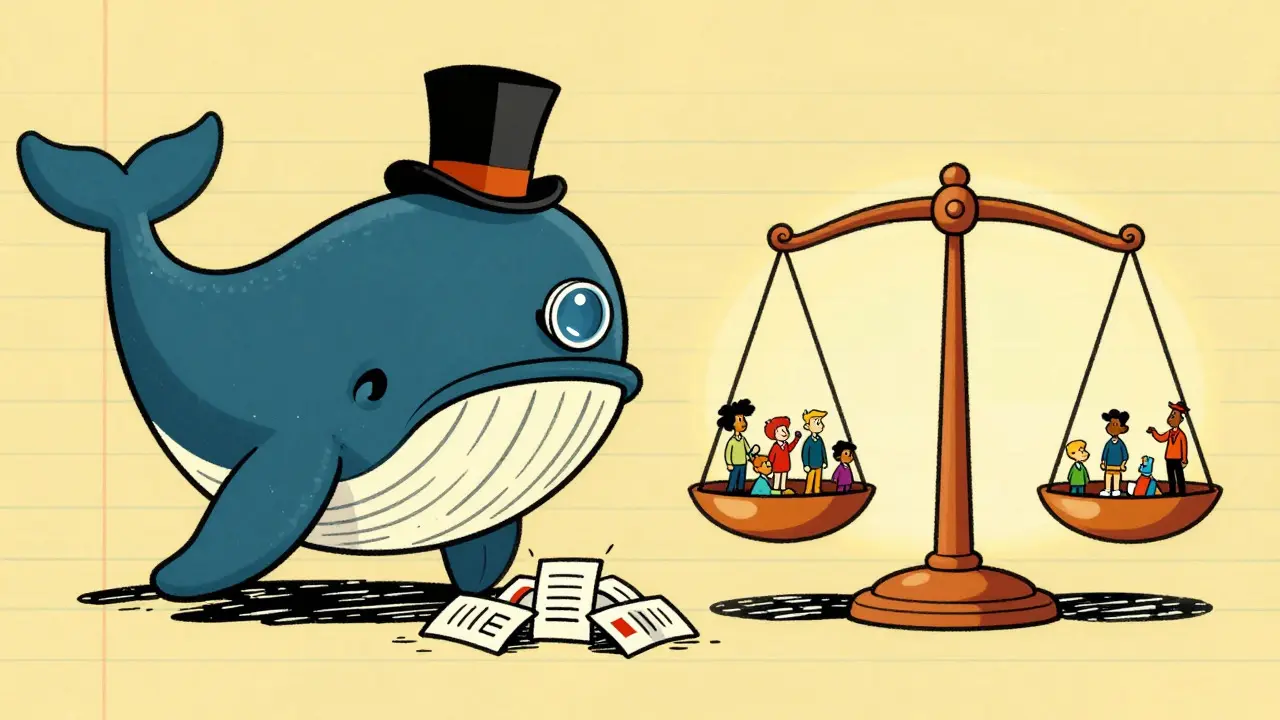
You hold tokens in a Decentralized Autonomous Organization (DAO), but what does that actually mean for your wallet? It means you have a voice. Unlike traditional companies where a board of directors makes decisions behind closed doors, DAOs put the power directly into the hands of the community. But how do you turn an idea into action? How do you ensure that one wealthy "whale" doesn't just buy up all the votes and dictate terms?
The answer lies in the mechanics of proposal creation and voting. These are the gears that keep the machine running. Whether you are looking to allocate treasury funds, update protocol code, or simply change the community logo, understanding these workflows is essential. This guide breaks down exactly how proposals move from a Discord chat to an executed smart contract, and why the method of voting matters more than you might think.
The Lifecycle of a DAO Proposal
Creating a proposal isn't as simple as typing a tweet and hitting send. In most robust DAOs, there is a structured lifecycle designed to prevent spam and ensure quality. Think of it like a bill moving through parliament, but automated by code.
First comes the discussion phase. Most serious proposals start off-chain in forums like Discourse or chats on Discord. Here, members debate the merits of an idea without burning gas fees. If the community shows interest, the next step is often sponsorship. Many DAOs require a certain number of existing members to "sponsor" or endorse a proposal before it can be formally submitted. This acts as a filter against low-effort noise.
Once sponsored, the proposal moves on-chain. This is where the technical heavy lifting happens. The proposer defines the specific actions the smart contract should take if the vote passes. For example, "Send 10,000 DAI to this address" or "Update variable X in the lending pool." Finally, the voting window opens. During this period, token holders cast their ballots. If the proposal meets the required quorum and majority thresholds, it enters a timelock period-a mandatory waiting time-before execution.
This structure protects the DAO. It ensures that every executed action has been thoroughly vetted, debated, and approved by the stakeholders who own the assets at risk.
Voting Mechanisms: Not All Votes Are Equal
The way votes are counted determines the fairness and efficiency of your DAO. There is no one-size-fits-all solution, and each mechanism carries trade-offs between security, decentralization, and ease of use.
Token-Weighted Voting is the most common model. Here, one token equals one vote. It is simple to understand and easy to implement. However, it creates a plutocracy. If you own 50% of the tokens, you control the outcome. This leads to "whale dominance," where large holders can push through proposals that benefit them but hurt smaller participants. Despite this, it remains popular because it aligns economic risk with decision-making power-if you lose money, you likely voted poorly.
Quadratic Voting attempts to solve the whale problem by increasing the cost of casting multiple votes. To cast two votes, you need four tokens; three votes require nine tokens ($votes^2$). This mathematical curve makes it expensive for whales to dominate while allowing small holders to express nuanced preferences cheaply. While theoretically fairer, it is complex for new users and can reduce overall participation due to cognitive load.
Reputation-Based Voting separates voting power from financial ownership. You earn reputation points by contributing code, writing documentation, or moderating chats. This prevents someone from buying influence overnight. However, it raises questions about how reputation is earned and whether it can be gamed.
| Mechanism | Pros | Cons | Best For |
|---|---|---|---|
| Token-Weighted | Simple, aligns economic incentives | Whale dominance, voter apathy among small holders | Treasury management, high-stakes protocol changes |
| Quadratic | Reduces whale influence, encourages broad consensus | Complex UX, lower turnout, hard to calculate costs | Grant allocation, public goods funding |
| Reputation | Rewards contribution, not just capital | Hard to bootstrap, potential for sybil attacks | Community-driven projects, developer-focused DAOs |
| Conviction Voting | No fixed deadlines, continuous feedback | Slow decision-making, unclear finality | Ongoing resource allocation, flexible budgets |
Critical Safety Nets: Quorums, Timelocks, and Rage Quitting
A voting system is only as good as its safety features. Without them, a DAO can be hijacked or paralyzed. Three mechanisms stand out as industry standards for protecting decentralized organizations.
Quorums set the minimum participation threshold for a vote to be valid. If a proposal requires a 40% quorum, at least 40% of total voting power must participate. This prevents a small, motivated group from making major changes that affect everyone else. However, setting the quorum too high can lead to gridlock, where nothing gets done because turnout never reaches the magic number.
Timelocks introduce a delay between approval and execution. Even if a proposal passes, it sits in a "pending" state for 24 to 168 hours. This gives dissenters time to react. If a malicious proposal slips through, the community can sell their tokens, withdraw liquidity, or launch a counter-proposal before the damage is done. It is the difference between a gun being fired instantly and having a few seconds to dodge.
Rage Quitting is a unique feature found in some DAOs like MolochDAO. If a member disagrees with a passed proposal, they can "rage quit." They withdraw their share of the treasury and leave the organization. This forces the remaining members to internalize the cost of bad decisions. If many people rage quit, the treasury shrinks, punishing those who stayed and voted for the unpopular measure. It incentivizes careful deliberation.
Tools of the Trade: Snapshot vs. On-Chain Voting
Not all voting happens on the blockchain. Gas fees on Ethereum can make on-chain voting prohibitively expensive for everyday decisions. This is where Snapshot comes in. Snapshot is an off-chain voting platform that uses IPFS to store votes. It is free, fast, and supports delegation, where users can assign their voting power to trusted representatives.
However, Snapshot votes are not legally binding in the same way on-chain votes are. They signal intent. Usually, a Snapshot poll precedes an on-chain vote. If the off-chain vote passes, the winning proposal is submitted on-chain for final execution. This hybrid approach saves gas while maintaining security for critical actions.
For fully on-chain voting, platforms like Aragon and Colony provide modular apps. Aragon focuses on simplicity and modularity, allowing DAOs to mix and match governance components. Colony emphasizes task-based contributions, linking reputation and payments directly to completed work.

Common Pitfalls and How to Avoid Them
Even well-designed systems fail when human behavior interferes. Here are the most common issues DAOs face and practical ways to mitigate them.
- Voter Apathy: Most token holders don't vote. Turnout often hovers below 20%. Solution: Use delegated voting. Allow inactive holders to assign their votes to active experts. Gamify participation with badges or reputation rewards.
- Proposal Spam: Too many low-quality ideas clutter the queue. Solution: Implement sponsorship requirements. Require a fee to submit a proposal, which is refunded if the proposal passes or rejected if it fails.
- Whale Capture: Large holders manipulate outcomes. Solution: Adopt quadratic voting or implement voting caps. Diversify token distribution through fair launches and vesting schedules.
- Legal Ambiguity: Regulators may classify DAO tokens as securities. Solution: Consult legal counsel early. Structure your DAO to emphasize utility over profit-sharing. Consider forming a legal wrapper like a Wyoming LLC or Swiss Foundation.
The Future of DAO Governance
We are still in the early stages of decentralized governance. Current models are clunky, slow, and prone to manipulation. But innovation is accelerating. We are seeing experiments with conviction voting, where support builds over time rather than in a single snapshot. We are exploring identity solutions to combat Sybil attacks, where one person creates thousands of fake wallets to game the system.
As DAOs manage billions in assets, the stakes are higher than ever. The goal is not just to decentralize control, but to create systems that are resilient, inclusive, and efficient. By understanding the mechanics of proposals and voting, you become more than just a token holder-you become a responsible citizen of the decentralized web.
What is the difference between on-chain and off-chain voting?
On-chain voting occurs directly on the blockchain, requiring gas fees and resulting in immutable, executable smart contract actions. Off-chain voting, like Snapshot, uses IPFS to record votes for free and speed, serving as a binding signal of intent that usually precedes a formal on-chain vote for critical decisions.
Why do DAOs use timelocks?
Timelocks add a mandatory delay between a proposal's approval and its execution. This safety net allows the community to react to potentially malicious or erroneous proposals by selling tokens, withdrawing funds, or launching counter-proposals before the action takes effect.
How does quadratic voting prevent whale dominance?
Quadratic voting increases the cost of casting additional votes exponentially. To cast N votes, a user needs N² tokens. This makes it financially prohibitive for large holders (whales) to exert disproportionate influence, while allowing smaller holders to participate meaningfully at a lower cost.
What is a quorum in DAO governance?
A quorum is the minimum percentage of total voting power that must participate in a vote for the result to be considered valid. It prevents a small, unrepresentative subset of the community from making major decisions that affect the entire organization.
Can I delegate my voting power in a DAO?
Yes, many DAOs support delegated voting. This allows token holders to assign their voting rights to a trusted representative or expert. The delegate casts votes on behalf of the delegator, but the original holder can revoke delegation at any time.