Everyone loves free money, especially when it comes in the form of cryptocurrency. But before you rush to claim your slice of the HaloDAO pie, there is a catch. The recent buzz around the HaloDAO x CoinMarketCap airdrop has left many investors scratching their heads. Is this a genuine opportunity for passive income, or just another ghost campaign that vanished into the blockchain void? As of late 2025 and early 2026, the landscape for RNBW tokens looks less like a gold rush and more like a quiet desert.
If you are holding RNBW or considering buying it specifically for an airdrop, you need the cold, hard facts. This guide breaks down what actually happened with the HaloDAO protocol, its relationship with major platforms like CoinMarketCap, and why the current market data tells a story very different from the hype cycle. We will look at the technical specs, the reality of the token’s liquidity, and how you can navigate these DeFi waters without getting burned.
The Reality Check: Current Market Status of RNBW
Let’s start with the numbers because they don’t lie. If you check major exchanges today, you might notice something odd about RNBW. It is listed, but it is effectively dead on arrival in terms of trading activity. The price sits at $0.00 USD, and the 24-hour trading volume is zero. Yes, zero. Not low-non-existent.
This isn’t just a minor dip; it’s a complete halt in market momentum. Over the last three months, the token saw a decline of over 22%, but since the volume is negligible, that percentage change is largely symbolic. The fully diluted market cap shows a tiny figure of roughly $2.42, which indicates that while the total supply exists, almost no one is actively trading it. Why does this matter for an airdrop? Because if you receive tokens that have no liquidity, you cannot sell them. You are stuck holding a digital receipt for value that doesn’t currently exist in the open market.
| Metric | Value | Status |
|---|---|---|
| Current Price | $0.00 USD | No active pricing |
| 24h Volume | $0.00 | No trading activity |
| Circulating Supply | 8.87 Million RNBW | Low utilization |
| Total Supply | 100 Million RNBW | Capped |
| Network | Binance Smart Chain (BSC) | Migrated from Ethereum |
What Was the HaloDAO x CoinMarketCap Connection?
You might be wondering, "If the volume is zero, why was there an airdrop talk?" The confusion stems from HaloDAO’s earlier days and its attempts to partner with major aggregators. HaloDAO launched on the Ethereum mainnet back in June 2021. Its goal was ambitious: create a decentralized application platform optimized specifically for stablecoin swaps. Unlike general-purpose Automated Market Makers (AMMs), HaloDAO used custom bonding curves to handle swaps between differently priced stablecoins, reducing slippage for users.
Part of their strategy involved leveraging partnerships with data giants like CoinMarketCap to boost visibility. However, public records do not show a concrete, exclusive, high-value "CoinMarketCap Exclusive Airdrop" that resulted in significant payouts for retail users recently. Instead, CoinMarketCap’s official airdrops section often lists campaigns based on user engagement metrics rather than direct project funding. In many cases, these "airdrops" are actually community contests or listing announcements where the reward is simply exposure, not necessarily a massive dump of free tokens.
Some users participated in campaigns requiring them to hold a minimum of $5 worth of tokens until a snapshot date. For HaloDAO, this often meant interacting with the PancakeSwap DEX on the Binance Smart Chain. If you missed the specific snapshot window or failed to meet the holding criteria, you likely received nothing. Furthermore, because the token migrated from Ethereum to BSC, some older wallet balances may not reflect correctly unless you manually imported the new contract address: 0xd8043c13d497D9AB94eFA73534CEAEB7039f7289.
Understanding the Tokenomics: RNBW vs. xRNBW
To understand the potential future value-or lack thereof-you need to distinguish between the two main tokens in the ecosystem. This is a common point of confusion for beginners.
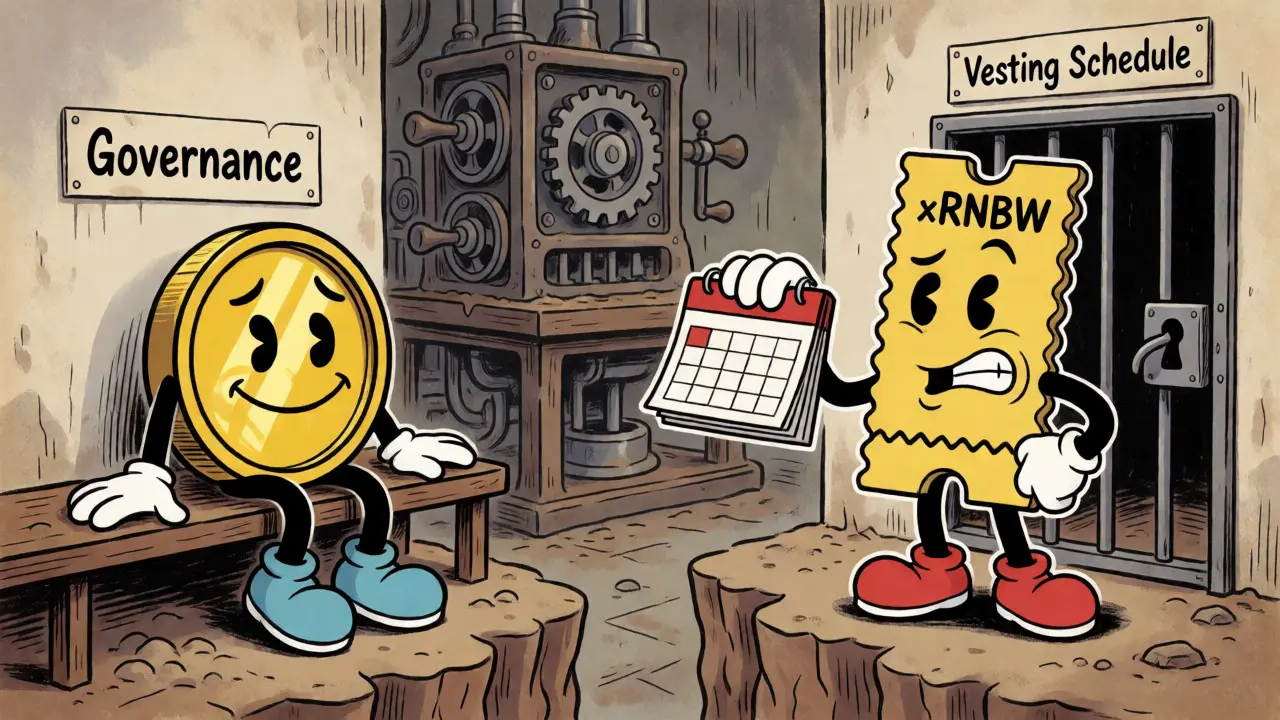
- RNBW: This is the native utility token. It is used for governance voting, serving as collateral in lending markets, and providing liquidity in AMM pools. There are 100 million total RNBW tokens, but only about 8.87 million are circulating. That means over 91% of the supply is locked up, vested, or unclaimed.
- xRNBW: This is a vesting token. Think of it as a claim ticket. When you stake your LP (Liquidity Provider) tokens, you earn xRNBW. This represents a promise of future RNBW rewards. Currently, there are 5.35 million xRNBW tokens in circulation.
The disparity between total supply and circulating supply is a red flag for long-term holders. With so much supply locked, any sudden unlock event could crash the price further if demand remains at zero. The protocol aims to solve this by incentivizing staking, but without active trading volume, those incentives feel hollow.
Technical Architecture and Migration to BSC
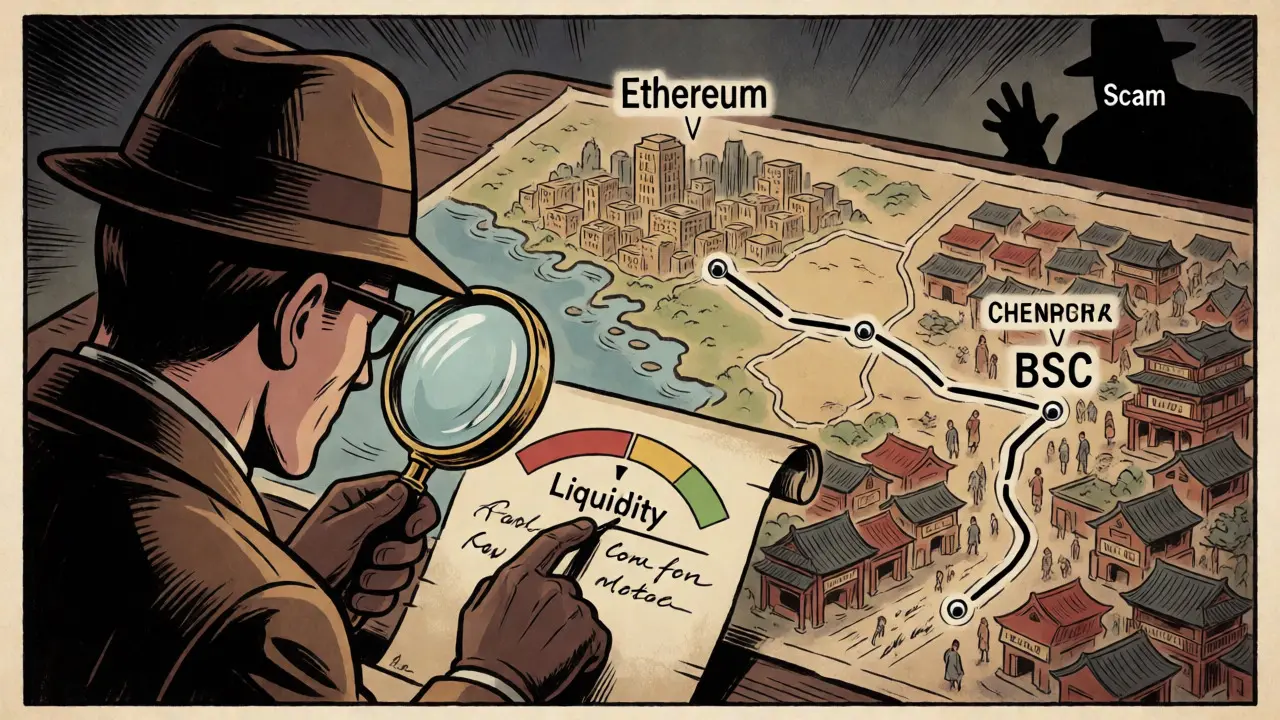
HaloDAO wasn’t always on the Binance Smart Chain. It started on Ethereum, aiming for security and decentralization. However, high gas fees and slow transaction times pushed the team to migrate to BSC and Polygon. This move was strategic, targeting Asian markets where BSC adoption is robust due to lower costs.
The core technology includes:
- Stablecoin-Optimized AMM: Designed to swap USDT, USDC, and other stablecoins with minimal slippage using custom mathematical curves.
- Lending Market: A risk-profiled system allowing users to lend and borrow stablecoins against collateral.
- Optimistic Governance: Voting happens off-chain to save gas, with results executed on-chain.
Despite this sophisticated tech stack, the migration didn’t spark the revival many hoped for. The focus on Asian local stablecoins was a niche play. While smart, it limited the global appeal compared to competitors like Curve Finance or Balancer, which dominate the broader stablecoin swap market.
How to Participate in Future DeFi Airdrops
Even if the HaloDAO x CoinMarketCap connection turned out to be underwhelming, the lesson is valuable. How do you spot a real airdrop versus a marketing gimmick? Here is a checklist for your next opportunity:
- Check Liquidity First: Before buying a token for an airdrop, ensure it has actual trading volume. A $0 volume token is a trap.
- Verify the Contract Address: Scams often use similar names. Always copy the contract address from the official project website or CoinGecko/CoinMarketCap listing.
- Understand the Snapshot Date: Most airdrops require you to hold tokens at a specific block height. Selling before the snapshot means missing out entirely.
- Watch for Vesting Schedules: If you receive xRNBW or similar vesting tokens, you won’t get all your funds immediately. They unlock over time.
For HaloDAO specifically, if you still hold RNBW, keep an eye on their Twitter communications. They occasionally run "biggest buy contests," which are small-scale promotions rather than mass distribution events. These are better opportunities to test the waters with small amounts rather than committing significant capital.
The Competitive Landscape
HaloDAO operates in a brutal sector. Competitors like Curve Finance offer deep liquidity and established reputations. Users prefer swapping on platforms where they know they can exit positions easily. With HaloDAO showing near-zero exit liquidity, it struggles to attract new users who fear being stuck with unsellable assets.
The protocol’s geographic specialization in Asia is a double-edged sword. It provides a dedicated user base but isolates it from Western DeFi trends. If the Asian crypto market sees a resurgence in stablecoin usage for cross-border payments, HaloDAO could see renewed interest. Until then, it remains a speculative asset with high risk.
Frequently Asked Questions
Is the HaloDAO RNBW token still tradable?
Technically, yes, it is listed on exchanges like PancakeSwap and CoinMarketCap. However, practical tradability is non-existent because the 24-hour trading volume is $0. This means you may find buyers, but selling large amounts would likely result in extreme slippage or inability to fill orders.
Did HaloDAO have an official airdrop with CoinMarketCap?
There is no record of a major, exclusive, high-value airdrop directly funded by CoinMarketCap for HaloDAO that distributed significant wealth to retail users. CoinMarketCap often features projects in its airdrop calendar, but these are frequently community-driven campaigns or listing announcements rather than guaranteed free distributions. Participation usually required holding tokens during specific snapshot periods.
What is the difference between RNBW and xRNBW?
RNBW is the primary governance and utility token. xRNBW is a vesting token earned through staking liquidity provider (LP) tokens. xRNBW acts as a claim on future RNBW rewards and unlocks over time, whereas RNBW is liquid and usable for immediate transactions and voting.
Why did HaloDAO migrate to Binance Smart Chain?
The migration aimed to reduce transaction fees (gas costs) and improve accessibility for users, particularly in Asian markets where BSC adoption is high. Lower fees make micro-transactions and frequent swapping of stablecoins more economically viable for everyday users.
Should I buy RNBW now hoping for a price pump?
This is a high-risk speculation. With zero trading volume and a circulating supply that is only 8% of the total, the market is illiquid. Any price movement would require a massive influx of new buyers. Without active development news or major exchange listings driving volume, the risk of capital stagnation is very high.