
Have you ever looked at your trading history and wondered where all your profits went? Probably hidden somewhere in those tiny transaction fees and slippage costs. That's exactly the problem FXDX is trying to solve. We've seen dozens of exchanges promise better rates, but few actually deliver on removing friction entirely. Launched to address the trust issues with centralized platforms and the clunky interfaces of older decentralized ones, this platform claims a unique spot in the market. By March 2026, FXDX has evolved into its 2.0 iteration, bringing hybrid liquidity models to the table. Before you connect your wallet, you need to understand what makes this engine tick and whether the promises hold up under real-world pressure.
The Core Concept Behind FXDX
At its heart, FXDX is a decentralized derivatives exchange built on blockchain technology to enable trustless trading. Unlike the traditional exchanges you might know, where someone holds your money, this system is non-custodial. You keep control of your assets until the moment of settlement. This design specifically targets the pain points of the previous decade: hacks at centralized vaults, sudden withdrawal freezes, and opaque fee structures. The platform focuses heavily on derivatives trading, allowing users to trade perpetual futures contracts with leverage up to 50x. This isn't just about buying low and selling high; it's about speculating on future price movements of assets ranging from cryptocurrencies to potentially even carbon credits.
Why does a non-custodial model matter? When you leave your funds on a centralized server, you are trusting a company's security protocols over your own keys. History has shown us that centralized failures happen. By moving everything on-chain through smart contracts, the risk shifts from institutional bankruptcy to protocol stability. FXDX aims to bridge the gap between institutional-grade user experience and the freedom of Web3. The team behind it recognized that while privacy is crucial, usability cannot be sacrificed. They wanted a system where the UI feels smooth, but the backend remains permissionless.
The Triple Zero Value Proposition
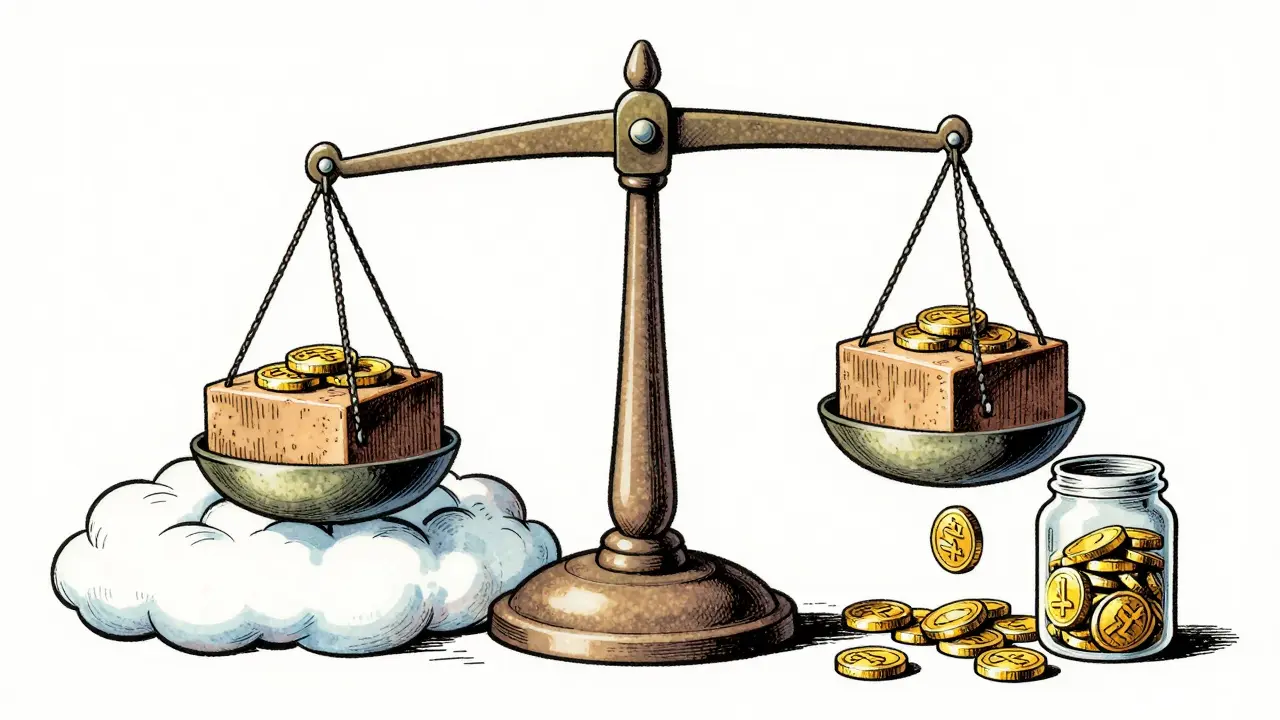
This is probably the biggest hook. FXDX advertises a "triple zero" system: zero trading fees, zero spreads, and zero price impact execution. On most platforms, these three cost components eat into your margin of safety. A typical exchange charges maker-taker fees that can range from 0.02% to 0.5%. Over hundreds of trades, that adds up to thousands in lost revenue. With FXDX's passive liquidity provider structure, they eliminate opening and closing fees regardless of position size.
But wait, zero price impact sounds too good to be true. How do they achieve that? The secret lies in their hybrid liquidity mechanism. Traditional automated market makers often suffer from slippage when large orders hit thin liquidity pools. FXDX combines order books with virtual AMM pools to ensure deep liquidity. This means even if you execute a massive trade, the market price shouldn't move significantly against you. Furthermore, Fee Distribution Model. All generated fees flow directly to stablecoin rewards for liquidity providers rather than burning tokens. This protects farmers from volatility risks associated with holding volatile tokens during farming periods.
Tech Stack and Security Architecture
Security is the bedrock of any financial tool. FXDX employs a robust oracle pricing system equipped with battle-tested outlier detections. Oracles feed price data to the smart contracts, and bad data equals drained funds. Their implementation uses a "black box function" described as secure even from the development team after deployment. This prevents insider manipulation of pricing feeds. Settlement occurs in seconds, which is critical for derivatives markets where milliseconds dictate profit or loss.
The architecture supports multi-collateral functionality. You aren't locked into just USDT or USDC. You can use any asset from the supported composition as collateral to open positions and redeem profits in any other asset. For example, you could deposit Bitcoin to open a leveraged Ethereum position. This flexibility reduces the need for constant asset bridging or swapping before trading. Looking ahead, they plan to integrate Router Protocol for cross-chain capabilities, ensuring interoperability across different blockchain networks without friction.
How FXDX Compares to Competitors
You can't judge a platform in isolation. Here is how it stacks up against established names in the space. While platforms like dYdX offer non-custodial trading with no KYC, they still maintain traditional maker-taker fee structures. Similarly, legacy centralized exchanges like Binance offer deep liquidity but require you to surrender custody of your funds.
| Feature | FXDX | Traditional CEX | Legacy DEX (e.g., dYdX) |
|---|---|---|---|
| Custody | Non-Custodial | Custodial | Non-Custodial |
| Trading Fees | Zero | Maker/Taker | Maker/Taker |
| Price Impact | Zero Claim | Varies | High on Large Trades |
| Leverage | Up to 50x | Up to 125x | Up to 20x |
One distinct advantage FXDX offers compared to traditional DEXs is single-sided liquidity provision. In most AMMs, you have to deposit two assets to provide liquidity (like BTC/USDT pairs). Here, liquidity providers can supply or remove liquidity on a single side. This greatly simplifies capital efficiency for market makers. However, keep in mind that market presence varies. As of late 2025, circulating token supply was around 38 million out of a total of roughly 1 billion. This indicates a significant portion of tokens remain reserved, which might imply lower liquidity depth compared to giants in the sector initially.
Risks and Realities to Consider
New platforms bring innovation, but they also bring untested variables. While the "zero fee" model is attractive, liquidity depth is king in crypto. If the pool isn't deep enough, your theoretical "zero price impact" might fail during extreme volatility events. Smart contract risk is another factor. Despite audit claims, code is never perfect. The reliance on oracle feeds creates a dependency on third-party infrastructure. If the oracle fails, your collateral could be liquidated incorrectly. Regulatory scrutiny is also increasing globally. Promising derivatives on stocks or real estate introduces compliance hurdles that haven't been fully tested in major jurisdictions yet.
User adoption metrics are still building. Established competitors have years of community loyalty and educational resources. While FXDX claims to cater to all levels, the advanced terminal interface might intimidate complete beginners. Documentation exists, but hands-on learning curves in DeFi are notoriously steep. Always start small. Don't treat a new protocol as a bank vault.
Tokenomics and Rewards
The FXDX token serves multiple utility functions beyond governance. Staking functionality allows holders to earn rewards, with plans for fee discounts on staking to enhance utility. Total supply is fixed near 1 billion tokens, providing scarcity attributes. Reward distribution favors stablecoins, which insulates yield farmers from volatility swings. This is a significant upgrade over many farms where APY looks great in paper profits but crashes in USD value due to inflation of the reward token.
Is FXDX safe for storing long-term crypto holdings?
FXDX is designed for active trading, specifically derivatives. While it is non-custodial, leaving large static holdings on a derivative platform always carries some smart contract risk. It is generally safer to keep your main treasury assets in a cold wallet and only use FXDX for trading sessions.
Do I need to do KYC to trade on FXDX?
No, as a decentralized protocol, it typically does not require Know Your Customer verification. This preserves privacy for users who prefer non-KYC environments, unlike centralized exchanges that mandate identity proofing.
What happens to my fees on this exchange?
Fees are distributed to liquidity providers in stablecoin assets. This ensures that the people providing liquidity receive returns free from volatility, avoiding the common issue of impermanent loss paired with token depreciation.
Can I trade assets other than crypto here?
The roadmap includes derivatives for tokens, stocks, bonds, and even carbon credits. However, availability depends on price feed integration and regulatory compliance in your jurisdiction for non-crypto underlying assets.
Is the liquidity deep enough for large orders?
Hybrid liquidity mechanisms help, but being newer, total volume may lag behind giants like Binance. Test with smaller amounts first to gauge slippage during different market conditions before committing significant capital.




Comments (16)
Arlen Medina
The zero fee model sounds like a classic rug pull waiting to happen.
shubhu patel
I have been following the development of non-custodial platforms for quite a while now and it seems like there is a genuine need for something that bridges the gap between ease of use and actual security for the assets that people hold. The way that they are handling the liquidity provision is actually quite interesting because most platforms require you to lock up two different tokens which creates unnecessary friction and tax implications for those of us who are trying to optimize our positions. I think the hybrid liquidity mechanism they described in the technical documentation addresses the slippage issue that we see on almost every other decentralized exchange currently operating in this space. It is really important that we consider the oracle risk though because relying on external price feeds can lead to catastrophic liquidation if the data feed gets manipulated or simply lags too much during high volatility periods. We also have to remember that the team claims to have implemented a black box function which theoretically prevents even the developers from interfering with the pricing after deployment is complete. This kind of transparency is exactly what the market needs right now to restore trust after so many centralized exchanges failed spectacularly over the last few years. I would suggest reading through the whitepaper carefully to understand the specific smart contract architecture before committing any significant amount of capital to the system. Diversification is always key when dealing with new protocols that are still in the early stages of adoption and user growth. It is possible that the liquidity depth is not there yet for large institutional orders but retail traders might find plenty of opportunity in the smaller cap pairs. We should keep an eye on the circulating supply metrics because holding a large portion of tokens in reserve could limit the immediate utility and governance power for early adopters. Overall I think this platform deserves serious consideration despite the inherent risks associated with any new financial infrastructure project.
vijendra pal
@Arlen u r wrong abt dis thng 😂 fx dx is legit 🔥 i tested it my self n got gud rates 📉 no feez is crazy 💸 u shud try it urself b4 u juz blame evrythng 🤷♂️
Adriana Gurau
Oh please spare me the hype cycle surrounding this particular tokenomics structure 🙄 Real investors don't chase zero spreads blindly without understanding the underlying economic sustainability models. Most projects collapse under the weight of unsustainable subsidy schemes designed merely to attract mindless retail capital. It feels like another attempt to gamify speculation under the guise of financial innovation technology 👁️🗨️.
June Coleman
Sure sounds impressive until the rug pulls happen which always eventually do lol. I get it you want to save money but free is rarely actually free in the crypto world especially with derivatives trading. Just saying dont lose your shirt chasing ghosts on a platform nobody knows yet.
Alexandra Lance
They control the oracle feeds behind the scenes obviously 😬. Nothing ever changes in this rigged game except the branding on the UI layers. Expect FUD when things go south like always 🤡📉.
Patty Levino
I understand why you feel that way and it is good to be cautious about centralized control mechanisms in these systems. However the audit reports do suggest the oracle implementation uses diverse sources to mitigate single points of failure. Please consider testing with small amounts rather than assuming malicious intent upfront.
Lauren Gilbert
The philosophical implication of shifting financial sovereignty back to the individual through non-custodial architectures represents a fundamental shift in how we conceptualize ownership in the digital age. When we move away from trusting institutions to trusting math we create a new layer of abstraction between human greed and asset loss. This forces us to become our own bank vaults which brings immense responsibility but also liberation from traditional gatekeeping mechanisms. The debate about zero fees versus sustainable revenue models touches on the deeper question of whether markets should prioritize efficiency or rent-seeking behavior for protocol survival. We are witnessing a transition period where legacy expectations clash with radical decentralization principles on a daily basis. Perhaps the ultimate test will be how the community governs the treasury during inevitable bear cycles when yield generation slows down significantly.
Sonya Bowen
Fascinating perspective on ownership dynamics. Always test new tools gradually to protect your mental state while learning.
Carol Prates
This is literally the biggest plot twist of 2026 nobody sees it coming! I mean imagine waking up tomorrow and your leverage position is gone because the bridge failed or whatever happens next. It is so dramatic how fast these platforms rise and fall like soap bubbles in a hurricane wind. We need to document everything just in case history repeats itself again soon. Stay tuned friends because this is getting spicy 🔥.
Arwyn Keast
Typically liquidity depth correlates inversely with volatility spikes in nascent protocols like this one. You see the same pattern emerge with dYdX v3 or GMX before they stabilized their order books. It is unlikely to scale efficiently without proper institutional market making integration.
Evan Borisoff
We cannot simply ignore the broader geopolitical implications of a platform that operates outside traditional regulatory frameworks entirely. When American firms build protocols on foreign chains they expose themselves to sanctions risk that could halt operations overnight. Our national security depends on maintaining oversight over capital flows that occur on these shadow banking networks disguised as decentralized applications. The lack of KYC is not a feature for safety but a loophole for bad actors to exploit international law enforcement agencies. We need robust standards enforced by domestic authorities before allowing widespread adoption of such unregulated derivative instruments globally. The promise of zero fees often masks the true cost borne by the ecosystem through potential systemic failures that affect the entire market. If the smart contracts are flawed the losses ripple outwards harming innocent retail participants who followed the hype cycle blindly. We should demand higher standards from development teams rather than accepting experimental software as production grade financial infrastructure immediately. The technology is impressive but the legal liability remains completely undefined in major jurisdictions worldwide today. Investors need to realize that privacy comes with heavy sacrifices regarding legal recourse and asset protection rights. Centralized entities provide insurance funds for crashes while DAOs often leave victims stranded with nothing but code to look at. History teaches us that unchecked autonomy leads to chaotic outcomes that hurt the average person the most. Security audits are useful but they do not guarantee immunity against sophisticated attacks targeting complex multi-chain interactions. The speed of settlement is great but accuracy of execution is paramount for maintaining long term market stability. Ultimately the success of this protocol relies heavily on the integrity of its underlying liquidity providers who may vanish during stress events.
Emma Pease-Byron
Your patriotic fervor misses the point that regulation usually stifles innovation before it gains traction organically. One could argue that the current framework is precisely what allows for progress without bureaucratic interference slowing the pace. The assumption that government oversight improves safety is historically contradicted by numerous examples of failed protections.
Erica Mahmood
slippage metrics are critical here. hybrid amm models reduce variance compared to pure spot pools. fee distribution to stablecoins avoids token inflation drag on yields
gladys christine
the energy put into stabilizing yields is amazing. we need that calmness in such a wild market environment. keep your heads clear when trading live positions
vijendra pal
yesss ppl forget the liquidity side of dis 😅 its deepr than u think 🔥 keep grinding fam 💪