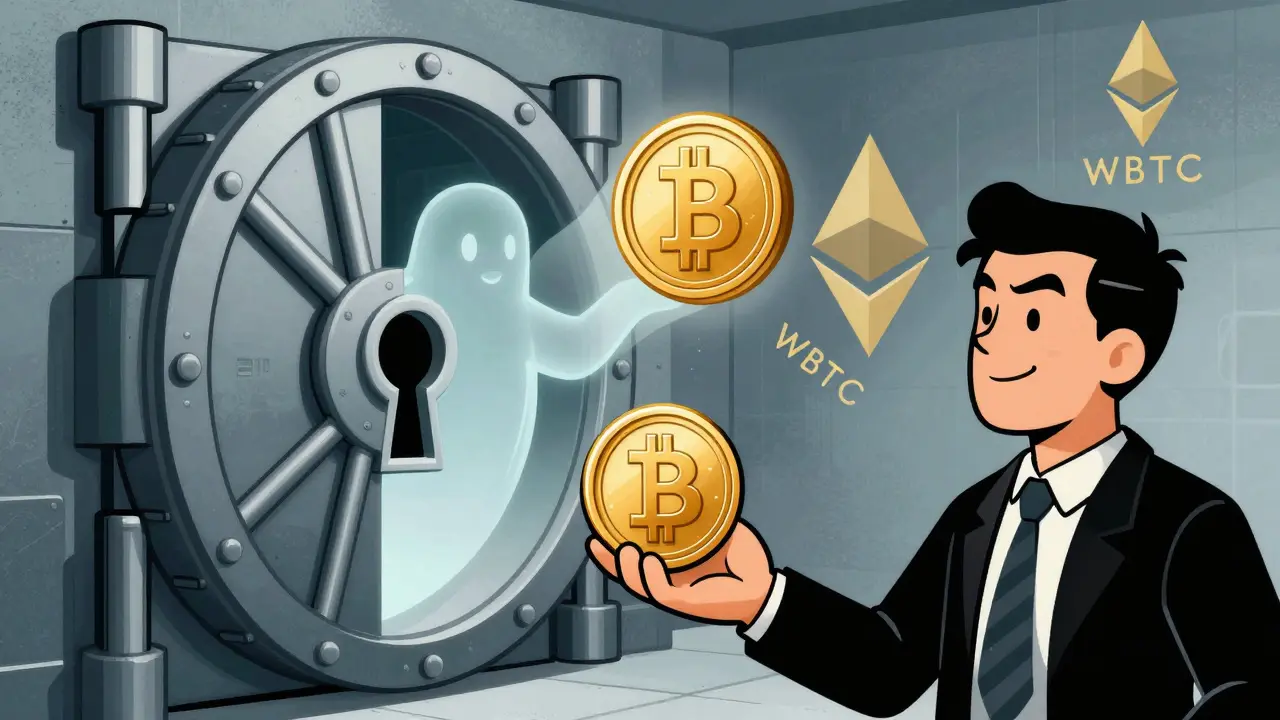
You want to use Bitcoin in Ethereum’s DeFi ecosystem. You can’t just send BTC to an ETH wallet. The blockchains don’t talk to each other natively. So you wrap it. You trade your native Bitcoin for a token that represents it on another chain. But here is the catch: someone has to hold your original Bitcoin. That someone is the custodian. And that relationship-between you, the wrapper, and the holder-is where the real risk lives.
Wrapped asset custody isn’t just a technical detail. It’s the foundation of cross-chain finance. In Q2 2024, over $15.3 billion was locked in wrapped assets. By mid-2026, that number has grown as institutions enter the space. But with growth comes scrutiny. If the custodian fails, gets hacked, or ignores regulators, your ‘wrapped’ asset might be worth nothing. Understanding how these systems work-and who you’re trusting-is essential before you lock up any funds.
What exactly is wrapped asset custody?
It’s the process where a trusted third party holds your original crypto asset (like Bitcoin) in reserve while issuing a corresponding token on a different blockchain (like Ethereum). This allows you to use Bitcoin in smart contracts that don’t natively support it.
How Wrapped Assets Actually Work
To understand custody, you first need to see the mechanics. When you wrap an asset, three parties are involved: you (the user), the merchant (who initiates the request), and the custodian (who holds the real asset). Let’s say you want Wrapped Bitcoin (WBTC). You send your BTC to BitGo, the designated custodian. Once they confirm receipt, their system signals a smart contract on Ethereum to mint new WBTC tokens and send them to your wallet. The ratio is strict: one BTC equals one WBTC.
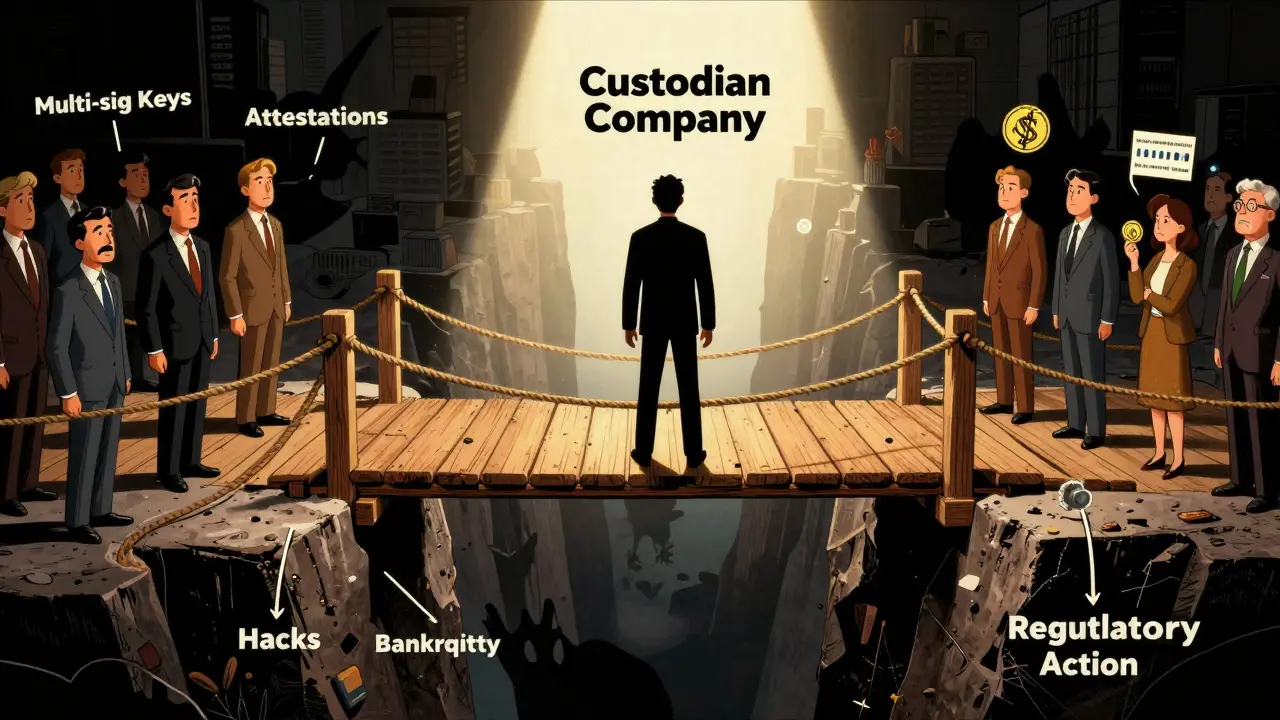
This sounds simple, but it breaks the core promise of blockchain: decentralization. Instead of trusting code, you’re trusting a company. BitGo is a digital asset custody provider that manages multi-signature wallets for institutional clients. For WBTC, they use a 3-of-5 multi-signature setup. This means five keys exist, and at least three must sign off to move funds. It’s safer than a single key, but it’s still centralized control.
The unwrapping process reverses this. You burn your WBTC on Ethereum. The smart contract notifies the custodian. BitGo then sends your original BTC back to your address. If any part of this chain fails-if the custodian refuses, goes bankrupt, or loses the keys-your bridge collapses. That’s why transparency matters. Since March 2019, accounting firm Armanino LLP has provided monthly attestations for WBTC reserves. These aren’t audits; they’re confirmations that the numbers match. But they don’t check if the custodian is solvent or compliant with changing laws.
The Trust Problem: Why Custodians Are a Risk
Blockchain was built to remove intermediaries. Wrapped assets bring them back. This creates what experts call a “hybrid trust model.” You get the convenience of interoperability, but you pay with counterparty risk. According to PwC’s 2024 survey, 67% of traditional financial institutions cite custodial risk as the biggest barrier to adopting wrapped assets. They want exposure to DeFi yields, but they don’t want to rely on a private company’s integrity.
Consider the alternatives. renBTC used a decentralized network called renVM to hold Bitcoin. No single company controlled it. But in March 2023, renBTC shut down due to security concerns and lack of liquidity. Decentralized doesn’t mean safe. It often means untested and hard to recover from. On the other end, Coinbase Wrapped Bitcoin (cbBTC) launched in February 2023 with FDIC-insured cash reserves for fiat components. It hit $1.2 billion in total value locked within six months because users trusted Coinbase’s brand and regulatory standing. But trust in a corporation is fragile. If Coinbase faces legal action, cbBTC could freeze.
Here’s the reality: all current major wrapped assets rely on some form of centralization. WBTC controls 68.3% of the market. cbBTC is growing fast. sBTC uses a decentralized oracle system but requires 750% collateralization, making it expensive to use. There is no perfect solution yet. You choose between convenience and risk.
| Asset | Custody Model | Market Share (June 2024) | Key Risk |
|---|---|---|---|
| WBTC | Centralized (BitGo) | 68.3% | Regulatory enforcement against custodian |
| cbBTC | Centralized (Coinbase) | Growing rapidly | Corporate insolvency or legal freeze |
| sBTC | Decentralized Oracles | 8.7% | High collateral requirements (750%) |
| renBTC | Decentralized (renVM) | 0% (Shutdown) | Security vulnerabilities and low liquidity |
Real-World Failures: What Happens When Trust Breaks
Don’t think this is theoretical. History shows us what happens when custody fails. In July 2023, Multichain collapsed after losing $325 million in a hack. Users couldn’t unwrap their assets. The bridge was frozen. Similarly, the Harmony Horizon Bridge lost $650 million in June 2022 because custodial controls failed to stop unauthorized minting. These weren’t small errors. They were systemic failures that erased billions in value.
Even stablecoins aren’t immune. The TerraUSD (UST) collapse in May 2022 wiped out $40 billion. While UST wasn’t a wrapped asset in the traditional sense, it relied on algorithmic trust mechanisms that failed under pressure. Retail users felt the pain immediately. One Reddit user noted losing $12,000 when RenBridge halted withdrawals during the 2023 crash. That fear drives many toward decentralized options, even if they’re less liquid.
Dr. Gavin Andresen, former Bitcoin Core lead developer, called custodial wrapped assets a “necessary evil” in October 2023. He acknowledged they provide liquidity but warned they create concentration points for systemic risk. Vitalik Buterin went further in January 2024, arguing they undermine blockchain’s ethos and should be replaced by decentralized bridges. The debate isn’t academic. It affects every dollar locked in DeFi.
Regulatory Shifts in 2025-2026
Regulators are waking up. In June 2024, the SEC charged BitGo with offering an unregistered security regarding WBTC. This wasn’t just a fine. It set a precedent. If wrapped tokens are securities, they face stricter reporting, disclosure, and custody rules. Traditional finance firms are paying attention. Fidelity’s March 2024 survey found 47% of traditional finance firms plan to allocate to wrapped assets within 18 months-but only if regulations clarify liability.
In Europe, MiCA (Markets in Crypto-Assets) regulation takes full effect in June 2025. It requires custodians to hold 130% capital reserves against wrapped assets. This protects users but raises costs for providers. Smaller players may exit. Larger ones like Coinbase and BitGo will adapt, but their fees might increase. For users, this means higher barriers to entry but potentially safer infrastructure.
The Blockchain Association filed a statement in June 2025 urging markets to allow investment in both native and tokenized assets. They warned against “transfer restrictions coded into smart contracts” that could trap users. This tension between innovation and control defines the current landscape. As a user, you need to know which side of the law your custodian stands on.
Technical Safeguards: What Protects Your Funds?
If you’re going to use wrapped assets, understand the safeguards. Most reputable custodians use Hardware Security Modules (HSMs) to store private keys offline. Multi-signature protocols require multiple approvals for transactions. Some use time-locks, delaying fund movements to allow for intervention if something looks wrong.
Verification is key. Look for regular attestation reports. WBTC publishes monthly updates from Armanino LLP. Check if these are publicly available. Also, monitor on-chain data. Dune Analytics dashboard #187432 tracks WBTC wrapping times, averaging 15-30 minutes. If delays spike, investigate why. High transaction costs ($1.27 on Ethereum vs. $0.03 on Polygon) can also signal congestion or inefficiency.
For developers, integrating wrapped assets requires care. Ensure your wallet supports ERC-20 standards for Ethereum-based tokens. Use established libraries rather than custom code. Test thoroughly. A bug in your integration won’t break the bridge, but it could drain your wallet. Consensys Academy estimates 80-100 hours of study needed to grasp the fundamentals properly.

Choosing the Right Model for You
Your choice depends on your profile. Institutions prefer custodial models like cbBTC or WBTC because of compliance, insurance, and support. Coinbase offers 24/7 institutional support with 15-minute SLA response times. Retail users often lean toward decentralized alternatives despite lower liquidity, seeking to avoid corporate risk. Chainflip and THORChain offer non-custodial swaps, but their volume is smaller and interfaces more complex.
Ask yourself: Do I need speed and ease? Go with a major custodian. Do I prioritize sovereignty and accept complexity? Explore decentralized bridges. Never put all your eggs in one basket. Diversify across chains and custody types. Monitor news closely. Regulatory changes happen fast. A safe platform today could be restricted tomorrow.
Future Outlook: Where Is Custody Heading?
The industry is moving toward hybrid models. Pure centralization is facing backlash. Pure decentralization lacks scale. Expect more solutions combining cryptographic proofs with institutional oversight. Ethereum’s Verkle tree implementation in Q4 2024 will reduce verification costs for custodial proofs by 87%, making transparent auditing cheaper and faster.
Interchain Security Stack v2, launching Q3 2024, enables shared security models. This could allow decentralized networks to borrow security from larger chains, reducing reliance on single custodians. JPMorgan projects custodial wrapped assets will maintain 60-70% market share through 2030 due to institutional demand. But Electric Capital notes declining GitHub activity in wrapper development, suggesting a shift toward native cross-chain protocols.
By 2026, mandatory third-party attestations may become standard. CoinDesk surveys indicate 72% of experts expect this. Until then, vigilance is your best tool. Read the terms. Check the audits. Know who holds your keys. In DeFi, trust is earned, not assumed.
Is WBTC safe to use in 2026?
WBTC remains widely used but carries regulatory risk. The SEC’s 2024 action against BitGo highlights potential legal challenges. While reserves are attested monthly, users should monitor enforcement actions and consider diversifying with cbBTC or decentralized alternatives depending on their risk tolerance.
What happens if a custodian goes bankrupt?
If a custodian becomes insolvent, your wrapped assets may be frozen or seized as part of bankruptcy proceedings. Unlike bank deposits, most crypto holdings are not insured. Always verify if the custodian segregates client assets and maintains adequate capital reserves.
Are decentralized bridges truly trustless?
No bridge is completely trustless. Decentralized bridges reduce single-point failure risks but introduce complexity in validator sets and consensus mechanisms. Projects like renBTC showed that decentralization doesn’t eliminate security vulnerabilities. Research the specific protocol’s audit history and economic incentives.
How does MiCA affect wrapped assets in Europe?
MiCA requires custodians to hold 130% capital reserves against issued wrapped assets starting June 2025. This enhances user protection but may increase fees and reduce the number of compliant providers. European users should ensure their chosen wrapper adheres to MiCA guidelines.
Which wrapped asset has the lowest fees?
Fees depend on the underlying blockchain. Wrapping on Layer 2 networks like Polygon costs around $0.03 per transaction, compared to $1.27 on Ethereum mainnet. However, consider total cost including slippage and withdrawal fees. Cross-chain slippage averages 0.87% on Ethereum according to Token Terminal.





Comments (20)
Hamza k
Oh my god, reading this is like watching a car crash in slow motion but with more zeroes attached to the dollar signs. The sheer audacity of trusting BitGo with our life savings while they play musical chairs with regulatory compliance is absolutely breathtaking in its stupidity. We are out here debating multi-sig setups like it's some kind of high-stakes poker game when the house is literally rigged by guys in suits who could freeze your assets because they had a bad Tuesday. It’s tragic, it’s hilarious, and it’s completely avoidable if we just stopped pretending that centralized custodians aren’t just digital banks with worse security and zero FDIC insurance. I’m just sitting here shaking my head at the collective amnesia of this community.
Kim Kay
i think people need to calm down a bit though not saying its safe but cbBTC has grown so fast becausw users trust coinbase brand right? its scary yes but maybe thats the trade off for ease of use? i mean if you dont know how to run a node or manage keys then what else can you do? please explain more about the decentralized options cause im always lost
Brad Semp
The notion that one should prioritize 'ease of use' over the fundamental tenets of cryptographic sovereignty is, frankly, disheartening. You are essentially arguing for the convenience of a leash. While Coinbase may offer a polished interface, their reliance on corporate goodwill rather than mathematical proof renders their wrapped assets nothing more than IOUs from a potentially insolvent entity. One must understand that true decentralization requires a certain level of technical literacy; those unwilling to acquire it deserve neither pity nor protection from the inevitable counterparty risks inherent in their chosen path.
Korn Arrieta
You’re missing the point entirely. It’s not about literacy, it’s about leverage. Institutions don’t care about your ‘sovereignty’ narrative. They want yield. They want exposure. And they will burn through any decentralized bridge that doesn’t have institutional-grade SLAs. Look at the market share data provided in the article. WBTC holds 68.3% despite being a centralized relic. Why? Because liquidity is king. If you can’t move billions efficiently, your ‘trustless’ bridge is a museum piece. Stop romanticizing renBTC’s failure as a noble sacrifice. It was a liquidity death spiral caused by poor economic design. Face reality.
Jackie D
wait but isnt that kinda wild how much power these companies hold? like i read that MiCA is making them hold 130% reserves now which sounds safer but also expensive... does that mean fees gonna go up for us little guys? i feel like the whole system is built on trust but trust is so fragile lol
Ruth Williams
It is precisely this lack of rigorous understanding that plagues the retail investor demographic. The implementation of MiCA’s capital reserve requirements is not merely an inconvenience; it is a necessary correction to the anarchic nature of unregulated crypto markets. Those who complain about increased fees fail to recognize that they are paying for the privilege of operating within a legal framework that offers recourse. To suggest otherwise is to advocate for a return to the Wild West era of crypto, where hacks and rug pulls were celebrated as features rather than bugs. Educate yourself before you invest.
Sophie Nakasako
I love how everyone jumps straight to the fear angle without considering the philosophical shift happening here. We are witnessing the birth of a new financial paradigm where trust is no longer binary. It’s becoming probabilistic. By analyzing the attestation reports and on-chain metrics, we are essentially creating a reputation layer that transcends traditional banking. Isn’t it fascinating how transparency itself becomes the currency? Instead of asking ‘who holds the keys,’ we should be asking ‘how verifiable is the custody?’ This opens up a world of possibilities for hybrid models that combine the best of both worlds. Let’s explore this further!
Kristy Morrow
you are dreaming if you think transparency fixes anything. the system is broken by design. why do we even need wrapped assets when blockchains should talk to each other natively? it’s all a scam to keep us dependent on middlemen. wake up sheeple
John Harman
Look, buddy, native cross-chain communication isn’t ready for prime time yet. You want instant finality and atomic swaps across heterogeneous chains? Good luck with that. Until ZK-proofs scale massively, wrappers are the only way to get liquidity into DeFi protocols that actually matter. WBTC exists because Ethereum needs Bitcoin liquidity. End of story. Stop complaining about the solution and start using the tools available. If you’re too scared to interact with smart contracts, maybe stick to stocks.
Antony Lopez
The problem is that American innovation is being stifled by European regulations like MiCA. We build the tech, they regulate it into oblivion. BitGo and Coinbase are US companies facing SEC harassment while trying to provide services. If the government wants to treat these as securities, fine, but stop acting surprised when the market moves offshore. We need less regulation, not more bureaucratic hurdles that favor big incumbents like Fidelity over actual innovators. Keep America great means keeping crypto free.
Kat Barr
omg yes!! 🙌 i totally agree that regs are tough but also kinda needed? like remember when ftx collapsed? 😱 we cant let that happen again! i hope coinbase stays strong because they seem super responsible 💪✨ lets all stay safe and diversified okay? no cap! 🚀💎
Logan Edmison
the irony is palpable when u say 'stay safe' while holding wrapped tokens. ur keys not ur coins is a meme for a reason. most people dont even know what a private key is let alone how to backup it properly. its all just hopium and vibes at this point. sad but true
Michelle Walker
Stop whining. The market dictates the standard. WBTC dominates because it works. Period. If you don’t like the risk, don’t use it. But don’t pretend decentralized alternatives are viable for serious capital allocation. RenBTC failed. sBTC is too expensive. cbBTC is growing because Coinbase is a regulated entity. That’s the reality. Adapt or die.
Shay Thomson
My heart breaks for those who see this as a battle between good and evil. It’s really just a spectrum of trust. Some of us need the safety net of a custodian to sleep at night. Others prefer the cold hardness of self-custody. Both are valid paths. Let’s not tear each other down. We are all navigating this complex new world together. Maybe there’s room for empathy here?
DJ Maleko
Empathy won’t save your portfolio when the bridge gets hacked 🤡. You need eyes wide open. Check the Dune dashboards. Watch the wrapping times. If BitGo slows down, dump immediately. Don’t listen to these soft-touch narratives. This is war zone finance. Protect yourself or get rekt. Simple as that. 👀📉
Erika Pozzetto
It is imperative that we consider the broader implications of these custodial models on global financial stability. The integration of wrapped assets into traditional finance portfolios necessitates a robust framework for accountability. As noted in the article, the lack of comprehensive audits beyond simple attestations poses significant systemic risks. Therefore, it is crucial that regulators enforce stricter standards for capital reserves and operational transparency to ensure the long-term viability of these instruments. Without such measures, the potential for cascading failures remains alarmingly high.
Russ Fincham
Boring stuff. Just tell me which one makes money fastest. Is it cbBTC? Everyone says Coinbase is safe. I don’t care about the philosophy, I care about the yield. Can someone just give me a direct answer without all the fluff about decentralization and ethics? Time is money.
Linda Hilliard
Your ignorance is staggering. Yield is a function of risk-adjusted returns, not mere speed. cbBTC offers stability due to its regulatory standing, but that comes with lower yields compared to higher-risk DeFi protocols utilizing WBTC. You cannot simply ‘pick a winner’ based on brand recognition. You must understand the underlying mechanics of liquidity provision and impermanent loss. Until you grasp these concepts, you are merely gambling. 📉💼
Winston Lacewing
This entire thread is a moral disaster. We are enabling centralization under the guise of innovation. Every time you wrap BTC, you betray Satoshi’s vision. You are handing your freedom to corporations that would sell you out for a penny on the dollar. It’s disgusting. How can anyone justify this betrayal of the core ethos of cryptocurrency? Wake up! 🤮🚫
Kristine Lawson
It is deeply concerning that individuals continue to propagate the myth of a singular ‘core ethos.’ Bitcoin has evolved. The current landscape demands pragmatic solutions to interoperability challenges. To dismiss wrapped assets as a ‘betrayal’ is to ignore the practical realities of scaling blockchain technology. Furthermore, the assertion that one ‘betrays’ Satoshi by utilizing existing infrastructure is logically fallacious. Satoshi intended for Bitcoin to be useful. If wrapping enables utility, then it aligns with his original intent. Cease this performative outrage.